
Views: 0 Author: Site Editor Publish Time: 2026-05-27 Origin: Site


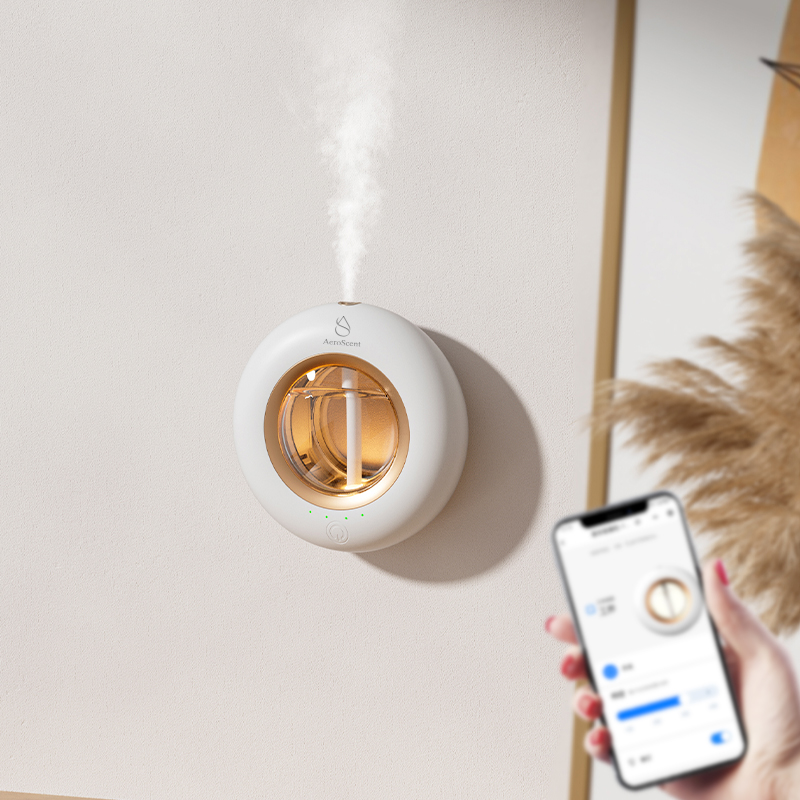
Consistent ambient scenting in industrial and large-scale commercial spaces goes far beyond simple aesthetics. Facilities rely heavily on carefully managed olfactory environments. They use scent strategically to enhance brand perception and manage complex odor remediation challenges. However, selecting the wrong dispersal method often leads to major operational headaches. You might face inconsistent coverage, extensive labor demands, or immediate residue damage.
In worst-case scenarios, facilities fail indoor air quality compliance completely. Operations managers frequently struggle to find a reliable system. They need robust solutions capable of handling massive square footage efficiently. Scenting strategy impacts occupant experience directly. Choosing the correct technology ensures seamless integration into your existing building management workflows.
This article provides an objective comparison of legacy systems versus modern cold-air diffusion technology. You will learn how these systems differ in scalability and implementation realities. We also explore the physical mechanics behind each method. This specialized knowledge helps you make an informed, confident infrastructure decision.
Dispersion Mechanics: Aerosol systems rely on propellants and heavy droplets that fall quickly; cold-air diffusion turns liquid into lightweight nanoparticles that remain suspended.
Scalability: Cold-air diffusion integrates seamlessly with HVAC systems for facility-wide coverage, whereas aerosols require localized, battery-operated dispensers.
Cost Dynamics: Aerosols offer lower upfront hardware costs but incur high recurring labor and consumable expenses; cold-air systems require higher initial CapEx but scale efficiently.
Safety & Compliance: Cold-air technology eliminates the Volatile Organic Compounds (VOCs) and propellants associated with traditional pressurized cans, meeting stricter environmental standards.
High-square-footage environments demand extremely precise airflow management. Warehouses, large retail chains, and hotel lobbies feature complex HVAC configurations. Scenting these expansive spaces requires understanding air circulation patterns deeply. You cannot simply place a unit in a corner. You cannot expect uniform results without proper planning. Facilities must account for air exchange rates. They must calculate ceiling heights accurately. They must map varying temperature zones. A system installed in a high-ceiling lobby behaves differently than one in a low-ceiling corridor.
Manual interventions create heavy hidden burdens. Swapping out consumables across dozens of discrete zones consumes immense staff time. Maintenance teams lose valuable hours managing isolated units. Every minute spent changing a canister detracts from critical facility operations. This constant need for attention degrades overall operational efficiency. Facility managers often underestimate this ongoing labor requirement entirely.
Commercial facilities must move entirely beyond localized consumer-grade options. Relying on a mini room spray or standalone plug-ins cannot achieve true commercial viability. These localized solutions fail rapidly in high-traffic areas. They lack the necessary output capacity. They also lack programmable controls suitable for enterprise environments. You need a robust system operating reliably during peak business hours.
Evaluate your options based on strict success criteria. Uniform distribution and scent fidelity stand paramount. Residue elimination prevents safety hazards and physical asset damage. Finally, minimal operational downtime ensures continuous, reliable scent delivery. Your chosen system must perform seamlessly behind the scenes.
This method utilizes strong chemical propellants. They forcefully push liquid fragrance through a small nozzle. The process creates heavily localized bursts of scent in the immediate vicinity. These legacy systems rely primarily on gravity and basic air currents. The average droplet size ranges from 30 to 100 microns. Because these droplets remain relatively large, they fall out of the air quickly.
Initial setup remains incredibly straightforward. You get simple plug-and-play installation everywhere. They do not require any complex HVAC modifications. You merely mount the unit to a wall. They also provide immediate odor masking capabilities. Facility managers appreciate the rapid deployment speed when handling emergency odor issues.
Heavy droplets cause rapid scent drop-off continuously. This creates distinct scent voids between dispensers. You might smell a strong aroma near the unit. Ten feet away, you smell absolutely nothing. Floor and surface residue buildup occurs over time. These residues potentially create dangerous slip hazards on hard commercial floors. They also damage delicate floor finishes over extended periods.
Furthermore, facilities face a high frequency of manual replacements. Staff must constantly monitor each aerosol spray air freshener canister closely. Missing a refill cycle leaves the space completely un-scented.
Confined, low-airflow zones fit this technology best. Individual restrooms, tight janitorial closets, or small isolated entryways represent optimal environments. In these small spaces, localized bursts effectively handle acute odor problems. You do not need broad dispersion here.
This sophisticated technology employs high amounts of filtered, pressurized air. The system atomizes essential oils and aroma blends into microscopic dry nanoparticles. We call this highly efficient process nebulization. It operates entirely without heat. It also eliminates the need for any chemical propellants. By forcing ambient air through a specialized baffle, it shears the oil into incredibly fine particles. These invisible particles typically measure strictly under 5 microns in diameter.
Nebulization maintains the strict chemical integrity of the essential oils. You never experience a "burnt" or synthetic alteration in the aroma profile. Heat alters the delicate molecular structure of fragrances permanently. By avoiding heat, cold-air systems preserve the intended scent perfectly. The dry process leaves absolute zero surface residue on furniture or floors.
Because they remain incredibly light, nanoparticles stay airborne significantly longer than traditional droplets. They ride natural air currents effortlessly. This maximizes your coverage per ounce of liquid.
Commercial units can connect directly into building ductwork. They utilize existing facility airflow perfectly. This distributes scent uniformly across thousands of square feet. It leverages the mechanical power of your central air handler. When your HVAC system activates, the scent distributes evenly.
Best Practices for HVAC Integration:
Locate the Supply Duct: Always tap into the supply air duct after the filtration system. Installing before the filter wastes fragrance.
Monitor Static Pressure: Use a manometer to check duct pressure. Ensure your machine overcomes the existing static pressure easily.
Synchronize Timers: Program the scent machine to operate only when the HVAC fan runs. Running the machine while the fan rests causes oil buildup inside the ductwork.
Fragmented coverage plagues legacy pressurized systems routinely. You must maintain dozens of independent aerosol air freshener units. Covering a large floor plan becomes a severe logistical nightmare. Imagine managing fifty different dispensers across a single warehouse. You must track fifty different refill schedules. You must manage fifty separate sets of batteries. This creates an unsustainable management loop.
Conversely, nebulizing systems achieve true systemic coverage. A single commercial HVAC-connected diffuser efficiently covers up to 10,000 square feet. The distribution remains perfectly even throughout the designated zone. The scent travels everywhere the conditioned air travels. You eliminate dead zones completely. You create a cohesive olfactory experience for every building occupant.
Pressurized cans often contain high levels of VOCs. They rely heavily on propellants like isobutane and propane to function. These chemicals may conflict with strict corporate ESG policies. They also jeopardize LEED building certifications. Many modern facilities strictly ban aerosolized propellants for environmental reasons. They compromise indoor environmental quality standards significantly.
Cold-air technology remains entirely propellant-free and heat-free. It generally supports stricter compliance with OSHA and EPA indoor air quality guidelines. You maximize safety when pairing them with certified, IFRA-compliant fragrance oils. The International Fragrance Association (IFRA) sets rigorous safety standards. Complying with these standards protects building occupants from respiratory irritation.
Performance Comparison Chart
Performance Metric | Aerosol Dispensers | Cold-Air Nebulizers |
|---|---|---|
Particle Size | 30 to 100 microns (Heavy) | Under 5 microns (Ultra-light) |
Airflow Integration | Relies on ambient drafts | Taps directly into HVAC supply |
Residue Potential | High slip and stain hazard | Zero physical residue left |
Chemical Propellants | Utilizes VOCs (Propane, Isobutane) | Uses strictly ambient air |
Deploying any scenting strategy carries distinct operational risks. You must evaluate these realities thoroughly before committing to a specific hardware path.
Wall-mounted plastic dispensers face frequent pilferage and vandalism in public spaces. Unauthorized individuals often tamper with the external casing.
Occupants often experience distinct "scent fatigue." They encounter overpowering bursts near the dispenser. Then, they find zero scent a few feet away. This inconsistency frustrates visitors.
Cheap dispensing mechanisms suffer frequent mechanical failures over time. Internal gears strip easily. Nozzles clog frequently when liquids dry unevenly.
Common Mistake: Installing these units directly above soft seating or high-traffic walkways. The falling droplets will stain upholstery and create slippery floors.
Installation requires meticulous facility airflow mapping. You must deeply understand distinct HVAC zones. A large building often contains multiple isolated air handlers.
Improper installation wastes essential oil completely. Exhausting it directly outside provides zero interior benefit. You must tap into the supply side correctly.
Teams must perform rigorous compatibility checks. They must evaluate duct pressure accurately. High static pressure pushes the oil backward into the machine.
These units strictly need dedicated power sources located near HVAC access panels. You cannot run extension cords safely across commercial mechanical rooms.
Common Mistake: Ignoring the building's MERV filtration rating. Exceptionally high-efficiency filters might strip the scent particles out of the air prematurely.
Choosing between these two technologies requires a very clear framework. Below we outline specific operational conditions favoring each approach.
Strictly Confined Spaces: You manage highly compartmentalized areas under 500 square feet.
Isolated Infrastructure: Your targeted spaces lack central air connectivity entirely.
Temporary Deployments: The implementation serves a strictly temporary functional purpose.
Short-Term Operations: You run short-term commercial leases or weekend pop-up events.
Strategic Branding: Scent represents a critical, non-negotiable component of your brand standard.
Massive Square Footage: You manage large, open-concept spaces exceeding 2,000 square feet.
Labor Optimization: You desperately need to reduce facilities management labor hours immediately.
Centralized Control: You want to centralize maintenance protocols into a single mechanical room safely.
Strict Compliance: Your facility strictly adheres to zero-residue and strict air quality policies globally.
Aerosols function primarily as tactical, localized tools. They resolve immediate odor issues in confined, isolated spaces. You deploy them best for acute problem-solving. Conversely, cold-air diffusion represents a strategic, facility-wide infrastructure investment. It delivers highly reliable, uniform branding across massive commercial footprints.
We strongly recommend conducting a comprehensive HVAC airflow audit first. Request a pilot program from a commercial scenting vendor next. Test the nebulization technology thoroughly in a designated zone. Measure the ambient distribution carefully. Do this before committing to a full-scale corporate rollout. This methodical approach guarantees optimal system alignment. It effectively ensures long-term operational success.
A: Yes. Cold-air systems use essential oils much more efficiently. They also drastically reduce ongoing maintenance labor. You spend far less time swapping out localized canisters. They automate the process effectively.
A: No. Introducing pressurized chemical propellants into ductwork causes dangerous buildup. Heavy liquids pool inside the metal vents. This creates severe fire hazards. It also causes potential damage to mechanical HVAC components.
A: Localized aerosol units often require manual checking every 15 to 30 days. High-capacity, HVAC-integrated cold-air systems typically require fluid refills only every 30 to 90 days. This timeline depends entirely on your operational usage intensity.


