
Tracy Phone:+86-18015583589 Tracy Email:tracy@ramon-aroma.com Grace Phone:+86-15152466145 Grace Email:grace@ramon-aroma.com


Views: 0 Author: Site Editor Publish Time: 2026-06-15 Origin: Site


Choosing the perfect home fragrance setup often feels confusing. You face a common buyer dilemma. Should you pick the plug-and-play simplicity of passive diffusers? Or do you need the controlled intensity of active scenting technology? Making the wrong choice carries costly consequences. You might waste money on expensive oils. You could end up battling overpowering fragrances in small bathrooms. Conversely, your chosen scent might completely disappear in a large living room. Finding the right fit matters deeply for your daily comfort. It also impacts your overall indoor air quality. Ultimately, your decision comes down to a few core factors. You must evaluate your total square footage carefully. You should consider your personal maintenance tolerance. Finally, you need to determine your desired scent intensity. We will explore these elements thoroughly. By understanding the mechanics, you will easily find your ideal ambient solution.
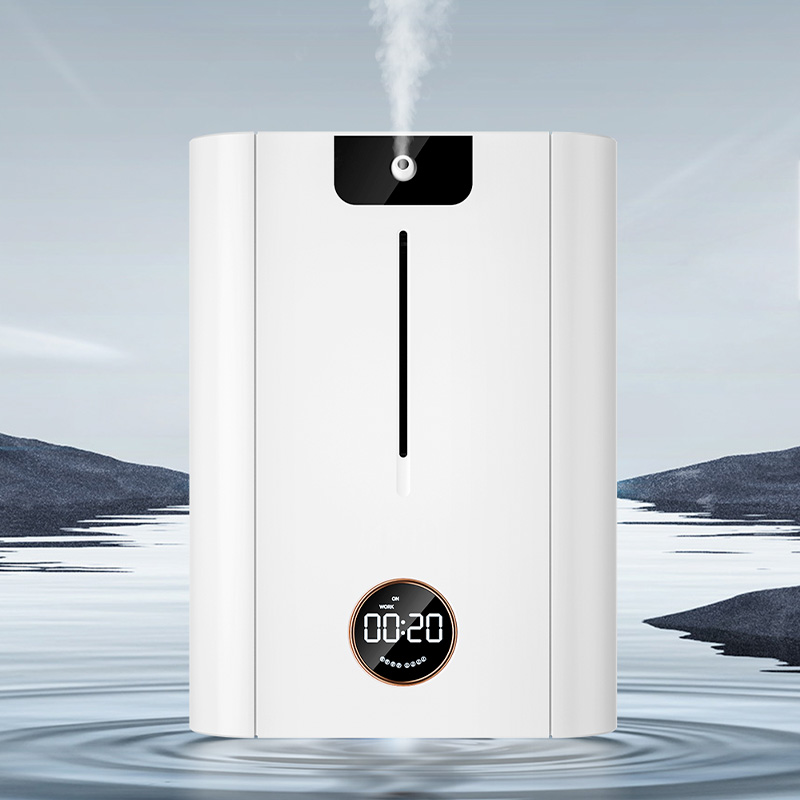
An aroma diffuser machine actively propels scent, making it ideal for large spaces, open floor plans, and users who want adjustable fragrance intensity.
Reed diffusers offer passive, continuous scenting best suited for small, enclosed spaces (like bathrooms) with zero daily maintenance or power requirements.
Total cost of ownership varies: machines have a higher upfront cost but offer precise oil conservation, while high-quality reed diffusers require frequent replacements.
Safety considerations—such as pet sensitivities and spill risks—should dictate the format used in high-traffic residential areas.
To make an informed choice, you must understand how these tools work. Devices operate using fundamentally different delivery methods. Knowing these mechanics helps you match the product to your specific lifestyle.
Active devices forcefully push fragrance into your environment. They rely on advanced electronic technology. The most effective units use nebulizing or ultrasonic mechanisms. Nebulizing tech utilizes pressurized cold air. It relies on Bernoulli’s principle to vaporize liquids. These systems break pure fragrance oils into invisible micro-particles. An advanced aroma diffusion machine operates entirely without heat. This preserves the therapeutic integrity of your oils. It ensures the delicate chemical bonds remain intact.
Passive diffusers take a completely natural approach. They rely entirely on a process called capillary action. You place rattan or synthetic reeds into a glass vessel. The sticks contain microscopic channels. They absorb the fragrant liquid from the base. The reeds draw this liquid upward. As the liquid reaches the exposed tips, it naturally evaporates. This releases the aroma into your air slowly.
These mechanical differences drastically alter scent throw. Scent throw refers to the measurable distance and strength of a fragrance. Active machines forcefully push the scent outwards. They fill a room rapidly and aggressively. Passive reeds rely on natural ambient airflow. They create a localized, subtle fragrance bubble. You only smell them when you walk close by.
Before buying, you should evaluate your specific environment. A mismatch between the device and your room size guarantees disappointment. We measure performance across three critical metrics.
Room volume remains your primary constraint. Traditional reeds cap out quickly. They effectively cover roughly 100 to 150 square feet. This limits them to smaller zones. Conversely, an active aroma scent machine scales easily. These powerful units can cover anywhere from 400 to over 4,000 square feet. High-end commercial models even connect directly to your HVAC system. They utilize your home's ductwork for whole-house distribution.
Your nose constantly adapts to familiar smells. Experts call this olfactory fatigue. It is also known as nose blindness. Reeds are "always on." They continuously emit aroma into the room. This often leads to rapid nose blindness. You soon stop noticing the fragrance entirely. Modern machines solve this biological issue. They offer programmable timers. You can adjust intensity dials easily. Scheduling active bursts and resting periods keeps the scent noticeable.
Both formats require specific upkeep routines.
Reeds: You must flip the sticks weekly. Dust can easily clog the porous material. Airflow restrictions stop the scent completely.
Machines: You need to run regular cleaning cycles. Pumping rubbing alcohol prevents clogged nozzles. Ultrasonic models need wiping to stop mold. They also require an electrical outlet or routine battery charging.
Here is a quick comparison chart of the core criteria:
Evaluation Metric | Reed Diffusers (Passive) | Active Scenting Devices |
|---|---|---|
Maximum Coverage | 100 – 150 sq. ft. | 400 – 4,000+ sq. ft. |
Intensity Control | None (always emitting) | High (timers and dials) |
Maintenance Tasks | Weekly stick flipping | Monthly alcohol flush |
Power Requirement | Zero electricity needed | Wall outlet or batteries |
Active systems deliver true luxury performance. They replicate the ambiance found in five-star hotels. However, they demand a more deliberate setup from the user.
Instant, customizable intensity: You get immediate results. You control exactly how strong the room smells.
Long-term efficiency: You lose less oil to passive evaporation. The machine only uses oil when scheduled.
Scent versatility: You can swap scents quickly. Waterless nebulizers avoid cross-contamination entirely.
Smart scheduling: Commercial-grade aroma scent machines allow for easy scheduling via smartphone apps. You can program them to start right before you arrive home.
Higher initial investment: The hardware costs significantly more upfront.
Operational noise: You might notice a slight humming. Motorized sounds can reach 30 to 40 decibels.
Cable management: You must place the unit near a dedicated power source.
Common Mistake: Many users buy cheap, thick carrier oils for their devices. This instantly clogs the delicate micro-nozzles. You should always use pure, high-quality fragrance oils for active units.
Passive vessels provide distinct lifestyle benefits. They excel in pure simplicity. They require zero technical knowledge to operate.
Zero electricity required: You never need batteries. You can place them anywhere.
Silent operation: They make absolutely no noise. This makes them perfect for light sleepers.
Aesthetic appeal: Elegant glass vessels double as beautiful home decor.
Set it and forget it: They work exceptionally well for low-traffic zones. You essentially ignore them until they run dry.
Inconsistent scent throw: They smell incredibly strong at first. They fade quickly as oil levels inevitably drop.
Spill hazard: Knocking them over ruins wood furniture. The essential oils eat through varnish rapidly.
Ongoing replacement costs: You must buy fresh reeds frequently. Old pores clog permanently with household dust.
Best Practice: Always place your passive vessel on a protective coaster. Keep it away from direct sunlight. Heat accelerates evaporation unnecessarily.
Safety must guide your final purchasing decision. Specific household dynamics change how you should diffuse fragrances. You must protect vulnerable family members.
Homes with active toddlers or curious pets require careful planning. Reed vessels hold easily accessible liquid oils. A bumped table causes an immediate, dangerous spill. Many essential oils contain phenols. These compounds are highly toxic to cats and dogs if ingested. Conversely, an aroma machine usually features a locked or enclosed oil chamber. This design dramatically reduces accidental spill risks. Regardless of the diffusion method you choose, you must verify your liquids. Highlight the importance of using certified pet-safe oils across your entire home.
Materials directly impact your indoor air quality. When selecting sticks, contrast natural rattan reeds against synthetic fibers. Synthetics generally hold scent better. However, manufacturers may treat them with cheap chemical dyes. You should always review material safety labels. For active devices, moisture matters greatly. A high-end aroma diffuser scent air machine completely avoids water. By using waterless cold-air technology, it prevents localized humidity. This effectively eliminates the mold risks commonly associated with cheap ultrasonic humidifiers. You also benefit from adhering to International Fragrance Association (IFRA) standards when selecting your liquids.
Your unique floor plan dictates the best tool for the job. You should apply these straightforward rules before making your final purchase.
You are targeting a smaller bathroom, a guest room, or a walk-in closet.
You want a continuous, subtle background fragrance.
You prefer not interacting with an electronic device or app.
You lack available electrical outlets in the desired location.
You are scenting a large living room or an open-concept kitchen.
You manage a retail store or a professional office environment.
You want the exact "luxury hotel" olfactory experience.
You require schedule-based, high-impact scenting capabilities.
You demand absolute control over the precise intensity of the fragrance.
Neither option stands out as universally "better" for everyone. The right choice depends entirely on your room volume. It also relies heavily on your desired level of control. Reeds offer unmatched simplicity for tiny areas. Electronic systems provide scalable power for large homes.
We highly recommend using a strategic hybrid approach. You should deploy a robust aroma diffuser machine in your primary living areas. This guarantees scalable, customizable impact where you spend the most time. Then, you can place high-quality reed diffusers in secondary, smaller spaces. This provides a consistent, low-effort ambiance in bathrooms and hallways.
Take a few moments today to measure your main rooms. Calculate your total square footage accurately. Once you know your numbers, browse recommended equipment collections. Select the best match based on your specific tier, whether you need a budget, residential, or commercial solution.
A: No. Advanced nebulizing machines operate highly efficiently. They break oils into nanoparticles and only run during scheduled hours. Conversely, passive sticks continuously draw and evaporate oil twenty-four hours a day. This non-stop process usually leads to much faster passive depletion over a month.
A: You must replace porous sticks every two to three months. They clog rapidly with ambient dust. Active device nozzles and bottles rarely need replacement unless physically damaged. However, you must perform a quick rubbing alcohol cleaning cycle monthly to maintain peak performance.
A: Not always. Passive sticks require a specialized carrier oil base. This allows the heavy liquid to travel efficiently up the pores. Cold-air diffusion devices require 100% pure essential or fragrance oils. Using thick carrier oils in them will severely clog the internal micro-nozzles.


