
Views: 0 Author: Site Editor Publish Time: 2026-06-08 Origin: Site


Navigating the commercial scenting industry often leaves buyers entirely overwhelmed. Terminology overlaps frequently. This makes it surprisingly difficult to distinguish between standard diffusers and advanced nebulizing systems. You might see the exact same labels applied to vastly different devices. Choosing the wrong dispersion method carries real consequences for your space. It leads to wasted fragrance oil, inadequate spatial coverage, and even unintended HVAC complications if applied incorrectly. Understanding the mechanics behind these systems remains essential. This article serves as an objective, evidence-based evaluation. We aim to clarify these overlapping terms and highlight exactly how each system functions. You will learn how to evaluate these technologies based on room size, scalable implementation, and actual maintenance realities. By the end, you will confidently select the exact technology suited for your specific environmental demands. We want you to bypass confusing marketing jargon and rely on clear, practical facts.
Mechanism: Standard aroma diffusers typically use water and ultrasonic vibrations (diluting the scent), while nebulizers use pressurized cold air to atomize pure essential oils.
Scent Integrity: Nebulizers preserve the exact chemical profile of the oil without introducing moisture or heat.
Scalability: Nebulizing systems are designed for high-square-footage and commercial HVAC integration, whereas water-based diffusers are strictly for localized, single-room use.
Total Cost of Ownership: Nebulizers require a higher upfront investment and use oil more rapidly, but deliver a higher, more consistent scent yield per operating hour.
We must first clarify the overlapping terminology in the scenting market. Buyers constantly encounter confusing product labels. The term aroma diffuser machine acts as a broad umbrella. It heavily associates consumer-grade ultrasonic humidifiers. People buy them for small bedrooms. Conversely, a nebulizer refers strictly to commercial-grade atomization. Industry professionals often call them cold-air systems. They function entirely differently under the hood.
Let us examine the ultrasonic standard first. These popular devices rely on a water-plus-oil vibration method. A small ceramic disc sits at the bottom. It emits ultrasonic frequencies. This rapid vibration agitates the water-oil mixture. It subsequently releases a visible, cool mist into the air. We see a significant limitation here. It creates highly localized scent. It alters the original fragrance concentration through dilution. It also introduces ambient humidity into your immediate environment. This limits their practical commercial application.
The nebulizing system offers a stark contrast. These devices utilize Bernoulli’s principle. A mechanical pump generates pressurized cold air. This air rushes across a highly engineered micro-tube. It forces the pure essential oil upward. The pressure atomizes the liquid into microscopic nanoparticles. It remains one hundred percent waterless. It introduces zero heat into the equation. You preserve the pure essence of the fragrance. You avoid thermal degradation completely.
Scent consistency over time reveals a major difference. Water-based models suffer from a predictable scent curve. They smell very strong during the first hour. Oil naturally floats on top of water. The ultrasonic disc atomizes the floating oil first. It evaporates much faster than the remaining water does. Your room smells incredibly strong initially. The intensity then fades dramatically. Nebulizers solve this frustrating problem entirely. They draw undiluted oil directly from the bottle. They provide a flat, consistent scent output. You experience the exact same intensity all day.
Space scalability presents another critical divergence. An ultrasonic aroma scent machine covers 200 to 500 square feet reliably. They struggle beyond a standard bedroom. A commercial nebulizer scales differently. They easily cover ranges from 1,000 to over 5,000 square feet. Large-scale models can scent entire hotel lobbies.
Implementation reality dictates your final choice. Passive diffusion fails in high airflow areas. High ceilings swallow ultrasonic mist instantly. The water droplets fall out of the air quickly. Nebulized nanoparticles behave differently. They measure under five microns in size. They suspend in the air much longer. They travel effortlessly on natural air currents.
Performance Metric | Ultrasonic Diffuser | Nebulizing Scent Machine |
|---|---|---|
Scent Consistency | Fades quickly (Oil evaporates first) | Consistent from start to finish |
Coverage Area | 200 - 500 Sq. Ft. | 1,000 - 5,000+ Sq. Ft. |
Moisture Added | Yes (Acts as a minor humidifier) | None (100% Waterless) |
Particle Size | Heavy droplets (Fall quickly) | Micro-particles (Suspend for hours) |
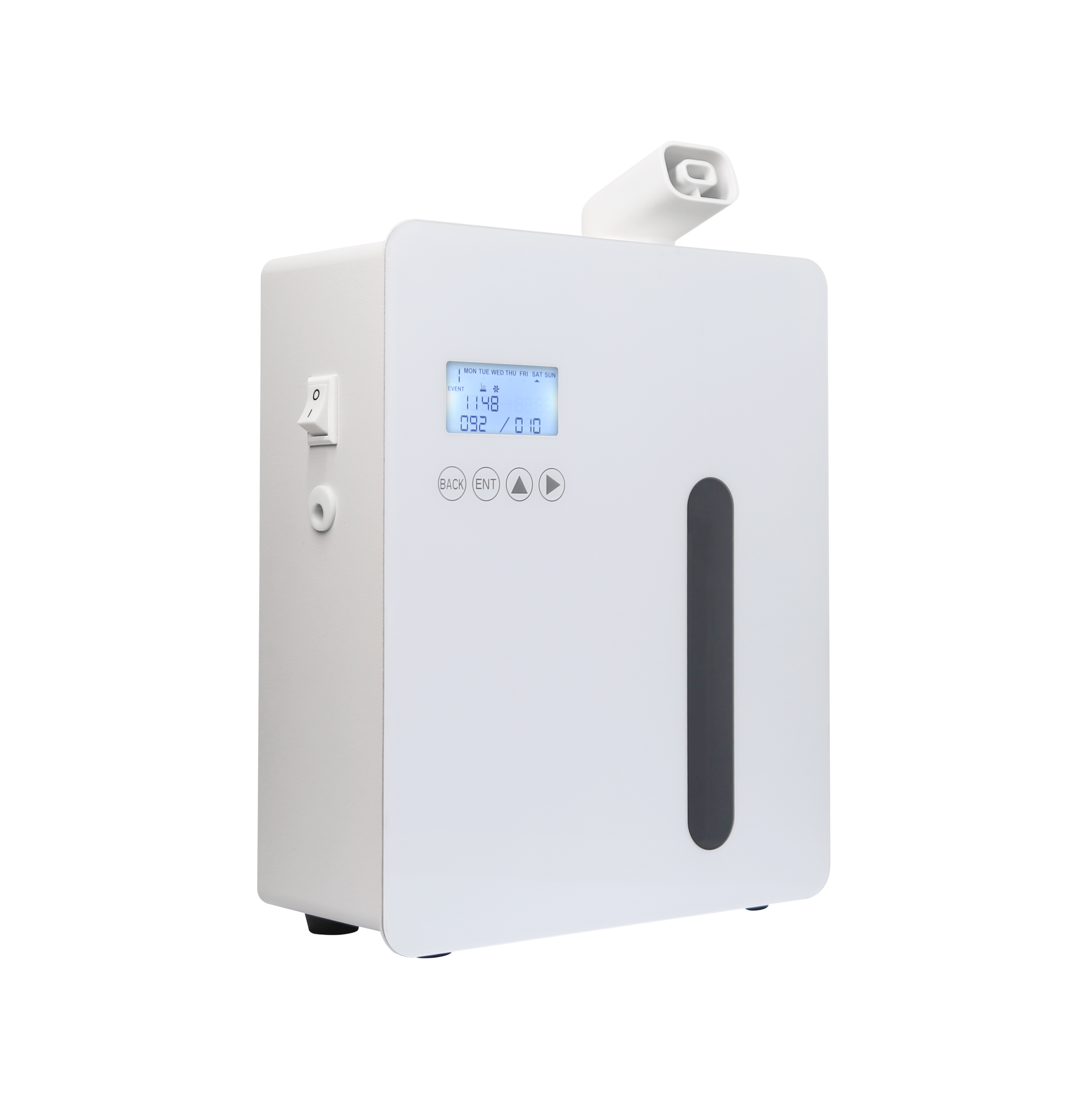
The central air advantage drives most commercial installations. Businesses and large residential homes prefer cold-air technology. They integrate these units directly into HVAC systems. It distributes scent uniformly across massive spaces. You achieve invisible, ambient scenting. The building occupants never see the actual machine. The fragrance simply exists in the air seamlessly.
Risk mitigation plays a critical role in commercial HVAC guidelines. Never introduce water-based mist into your building ductwork. Professional standards explicitly warn against this practice. Adding moisture creates a severe compliance hazard. The dark, damp environment encourages aggressive mold growth. Moisture accumulation also causes galvanized metal ducts to rust prematurely. You can introduce a aroma fragrance machine safely only if it operates completely waterless. Nebulizers meet this strict safety requirement.
Hardware realities require careful planning. HVAC installation demands specific technical considerations. You must consider duct static pressure. The scent pump must overcome the internal air pressure. Installers use specialized duct-mounted tubing. They drill a small hole in the supply duct. They insert a specialized nozzle. Sometimes, older HVAC systems lack consistent airflow. Standalone nebulizing units perform better in those specific scenarios.
Best Practice: Always install the scent nozzle downstream of the main HVAC fan. This prevents fragrance oils from coating the fan blades or internal coils.
Common Mistake: Connecting a unit to the return air duct. The air filter will instantly strip the fragrance particles out of the air.
Oil consumption realities often surprise new users. We must provide a completely transparent assessment. Nebulizers consume pure fragrance oil much faster. They atomize undiluted liquid continuously. They do not dilute the liquid with cheap tap water. We frame this as a necessary operational reality. You need a higher oil volume for high-intensity, waterless scenting. The scent yield per operating hour remains vastly superior.
Routine maintenance constraints apply to all machines. No equipment offers a zero-maintenance experience. We must dispel this aggressive marketing myth. Standard diffusers require highly frequent wiping. Water stagnation causes rapid mold growth. Minerals in tap water cause severe calcification. You must scrub the ceramic disc weekly. Neglect destroys ultrasonic machines quickly.
Nebulizers require an entirely different care protocol. The micro-tubes handle thick, highly concentrated oils. These essential oils oxidize over time. They become sticky and highly viscous. You must perform routine maintenance to prevent blockages. You flush the system periodically. You use plain rubbing alcohol for this task. It breaks down the sticky residue easily.
Remove the fragrance oil bottle from the pump.
Fill an empty replacement bottle with a quarter inch of pure rubbing alcohol.
Attach the alcohol bottle to the machine.
Run the device on its highest setting for roughly fifteen minutes.
Remove the alcohol bottle and reattach your chosen fragrance oil.
Choosing the correct device requires analyzing your exact environment. You must align the hardware capabilities with your physical space. A mismatch guarantees ongoing frustration. We offer a clear framework below.
When to choose an ultrasonic diffuser:
You want to scent small, enclosed spaces. Think of standard bedrooms or small home offices.
You want slight localized humidification. Dry winter months make this secondary benefit highly appealing.
You frequently change scents. Rinsing out a water tank takes only seconds.
When to choose a nebulizing aroma diffuser scent air machine:
You possess open-concept residential floor plans. Vaulted ceilings demand highly potent atomization.
You manage multi-zone commercial spaces. Retail stores, gymnasiums, and hotel lobbies require sustained intensity.
You mandate HVAC integration. Invisible, centralized scenting requires professional cold-air delivery.
You utilize high-end, pure essential oils. Dilution actively degrades their therapeutic or aromatic value.
The choice ultimately hinges on your spatial requirements. Selecting an appropriate dispersion method eliminates wasted resources. Ultrasonic models serve enclosed, localized areas exceptionally well. They provide gentle aromas alongside minor humidification. Conversely, nebulizing systems dominate commercial spaces. They deliver pure, waterless scent distribution across massive square footage. They integrate safely into complex air handling systems.
Evaluate your target coverage area carefully. Identify whether centralized HVAC integration represents your ultimate goal. If you manage an open-concept space, prioritize cold-air technology. Take precise square footage measurements of your rooms. Review the layout of your air ducts before browsing specific models. Proper planning guarantees a flawless, invisible scenting experience.
A: Yes, they consume more oil over time. They operate completely waterless. They do not dilute the liquid with tap water. They atomize pure concentrate directly into the air. However, they offer vastly superior spatial coverage per ounce of fluid used.
A: Nebulizers generally produce more noise. They rely on a mechanical internal air pump. Standalone units often emit a low, vibrating hum during operation. Conversely, HVAC-connected units hide this noise entirely. You place them in utility closets away from common areas.
A: No. You must consider liquid viscosity closely. Thick carrier oils clog the delicate micro-tubes quickly. You need pure essential oils or specialized aroma oils designed specifically for cold-air atomization. Avoid any oils diluted with heavy vegetable or coconut bases.


