
Views: 0 Author: Site Editor Publish Time: 2026-06-10 Origin: Site


Have you ever placed a beautiful diffuser in your living room, only to realize the fragrance vanishes just a few feet away? Many homeowners face this exact frustration when dealing with modern, open-concept layouts. Wide floor plans and towering ceilings routinely overpower basic scenting devices. Standard diffusers simply lack the power to provide consistent coverage across these massive air volumes.
This creates a significant dilemma for anyone trying to achieve a signature scent. Large residential spaces render conventional retail diffusers nearly useless. Shoppers end up constantly refilling tiny water tanks, hoping for a better result.
Should you buy a standard aroma machine for home, or invest in a commercial-grade HVAC unit? This guide evaluates coverage sizing, technology differences, maintenance realities, and everyday expenses to help finalize a purchasing decision. You will learn exactly how to measure your space, assess your maintenance tolerance, and choose the right system.
Square Footage is the Ultimate Filter: Standard home units effectively cover up to 500-800 sq. ft., while commercial units start at 1,000 sq. ft. and scale beyond 5,000 sq. ft.
Technology Drives Output: Home models generally rely on ultrasonic (water-based) technology, whereas commercial machines utilize waterless cold-air nebulization for denser, longer-lasting fragrance.
Maintenance vs. Convenience: Commercial models require less frequent refilling (monthly vs. daily) but demand strict adherence to maintenance schedules and higher upfront oil costs.
HVAC Integration Requires Commitment: Attaching an aroma diffuser scent air machine to a home HVAC system requires compatible ductwork, accessible power, and professional installation considerations.
Shoppers often assume all diffusers perform the same basic function. They assume a larger tank just means fewer refills. However, residential and commercial units operate on entirely different mechanical principles.
Retail diffusers prioritize aesthetic appeal and simplicity. You will typically find them in compact, tabletop designs. Manufacturers build them to blend seamlessly into residential decor. They feature faux wood finishes, ceramic shells, or sleek plastic bodies.
These devices hold small reservoir capacities. Tanks usually range from 100ml up to 500ml. They rely entirely on ultrasonic technology. A small ceramic disc sits at the bottom of the water tank. This disc vibrates at high frequencies. It creates a fine mist of water mixed with a few drops of essential oil.
The primary outcome is highly localized scenting. You place these units in bedrooms, home offices, or small living rooms. The mist falls relatively quickly to the ground. It cannot travel far from the base unit. If you step out of the room, you lose the scent entirely.
Common Mistake: Many users leave stale water in the tank for days. This promotes mold growth and degrades the ultrasonic plate. Always empty and rinse the tank after every use.
Commercial units abandon aesthetic subtlety for raw performance. They feature utilitarian designs with heavy metal casings. Manufacturers build them for durability. You hide them inside utility closets or mount them directly near HVAC air handlers.
Reservoir capacities dwarf standard units. A true aroma scent machine holds anywhere from 500ml to over 3000ml of pure fragrance oil. These devices do not use water. They utilize cold-air diffusion technology. A high-pressure air pump forces ambient air through a specialized nebulizer. This breaks pure essential oils into microscopic nanoparticles.
Nanoparticles act like a dry gas. They stay suspended in the air for hours. The primary outcome is whole-house or multi-zone scenting. You achieve uniform fragrance density across thousands of square feet. The scent profile remains consistent from the front door to the back hallway.
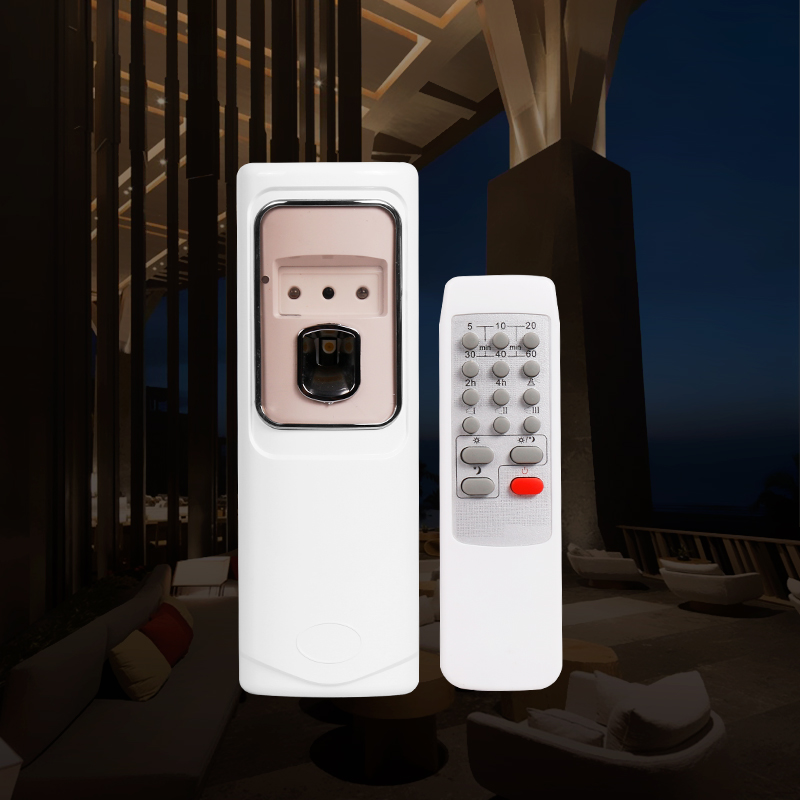
Choosing the right equipment requires precise measurements. Guessing your square footage leads to disappointing results. You must evaluate the actual physical layout of your environment.
Total home square footage is a misleading metric. You only need to measure the contiguous open space. If you want to scent an open-concept living room, dining room, and kitchen, calculate only that zone.
Follow these numbered steps for accurate measurement:
Measure the length and width of your main target room.
Multiply these two numbers to get the base square footage.
Identify any directly connected rooms lacking physical doors.
Measure those connected spaces and add them to your base total.
Exclude closed-off areas like guest bathrooms or laundry rooms.
If your contiguous open space exceeds 800 square feet, ultrasonic tabletop devices will struggle. The mist simply cannot disperse widely enough.
Square footage only tells half the story. Vaulted ceilings and open lofts drastically change the equation. Fragrance fills an area based on cubic volume, not just flat floor space.
Consider a standard 20x20 foot room. With standard 8-foot ceilings, you need to fill 3,200 cubic feet of air. If that same room features 16-foot vaulted ceilings, the volume doubles to 6,400 cubic feet. Standard home diffusers push scent upward, but the mist dilutes rapidly in that expansive upper airspace. High ceilings demand high-capacity nebulizers regardless of the actual floor footprint.
Walls and doors act as hard barriers for scent. Divided floor plans trap fragrance from localized diffusers inside single rooms. Even a powerful standalone nebulizer cannot push scent through closed doors or tight hallways.
If you want whole-home consistency, you must rely on your property's internal airflow. This pushes buyers toward HVAC-integrated models. By injecting the fragrance directly into the ductwork, the system utilizes the existing fans to distribute scent uniformly into every divided room.
Hardware pricing represents only your initial step. You must also evaluate how these devices fit into your weekly routine. Maintenance schedules and oil requirements dictate long-term satisfaction.
Water-based ultrasonic models carry specific risks. They introduce humidity into localized areas. Over time, the mist settles onto surrounding surfaces. This leaves behind a damp residue. Furniture finishes may warp. Hardwood floors can become slippery. Stagnant water also breeds mold if you ignore daily cleaning.
In contrast, a waterless aroma diffuser machine produces a completely dry mist. It leaves absolutely no residue on furniture, electronics, or artwork. The nebulization process preserves the integrity of the essential oil. It delivers a cleaner, more hygienic scent profile.
Commercial and residential units consume oil at vastly different rates. Understanding this usage helps manage expectations regarding ongoing expenses.
Table 1: Maintenance and Consumption Comparison | ||
Feature | Standard Home Model | Commercial System |
|---|---|---|
Technology Base | Ultrasonic (Water + Oil drops) | Cold-Air Nebulizing (Pure Oil) |
Average Oil Usage | 3-10 drops per tank fill | 1.5mL to 3mL per hour of operation |
Typical Oil Format | 15mL dropper bottles | 500mL to 1-Liter bulk jugs |
Cleaning Frequency | Daily rinsing | Monthly deep clean |
Commercial units require buying pure fragrance oils by the liter. You no longer buy tiny 15ml dropper bottles. A 500ml bottle of luxury fragrance can represent a substantial upfront expense. However, because you use pure oil, the scent lasts much longer in the air.
Users frequently abandon home diffusers because of tedious maintenance. You must rinse them daily to prevent bacterial growth. The ceramic plates eventually wear out.
Commercial atomizers eliminate daily rinsing. You typically refill the large reservoir once a month. However, they demand strict monthly deep-cleaning routines. You must run pure isopropyl alcohol through the nebulizer for fifteen minutes. If you skip this step, thick oils will clog the microscopic nozzles. A clogged nozzle leads directly to pump failure.
Stepping up to commercial equipment introduces new logistical challenges. You cannot simply plug them in on a kitchen counter and expect flawless results.
Connecting an aroma fragrance machine to residential ductwork requires careful planning. It demands specific physical prerequisites. You must drill a small hole into the supply plenum of your HVAC system. The supply plenum sits just after the air handler, pushing conditioned air out into the house.
You also need an accessible electrical outlet within a few feet of the installation point. Airflow pressure matters deeply. Your system fan must run frequently enough to distribute the mist. Some homeowners set their HVAC fans to run continuously on low speed just to support the scenting cycle.
What to watch out for: Never install the injection tube before the HVAC air filter. The dense oil nanoparticles will saturate the filter. This severely restricts airflow and damages your furnace motor.
Noise levels routinely surprise new buyers. Commercial systems move pressurized air, and that process creates distinct mechanical sounds.
Acoustic Impact Chart (HTML Format) | ||
Device Type | Noise Level (dB) | Real-World Equivalent |
|---|---|---|
Standard Home Diffuser | Under 30 dB | A quiet whisper or rustling leaves |
Standalone Commercial Unit | 40 dB - 50 dB | Low refrigerator hum or quiet office |
HVAC Integrated Unit | Variable (Depends on location) | Barely noticeable in living spaces |
Home units operate near silently. Commercial nebulizers produce a noticeable hum or vibration. To mitigate this noise, install commercial units on thick rubber dampening pads. You can also program the internal computer to only run the pump when the house is empty.
Many buyers discover a highly effective middle ground. You can purchase a high-capacity commercial unit and use it as a freestanding device. This approach avoids HVAC installation complexities. You place the tower in a central living area. It provides immense coverage without requiring tools or duct modifications. It serves as a perfect compromise for large apartments or leased properties.
Choosing the correct equipment removes frustration and protects your investment. Use these straightforward guidelines to finalize your path.
Your target scenting area measures under 800 square feet.
You prefer changing scents frequently, rotating options daily or weekly.
You possess a limited upfront budget, generally under $150.
You currently rent your property and cannot modify internal ductwork.
You enjoy localized scents rather than whole-house coverage.
Your property features large open-concept areas exceeding 1,500 square feet.
You want a "set it and forget it" system utilizing automated weekly scheduling.
You remain willing to invest $500 or more upfront for reliable hardware.
You feel comfortable purchasing bulk fragrance oils by the liter.
You demand the exact, uniform scent-density experience found inside luxury hotels or premium retail spaces.
Your ultimate decision hinges primarily on raw square footage and maintenance tolerance. Physical machine size matters far less than output capacity. Standard units serve perfectly well in bedrooms and small apartments. However, open floor plans, vaulted ceilings, and whole-house ambitions strictly require commercial-grade nebulization.
Before purchasing any equipment, take immediate action. Measure your intended scenting zone meticulously. Calculate the cubic volume if you have high ceilings. Finally, inspect your basement or utility closet to ensure your HVAC plenum is accessible. Understanding these physical parameters guarantees you will select the perfect system for your environment.
A: No. Commercial nebulizers require specific oil viscosities to function properly. Thick oils like vetiver or cheap synthetic blends diluted with carrier oils will rapidly clog the internal atomizing nozzles. Using unapproved or highly viscous oils often voids the manufacturer's warranty. Always purchase high-quality, pure fragrance oils designed specifically for cold-air diffusion.
A: Yes, it is highly safe when installed correctly. You must use proper cold-air diffusion technology. This ensures the oil breaks down into dry nanoparticles, preventing duct condensation. Never install the injection nozzle before the air filter, as the oil particles will saturate the filter material and restrict furnace airflow.
A: A 500ml bottle typically lasts between 30 to 60 days. This baseline depends heavily on your specific settings. If you run the system for eight hours daily at a medium intensity (e.g., 30 seconds on, 60 seconds off), expect about a month of usage. Lower intensities stretch the lifespan further.
A: Generally, yes, provided you manage concentration levels carefully. Because nebulizers disperse nanoparticles evenly, the scent never pools heavily near the floor. However, certain essential oils (like tea tree or eucalyptus) are highly toxic to dogs and cats. Always use pet-safe, vet-approved oil formulations and ensure rooms remain well-ventilated.


