
Tracy Phone:+86-18015583589 Tracy Email:tracy@ramon-aroma.com Grace Phone:+86-15152466145 Grace Email:grace@ramon-aroma.com


Views: 0 Author: Site Editor Publish Time: 2026-06-14 Origin: Site


Transitioning from residential diffusers to commercial-grade scenting requires a massive shift. You cannot simply scale up basic consumer technology. Instead, you must rethink safety standards. You must also plan for complex infrastructure requirements. For facility managers and operations directors, understanding these systems is vital. Knowing the exact mechanics behind an aroma diffuser office hotel system helps you avoid critical failures. You can prevent inefficient space coverage. You can reduce excessive maintenance burdens. Most importantly, you avoid potential HVAC damage.
A poorly planned installation disrupts operations. A carefully calibrated system transforms the guest experience. This guide breaks down commercial scenting technology. We explain how these units operate under high demands. We explore how they integrate into your existing building infrastructure. We also outline the evaluation criteria necessary for a successful deployment. You will learn how to choose the right architecture for your specific square footage. You will also discover the compliance standards required to ensure occupant safety.
Many beginners make a critical mistake when scenting commercial spaces. They attempt to use residential ultrasonic diffusers. Residential units use water and heat. This combination fails entirely in commercial environments. Water dilutes the fragrance profile. Heat alters the chemical composition of the oil. Furthermore, ultrasonic units introduce unwanted humidity into the air. This excess moisture damages commercial interiors over time. It creates condensation on windows and furniture. Worst of all, it promotes mold growth inside public spaces.
Commercial venues require a fundamentally different approach. The industry standard relies entirely on cold-air diffusion. We also call this process nebulization. It requires no water. It requires no heat. It preserves the integrity of the fragrance perfectly.
Nebulizing technology operates using advanced fluid dynamics. The system forces high amounts of pressurized air through a small tube. This air passes over a specialized nozzle. The force draws the pure fragrance oil upward. The high-velocity air then blasts the oil against a tiny baffle.
This impact shatters the heavy liquid into dry nanoparticles. These microscopic particles measure less than one micron in diameter. Because they are so small, they behave exactly like a gas. They exit the machine as a fine, invisible mist. The dry particles remain suspended in the ambient air for hours. They travel freely on natural air currents. They do not drop onto floors. They never leave oily residues on furniture or glass.
Common Mistake: Never pour water-based solutions into a cold-air nebulizer. The device relies on pure, undiluted essential or fragrance oils. Water destroys the internal pump mechanism.
We must acknowledge one skeptical-friendly point. Cold-air systems are highly effective. However, they are inherently noisier than ultrasonic models. They contain internal air pumps. These pumps generate a distinct humming sound. You must place standalone units strategically to mask this operational noise.
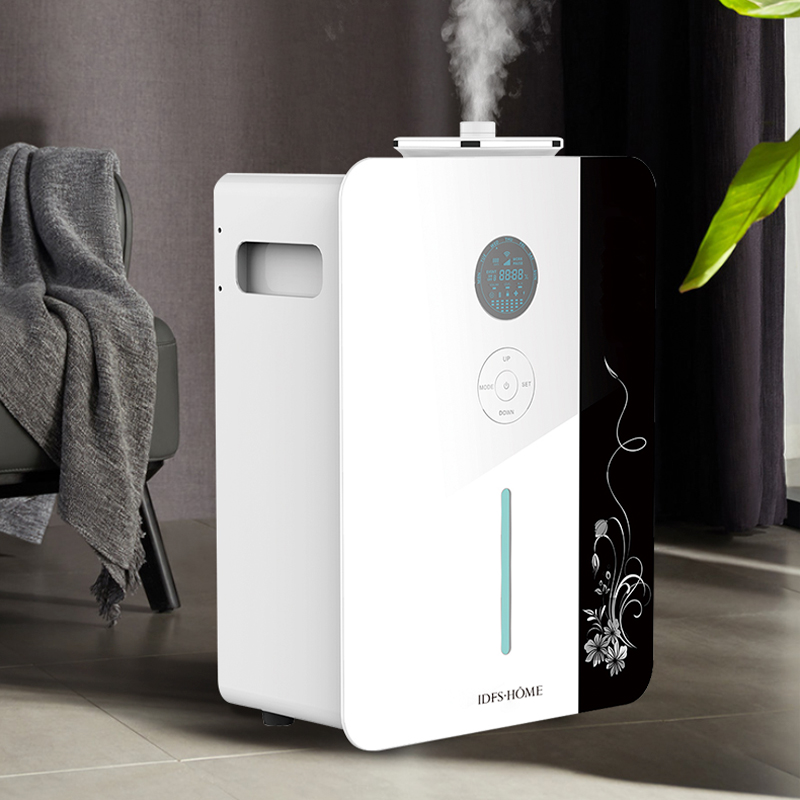
Deploying an office/hotel diffuser at scale requires architectural planning. You must choose how to deliver the scent physically. Facility managers typically select between two primary deployment categories. Each approach offers distinct operational advantages.
Standalone units are self-contained machines. You do not connect them to your ductwork. You plug them directly into standard electrical outlets. You can mount them on walls. You can also hide them behind reception desks or decorative plants.
They offer tremendous flexibility. You can move them easily if you redesign the lobby. They require minimal installation time. However, they provide strictly localized coverage. A single unit typically covers between 1,000 and 3,000 square feet. You must also refill each unit manually. If your hotel requires ten standalone units, your maintenance staff must service ten separate machines.
HVAC-integrated systems connect directly to your building’s air handling unit (AHU). Technicians insert a small plastic tube from the nebulizer into the supply duct. The system injects the dry fragrance mist directly into the airflow.
The building's HVAC fan then pushes the scent throughout the entire property. This provides an invisible aesthetic. Guests smell the fragrance but never see the equipment. It also centralizes your maintenance. Staff only need to refill one large centralized reservoir. However, it requires professional installation. You must calibrate the airflow precisely. If the airflow is too low, the scent traps inside the ducts. This causes localized buildup over time.
Below is a summary chart outlining the operational differences between these two architectures.
| Deployment Feature | Standalone Commercial Units | HVAC-Integrated Systems |
|---|---|---|
| Installation Complexity | Very low. Plug-and-play operation. | High. Requires HVAC access and duct drilling. |
| Coverage Area | Localized (1,000 - 3,000 sq. ft.) | Global (Entire building or specific AHU zones) |
| Maintenance Workflow | Decentralized. Manual refilling per device. | Centralized. One large reservoir handles the whole zone. |
| Aesthetic Impact | Visible hardware. Requires strategic placement. | Invisible. Scent emerges silently from air vents. |
You must match hardware capabilities directly to your operational goals. Buying a massive unit for a tiny vestibule causes overscenting. Buying a weak unit for a grand lobby yields no noticeable fragrance. You need a structured evaluation framework.
Calculating coverage based purely on square footage is fundamentally flawed. Many manufacturers list coverage in square feet. This metric assumes a standard eight-foot ceiling. Commercial spaces rarely have standard ceilings. A hotel lobby might feature thirty-foot ceilings. An open-plan office might have vaulted architecture.
You must evaluate total air volume instead. You must also consider natural ventilation. Large glass doors opening constantly will sweep the fragrance outside. The most critical metric is your HVAC CFM (Cubic Feet per Minute) rating. A high CFM dilutes the scent rapidly. You need a machine capable of producing enough nanoparticle volume to match your CFM turnover rate.
Evaluation Framework Chart (CFM vs. Space Volume):
| Space Volume (Cubic Feet) | Expected Airflow Turnover | Recommended Diffuser Output Level |
|---|---|---|
| Under 10,000 CF | Low (Closed doors, standard ceilings) | Light output standalone unit. |
| 10,000 - 30,000 CF | Moderate (Occasional door opening) | High-capacity standalone or small HVAC unit. |
| Over 30,000 CF | High (Revolving doors, high ceilings, high CFM) | Industrial HVAC-integrated system only. |
Modern commercial deployments require digital precision. You cannot leave a machine running at maximum capacity constantly. This causes olfactory fatigue. Guests stop noticing the scent entirely.
You need programmable intensity levels. You might operate the system at 30% intensity during quiet overnight hours. You might ramp it up to 70% during the busy afternoon check-in rush. Sophisticated scheduling maximizes impact while extending the life of your oil reservoir.
Bluetooth and Wi-Fi connectivity are now mandatory for large facilities. Centralized management allows your operations director to control multiple zones. You can adjust the lobby, the spa, and the executive lounge from a single smartphone interface. You receive automated alerts when a specific unit runs low on fragrance. This prevents awkward lapses in the guest experience.
When you propose a scenting program, human resources and operations teams will raise objections. They will ask about employee and guest health. You must address air quality compliance proactively.
You must insist on stringent global standards. Shortlisting vendors requires proof of IFRA-certified fragrances. The International Fragrance Association (IFRA) sets rigorous guidelines for safe scent formulation. They test ingredients for respiratory irritants. They ban compounds known to trigger severe allergies.
Using non-compliant, cheap oils exposes your enterprise to liability. It causes headaches among staff. It triggers guest complaints. Always demand a safety data sheet (SDS) from your vendor. Ensure the formulations comply with local VOC (Volatile Organic Compound) regulations.
A major concern involves injecting substances into building air supplies. Traditional water mist systems destroy HVAC infrastructure. Moisture accumulates inside dark, cool air ducts. This environment breeds toxic black mold instantly. It leads to sick building syndrome.
Dry nanoparticle diffusion completely prevents moisture buildup. Cold-air nebulizers output absolutely zero water. The particles remain entirely dry. They pass through the ductwork without adhering to the metal walls. This eliminates the risk of mold growth entirely. It preserves the integrity of your expensive HVAC investments.
We must address a transparent assumption. Many buyers believe "100% natural essential oils" are inherently safer than synthetic commercial blends. This is functionally incorrect in commercial applications.
Natural essential oils are highly volatile. They contain hundreds of unpredictable chemical compounds. A batch of natural lavender might vary wildly from season to season. Natural oils frequently trigger severe allergies in public populations. Commercial grade scenting requires stable, scientifically tested formulations. High-quality synthetic blends, or hybrid mixtures, provide consistent safety. They strip out known allergens while delivering a predictable, stable aroma. You must prioritize stability over natural buzzwords.
Moving beyond the sales pitch requires understanding actual operational realities. Implementing an enterprise scenting strategy requires ongoing management. You must plan for the physical handling of the equipment and liquids.
Your ongoing operations depend entirely on managing your fragrance oil inventory. You need a framework for estimating monthly usage. Oil consumption varies drastically based on your programming.
A typical 500ml bottle might last 30 days under heavy lobby usage. That same bottle might last 90 days in a quiet hallway corridor. You must track the first month closely to establish a baseline.
Cold-air nebulizers are robust, but they require strict hygiene. The nebulizer nozzle processes thick oils constantly. If neglected, the micro-tubes clog.
You must establish a routine cleaning cadence. Every one to three months, technicians must flush the system. They replace the fragrance oil with rubbing alcohol. They run the machine for fifteen minutes. The alcohol dissolves any hardened oil residue. It clears the microscopic baffle.
You must decide how to handle this workflow. You can manage maintenance in-house. This requires training your janitorial or engineering staff. Alternatively, you can outsource it. Many scent marketing agencies offer service contracts. Their technicians visit monthly to refill oils and clean nozzles. Outsourcing guarantees consistency but reduces internal control.
We strongly advise against buying a fleet of machines blindly. You should request a trial period from your shortlisted vendors. Ask for a site survey.
During the site survey, the vendor will measure your HVAC airflow. They will test scent dispersion in your specific architecture. You can evaluate the hardware noise levels in real-time. You can verify if the standalone unit disrupts quiet waiting areas. A physical trial ensures your chosen technology actually matches your environmental realities before full enterprise rollout.
A successful commercial aroma diffuser deployment relies on specialized knowledge. You must firmly abandon residential ultrasonic units. Choosing cold-air nebulizing technology is the only viable path forward. You must match the installation type directly to your building's infrastructure. Choose standalone units for flexible, localized impact. Choose HVAC integration for invisible, global coverage.
You must also plan for an ongoing operational cadence. Maintenance and oil management require dedicated attention. To move forward, we recommend conducting a facility HVAC audit immediately. Identify your duct access points. Calculate your lobby CFM ratings. Simultaneously, request formal IFRA compliance documentation from your potential vendors. These concrete next steps ensure a safe, highly effective procurement process.
A: No, provided it uses cold-air nebulizing technology that creates dry nanoparticles. These microscopic particles behave like a dry gas. They travel freely through air passages without settling. However, improper calibration causes problems. Running the unit at an excessively high intensity or using the wrong type of oil can cause buildup. You must balance the output with your HVAC fan speed.
A: Usually 30 to 90 days. This timeline heavily depends on your programmed settings. The intensity level and total operating hours dictate consumption speed. A unit running constantly empties much faster than one on a timer. The specific viscosity of the fragrance oil also matters. Thicker oils diffuse at different rates. Monitor your initial usage to establish an accurate cadence.
A: High-quality systems use IFRA-compliant, hypoallergenic scent formulations designed specifically for public spaces. They undergo rigorous testing to remove known respiratory irritants. However, proper ventilation is strictly required. You must adhere to recommended concentration levels. Overscenting a room can trigger sensitivities regardless of oil quality. We recommend running a localized trial first to gather employee feedback.


