
Tracy Phone:+86-18015583589 Tracy Email:tracy@ramon-aroma.com Grace Phone:+86-15152466145 Grace Email:grace@ramon-aroma.com


Views: 0 Author: Site Editor Publish Time: 2026-06-16 Origin: Site


Ambient scent marketing has rapidly transformed commercial spaces into immersive sensory environments. Hotels, retail stores, and modern corporate offices increasingly rely on signature fragrances to elevate guest experiences. Today, two dominant players lead this premium scenting market. B2B buyers often struggle to separate slick consumer marketing hype from true commercial-grade reliability. Navigating hardware capabilities and proprietary oil ecosystems requires looking far beyond flashy aesthetics. Facility managers need durable systems capable of consistent, large-scale fragrance delivery without constant babysitting. We provide an objective, evidence-based breakdown of both systems to clarify these operational differences. You will learn about HVAC integration capabilities, maintenance realities, and hardware flexibility. This guide delivers the actionable insights you need to make a confident procurement decision for your commercial facility.
Before diving into brand specifics, we must establish objective operational benchmarks. Commercial scent marketing differs vastly from residential use. Facility managers require predictable performance across massive spaces. Relying solely on aesthetic preference leads to operational bottlenecks. We suggest evaluating four primary pillars to frame your procurement strategy accurately.
First, evaluate coverage versus capacity. You must determine exact square footage requirements accurately. Localized lobbies need different hardware architectures than multi-floor HVAC distribution networks. High ceilings dramatically impact ambient dispersion. Airflow patterns shift constantly near main entrances. You must calculate the cubic volume of your space, not just the floor area.
Second, assess your need for operational autonomy. Commercial teams demand set-and-forget programming. Busy staff members cannot manage daily manual machine adjustments. You must evaluate the software interface controlling these systems. Advanced scheduling allows distinct intensity levels during peak traffic hours.
Third, define clear brand alignment metrics. Scent marketing should increase customer dwell time. It must elevate perceived brand value across your properties. You can measure ROI through specific qualitative indicators. Monitor guest feedback scores regarding lobby ambiance. Track the duration shoppers remain inside retail zones. Evaluate employee satisfaction surveys inside corporate environments.
Fourth, prioritize long-term risk mitigation. Identify potential operational roadblocks early in your deployment planning. Consider HVAC maintenance limitations beforehand. Account for employee fragrance sensitivities carefully. Monitor ongoing consumable inventory requirements to prevent unexpected downtime. Proactive planning eliminates the most common deployment failures.
To make an accurate aroma diffuser comparison, we first examine the underlying technology. Both brands rely heavily on cold-air nebulizing technology. We consider this the baseline standard for commercial spaces. Nebulization forces pressurized air through essential oils. It creates a dry, ultra-fine nano-mist. This process leaves zero residue on merchandise or furniture. It preserves the delicate structural integrity of complex fragrance oils. Heat or water-based systems degrade scents rapidly. They also introduce unwanted humidity into climate-controlled buildings.
Aroma360 engineers their heavy-duty models for rigorous commercial demands. Units like the Museum360 and VanGogh360 dominate large-scale corporate environments. They offer incredibly robust build quality. We see exceptional enterprise scalability here. These industrial units connect directly into existing ductwork. They push fragrance evenly across tens of thousands of square feet. Facility managers appreciate the metal enclosures and heavy-duty compressors. These machines operate continuously behind the scenes.
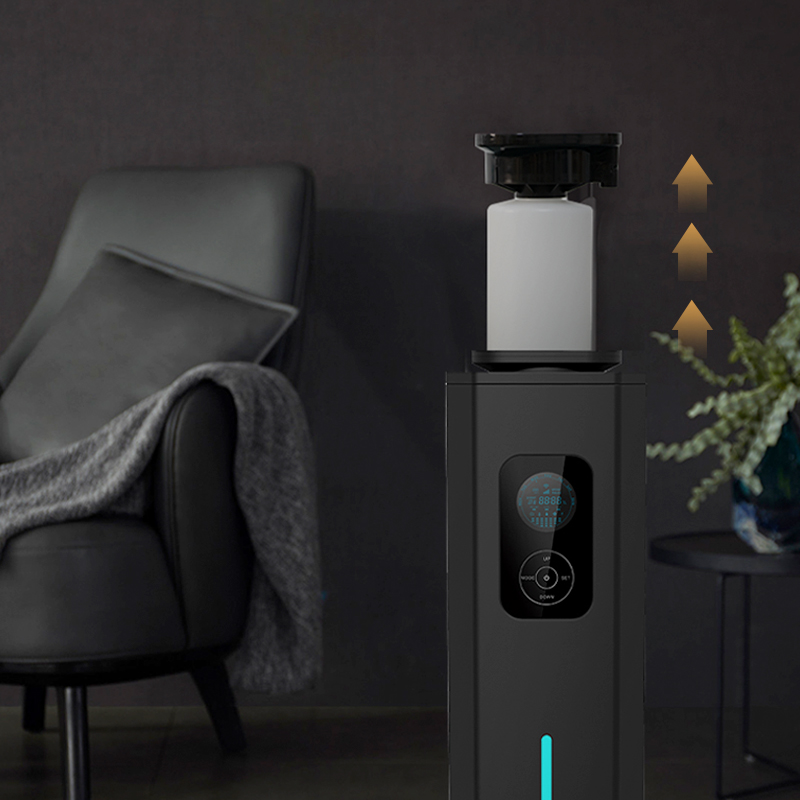
Hotel Collection focuses heavily on striking aesthetic standalone units. Popular models include the Penthouse Diffuser and the Presidential Diffuser. These sleek machines look like high-end luxury decor. They offer simple plug-and-play deployment. Boutique spaces benefit greatly from this visual approach. You avoid complex mechanical HVAC installations entirely. They fit seamlessly inside upscale retail displays and real estate staging environments.
We evaluate atomization consistency, operational noise, and footprint requirements. Quiet environments demand ultra-low decibel outputs. High-traffic zones require aggressive atomization rates.
| Performance Metric | Aroma360 (HVAC Focus) | Hotel Collection (Standalone Focus) |
|---|---|---|
| Atomization Consistency | Highly uniform across multi-zone areas via centralized ductwork. | Excellent localized consistency within targeted room zones. |
| Noise Levels (Decibels) | Negligible in occupied spaces (machine hidden in utility rooms). | Low hum, typically under 45dB, suitable for ambient lobbies. |
| Deployment Flexibility | Requires facility access and structural planning. | Instantly movable across different retail or lobby zones. |
| Maintenance Accessibility | Handled in utility closets away from public view. | Serviced directly on the commercial floor. |
We explore scent profiles next. Aroma360 provides extensive custom blending capabilities. They manage a massive library of unique fragrance categories. Businesses can formulate entirely bespoke signature scents. This approach builds unique intellectual property for enterprise brands. Conversely, Hotel Collection focuses on replicating iconic luxury resort scents. You get instantly recognizable aromatic profiles. They mimic popular hospitality destinations perfectly. Customers often recognize these familiar comforting profiles immediately.
Safety remains paramount in public commercial spaces. You must verify IFRA (International Fragrance Association) compliance. Public liability demands strict adherence to rigorous safety standards. Both brands claim strong hypoallergenic properties. They formulate oils safe around pets and children. You should always request official material safety data sheets for your facility records. Transparency protects your business from potential operational liabilities.
Can you use Aroma360 oils in a Hotel Collection diffuser? We address this common operational query directly. Physical viscosity differences exist between competing oil lines. Swapping proprietary oils risks severely clogged nebulizers. Different formulas require specific pressurization levels. Cross-pollination severely impacts diffusion consistency. More importantly, mixing brands typically voids commercial hardware warranties instantly. We strongly advise against mixing these ecosystems. Stick to the manufacturer's designated consumable line to ensure maximum uptime.
We evaluate the sourcing structures behind both brands carefully. Operational models vary significantly between these two providers. Your choice dictates how your team manages ongoing inventory.
Aroma360 frequently utilizes a subscription-based operational model. We see clear logistical advantages here. You receive automated oil refills shipped directly to your facility. This automation removes procurement friction entirely. You benefit from a lifetime machine warranty while remaining actively subscribed. Hardware replacements happen seamlessly if units fail. However, we note distinct operational limitations. Buyers often face multi-year vendor lock-ins. You must navigate strict contract cancellation policies. Overall agility decreases slightly when your business footprint changes unexpectedly.
Hotel Collection employs a direct hardware acquisition model. You gain complete ownership over your machine hardware immediately. We appreciate the profound flexibility to source oils precisely as needed. You operate freely without binding contractual obligations. The operational risks shift heavily toward internal management. You face inevitable hardware lifecycle responsibilities. Your staff manages manual inventory restocking closely. If a machine breaks outside the initial warranty window, you handle troubleshooting internally. You must secure replacement parts through independent service requests.
We recommend building a structured three-year operational projection. Calculate exact monthly oil consumption volumes over thirty-six consecutive months. Determine precisely how many maintenance hours your internal team will spend. This rigorous exercise clarifies the true operational burden of each procurement model.
HVAC installations require significant structural planning. A commercial facility manager needs specific knowledge before cutting into building ductwork. You must coordinate extensively with certified HVAC technicians. Central air systems present unique challenges compared to localized handlers.
Customer service Service Level Agreements (SLAs) vary between vendors. We contrast the B2B account management experiences carefully. Industry realities dictate practical response times. You might wait several business days for complex machine repairs. Subscription adjustment requests often require multiple emails. We recommend establishing clear communication channels early during the onboarding phase.
Maintenance creates a persistent operational burden. We outline strict monthly cleaning protocols below. Commercial diffusers require regular attention to prevent sudden breakdowns. Ignoring these steps guarantees clogged systems and uneven scenting across your floor.
Making your ultimate aroma360 vs hotel collection decision requires strict strategic alignment. You must match your infrastructure realities to the right hardware.
Choose Aroma360 when outfitting enterprise-level spaces. We recommend them highly for massive square footage exceeding 5,000 square feet. You need centralized HVAC setups to maximize their potential. Businesses preferring predictable operational support over standalone machine management thrive here. They excel in sprawling casinos, multi-story office buildings, and expansive luxury auto dealerships. Their robust infrastructure handles extreme demands beautifully.
Choose Hotel Collection when managing boutique environments. We suggest them for boutique hotels and high-end specialty retail. Real estate staging benefits immensely from their visual appeal. Businesses demanding beautiful standalone units perform best here. They suit leaders who refuse binding vendor contracts outright. Their machines elevate the aesthetic profile of any modern reception desk.
We recommend initiating a localized pilot program first. Test a single standalone unit in one designated zone. Request comprehensive commercial scent sample kits from both vendors. Evaluate hardware performance thoroughly before committing to a facility-wide rollout. Test the software interfaces yourself to gauge user-friendliness.
We have detailed the core operational realities defining today's scent marketing landscape. Both brands offer truly premium commercial scenting capabilities. Your final choice hinges entirely on your preferred operational infrastructure. You must decide between subscription-based automation or direct hardware management. You must choose between robust centralized HVAC integration or elegant localized diffusion.
Facility managers must look past basic fragrance selections. Focus intensely on hardware durability, maintenance accessibility, and vendor service levels. Evaluate your long-term staffing capacity to manage consumable inventory.
We encourage you to audit your HVAC system accessibility immediately. Evaluate your three-year operational capacity before contacting either brand's B2B sales team. Map out your highest-priority zones. Identify your preferred fragrance profiles. Make a procurement decision rooted deeply in long-term facility readiness and operational stability.
A: No. Commercial units utilize cold-air nebulizing technology. This process breaks essential oils into dry nano-particles. Unlike cheap ultrasonic water diffusers, cold-air systems introduce zero moisture or heavy droplets into the air. Your expensive retail merchandise, electronics, and luxury furniture remain completely safe from oily residue.
A: Early cancellation often incurs specific penalties. Most commercial subscription agreements lock you into a defined multi-year term. Exiting early typically requires paying a substantial buyout fee. We strongly recommend reviewing the strict termination clauses in your specific B2B service contract before signing.
A: Yes, but you must exercise strategic caution. Ambient scents can heavily interfere with culinary flavor profiles. We recommend placing diffusers far away from dining rooms. Target transitional spaces like entry vestibules, washrooms, or main lobbies instead. This strategy prevents scent contamination near food service areas.
A: HVAC diffusers generate noticeable compressor noise, but they sit hidden inside soundproof utility closets. Therefore, occupied public spaces remain completely silent. Standalone towers sit directly in the room. They produce a very soft, continuous hum (typically under 45 decibels). You rarely hear them over standard ambient background music.


