
Views: 0 Author: Site Editor Publish Time: 2026-06-13 Origin: Site


Transitioning from localized room scenting to facility-wide scent marketing reveals a significant technology gap. Consumer-grade diffusers cannot handle high square footage without leaving residue. They fade quickly and demand constant maintenance from your staff. You cannot rely on basic evaporation to fill massive spaces.
The commercial reality is much more complex. True commercial scenting relies heavily on fluid dynamics and HVAC integration. Business owners often struggle when consumer units fail in large lobbies or retail environments. You need industrial-grade mechanics to push fragrance across thousands of square feet effectively.
This article aims to demystify the mechanical principles behind commercial diffusers. We provide a clear framework for evaluating the right system for large-scale business environments. You will discover exactly how to transform your facility's ambient experience. Our guide helps you navigate the technology so you can make an informed, confident upgrade.
You must understand why specific technologies are required for commercial spaces. Standard consumer models simply lack the power and precision needed. Relying on basic hardware in a commercial setting often leads to damaged property and weak fragrance dispersion.
The secret behind professional scenting lies in the Bernoulli principle. Commercial systems use highly pressurized air to pull fragrance oils through a tiny nozzle. This high-speed airflow breaks the thick oils down into a dry mist. The resulting nanoparticles typically measure under 1 micron in size. Because they are so incredibly small, they behave more like a gas than a liquid.
This creates a highly profitable business outcome. The dry mist remains suspended in the air current for hours. It floats naturally through the room without falling onto surfaces. This completely protects your expensive inventory, hardwood flooring, and sensitive electronics from oil damage. Finding the best commercial scent diffuser means prioritizing this dry-mist capability above all else.
Best Practice: Always ask manufacturers for the particle size specifications. Anything larger than 2 microns risks creating a slippery residue over time.
Many businesses mistakenly buy large ultrasonic or heat-based units. These systems fail dramatically when pushed beyond residential limits.
Ultrasonic systems are water-based. They rely on vibrating plates to mix water and oil. This dilutes the scent immediately. It alters the precise chemical profile of the fragrance oil. More importantly, it increases localized humidity. Pumping moisture into a commercial space can encourage mold growth. Furthermore, ultrasonic units lack the propulsion needed for spaces over 1,000 square feet.
Heat-based systems are equally problematic. Heat literally cooks the fragrance oil. It destroys the delicate top notes of complex fragrances. The resulting scent often smells burnt or entirely different from the original profile. Heating oils continuously also poses significant operational fire risks in unattended commercial zones.
| Technology Type | Mechanism | Residue Risk | Commercial Viability |
|---|---|---|---|
| Cold-Air Nebulization | Pressurized air breaks oil into sub-micron dry mist. | Very Low | Excellent (Industry Standard) |
| Ultrasonic | Vibrating water and oil mixture creates wet vapor. | High (Water/Oil damage) | Poor (Limits to small rooms) |
| Heat-Based | Warming pads evaporate liquid oils. | Medium | Poor (Alters scent profile) |
Choosing the right hardware means aligning the equipment with your facility’s structural realities. You must evaluate how air actually moves through your building. You have two primary deployment architectures to consider.
HVAC integration offers the most seamless scenting experience possible. The diffuser connects directly to the supply duct of your HVAC system. It injects the dry fragrance mist directly into the airstream. The building's existing airflow then distributes the scent evenly across massive square footage.
This method requires a strict evaluation process. You must assess duct accessibility first. Technicians need physical access to the ductwork just past the air handler. You must also evaluate static pressure compatibility. If duct pressure is too high, it will push the mist back into the machine. This architecture works best for casinos, large hotel lobbies, and massive convention centers.
Common Mistake: Installing the injection tube before the HVAC filter. The filter will strip the scent particles from the air entirely. Always install the tube downstream from all filters.
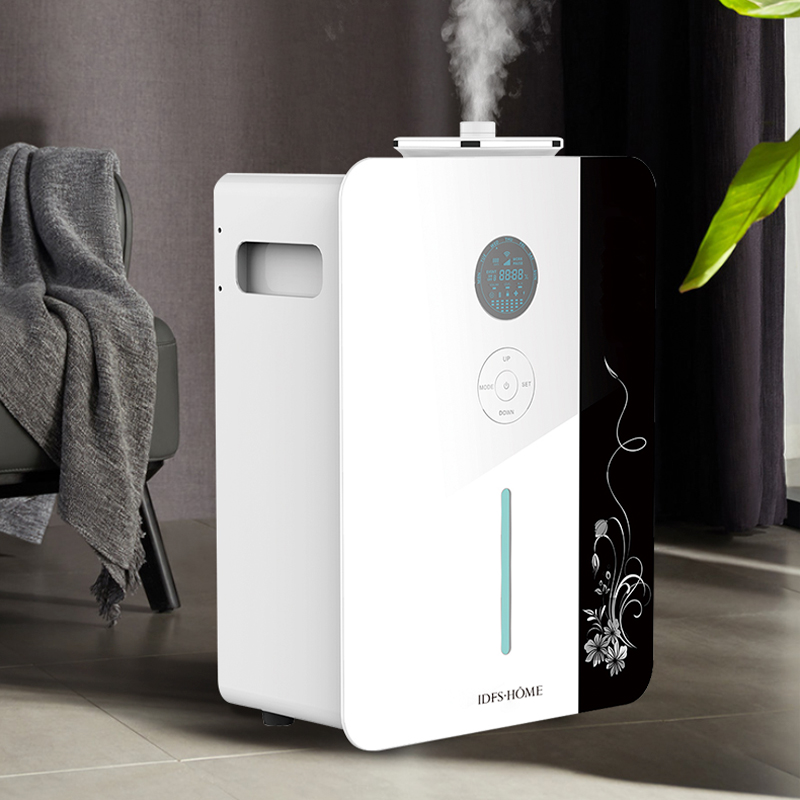
Not every space requires or allows HVAC integration. Standalone and wall-mounted units serve as independent powerhouses. They utilize built-in fans to disperse the cold-air mist in localized areas.
These units are ideal for environments lacking centralized HVAC. They also shine when businesses require varying scent profiles in different areas. For example, you might want an energizing citrus near retail entrances. You could then transition to a calming lavender near specific clinic rooms. A versatile commercial diffuser easily adapts to these complex zoning strategies. You just plug them into a standard outlet and program the desired intensity.
You must look beyond basic manufacturer specifications. True evaluation relies on hard performance metrics. These metrics directly impact your daily operations and your return on investment.
Do not rely solely on manufacturer square-footage claims. These numbers often assume perfect, empty rooms with low ceilings. Commercial spaces are never perfect. You must evaluate the actual pump velocity.
Consider the unit's ability to overcome competing airflow. Open retail doors let scent escape quickly. High ceilings trap fragrance far above the customer's nose. Drafty entryways disrupt scent consistency. A robust commercial pump pushes the mist forcefully enough to establish a dominant scent profile despite these physical challenges.
Modern commercial scenting requires absolute control. Basic on/off switches are useless in a business setting.
The human brain is wired to ignore continuous smells. This biological phenomenon is called olfactory fatigue. If you pump fragrance constantly, customers will become "noseblind" within twenty minutes.
Look for systems offering intermittent diffusion. They operate on specific duty cycles. For example, the machine runs for 30 seconds, then pauses for 30 seconds. The pause allows the scent to settle. This brief gap tricks the brain into noticing the fragrance continuously. Intermittent running also prolongs your fragrance lifespan significantly.
Post-installation regrets usually stem from ignored facility management realities. We frequently hear complaints from Medical Spa and clinic operators who bought the wrong hardware. You must address these friction points proactively.
Cold-air diffusion requires powerful internal air pumps. By their very nature, these pumps generate a humming noise. You must evaluate the decibel (dB) ratings closely before purchasing.
There is a massive implementation risk here. Placing a high-capacity standalone unit in a quiet zone disrupts the customer experience. Imagine a loud, vibrating pump running during a quiet spa treatment or inside a high-end waiting area. It destroys the relaxing atmosphere. For these sensitive zones, HVAC integration is best since the machinery stays hidden in a utility room. If HVAC is impossible, you must select specially sound-dampened standalone units rated below 40 decibels.
Labor is a crucial operational metric. You do not want staff refilling tiny scent bottles every three days. Assess the capacity of the fragrance reservoir carefully.
Look for commercial capacities. A standard 500ml or 1000ml bottle is ideal. The best systems run for 30 to 60 days between maintenance cycles. This drastically reduces staff labor and ensures the scent never unexpectedly runs out during peak business hours.
Ambient scenting must prioritize public health. Ensure the hardware operates without generating ozone. It must not alter the oil structure through heat or chemical reactions.
However, the equipment is only as compliant as the oil you use. You must mandate IFRA (International Fragrance Association) certified oils. The fragrance must be free of harmful VOCs (Volatile Organic Compounds). It should never contain phthalates, parabens, or known respiratory allergens. Using hypoallergenic oils guarantees a safe, pleasant environment for every customer who walks through your doors.
Choosing the correct equipment follows a logical, step-by-step process. Do not guess what your facility needs. Follow this structural approach to guarantee success.
Common Mistake: Skipping the trial phase. Fragrance is highly subjective. A scent that works in a catalog might feel overwhelming in your specific lobby.
Transforming your commercial environment requires robust, professional-grade technology. Keep these final action steps in mind as you upgrade your scent marketing strategy:
A: No. Because professional units use cold-air nebulization to create dry sub-micron particles, the fragrance travels as a dry gas rather than a heavy liquid mist. This specific technology ensures it leaves no residue or oil buildup whatsoever inside your ducts.
A: Standalone units typically operate between 35-50 decibels. This is very similar to a quiet refrigerator humming. HVAC-integrated units are installed far away in mechanical rooms. This renders them virtually silent to the customer-facing areas of your business.
A: Depending on your specific operational hours and intensity settings, they last quite a while. A standard 500ml to 1000ml commercial reservoir usually lasts between 30 and 60 days before requiring a refill from your staff.
A: Yes, provided the system uses high-quality, cold-air diffusion. This method doesn't alter the oil via heat. You must also rely on IFRA-compliant fragrance oils that are completely free of parabens, phthalates, and synthetic allergens.


