
Views: 0 Author: Site Editor Publish Time: 2026-06-21 Origin: Site


Commercial environments have shifted away from ad-hoc air fresheners. Today, businesses rely on engineered scent marketing. They use ambient fragrance to shape visitor impressions and boost employee focus. However, a major operational problem exists in this space. Facility managers often attempt to deploy residential diffusers in large workspaces. These small units fail dramatically in expansive footprints. They lack coverage capacity and distribute scent unevenly. You need commercial-grade systems to handle large, open-plan areas effectively.
Understanding the underlying technology is critical. Specifically, you must grasp cold-air atomization and HVAC integration. Facility managers and HR leaders evaluate an office fragrance diffuser based on scale, safety, and operational efficiency. We will explore how these robust systems actually work. You will learn optimal deployment strategies. We will also cover compliance standards for workplace environments to ensure safe, continuous operation.
Legacy scenting methods struggle in commercial real estate. Water-based ultrasonic diffusers pose significant operational risks. They add moisture to the air continuously. This localized humidity encourages mold growth near the unit. You also face highly uneven scent distribution. The moisture droplets are heavy. They fall quickly to the floor. They rarely travel beyond a small room. This creates puddles and damages wood flooring or carpets.
Heated diffusers present different but equally disruptive challenges. Heat alters the chemical composition of fragrance oils. It degrades the delicate top notes. You often get an artificial, burnt smell instead of a crisp aroma. Both legacy methods fail to cover large square footage. They lack the kinetic energy required to push scent across open-plan workspaces.
The following table outlines the stark differences between legacy systems and modern commercial solutions:
| Technology Type | Operating Mechanism | Coverage Area | Commercial Suitability |
|---|---|---|---|
| Ultrasonic (Water-Based) | Vibrating disc creates water vapor | Under 500 sq. ft. | Low (High mold risk, localized dampness) |
| Evaporative (Heat-Based) | Warming plate evaporates oil | Under 300 sq. ft. | Low (Alters scent profile, fire hazard) |
| Cold-Air Nebulization | High-pressure air atomizes raw oil | Up to 10,000+ sq. ft. | High (Dry mist, zero residue, consistent scent) |
Modern commercial systems discard heat and water entirely. They rely strictly on cold-air nebulization. The physics behind this are straightforward but highly effective. A specialized internal pump generates high-velocity pressurized air. This air forces liquid fragrance through a micro-nozzle. The sheer pneumatic force breaks the oil down mechanically. It creates dry nanoparticles. These particles typically measure under one micron in diameter.
Because they are extremely small, they defy gravity. They remain suspended in the ambient airflow for hours. You get a consistent scent profile across the entire room. This dry mist offers a massive operational benefit. It leaves zero residue. You never have to worry about an office fragrance diffuser damaging desks, server racks, or sensitive electronics. The particles simply circulate and eventually dissipate safely. This preserves your expensive commercial assets while elevating the environment.
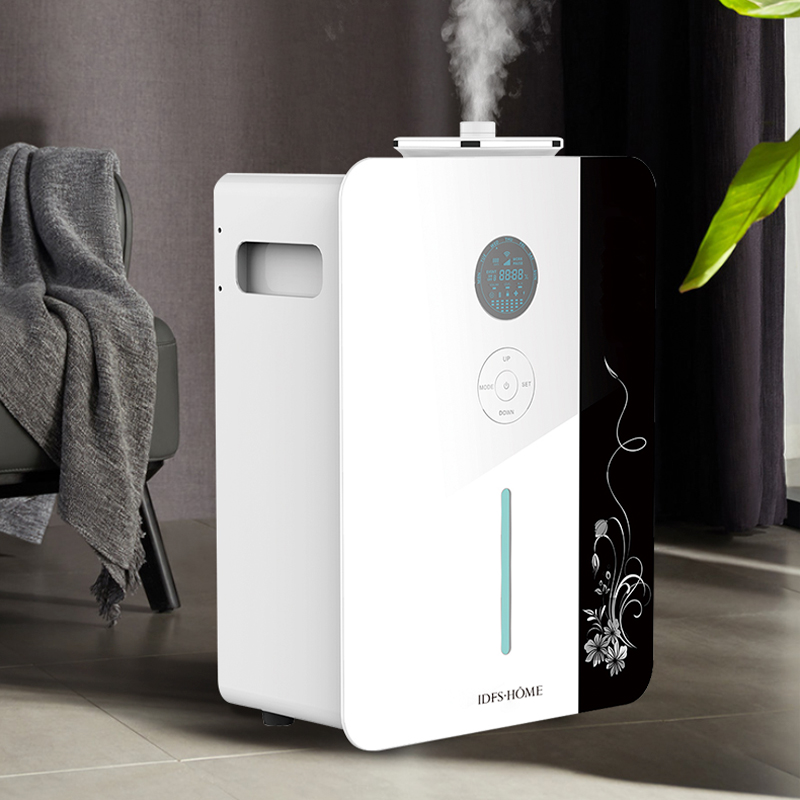
Not every facility requires whole-building coverage. Standalone units excel at targeted zone diffusion. They work best in specific, high-impact locations where first impressions matter most. You typically see them deployed in distinct architectural spaces rather than open floors.
Consider these primary use cases for standalone units:
Installation realities are quite simple. These standalone machines plug right in. They require only standard 110V or 220V electrical outlets. You can easily relocate them. Facility teams often move them based on seasonal layout changes or special corporate events. They offer maximum flexibility for dynamic workspaces.
Enterprise environments demand broader solutions. HVAC-integrated systems deliver whole-office coverage efficiently. Technicians install the unit near the air handler unit (AHU) in the mechanical room. The diffuser injects the dry mist directly into the supply ductwork. It strategically bypasses the return air filters so the scent is not immediately scrubbed out.
This deployment requires specific engineering considerations. We recommend following these procedural steps during installation:
The efficiency advantage is massive. The system leverages your existing building ventilation. You achieve consistent, invisible, and uniform scenting. It effectively covers thousands of square feet without placing standalone towers on the office floor.
Commercial diffusers require precise operational management. You must evaluate units based on their smart controls. Programmability prevents excessive liquid consumption. You can schedule the machine easily to match building occupancy. For example, it should only operate during Monday-to-Friday business hours. It powers down automatically during weekends and holidays.
Modern systems offer advanced connectivity. Look for Bluetooth or Wi-Fi capabilities. Premium enterprise vendors provide centralized IoT dashboards. These digital platforms let you manage multiple zones seamlessly. You can monitor branch locations across different states from a single screen. This remote access streamlines facility operations. It eliminates the need for manual daily adjustments.
Hardware sizing dictates your ongoing maintenance workflows. You must carefully assess the internal reservoir size. Small office diffuser units hold around 500ml. Enterprise HVAC machines hold large 5L bulk tanks. You compare this liquid capacity against the stated consumption rate. Manufacturers usually measure this in milliliters per hour.
You must link intensity settings to your refill schedule. Higher intensity burns through liquid faster. Calculating this interplay is vital for logistics. It projects accurate maintenance intervals. You avoid unexpected empty reservoirs. You maintain a continuous olfactory experience for occupants. Always request consumption charts from the manufacturer before finalizing hardware selection.
Employee well-being remains the top priority in any commercial rollout. Facilities often face skeptical concerns regarding Volatile Organic Compounds (VOCs). Some VOCs harm indoor air quality (IAQ). You must address these fears transparently. Quality commercial scents contain safe, compliant compounds designed specifically for inhalation.
Always request Material Safety Data Sheets (MSDS). Vendors must provide them upon request. The MSDS breaks down the chemical composition. It verifies safety for prolonged human exposure in enclosed spaces. Sharing this documentation transparently builds trust. It reassures your workforce regarding their daily environment.
Allergen management requires strict vendor vetting. Sourcing certified fragrances is non-negotiable. The International Fragrance Association (IFRA) sets global safety benchmarks. They rigorously test ingredients for respiratory and dermal reactions. You should only purchase IFRA-certified liquids for workplace environments.
Many people assume pure essential oils are safer. This is a common mistake. Pure oils are highly volatile. They frequently trigger workplace allergies or asthma flare-ups. We highly recommend hypoallergenic, synthetic-blend formulations. They provide stable, controlled scent profiles. They drastically lower allergy risks while delivering a consistent aroma.
You should establish an anonymous feedback loop. Do this during the initial pilot phase. Employees can confidentially report any scent sensitivities or discomfort. This ensures a comfortable, inclusive environment for everyone. It allows facility managers to adjust intensity levels proactively.
Facility teams choose between two main operational models. Some organizations prefer direct hardware ownership. They buy the unit outright. Their internal maintenance staff manages all liquid refills. They handle technical troubleshooting independently. This approach requires dedicated labor hours and stringent inventory tracking.
Others prefer a Scent-as-a-Service (SaaS) model. This subscription approach eliminates hands-on management. The vendor provides the hardware. They schedule automated liquid delivery based on known consumption rates. A certified technician handles all routine maintenance and repairs. This model offloads the logistical burden from your internal team. It ensures the machines never run dry or fall into disrepair.
Preventative maintenance keeps nebulizers functioning optimally. You must follow strict cleaning protocols. Micro-nozzles occasionally clog over time due to oil viscosity. Technicians perform periodic flushing. They run rubbing alcohol through the system for fifteen minutes. This dissolves residual buildup. It restores optimal mist output immediately.
You must also manage "scent fatigue" actively. This physiological phenomenon occurs frequently. It is scientifically known as olfactory adaptation. Employees simply stop smelling the fragrance after a few weeks. Their noses adapt to the baseline environment. Do not increase the machine intensity when this happens. That wastes liquid and overpowers occasional visitors. Instead, rotate your fragrances quarterly. This simple practice resets the olfactory baseline effectively.
A: No. Commercial units use cold-air atomization. This technology creates ultra-fine, dry nanoparticles. These particles are lighter than air. They remain suspended in the ambient airflow and dissipate naturally. This prevents the heavy fallout and oily residue commonly associated with aerosol sprays or water-based ultrasonic diffusers.
A: Refill frequency varies based on your operating hours and intensity settings. However, enterprise models running on standard 9-to-5 schedules typically require refills every 30 to 90 days. Systems with larger bulk tanks connected to HVAC units can often run for several months without intervention.
A: We strongly advise against this. Using unapproved oils risks voiding the manufacturer warranty. Pure essential oils often have incorrect viscosity levels for micro-nozzles, leading to severe clogs. Commercial systems require specifically formulated, IFRA-compliant oils to ensure proper nebulization and maintain rigorous workplace safety standards.
A: Yes, it is entirely safe. The system uses dry mist technology. It introduces no moisture or heavy oils into the ventilation shafts. A certified technician installs the injection tube post-filtration. This strategic placement avoids degrading internal HVAC components or dirtying the air handler's filters.

