
Views: 0 Author: Site Editor Publish Time: 2026-06-12 Origin: Site


Home and business owners often face a frustrating dilemma. They desire a captivating signature scent but dread the reality of cleaning up ash, soot, or sticky residue. Balancing aesthetic appeal with physical cleanliness remains a daily challenge. Traditional incense relies on a combustion method. This process creates fragrant smoke alongside inevitable physical waste. In contrast, a modern scent aroma machine uses technology-driven delivery. It disperses fragrance without burning anything. This shift from ancient rituals to contemporary devices changes how we manage indoor environments. This guide evaluates both methods strictly through the lens of cleanliness. We will examine physical residue, indoor air quality, and long-term maintenance requirements. Ultimately, you will discover which system keeps your space smelling beautiful and looking spotless.
Physical Cleanliness: Scent aroma machines eliminate the daily accumulation of ash and soot inherent to burning incense.
Air Quality: Combustion-free diffusion prevents the release of PM2.5 particles and smoke, offering a respiratory-friendly alternative.
Maintenance Reality: While machines produce no ash, they require scheduled cleaning to prevent oil clogs, shifting the maintenance from daily sweeping to monthly system care.
Verdict: For environments prioritizing spotless surfaces and controlled air quality, advanced cold-air diffusion systems clearly outperform traditional incense.
Cleanliness in environmental scenting extends far beyond simply sweeping up a mess. Many people assume a space is clean if floors look tidy. However, true cleanliness involves multiple invisible layers. Scent delivery methods impact HVAC system longevity. They affect wall discoloration. They also determine the respiratory comfort of occupants.
When you burn organic materials, you introduce physical byproducts into your space. When you diffuse liquids, you introduce airborne molecules. Both processes require a strict evaluation framework to determine their true cleanliness. We evaluate this through three specific pillars.
Physical Residue: This measures the immediate fallout on surrounding surfaces. It includes ash, soot, and stray oil droplets.
Indoor Air Quality (IAQ): This assesses invisible atmospheric changes. It tracks the presence of Volatile Organic Compounds (VOCs), fine particulate matter, and smoke.
Operational Hygiene: This evaluates the physical upkeep of the delivery device. It looks at the frequency and difficulty of cleaning the system.
Understanding these pillars helps you make an informed decision. You can protect your interior surfaces. You can also protect the air you breathe.
Physical messes demand daily attention. The traditional combustion waste of incense creates a very localized physical footprint. Burning incense inherently produces a mess. Ash drops continually during use. You must use a dedicated catch-tray to prevent damage to your tables or floors.
Micro-soot presents a more insidious problem. While ash falls straight down, soot travels upward. It rides thermal currents generated by the glowing ember. Over time, this micro-soot accumulates on nearby surfaces. It can permanently stain nearby fabrics, paint, or light-colored furniture. You might not notice the darkening walls for months. Once you do, cleaning the soot often requires repainting.
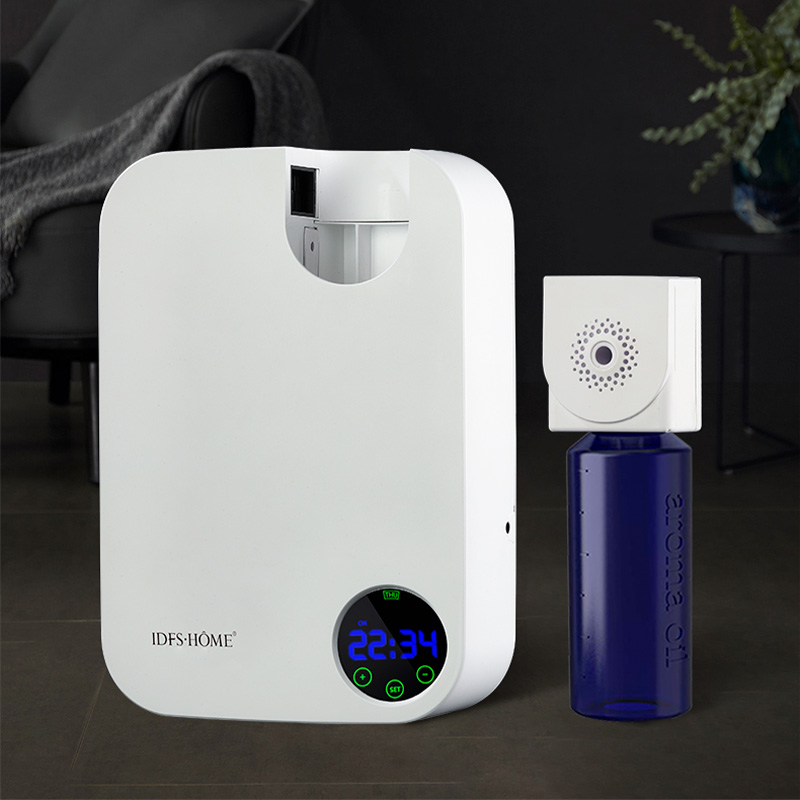
Modern technology offers a stark contrast. A high-quality aroma diffuser scent air machine operates entirely without combustion. This means it produces zero ash and zero soot. You never have to wipe dark dust off your shelves.
However, we must introduce a balanced nuance here. Not all automated devices perform equally. Advanced cold-air technology leaves no physical residue. Cheaper ultrasonic models work differently. They mix oil and water, projecting a wet mist. If you place an ultrasonic model too close to a surface, it can leave localized moisture. It might also leave a minor oil residue. You must choose your technology carefully to ensure truly spotless surfaces.
To clarify these differences, we have mapped out how each scenting method interacts with your physical space.
Scenting Method | Primary Byproduct | Surface Impact Area | Residue Type |
|---|---|---|---|
Traditional Incense | Ash & Soot | Immediate vicinity & ceiling above | Dry ash, sticky micro-soot |
Ultrasonic Diffuser | Wet Mist | Directly below the nozzle | Water moisture, light oil film |
Cold-Air Nebulizer | Dry Nanoparticles | None (remains suspended in air) | Zero surface residue |
Indoor Air Quality requires serious consideration. The invisible pollutants floating in your room often matter more than visible ash. Environmental agencies frequently warn about indoor combustion sources. Burning organic matter releases PM2.5. These are fine particulate matters smaller than 2.5 microns. They bypass human respiratory defenses.
Incense also releases carbon monoxide and other combustion byproducts. Regular incense burning can trigger sensitive smoke alarms. More importantly, it can irritate the respiratory systems of building occupants. The fragrant smoke feels calming, but its chemical profile often degrades room air purity.
Advanced scenting technology protects air quality differently. A modern aroma scent machine uses cold-air diffusion, also known as nebulization. This process forces pressurized air across a small tube of fragrance oil. It breaks the liquid into dry nanoparticles. These particles usually measure under 5 microns.
Because they are so small, these dry particles remain suspended in the air. They do not fall out of the atmosphere to create residue. This mechanical process maintains the chemical integrity of the essential oils. It never heats them. It never burns them. This ensures the scent remains pure. The air remains clear.
Compliance note: Cold-air systems suit commercial spaces exceptionally well. Offices and premium homes rely on stringent HVAC air-filter standards. Smoke from incense clogs HEPA filters rapidly. Dry nanoparticles pass through environments without straining air purification systems. This makes nebulization the safest choice for high-traffic or heavily filtered spaces.
Pollutant Metric | Traditional Incense | Cold-Air Scent Machine |
|---|---|---|
PM2.5 Generation | High (Combustion smoke) | None (Dry mist only) |
Carbon Monoxide | Present | Zero |
HEPA Filter Impact | Rapid depletion & clogging | Minimal to zero impact |
Heat Alteration | Destroys oil compounds via fire | Preserves oil integrity (no heat) |
Cleanliness relies heavily on routine maintenance. You must evaluate the effort required to keep your scenting solution hygienic. Both incense and automated diffusers require human intervention. However, the nature of this work looks very different.
Incense requires high-frequency, low-effort maintenance. You must empty ash catchers daily. You must wipe down the immediate area. If you skip this step, a slight breeze will blow ash across the room. The task takes only a minute, but it never stops. You commit to a daily chore.
Conversely, maintaining an aroma fragrance machine represents low-frequency, higher-effort maintenance. Implementation reality dictates that these devices are not entirely "set and forget." They do not produce ash, but they process thick oils. Over time, these oils can congeal.
To maintain clean operation, you must practice proactive hygiene. The internal nozzle and tubing require periodic flushing. You should perform this flush every one to three months. Refilling the device is generally a clean, contained process. Modern units often utilize sealed oil cartridges. These cartridges prevent spills and keep your hands clean.
Routine Flushing: Run a small amount of rubbing alcohol through the machine every 60 days. This clears out microscopic oil clogs.
Bottle Care: Never mix old oil with a different new fragrance. Clean the empty bottle thoroughly before switching scent profiles.
Placement: Keep the machine away from dusty corners. Dust can settle on the intake vents and reduce operational efficiency.
A common mistake involves ignoring the alcohol flush. Users run thick essential oils for a year without cleaning the nozzle. The machine eventually clogs. You can easily avoid this by establishing a simple quarterly maintenance schedule.
Evaluating cleanliness helps you match the right tool to your specific environment. Different spaces tolerate different levels of physical residue and air pollutants. You must audit your space size and your maintenance bandwidth before choosing.
When to Choose Incense:
Incense still holds value in specific scenarios. It works best for outdoor patios. It suits brief meditation sessions where you desire the visual aesthetic of smoke. It also works in highly ventilated, semi-open spaces. If you value the ancient ritual of lighting a stick above surface cleanliness, incense remains a viable option.
When to Upgrade to an aroma diffuser machine:
Most modern indoor environments require a technological upgrade. Consider an automated machine for the following spaces:
Residential Spaces: Homes with pets, young children, or allergy sufferers benefit immensely. Open flames pose safety hazards. Smoke aggravates asthma. A cold-air diffuser eliminates both risks completely.
Commercial Environments: Hotel lobbies, retail stores, and clinical waiting rooms require consistency. They need an invisible, 100% ash-free scenting solution. Staff cannot sweep up ash every hour.
When selecting your device, strictly apply your evaluation criteria. Look for cold-air or HVAC-integrated systems if your primary goal is zero surface residue. Opt for water-based ultrasonic machines only if your space also requires localized humidification. Otherwise, cold-air remains the cleanest choice.
Maintaining a beautifully scented space does not require sacrificing cleanliness. Our evaluation shows a clear distinction between traditional and modern methods. While incense offers a classic aesthetic and ritualistic value, an automated machine operates much cleaner. It categorically outperforms burning methods regarding physical residue and indoor air quality. You eliminate ash, soot, and harmful PM2.5 completely.
Audit your space size and your daily maintenance bandwidth.
Start with a standalone cold-air diffuser to test the clean-scent experience in a single room.
Commit to a simple quarterly cleaning schedule to keep your new device hygienic.
Consider whole-home HVAC integration only after you confirm your satisfaction with cold-air technology.
By upgrading your approach, you protect your lungs, your furniture, and your free time. Embrace combustion-free scenting for a truly spotless environment.
A: Cold-air nebulizing machines do not leave a film. They produce dry nanoparticles that remain suspended in the air. However, water-based ultrasonic diffusers can leave a slight residue. This happens if you place them directly on wood surfaces or run them continuously in poorly ventilated areas.
A: Yes. The smoke and particulate matter generated by burning incense will rapidly deplete HEPA filters in air purifiers. In contrast, dry fragrance nanoparticles from an aroma machine have minimal to zero impact on filter lifespan.
A: Generally, you should perform a quick alcohol flush every 30 to 60 days. You should also run alcohol through the system every time you switch to a completely new fragrance profile. This ensures optimal, clean diffusion and prevents oil coagulation.


