
Tracy Phone:+86-18015583589 Tracy Email:tracy@ramon-aroma.com Grace Phone:+86-15152466145 Grace Email:grace@ramon-aroma.com


Views: 0 Author: Site Editor Publish Time: 2026-06-10 Origin: Site


Gone are the days when a plug-in air freshener or an aerosol spray could handle a professional environment. Businesses now understand how vital strategic scent marketing is to their physical spaces. You can no longer rely on ad-hoc odor management to shape your customer experience. Investing in a professional-grade scent solution represents a major operational and branding upgrade. It moves your facility far beyond simple aesthetic improvements.
When you upgrade your space, you need technology built for heavy daily use. We see many companies struggle when using residential products in large commercial areas. These smaller devices fail to provide even coverage. They require constant refills and often break down quickly under continuous operation. Enterprise-grade scenting solves these specific inconsistencies. It drives measurable business outcomes by keeping your brand perception high and your maintenance efforts low. We will explore exactly how these automated systems work. You will learn why they outperform traditional methods and how you can choose the ideal setup for your facility.
Most facilities managers quickly discover the hard limitations of consumer scenting products. Manual sprays evaporate within minutes. Standard oil diffusers use water, which limits their range and leaves wet residues on expensive furniture. Furthermore, cheaper aerosol products often release harsh volatile organic compounds (VOCs). These compounds can cause headaches or allergic reactions among your staff and customers. You also face a significant maintenance burden. If your employees spend time manually spraying lobbies or refilling small water tanks, you are wasting valuable labor hours.
Transitioning to an automated commercial diffuser eliminates these daily chores. These systems turn ambient scenting into a "set-and-forget" utility. Once you program the machine, it operates entirely in the background. It disperses the fragrance evenly at predetermined times. This automation immediately reduces labor costs. It completely removes human error from your odor management strategy. Your staff can focus on high-value tasks instead of acting as human air fresheners.
Beyond simple labor savings, we must look at the scent marketing return on investment (ROI). Ambient scenting directly influences consumer psychology. Research and industry-standard metrics track this impact closely. When a pleasant, branded scent fills a space, customer dwell time increases. People naturally linger longer in environments that smell clean and inviting. This extended dwell time often translates into higher purchase intent. While we avoid exaggerated guarantees about doubling sales overnight, the data remains clear. Facilities consistently report measurable improvements in customer satisfaction scores and brand recall when they invest in professional scenting.
| Feature | Traditional Air Fresheners | Commercial Scent Diffusers |
|---|---|---|
| Distribution | Manual spray, wet vapor, or heated evaporation. | Automated cold air dry nano-mist. |
| Labor Required | High (daily manual application or water refills). | Low (set-and-forget programming). |
| Coverage Area | Small (typically under 500 sq ft). | Large (scalable from 1,000 to 10,000+ sq ft). |
| Scent Quality | Inconsistent, often synthetic or overwhelming. | Smooth, consistent, high-fidelity fragrance. |
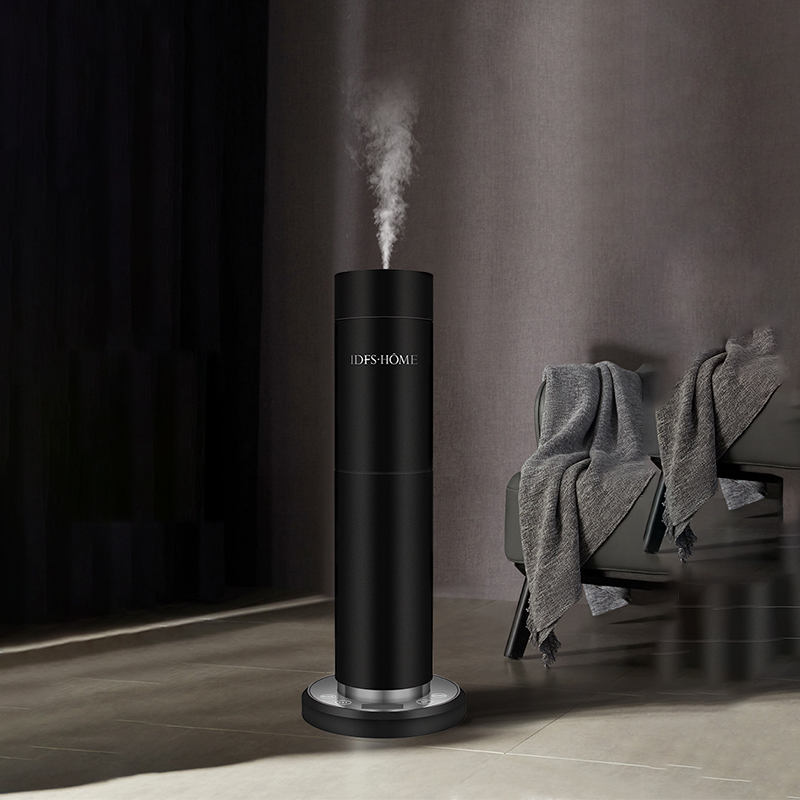
The secret behind enterprise-grade scenting lies in cold air diffusion technology. This mechanism completely fundamentally changes how oils enter the air. The unit uses high-velocity pressurized air to atomize liquid fragrance. It breaks the heavy oil down into a dry, ultra-fine nano-mist. These microscopic particles weigh almost nothing. They float effortlessly on natural air currents for hours.
This process offers a massive benefit. It entirely eliminates the need for water or heat. Heat alters the chemical composition of essential oils, destroying their therapeutic properties and natural scent profile. Water creates wet vapor that falls to the ground, causing mold risks and slipping hazards. Cold air diffusion protects the chemical integrity of the fragrance. It also ensures the mist remains completely dry, which protects your HVAC ductwork and delicate electronics from moisture damage.
Commercial units give you total control over the fragrance experience. You do not simply turn the machine on and let it run blindly. You can program precise intensity levels and detailed operating schedules. This ensures your space always smells perfect without wasting expensive fragrance oil.
We recommend establishing a targeted daily routine. Here is an example of a highly efficient scheduling strategy:
Nothing ruins a customer experience quite like "scent fatigue." This happens when a harsh smell overwhelms you at the entrance, but completely vanishes 20 feet inside the building. Consumer products create these frustrating dead zones. A professional system prevents this uneven experience entirely.
Commercial units push the nano-mist deep into the facility. They utilize the natural airflow of the room or the mechanical airflow of your central air system. This guarantees that the fragrance experience remains identical everywhere. A guest standing at the reception desk enjoys the exact same scent profile as a guest walking down a distant hallway.
You do not always need to integrate your scenting system into the building's ductwork. Standalone units offer incredible power in a localized package.
For truly massive spaces, you must leverage your building's existing ventilation infrastructure.
When you decide to make the investment, you must evaluate the hardware carefully. Selecting the best commercial scent diffuser requires matching the machine's capabilities to your facility’s unique dimensions and operational needs.
First, analyze the coverage capacity. You must match the machine's maximum square footage rating to your exact dimensions. If you put a 5,000-square-foot machine in a 500-square-foot room, you will over-saturate the air. If you do the reverse, you will suffer from severe under-performance. Always buy a machine that comfortably exceeds your square footage by about 20% to account for high ceilings and poor airflow.
Next, inspect the material and build quality. Residential machines use cheap plastics that degrade over time. Commercial environments demand durability. Look for scratch-resistant exteriors made from heavy-duty materials like anodized aluminum. These metals withstand daily bumps and protect the internal air pumps.
Software and connectivity also play a massive role. The leading machines now feature Bluetooth and Wi-Fi app controls. This allows facilities managers to adjust intensity levels from their smartphones. If you manage multiple franchise locations, cloud-connected dashboards let you monitor and synchronize the scent profiles across the entire country from a single laptop.
Finally, review the maintenance requirements. Assess the accessibility of the fragrance canisters. You need to know the realistic frequency of your refills. Some machines hold enough oil for a 30-day cycle, while larger reservoirs can stretch to a 90-day cycle. Choose a machine that aligns with your preferred maintenance schedule.
| Evaluation Criteria | What to Look For | Common Mistake |
|---|---|---|
| Coverage Capacity | Rating that slightly exceeds your actual floor space. | Ignoring high ceilings, which increase total cubic volume. |
| Build Material | Anodized aluminum or industrial-grade steel. | Accepting residential-grade plastics that crack easily. |
| App Connectivity | Wi-Fi dashboards and Bluetooth mobile apps. | Buying analog machines that require manual dial adjustments. |
| Refill Cycle | Large oil reservoirs capable of 30-to-90-day runs. | Choosing small tanks that demand weekly staff intervention. |
Before deploying a scenting system, you must address valid concerns regarding safety and facility maintenance. Consumers and employees frequently ask about allergen and pet safety. People worry about breathing in fragrance oils every day. You can easily resolve these concerns by focusing on compliance.
You must source hypoallergenic oils. More importantly, you must insist on IFRA-compliant fragrances. The International Fragrance Association (IFRA) sets the global benchmark for safe fragrance usage. They scientifically evaluate ingredients and limit harmful volatile organic compounds. When you use IFRA-compliant oils at the proper dilution and dispersion rates, the environment remains completely safe for employees, customers, and even pets. The dry nano-mist disperses so thinly that it never accumulates on skin or animal fur.
Facilities managers also raise concerns about HVAC maintenance. They worry that injecting oils into the ductwork will ruin the system. You must clarify that true cold-air diffusers do not leave sticky residue. Because the technology produces a dry mist, the particles remain too small to adhere to metal duct walls. They simply float through the vents and into the room.
However, routine HVAC maintenance remains a strict best practice. You must continue your standard filter checks. A clogged air filter restricts airflow. If the air handler cannot push air effectively, the scent will fail to distribute evenly. Clean filters ensure your scenting system performs at its maximum potential.
Upgrading to a professional scent system is a direct investment in your automated brand experience. It improves operational efficiency by removing the daily labor of manual odor management. By utilizing cold-air technology and smart scheduling, you protect your air quality while ensuring an identical scent experience for every guest.
To move forward, take these actionable next steps. First, measure your facility's exact square footage and note your ceiling heights. Second, evaluate your HVAC accessibility to decide between a standalone unit or a duct-integrated system. Finally, reach out to a trusted supplier to request a consultation and a fragrance sample kit. Testing the oils in your own space will help you finalize the perfect signature scent for your brand.
A: No, they require specific setups. Your facility needs accessible central ductwork and a standard air handler. Ductless mini-splits or window units cannot distribute the mist. Installers must tap the diffuser tube into the supply duct past the main fan and filter. This prevents the HVAC filter from trapping the fragrance particles before they reach the room.
A: Yes, as long as you select the right products. Always use IFRA-compliant oils. These fragrances meet strict global safety standards and maintain safe VOC limits. Because cold air technology creates a dry nano-mist, it uses incredibly low dilution rates. The mist leaves no wet droplets on food surfaces or pet coats, making it perfectly safe.
A: Refill frequency depends entirely on your usage hours and intensity settings. Most commercial systems require new oil every 1 to 3 months. If you run the machine 24/7 at maximum intensity, expect monthly refills. Programming the unit to shut down overnight and during weekends stretches the oil supply significantly.
A: Ultrasonic diffusers mix oil with water and use vibrations to create a wet vapor. They increase room humidity and only cover small areas. Cold air diffusion uses pressurized air to atomize pure oil into a dry nano-mist. It requires no heat or water, leaves no residue, and easily covers massive commercial spaces.


