
Views: 0 Author: Site Editor Publish Time: 2026-06-08 Origin: Site


Transitioning from reactive odor control to proactive scent marketing is a critical shift. It transforms physical spaces for brick-and-mortar businesses, hospitality, and retail. Customers form immediate subconscious opinions based on ambient smell. Standard air fresheners merely mask localized odors temporarily. In contrast, a commercial scent diffuser machine is an engineered solution. It delivers consistent, safe, and brand-aligned ambient scenting across massive square footages.
You face rising expectations for clean, immersive environments. A premium olfactory experience directly influences consumer behavior. This guide breaks down verifiable business benefits and technological differentiators. We explore the actual implementation realities you will encounter. Decision-makers can evaluate these factors clearly. You will learn how upgrading your scenting infrastructure serves as a highly viable, long-term operational investment.
Many businesses mistakenly rely on consumer-grade products for large-scale facilities. These standard solutions fall short in commercial environments. They fail to deliver consistent results over large areas. You must understand these failures to justify professional upgrades.
Consumer products use heavy liquid droplets to temporarily cover bad smells. This approach causes olfactory fatigue quickly. Customers stop noticing the pleasant scent within minutes. The heavy droplets fall rapidly to the ground. This leads to highly uneven scent distribution across your floor plan. True commercial solutions use chemical neutralizing agents. They alter the molecular structure of malodors rather than hiding them.
Manual aerosol sprays require high staff intervention. Your team must repeatedly walk the floor to apply them. Plug-ins deplete constantly and unevenly. They create unpredictable scent profiles throughout the day. Visitors experience strong odors near the outlet and nothing a few feet away. This inconsistency damages brand perception. You waste valuable payroll hours on ineffective janitorial tasks.
Aerosols emit unregulated volatile organic compounds. Heated diffusers pose fire hazards in unmonitored commercial spaces. Both methods leave slippery residue on hard commercial flooring. This residue damages expensive merchandise and creates slip-and-fall liabilities. Safety remains paramount in public-facing businesses.
Businesses need a predictable, automated system. You must treat scent as a strategic environmental asset. It is never just a janitorial afterthought. The table below illustrates this performance gap.
| Feature | Standard Air Fresheners | Commercial Diffusion Systems |
|---|---|---|
| Odor Control Method | Heavy masking droplets | Molecular neutralizing agents |
| Distribution | Uneven, localized | Uniform, automated |
| Staff Labor | High (manual refills/spraying) | Low (automated scheduling) |
| Residue Risk | High (slippery floors) | Zero (dry nanoparticles) |
Deploying professional scenting hardware delivers tangible operational rewards. It transforms how patrons interact in your physical space. The benefits extend far beyond a pleasant-smelling lobby. They directly impact your bottom line.
Ambient scenting drives verifiable behavioral changes. Retailers see increased customer dwell time when using optimized fragrances. Shoppers linger longer in pleasant environments. Hospitality brands report higher perceived value from guests. A fresh, luxurious scent makes a hotel lobby feel more exclusive. Advanced commercial fragrances also excel at odor remediation. They contain neutralizing agents targeting specific malodors. Dampness, stale smoke, and food odors undergo molecular alteration. The system eradicates the bad smells permanently.
Creating a multisensory brand identity differentiates your business. Visuals and audio only go so far. A signature scent builds powerful emotional connections. Subconscious brand recall relies heavily on smell. You ensure a uniform customer experience across multiple franchise locations. Global properties maintain exact brand standards. A customer stepping into your Tokyo location smells the identical fragrance as your New York branch. This consistency builds deep brand loyalty.
Professional machines cover massive physical footprints. A single robust device can scent areas ranging from 1,000 to over 10,000 square feet. You achieve a steady concentration level from open to close. The automated pumps regulate output precisely. Customers experience the exact same scent intensity at 9 AM and 9 PM. You eliminate the mid-afternoon fragrance drop-off common in residential units.
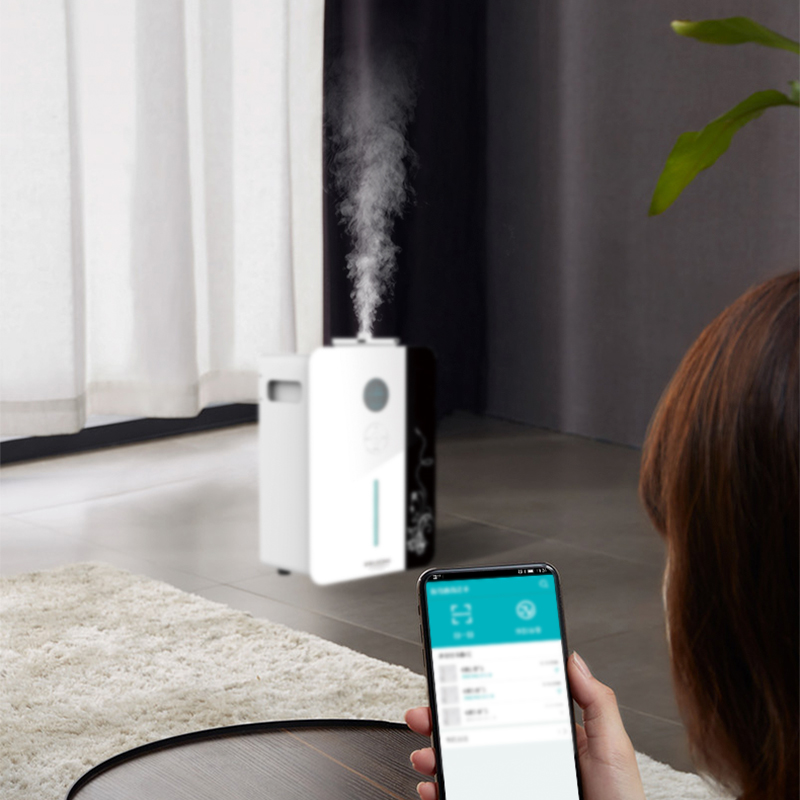
Understanding the internal mechanics helps you make informed hardware choices. Commercial systems abandon outdated evaporation methods. They rely on precise fluid dynamics and targeted air pressure. This section explains the engineering behind the performance.
Standard ultrasonic diffusers dilute essential oils using tap water. This creates heavy, wet mist. Professional machines utilize nebulizing or cold-air diffusion technology instead. They draw pure fragrance oil directly from the reservoir. They do not use water or carrier liquids. A scent diffuser using cold-air technology ensures maximum fragrance purity. High-velocity pressurized air strikes the liquid oil.
This high-velocity air physically shears the pure fragrance oil. It breaks the liquid into microscopic dry nanoparticles. These particles typically measure under 1 micron in diameter. They are virtually weightless. This sub-micron size allows them to ride natural ambient air currents. They float effortlessly throughout your facility. They do not sink to the floor like heavy aerosol drops.
This advanced technological approach delivers three critical advantages for facility managers:
You must select the correct deployment strategy for your specific floor plan. Facility size and architectural layout dictate your optimal hardware choice. Businesses generally choose between localized standalone units and centralized HVAC integration. Both methods offer distinct logistical advantages.
These independent devices require only a standard electrical outlet. You can place them discreetly in corners or mount them high on walls. They push scent directly into the immediate environment.
These systems connect directly to your building's central air handling unit. They inject the dry fragrance nanoparticles into the supply ductwork. The conditioned air carries the scent evenly throughout the entire building.
Always map your natural air currents before placing standalone units. Keep them away from exhaust fans or open doorways. For HVAC systems, ensure the injection point sits downstream from all primary air filters. This prevents the filters from stripping the scent particles out of the air.
Selecting the right commercial vendor requires strict due diligence. The market floods buyers with cheap, underperforming imports. You must look past the sleek outer casing. Evaluate the internal components and software capabilities carefully.
Modern commercial machines must feature robust Bluetooth or Wi-Fi connectivity. Facility managers need remote access to adjust settings instantly. Look for apps allowing exact operating hour scheduling. You can program the machine to run only during business hours. You can set different intensity levels for busy weekends versus quiet Tuesdays. This precise control prevents massive oil waste during closed hours.
Labor costs rise when staff must refill machines weekly. Check the internal reservoir capacity. Look for units holding 500ml to 1000ml bottles. This larger capacity allows for 30 to 90 days of continuous operation between refills. Your maintenance team will appreciate the reduced intervention frequency. It ensures uninterrupted customer experiences.
Never compromise on indoor air quality. Demand hardware and oils complying strictly with IFRA (International Fragrance Association) standards. Ask vendors for safety data sheets upfront. Ensure all oils are strictly cruelty-free and hypoallergenic. They must be entirely free from harmful synthetic propellants. Protect your customers and your corporate liability simultaneously.
Commercial hardware runs hard. It operates 10 to 14 hours daily. Look for a minimum 1-year comprehensive commercial warranty. Prioritize vendors offering dedicated B2B account managers. You need reliable partners for automated oil replenishment. You need fast technical troubleshooting if a machine goes offline.
Deploying new hardware involves practical challenges. Many buyers focus solely on the initial machine price. You must analyze ongoing operational realities. Understanding these factors prevents budget overruns.
Some manufacturers lock you into their specific fragrance cartridges. You cannot use third-party oils in their machines. This closed ecosystem dictates your long-term operational costs. Verify if the vendor uses open-pour reservoirs or proprietary locked bottles. Open systems offer you market flexibility. Locked systems guarantee compatibility but often carry premium monthly price tags.
Not all HVAC systems can accommodate a diffusion machine. High-velocity systems might push scent through too quickly. Specific return-air configurations might recycle the scent poorly. You require prior inspection by a qualified HVAC technician. They must confirm adequate static pressure. They must verify ductwork accessibility before you purchase any centralized hardware.
Nebulizers boast low maintenance, but they are never zero-maintenance. The micro-nozzles handle thick essential oils daily. They require periodic deep cleaning. Your staff must run simple rubbing alcohol through the system every few months. This dissolves residual oil buildup. It prevents complete nozzle clogging. Neglecting this simple task voids most manufacturer warranties rapidly.
Hardware represents a fraction of your investment. You must budget accurately for consumables. Calculate the Monthly Recurring Cost (MRC) of your fragrance oil. This calculation relies on your desired scent intensity, operating hours, and total square footage. High-intensity settings in a 10,000-square-foot casino consume significantly more oil than a subtle setting in a 2,000-square-foot boutique. Ask vendors for accurate consumption rate charts.
A professional diffusion system represents far more than a basic air freshener. It serves as a highly strategic tool for multisensory branding. It elevates the baseline customer experience effortlessly. It streamlines your daily facility management tasks. Relying on outdated manual sprays harms your operational efficiency. It ultimately diminishes your brand equity in the eyes of the consumer.
Decision-makers should apply a simple framework. If your commercial space exceeds 1,000 square feet, perception drives your revenue. Shifting to automated cold-air diffusion yields a positive, verifiable return on investment. The technology ensures safety, consistency, and remarkable efficiency.
Take concrete action today. Audit your current floor plan to determine HVAC versus standalone needs. Measure your exact square footage accurately. Request sample fragrance oils from compliant, B2B-focused vendors. Test these samples physically before committing to full hardware deployment.
A: It depends heavily on your scheduling, intensity settings, and bottle size. A standard 500ml bottle typically lasts 30 to 90 days under normal business hours. Running the machine 24/7 or setting it to maximum intensity will deplete the oil much faster.
A: Yes, provided the system uses dry cold-air diffusion or nebulization. This specific technology creates weightless nanoparticles. It leaves absolutely no moisture or sticky residue inside your expensive ductwork, unlike outdated water-based ultrasonic systems.
A: Reputable B2B scenting companies exclusively use IFRA-compliant, hypoallergenic oils. These strict formulations are completely free of parabens, sulfates, and synthetic propellants. They prioritize human safety and adhere to global indoor air quality standards.
A: Generally, no. Commercial nebulizers require very specific viscosity formulations. Using thick, unapproved consumer-grade oils can quickly clog the internal micro-nozzles. This improper use will instantly void your commercial hardware warranty.


