
Views: 0 Author: Site Editor Publish Time: 2026-06-24 Origin: Site


Transitioning from localized, consumer-grade diffusers to commercial-grade scenting requires a significant jump in hardware complexity and ongoing maintenance. Many property owners want their spaces to smell like a luxury resort. However, buyers evaluating a hotel 360 diffuser must look past the marketing allure of "luxury scenting." You need to understand the mechanical advantages, actual operational requirements, and installation realities before committing to this upgrade. Cheaper models often fail to deliver consistent results across large areas, leaving patchy scent trails. This article provides an objective, evidence-based breakdown of the benefits, limitations, and implementation requirements of using a high-capacity commercial machine. We will explore cold-air nebulization technology, HVAC integration, and crucial maintenance standards. You will learn exactly what it takes to implement these systems effectively and determine if the upgrade aligns perfectly with your specific space and daily routines.
Most consumers know basic ultrasonic diffusers. They fill a plastic tank, add a few drops of essential oil, and turn it on. Commercial systems operate differently. They utilize cold-air nebulization to achieve superior performance.
A nebulizing system does not use water or heat. Instead, it uses highly pressurized air to pull fragrance oil directly from the bottle. The machine forces this liquid through a specialized atomizer. This process breaks the oil down into sub-micron nanoparticles. These ultra-fine particles behave almost like a gas. They float through the air effortlessly. They do not drop to the ground. They travel along natural air currents to fill vast open spaces.
Standard diffusers dilute oils in water. They spit out heavy, wet droplets. These droplets quickly fall onto nearby surfaces. Over time, you notice a sticky, oily film on your hardwood floors, electronics, and countertops. Cold-air nebulization delivers a completely dry mist. The sub-micron particles are too light to settle out of the air quickly. This dry-mist technology protects your property. It prevents oily buildup inside your delicate HVAC ducts. It keeps your expensive electronics safe from moisture damage.
Heat alters the complex chemical structure of high-quality fragrance oils. Burning or warming oils destroys delicate top notes immediately. Cold-air diffusion preserves the entire fragrance pyramid.
Avoiding heat ensures the fragrance you smell in the bottle matches the fragrance circulating through your room.
| Feature | Cold-Air Nebulizer | Ultrasonic Diffuser | Heat Warmer |
|---|---|---|---|
| Operation Method | Pressurized air | Water and vibration | Direct heat |
| Moisture Added | None (Dry Mist) | High | None |
| Scent Integrity | 100% Preserved | Diluted | Altered/Degraded |
| Residue Risk | Very Low | High (Water & Oil) | Moderate (Wax/Oil) |
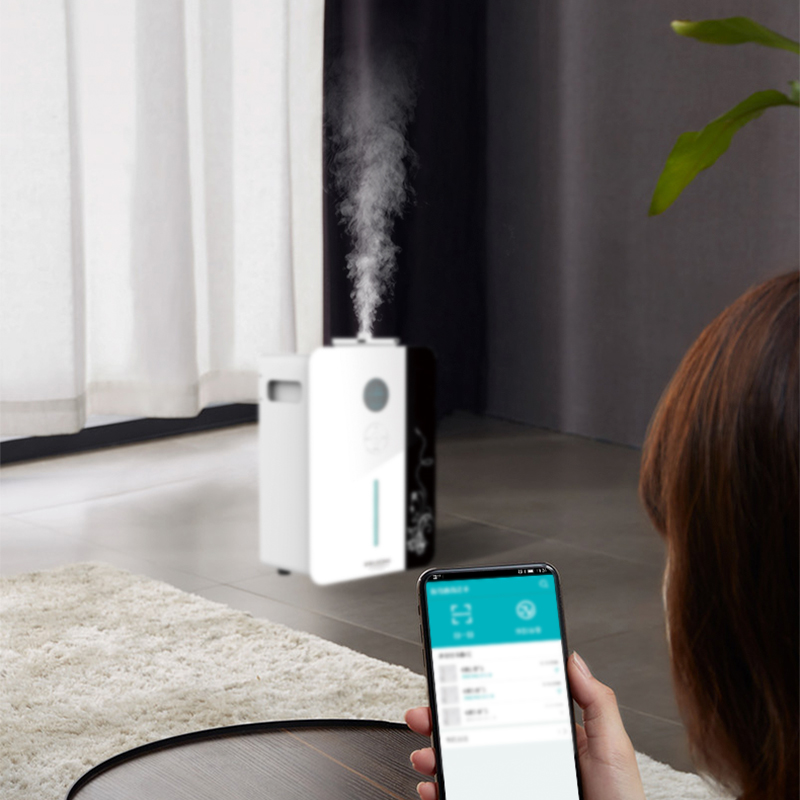
Upgrading to commercial-grade scenting transforms how a space feels. These machines provide distinct environmental and architectural advantages over localized options.
Have you ever plugged in an air freshener, only to stop smelling it two days later? We call this "nose blindness" or olfactory fatigue. Your brain tunes out constant stimuli. A hotel diffuser solves this problem mechanically. You can program exact concentration levels and rest cycles. The machine might run for two minutes and pause for three minutes. This pulsing mechanism keeps the scent fresh in your environment. It prevents olfactory fatigue entirely. You experience a uniform scent across thousands of square feet.
Architects and interior designers praise nebulizers for their invisible integration. You can connect many models directly into your ductwork. The machine injects the nano-mist into the supply airflow. The HVAC fan then carries the fragrance evenly into every room. You do not see cords. You do not see bulky plastic machines sitting on end tables. This invisible, whole-building scenting mimics the seamless experience found in five-star resorts.
Ultrasonic units dump humidity into your air. This creates serious liabilities in commercial environments. Excess moisture warps hardwood flooring over time. It degrades paper in art galleries. It fosters mold growth in poorly ventilated corners. Commercial diffusers introduce absolutely zero humidity. You can run them safely in server rooms, retail boutiques, and historic homes. They alter the scent without altering the indoor climate.
Modern units offer set-and-forget operational benefits. You can program specific run times down to the minute. If your business opens at 9:00 AM and closes at 6:00 PM, you set the machine to match those hours. Homeowners often program their units to run exclusively during evenings and weekends. This precise scheduling optimizes your oil longevity. You never waste fragrance when the building sits empty.
Understanding how these machines consume oil helps you plan your maintenance routine. While initial setup feels complex, the long-term operational rhythm becomes highly predictable.
Cold-air nebulizers use oil efficiently. However, they run through high volumes of air, which demands realistic planning. Your oil burn rate depends heavily on three variables.
Under moderate settings, a standard 500ml bottle typically lasts between one and three months. You must monitor the fluid level regularly during the first few weeks to establish your baseline burn rate.
Many manufacturers design their machines to accept only proprietary oil bottles. They use unique thread patterns on the glass or plastic reservoirs. Buyers often worry about this limitation. While you can technically pour third-party luxury oils into an empty proprietary bottle, you must proceed carefully. Different brands formulate their oils with different viscosities. If you use an oil too thick for the atomizer, you risk clogging the microscopic pump. Additionally, running unauthorized oils often voids the manufacturer's warranty. You must weigh the desire for cross-compatibility against the need for equipment protection.
Commercial nebulizers represent a robust hardware upgrade. Cheaper ultrasonic diffusers often break down after a few months. Their internal ceramic discs fail. Their plastic tanks crack. When you invest in a commercial-grade nebulizer, you acquire an industrial air pump housed in metal or high-grade polymer. This durability means you stop replacing broken localized units constantly. The machine runs reliably for years if properly maintained.
Proper installation dictates performance. You must choose between standalone placement and HVAC integration based on your floor plan.
If you cannot connect the unit to your ductwork, standalone placement works perfectly. However, you must follow strict airflow rules.
Connecting the machine to your ductwork requires technical planning. You typically drill a small hole into the supply plenum—the main duct immediately above your furnace or air handler. You then insert a flexible plastic tube from the diffuser into this hole.
Important Practice: You must configure your thermostat properly. The HVAC fan must run continuously (set to "On" rather than "Auto") to carry the scent. If the fan stops, the heavy scent will pool inside the ductwork, potentially causing localized residue.
We must address equipment noise transparently. Nebulizing compressors emit a distinct, low-frequency hum. They use powerful mechanical pumps to force air through tiny nozzles. This vibration creates sound. If you place a standalone unit in a quiet yoga studio or a silent bedroom, the humming may disrupt the atmosphere. Always evaluate placement carefully. Mount HVAC-connected units in a utility closet or basement. Place standalone units in active areas like lobbies or living rooms where ambient noise easily masks the compressor's hum.
Commercial-grade diffusers vaporize high concentrations of essential and synthetic oils. Operating them requires strict adherence to safety and maintenance protocols to protect your indoor air quality.
You must pair your diffuser with high-quality oils. Look for oils certified by the International Fragrance Association (IFRA). IFRA standards ensure the fragrance compounds contain no harmful toxins or banned respiratory irritants. Commercial machines break particles down to microscopic sizes. Your lungs absorb these particles easily. Therefore, diffusing untested, unverified oils poses a genuine health risk. Always verify the manufacturer's IFRA compliance before diffusing any liquid into your environment.
Diffusing high-concentration oils requires caution around animals. Pets possess highly sensitive respiratory systems. Cats, in particular, lack the liver enzymes necessary to break down many essential oils (like eucalyptus, tea tree, and citrus). Birds have incredibly delicate air sacs.
Best Practices for Pets: Ensure adequate ventilation at all times. Never lock an animal in a room where a nebulizer operates. Program the machine to run at lower intensities. Monitor your pets for signs of lethargy, drooling, or labored breathing when introducing a new scent.
Owning a high-capacity machine involves mandatory upkeep. You cannot simply refill the oil and ignore the hardware. The microscopic atomizer clogs easily if left uncleaned. Thick oils calcify and harden over time, causing the pump to fail.
You must perform a strict monthly cleaning routine:
Skipping this routine guarantees equipment failure and typically voids your warranty.
A commercial-grade nebulizing machine transforms the atmosphere of any large environment. Businesses, luxury homeowners, and operators of expansive open-concept spaces benefit immensely from this technology. The dry-mist delivery preserves your furniture, prevents olfactory fatigue, and distributes complex fragrances flawlessly. However, smaller, segmented spaces or buyers seeking a low-maintenance, casual scenting option should likely stick to localized alternatives.
To move forward effectively, you should map out your exact needs. Calculate the total square footage you wish to cover. Inspect your utility room to determine if HVAC ductwork remains accessible for an integrated installation. Finally, order small samples of fragrance oils to test their profiles before committing to bulk bottles. Thorough preparation guarantees your new scenting system performs perfectly.
A: Yes, you can technically use third-party oils, but you must match the viscosity. If the alternative oil is too thick, it will clog the nebulizer's micro-pump. Be aware that using unauthorized oils almost always voids the manufacturer's warranty.
A: No. Cold-air nebulizers produce sub-micron nanoparticles. These dry particles are small enough to pass easily through standard MERV filters without causing sticky residue or clogging the filter media, provided you use the correct intensity settings.
A: They are not completely silent. The internal air compressor emits a noticeable, low-frequency hum and slight vibration. While ambient room noise easily masks it, you should avoid placing standalone units directly next to beds or in extremely quiet zones.
A: You must clean the unit every 30 to 60 days. You do this by running pure isopropyl alcohol through the machine for 15 minutes. This regular flush dissolves hardened oil deposits and prevents permanent atomizer clogs.


