
Views: 0 Author: Site Editor Publish Time: 2026-06-19 Origin: Site


Corporate facility management is undergoing a massive shift today. Scent is no longer just about masking unpleasant odors. Instead, operators view it as a strategic tool for shaping workspace environments.
Creating an optimal workspace involves balancing employee productivity, client perception, and facility hygiene. You must achieve these goals without introducing harsh allergens or relying on high-maintenance hardware. Finding a seamless, safe solution remains a core business challenge for many modern organizations.
Investing in an office fragrance diffuser requires evaluating measurable benefits against hardware capabilities, HVAC compatibility, and workplace safety standards. We will explore how ambient scenting impacts cognitive focus and brand identity. You will also learn practical steps to mitigate implementation risks while maximizing operational efficiency.
Ambient scenting transforms how we experience a daily workspace. Environmental psychology studies show our sense of smell connects directly to the brain's limbic system. This area regulates emotion and memory. You can optimize the office environment easily by deploying specific botanical profiles. We see clear evidence supporting targeted aromas for cognitive performance.
We must frame these benefits correctly. A commercial scent program is not a medical cure. It functions as a low-friction environmental optimization tool. You enhance the baseline comfort of your team without requiring them to change their daily habits. When employees feel comfortable, they engage more deeply.
Your brand identity extends beyond visual logos and lobby furniture. A signature scent acts as an invisible architectural element. When clients walk into an executive suite, the immediate aroma dictates their first impression. We often associate pleasant ambient environments with perceived service quality and elevated brand value.
Consider a high-end law firm or a luxury real estate agency. If the reception area smells like stale coffee, the client subconsciously questions the firm's attention to detail. Conversely, a subtle blend of white tea and fig projects sophistication. A reliable office diffuser establishes this cohesive brand impression effortlessly. It communicates professionalism before you even shake a client's hand.
Many facility managers misunderstand how commercial scenting handles bad smells. A common mistake is attempting to mask odors. If you layer heavy perfumes over bad air, you create a suffocating, unpleasant environment. Consumer air fresheners simply cover up the problem temporarily.
Professional-grade diffusers take a completely different approach. They neutralize stale odors at a molecular level. Whether the smell originates from a busy cafeteria, aging carpets, or poor ventilation, advanced oils bind to odor molecules. They alter the chemical structure of the bad smell, effectively neutralizing it. Only after neutralizing the bad odor does the system disperse the desired ambient fragrance. This ensures the air remains crisp and genuinely clean.
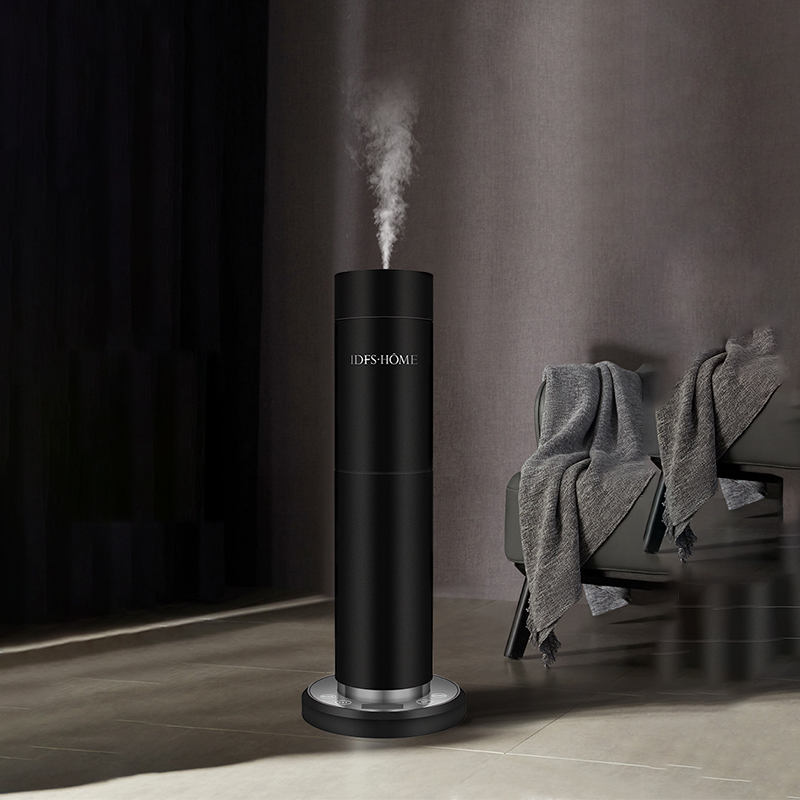
Choosing the right hardware dictates the success of your entire scent program. We generally categorize commercial scenting into two primary technologies. You must understand the mechanics of each to make an informed decision for your facility.
Cold-air nebulization represents the gold standard in commercial scenting. This mechanism uses high-velocity pressurized air. The air breaks liquid fragrance oils down into a dry nanoparticle mist. Because the particles are microscopic, they float evenly through the air currents.
The benefits are substantial. A dry mist leaves absolutely no residue on office electronics, server racks, or expensive furniture. Furthermore, it provides consistent, invisible scenting across massive square footages. A single commercial unit can easily cover upwards of 5,000 square feet. This technology is best for whole-building deployments. It offers seamless aesthetics because you can hide the unit inside a mechanical room. It also enables centralized facility management, requiring minimal daily intervention.
Ultrasonic technology operates differently. It uses water and rapid ultrasonic vibrations to disperse a localized mist into the room. You will often see these smaller units sitting on individual desks or in small breakout rooms.
These units offer a much lower upfront cost. They are highly portable. They also allow different departments to control their own micro-environments. However, they carry significant limitations for corporate use. Ultrasonic models add moisture to the air. This added humidity can be highly problematic for IT environments containing sensitive servers. They also have a very small coverage footprint. Most importantly, they require frequent manual refilling, which drains employee time.
| Feature | Cold-Air Nebulization (HVAC) | Ultrasonic (Desktop/Zonal) |
|---|---|---|
| Mechanism | High-velocity air pressure creates dry nano-mist. | Ultrasonic vibrations disperse water and oil. |
| Coverage Area | Massive (1,000 to 10,000+ sq ft). | Small (100 to 400 sq ft). |
| Residue & Moisture | Dry mist. No residue. Safe for IT equipment. | Adds humidity. Can leave water rings on desks. |
| Maintenance | Low. Replace cartridges every 30-90 days. | High. Requires daily water and oil refills. |
When evaluating hardware, you must look beyond the initial purchase price. You need to assess the ongoing operational burden. Compare the labor involved in maintaining different systems. If you place twenty desktop units around an office, a staff member must manually clean them and refill their water tanks every single day. This daily labor adds up rapidly.
In contrast, commercial HVAC systems or large standalone nebulizers utilize large oil cartridges. A facility technician simply swaps the scent cartridge once every quarter. The operational overhead drops significantly. You optimize your maintenance budget by prioritizing systems requiring infrequent, predictable servicing.
A smart deployment requires precise control. Commercial environments are dynamic. You should never run a scenting system 24/7. High-quality systems feature robust programmable schedules. You can set the unit to operate strictly during business hours, conserving expensive fragrance oils overnight and on weekends.
Intensity control is equally vital. Your system must allow you to adjust the output based on HVAC airflow and foot traffic. A busy lobby on a Monday morning might require a slightly higher intensity than a quiet Friday afternoon. Digital control panels and Bluetooth-enabled apps allow managers to dial in the perfect ambient level without physically accessing the ductwork.
Workplace safety remains non-negotiable. Indoor air quality directly impacts employee health. You must stress the importance of sourcing IFRA-certified (International Fragrance Association) oils. The IFRA sets rigorous global standards for fragrance safety. They test compounds for potential allergens and toxicity.
You also need to discuss VOC (Volatile Organic Compound) compliance. Ensure your chosen oils are entirely free from harmful phthalates, parabens, and highly synthetic allergens. High-quality commercial oils utilize safe, pure ingredients. They elevate the space without compromising the breathable air. Always request safety data sheets (SDS) from your fragrance vendor before a full-scale deployment.
Introducing scent into a shared workspace often triggers human resources concerns. You must address the reality of allergies, asthma, and chemical sensitivities proactively. Ignoring these concerns leads to employee dissatisfaction and potential grievances.
Best Practice: Start small. We recommend initiating your program with hypoallergenic, subtle scent profiles. Citrus and light woods are generally well-tolerated. Avoid heavy florals or overpowering musks. Before rolling out the system globally, run a two-week pilot in a neutral zone, like a lobby or main hallway. Gather anonymous employee feedback. You can easily adjust the formulation or intensity based on their responses.
A major challenge in scent marketing is olfactory fatigue. This phenomenon occurs when users stop noticing a smell after being exposed to it for a long period. The brain simply tunes the scent out to focus on new stimuli.
Common Mistake: When managers stop smelling the fragrance, they often increase the machine's output volume. This creates an overpowering, suffocating environment for new visitors.
The correct solution is dynamic scheduling, also known as scent cycling. Program your system to run for ten minutes, then pause for ten minutes. The scent level remains perfectly ambient. The short pauses prevent receptor saturation, ensuring employees and guests continue to perceive the pleasant aroma without feeling overwhelmed.
Scent does not travel by magic. It travels on air currents. Deploying a system requires professional spatial assessment. You must map your building's architecture.
Scent needs to work with the building's existing return air ducts and natural drafts. It should never fight against them. If you place a standalone unit near an exhaust vent, the fragrance immediately gets sucked outside. If your building has negative air pressure near the entrance, the scent might fail to reach the reception desk. Work with HVAC technicians to identify the optimal insertion point in your ductwork. Proper mapping guarantees even, consistent distribution across the entire floor plan.
How do you finalize your procurement decision? We suggest following a strict shortlisting logic. By answering three fundamental questions, you narrow down the market to the exact solution your facility needs.
Creating a signature environment goes far beyond basic cleaning. We must treat ambient air as a core component of facility design.
We advise decision-makers to prioritize cold-air diffusion technology. It eliminates moisture risks and slashes maintenance overhead. Furthermore, you must rigorously vet your fragrance suppliers. Demand IFRA certification and VOC compliance before introducing any oils into your building.
Ready to transform your corporate environment? Request a professional spatial consultation today. Ask your vendor for a scent sample kit. Testing oil profiles and hardware compatibility against your specific office layout is the smartest first step toward a superior workspace.
A: Not if you use cold-air nebulizing technology. Unlike ultrasonic diffusers that disperse water and oil mist, cold-air diffusers create a dry nano-mist. This ultra-fine mist leaves absolutely no residue or moisture on computer screens, server racks, or sensitive office hardware.
A: It depends heavily on the capacity and your programmed schedule. High-end HVAC or standalone commercial units typically require a cartridge change every 30 to 90 days. Conversely, consumer-grade desktop models require daily manual water and oil top-offs.
A: Yes, if poor-quality, highly synthetic oils are used. To mitigate this risk, businesses must select IFRA-compliant, hypoallergenic fragrances. You must also maintain a low, ambient intensity rather than creating an overpowering scent environment.
A: No. While some diffusers contain antibacterial properties or advanced odor neutralizers, they do not remove physical dust, dander, or airborne pathogens. You should always use scent systems in tandem with proper HVAC filtration.


