
Tracy Phone:+86-18015583589 Tracy Email:tracy@ramon-aroma.com Grace Phone:+86-15152466145 Grace Email:grace@ramon-aroma.com


Views: 0 Author: Site Editor Publish Time: 2026-08-06 Origin: Site


Consumers face a saturated market of devices making broad health claims. Buyers struggle to differentiate between evidence-based therapeutic benefits, basic atmospheric enhancement, and marketing hyperbole when evaluating an investment. You need to know exactly what these devices do before installing one in your home or clinic. This guide breaks down the verifiable use cases of an aromatherapy essential oil diffuser, the technical differences between device types, and the critical evaluation criteria required to select the right unit for specific wellness and environmental goals. We will look at the mechanics of scent dispersion, the physiological absorption of plant compounds, and the strict maintenance protocols required to operate these units safely. By the end of this breakdown, you will have a clear framework for matching device specifications to your exact square footage and operational needs.
Aromatic dispersion devices operate by breaking down dense essential oils into breathable micro-molecules. Once released into the environment, these lightweight particles remain suspended in the air currents of a room. When you breathe in this scented air, the molecules follow a dual pathway. First, they travel up the nasal cavity and bind to olfactory receptors. These receptors send immediate electrical signals directly to the olfactory bulb and the limbic system in the brain. Second, the microscopic droplets enter the respiratory tract and lungs. While the concentration remains low, this inhalation pathway allows trace amounts of the plant compounds to interact with the respiratory system. This provides localized physical sensations and allows minor absorption into the bloodstream.
To understand how this works in practice, we can break down the physiological absorption process into three distinct stages:
Unlike synthetic aerosol sprays that simply coat the air with heavy artificial perfumes to mask bad smells, plant-based oils actively neutralize odors at a molecular level. Specific chemical compounds naturally found in essential oils interact directly with airborne odor molecules. For example, terpenes are highly active organic compounds abundant in citrus oils like lemon and sweet orange. They bind to and alter the structure of foul-smelling particles like thiols, which are responsible for garbage and bathroom odors. This chemical interaction neutralizes the unpleasant scent rather than just covering it up. You get a highly functional and natural alternative for managing household odors in kitchens, bathrooms, and entryways.
| Feature | Synthetic Aerosol Sprays (Masking) | Essential Oil Dispersion (Neutralizing) |
|---|---|---|
| Mechanism | Overwhelms the olfactory system with a stronger scent. | Binds to and alters the chemical structure of odor molecules. |
| Ingredients | Artificial fragrances, propellants, phthalates. | Plant-derived volatile organic compounds (terpenes, phenols). |
| Duration | Fades quickly once the heavy droplets fall to the ground. | Lingers longer as micro-particles remain suspended in air currents. |
| Residue | Leaves sticky chemical residue on surfaces. | Leaves minimal to no residue when properly diluted. |
Beyond simple odor management, diffusing scent acts as a powerful tool for spatial design. In open-concept homes or large commercial spaces, scent establishes distinct functional zones without the need for physical walls. You might deploy a crisp, invigorating citrus blend in a home office area to signal productivity. At the same time, you can maintain a warm, grounding cedarwood scent in the adjacent living room to encourage relaxation. Clinical waiting rooms and professional reception areas also utilize this technique. They deploy calming aromas to manage the ambient experience, lower baseline anxiety for visitors, and create a welcoming, controlled environment.
The connection between the olfactory system and the brain is direct and immediate. Inhaled scent molecules bypass the conscious processing centers of the brain and interact directly with the limbic system. This area governs emotion, memory, and arousal. Established clinical perspectives support the use of specific aromas to influence mood. For evening routines, linalool-heavy oils such as Lavender, Clary Sage, and Roman Chamomile prove highly effective. Linalool is a naturally occurring terpene alcohol known for down-regulating the sympathetic nervous system. It helps transition the body from a state of alertness to one of rest.
To optimize this process, your device needs specific operational features. Auto-shutoff mechanisms ensure the unit powers down once you fall asleep. Intermittent timers prevent the room from becoming overwhelmingly fragrant. The ability to completely disable LED lights remains mandatory to maintain a dark environment conducive to melatonin production.
State-dependent memory is a psychological phenomenon where physical or sensory cues help trigger specific mental states. Users frequently deploy a wellness diffuser during deep-work sessions to create a reliable sensory cue for focus. By consistently diffusing the same scent only when studying or tackling complex tasks, you condition your brain to associate that specific aroma with concentration. Over time, simply turning on the device triggers a Pavlovian response, accelerating your entry into a flow state. Targeted oils for cognitive anchoring typically include Rosemary, Peppermint, and Lemon. These sharp, camphoraceous, and citrus notes promote perceived cognitive clarity, alertness, and mental stamina during prolonged periods of concentration.
Olfactory stimulation provides a clinically supported, non-invasive method for mitigating mild nausea and motion sickness. When gastric discomfort strikes, inhaling specific aromatic compounds interrupts the nausea signals traveling between the gut and the brain. An aromatherapy diffuser provides a continuous, gentle delivery method for these soothing compounds. Ginger essential oil contains gingerol, which is highly regarded for its anti-nausea properties. Peppermint contains menthol, providing a cooling sensation that often settles an uneasy stomach. Lemon oil sees frequent use in clinical settings, particularly for pregnant women experiencing morning sickness. Its clean, sharp profile reliably cuts through the heavy, stagnant air that often exacerbates nausea.
You must maintain realistic expectations regarding respiratory health. Diffusing oils cannot cure viral or bacterial respiratory illnesses. However, they provide exceptional value for symptomatic comfort during cold and flu season. Oils rich in eucalyptol, such as Eucalyptus, Tea Tree, and Peppermint, create a strong cooling sensation in the nasal passages. They interact with the TRPM8 receptors in the nose, providing the perception of airway clearance and making breathing feel less labored when congested.
The delivery method also matters. Ultrasonic models add a slight amount of moisture to the air, which soothes dry, irritated mucous membranes. You must differentiate this from a dedicated humidifier. A standard aromatic device outputs a fraction of the water volume of a true humidifier. You should never rely on it to significantly alter the baseline humidity of a large room.
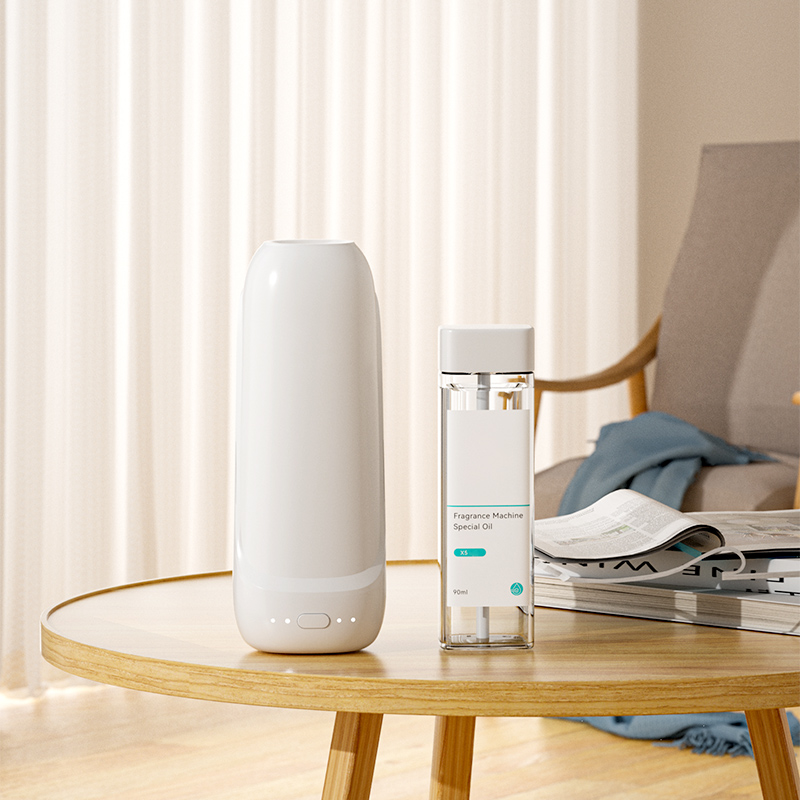
Ultrasonic devices dominate the residential market. They operate using a small ceramic disc located at the base of the water reservoir. This disc vibrates at highly rapid, ultrasonic frequencies—often up to 2.4 million times per second. This vibration agitates the water and the drops of oil resting on its surface. The intense mechanical action breaks the liquids down into a fine, cool mist. A small internal fan then blows this mist out of the top nozzle and into the room.
A nebulizing essential oil machine represents the professional standard for aromatic dispersion. These devices do not use water or heat. Instead, they rely on pressurized air and a vacuum effect known as Bernoulli's principle. A small air pump forces air through a narrow tube, creating a vacuum that pulls pure essential oil from the bottom of a glass chamber to the top. The pressurized air then blows across the oil, atomizing it into incredibly fine particles dispersed directly into the environment.
Evaporative models use airflow, typically generated by a small internal fan, to blow air through a pad or filter soaked in essential oil. The moving air causes the oil to evaporate quickly, dispersing the scent into the room. Heat diffusers operate on a similar principle but use a gentle heat source—such as a candle flame or a low-wattage electric heating element—to accelerate the evaporation process.
The trade-offs for these technologies are significant. We generally discourage heat diffusers for therapeutic use. Heat fundamentally alters the delicate chemical composition of the plant extracts. It degrades their therapeutic properties and potentially creates unpleasant, burnt odors. Fan-based evaporative models do not damage the oil, but they fractionate the scent. Lighter top notes evaporate quickly, while heavier base notes linger on the pad. This results in an uneven aromatic profile over time. However, small, fan-based evaporative models remain an excellent, low-maintenance choice for localized, personal use, such as on a crowded office desk or inside a vehicle.
| Technology Type | Mechanism | Best Use Case | Maintenance Level |
|---|---|---|---|
| Ultrasonic | High-frequency vibration in water | Bedrooms, personal spaces, sleep routines | Medium (Requires frequent water changes and wiping) |
| Nebulizing | Pressurized air atomization (Waterless) | Large open areas, clinical settings, high potency | High (Requires alcohol flushing to prevent clogs) |
| Evaporative | Fan-assisted airflow over an oil pad | Desks, cars, localized personal scenting | Low (Requires occasional pad replacement) |
Selecting the correct device requires mapping the technical specifications to the physical dimensions of your space. An undersized unit will fail to scent the room, while an oversized unit can quickly cause headaches and respiratory irritation. If you attempt to scent an open-concept living, dining, and kitchen area, standard ultrasonic units will struggle. In these large spaces, you must upgrade to either a high-output commercial ultrasonic unit or a waterless nebulizing system capable of projecting micro-particles across vast square footage.
| Room Size (Sq. Ft.) | Recommended Device Type | Ideal Reservoir Capacity |
|---|---|---|
| Under 150 (Bathrooms, Small Offices) | Ultrasonic or Evaporative | 50mL - 100mL |
| 150 - 300 (Standard Bedrooms) | Ultrasonic | 100mL - 200mL |
| 300 - 500 (Living Rooms, Master Suites) | Large Ultrasonic or Small Nebulizer | 300mL - 500mL |
| 500+ (Open Concept, Commercial) | Nebulizing System | Waterless (Direct from bottle) |
Pure essential oils are highly concentrated, volatile organic compounds. Many of them, particularly citrus oils rich in d-limonene, act as natural solvents. If you place them inside a device made from cheap, low-grade plastic, the oil will slowly dissolve the reservoir walls. This degradation destroys the machine and leaches toxic plastic chemicals into the water. The device then aerosolizes these chemicals and blows them into your breathing space. When evaluating a unit, material safety stands as a top priority. Ensure the water reservoir utilizes high-grade, BPA-free polypropylene (PP5) plastic, which resists essential oil corrosion. Alternatively, opt for devices constructed entirely from inert materials like medical-grade glass or glazed ceramic.
The operational features of a unit dictate how seamlessly it integrates into your daily routine. Continuous misting rarely serves as the optimal setting. The human olfactory system quickly adapts to constant smells, a phenomenon known as olfactory fatigue or nose blindness. After 15 minutes of continuous exposure, you stop noticing the scent, leading many users to mistakenly add more oil. Intermittent misting settings prevent this fatigue, keeping the aroma noticeable while conserving oil. Timer functions provide safety and support sleep hygiene. For advanced setups, consider units with smart-home integration. This allows you to schedule automated routines that trigger specific scents to align with your waking hours or evening wind-down protocols.
The physical placement of your unit drastically impacts its performance. To maximize dispersion, follow these specific setup protocols:
Overloading the water reservoir with essential oil represents the most common operational error. This results in overpowering scents, headaches, and wasted product. Adhere to standard dilution guidelines to maintain a balanced atmosphere. For a standard ultrasonic model, the rule of thumb dictates 3 to 5 drops of pure essential oil per 100mL of water. If you use a 300mL device, you add 9 to 15 drops total. Start at the lower end of this spectrum, especially when using highly pungent oils like Peppermint or Ylang Ylang. You can always add an extra drop if the scent feels too faint, but you cannot remove oil once it mixes into the water.
Creating a balanced, aromatherapist-grade experience requires understanding the volatility of different oils. Oils evaporate at different rates, categorized as top, middle, and base notes. Top notes like Lemon, Bergamot, and Grapefruit hit the nose immediately but evaporate quickly. Middle notes like Lavender, Rosemary, and Geranium form the core of the scent profile and last longer. Base notes like Cedarwood, Frankincense, and Patchouli are heavy and viscous. They linger in the air for hours, anchoring the lighter scents. A standard synergistic blend utilizes a ratio of roughly 30% top notes, 50% middle notes, and 20% base notes. For example, a grounding focus blend might consist of 2 drops of Sweet Orange, 3 drops of Rosemary, and 1 drop of Frankincense.
The biological sensitivities of household pets differ vastly from humans. Many common essential oils present severe toxicity risks to cats and dogs. Felines lack a specific liver enzyme called glucuronyl transferase, which is necessary to metabolize and eliminate phenols found in plant extracts. Diffusing toxic oils in a closed room leads to severe respiratory distress, neurological issues, or liver failure in pets. Highly dangerous oils include Eucalyptus, Tea Tree, Peppermint, Citrus, Cinnamon, and Ylang Ylang. Always research an oil's pet safety profile before purchasing. When diffusing safe oils, ensure the room remains well-ventilated. Always leave the door open so the animal has a clear exit path if the scent becomes overwhelming. For households with highly sensitive pets or infants, passive diffusion alternatives like a personal inhaler stick provide a safer option than active aerosolization.
While essential oils come from nature, they technically classify as Volatile Organic Compounds (VOCs). Emitting high concentrations of VOCs into a sealed environment degrades indoor air quality. Air overload occurs when users run multiple devices continuously in unventilated spaces. This dense concentration of airborne particles triggers asthma attacks, induces migraines, and irritates the eyes and throat. Treat active diffusion as an intermittent atmospheric enhancement, not a continuous background utility. Run your device in 30- to 60-minute intervals. Ensure your home receives adequate fresh air exchange by periodically opening windows or running an HVAC system with high-quality air filters.
Water-based ultrasonic units present a significant hygiene risk if neglected. Standing water combined with organic plant material creates an ideal breeding ground for mold, mildew, and airborne bacteria. If you fail to clean the reservoir, the ultrasonic disc aerosolizes these harmful spores and blows them directly into your lungs. Strict maintenance protocols remain non-negotiable.
A: The primary purpose is to disperse aromatic plant molecules into the air. This active dispersion neutralizes airborne household odors, manages mood through olfactory stimulation, and enhances the overall atmospheric experience of a specific room.
A: For a standard ultrasonic device, use 3 to 5 drops of pure essential oil per 100mL of water. Adhering to this ratio prevents the scent from overwhelming the space and mitigates the risk of triggering headaches.
A: No, they do not purify the air mechanically. While specific oils neutralize odor-causing molecules, these devices do not filter out dust, dander, or particulate matter. They cannot replace the function of a dedicated HEPA air purifier.
A: You should run the device for 30 to 60 minutes at a time. Operating it continuously leads to olfactory fatigue, where you no longer smell the aroma, and causes an unnecessary buildup of volatile organic compounds in your indoor air.
A: Ultrasonic models add a small amount of moisture to the air, providing minor localized comfort. However, their water output is far too low to significantly raise the baseline humidity of a room. They should not replace a dedicated humidifier.


