
Tracy Phone:+86-18015583589 Tracy Email:tracy@ramon-aroma.com Grace Phone:+86-15152466145 Grace Email:grace@ramon-aroma.com


Views: 0 Author: Site Editor Publish Time: 2026-06-26 Origin: Site


Walking into a beautifully scented space instantly elevates your mood and shapes your perception of the environment. Yet, achieving perfect atmospheric balance remains surprisingly difficult for many homeowners and facility managers. The core problem usually stems from scaling. Selecting the wrong diffuser scale leads to either an overpowering, headache-inducing scent concentration or a complete lack of fragrance impact.
You cannot rely on standard marketing claims to guarantee results. The technical reality shows airflow dynamics, ceiling height, and diffusion technology dictate actual performance. Water-based units behave very differently from waterless systems. Understanding these mechanical differences helps you avoid common purchasing mistakes.
This article provides a clear, metric-driven framework to evaluate and shortlist the right diffusion technology. You will learn how to match device capabilities to exact square footage and daily operational realities. By following these guidelines, you can create a perfectly balanced olfactory experience.
Small Spaces (< 400 sq. ft.): Ultrasonic and standard nebulizing diffusers are optimal for localized, low-noise scenting (e.g., bedrooms, home offices).
Large Spaces (1,000+ sq. ft.): Cold-air waterless scent diffuser machines or HVAC-integrated systems are required for consistent, wide-area coverage.
The Sizing Rule: Always calculate total cubic volume (factoring in vaulted ceilings and open-floor plans), not just standard square footage.
Maintenance Trade-off: High-capacity machines require less frequent refilling but demand stricter cleaning protocols to prevent micro-tube clogging.
Before purchasing any fragrance device, you must accurately quantify your target coverage area. Standard square footage metrics often mislead buyers. Two rooms with identical floor spaces can require entirely different diffusion strategies based on vertical space and air movement.
Manufacturers usually rate devices based on two-dimensional square footage. However, scent molecules disperse in three dimensions. You should always calculate cubic volume to understand true coverage needs. Multiply length by width by height to find this number.
A 500 sq. ft. room featuring standard 8-foot ceilings contains 4,000 cubic feet of air. The exact same 500 sq. ft. footprint featuring 12-foot vaulted ceilings contains 6,000 cubic feet of air. This 50% increase in air volume severely dilutes fragrance concentration. A standard unit will perform well in the first room but fail completely in the second.
Static air does not exist in modern buildings. Heating, ventilation, and air conditioning systems constantly push and pull air across zones. You must map these airflow patterns before placing a unit.
Forced-Air Systems: Active vents quickly disperse light mist. Placing a standalone unit directly under a return vent will suck the fragrance out of the room before you can smell it.
Open Concept Layouts: Without physical walls, scent molecules drift into adjacent hallways and kitchens. You essentially scent the entire floor, not just the living room.
Natural Ventilation: Open windows introduce unpredictable cross-breezes. High-wind environments demand higher output settings to maintain a noticeable aroma.
Many consumers mistakenly buy oversized commercial units for small bedrooms, assuming they will get better results. This triggers a biological response called olfactory fatigue, commonly known as scent blindness. Your brain naturally filters out overwhelming sensory inputs. Oversizing a machine for a small room overwhelms your nasal receptors. Within twenty minutes, you stop smelling the fragrance entirely, leading you to turn up the dial and waste expensive oils.
Small, enclosed environments require precision rather than raw power. Bedrooms, personal offices, and small retail boutiques benefit most from localized diffusion technologies.
For spaces under 400 square feet, ultrasonic models and traditional reed diffusers remain the best choices. Ultrasonic models use rapid vibrations to blend essential oils into a fine water mist. Passive reed diffusers rely on natural evaporation. A high-quality room diffuser machine utilizing ultrasonic technology strikes the perfect balance for daily residential use.
When evaluating small-scale units, examine these specific metrics:
Expected Run Times: Standard ultrasonic water tanks range from 100ml to 500ml. Expect these to run for 4 to 8 hours before requiring a refill.
Mist Output Control: Look for intermittent modes. A device pausing for 30 seconds every minute prevents the scent blindness trap mentioned earlier.
Ultrasonic units offer near-silent operation. The gentle trickle of water creates a soothing white noise, making them ideal for sleep environments or focused deep-work sessions. They present a much lower upfront hardware cost compared to commercial nebulizers. Furthermore, the water-based mist doubles as a mild room humidifier during dry winter months.
Water-based diffusion carries inherent physical limitations. Scent molecules bind to heavy water droplets. These heavy droplets fall quickly to the floor, severely limiting travel distance. You also face strict maintenance requirements. Stagnant water breeds mold rapidly. You must refill the tank daily and perform frequent wipe-downs to ensure safe air quality.
Do not prioritize raw output power for small rooms. Instead, prioritize ease of cleaning. Select designs featuring wide openings that easily fit a sponge. Require automatic shut-off safety features to prevent motor burnout when the water runs dry. Finally, consider aesthetic integration; smaller units often sit on visible nightstands or desks, so design matters.
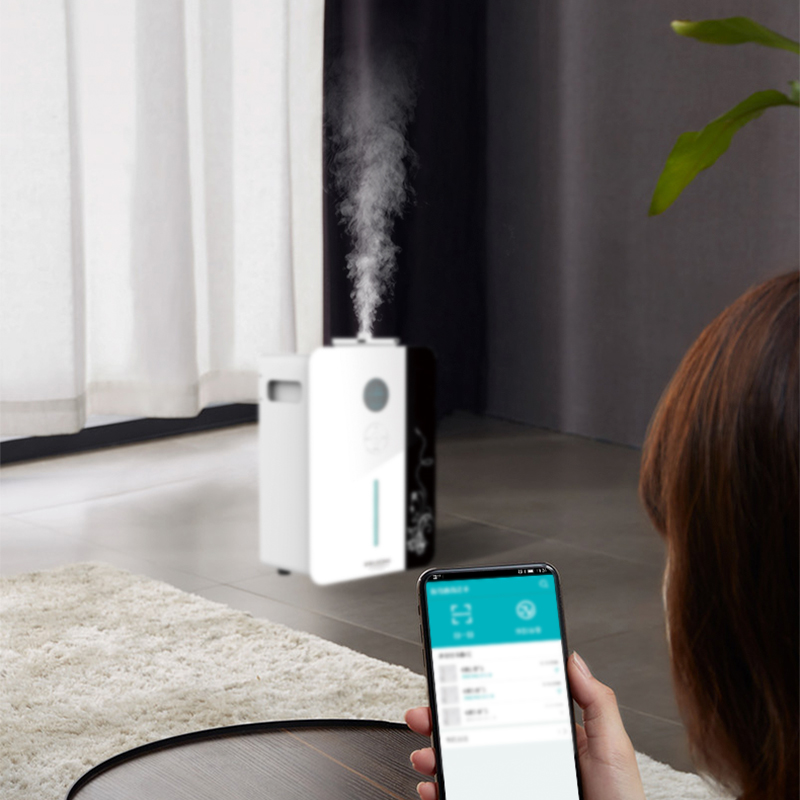
Expansive hotel lobbies, open-concept living floors, and large commercial spaces expose the fatal flaws of small ultrasonic units. To effectively manage a massive cubic volume, you must upgrade your core technology.
Large spaces demand waterless cold-air diffusion or fully integrated HVAC units. Cold-air nebulizing technology uses highly pressurized air to break pure essential oils into microscopic nanoparticles. A commercial-grade scent diffuser machine utilizes this method to guarantee consistent atmospheric coverage without adding moisture.
The evaluation criteria shift dramatically when assessing large-scale systems:
Suspension Time: Micro-droplets remain suspended in the air for hours, whereas heavy water mist falls within minutes.
Coverage Capacity: These machines easily handle ranges from 1,000 to 5,000+ square feet per unit.
Waterless systems deliver unparalleled efficiency. They add zero humidity to the environment, protecting sensitive hardwood floors and electronics. They offer exceptionally low refill frequencies. A 500ml bottle of pure oil might last an entire month under standard scheduling. They also provide precise intensity control, allowing you to fine-tune the ambient fragrance to a subtle, background level.
Performance comes at a cost. Cold-air compressors generate higher decibel levels. You will hear an audible pump noise during the dispersion cycle. The initial hardware investment runs significantly higher than basic water models. Additionally, manufacturers often design these machines to lock users into specific oil bottle thread sizes, limiting aftermarket oil choices.
When shortlisting commercial-grade systems, prioritize programmable scheduling. App or Wi-Fi connectivity allows you to align scenting hours with business operations or family routines. Look for durable commercial-grade aluminum housings rather than cheap plastics. Insist on adjustable intensity levels spanning at least ten gradients.
Technology Comparison Chart | ||
Feature | Ultrasonic (Small Spaces) | Cold-Air (Large Spaces) |
|---|---|---|
Method | Water & Oil Mixture | Pressurized Air (Waterless) |
Coverage | Up to 400 sq. ft. | 1,000 - 5,000+ sq. ft. |
Maintenance | Daily Refills / Weekly Cleaning | Monthly Refills / Periodic Flushes |
Noise Level | Whisper Quiet (< 25dB) | Noticeable Hum (35dB - 50dB) |
Matching a machine to room size solves only half the equation. Daily satisfaction depends on aligning the device features with your lifestyle and environmental constraints. Evaluate these four critical dimensions before making a final decision.
You must map the sound profile of the machine against the primary use of the room. A waterless compressor produces a distinct mechanical hum. Placing one of these units in a silent bedroom disrupts sleep. Conversely, the gentle trickle of an ultrasonic unit gets completely lost in a busy commercial lobby. Match the decibel rating to the ambient noise floor of your space.
Different technologies burn through consumables at vastly different rates. Waterless cold-air machines consume pure essential oils or fragrance oils directly. If you run a high-output machine continuously at maximum intensity, you will deplete oil reserves rapidly. Assess your budget for ongoing consumable purchases. Calculate how many milliliters a device processes per hour on its lowest setting.
Modern devices offer extensive digital integrations. Determine if Bluetooth or Wi-Fi scheduling serves as a necessary tool or a useless gimmick.
Necessary: Retail spaces, large homes, and offices benefit heavily from scheduling. You can set the machine to start diffusing thirty minutes before arrival and turn off automatically at closing time.
Gimmick: Small bedroom units usually only run when you are physically present. A simple manual push-button works perfectly and reduces hardware failure points.
Chemical compatibility matters immensely. Pure essential oils dissolve cheap plastics. For ultrasonic units, demand BPA-free plastic reservoirs. For waterless nebulizers, verify the internal tubes use corrosion-resistant materials. Furthermore, consider pet and child safety. High concentrations of certain essential oils (like tea tree or eucalyptus) pose severe risks to cats and dogs. Adjustable output controls help maintain safe dilution levels in shared spaces.
Every technology requires ongoing physical interaction. Ignoring the mechanical reality of your chosen device guarantees premature hardware failure and potential property damage.
Ultrasonic units eject a heavy mist. In small or poorly ventilated spaces, this moisture settles onto immediate surroundings. Over time, you will notice an oily, damp residue coating adjacent wood furniture, paperwork, or delicate electronics. Never place water-based units directly next to laptops, televisions, or unsealed wood tables.
Waterless nebulizers utilize microscopic tubes to atomize oil. These systems will inevitably fail if you leave them unused while filled with thick, viscous essential oils like Vetiver, Sandalwood, or Patchouli. The oil oxidizes and hardens inside the nozzle. You must execute a routine cleaning flush using rubbing alcohol to clear these micro-tubes. Run pure isopropyl alcohol through the system for fifteen minutes whenever changing scent profiles.
Connecting a commercial unit directly into your central ductwork provides the ultimate "invisible" scenting experience. However, this process carries substantial risks. Amateurs should never attempt HVAC integration. You risk puncturing ductwork incorrectly, leading to air leaks. Furthermore, installing the injection nozzle too close to the blower motor or air filter causes localized oil saturation. Professional installation ensures the vapor travels safely past mechanical components and directly into the living spaces.
Routine Flushing: Run a small amount of white vinegar (for ultrasonic) or rubbing alcohol (for waterless) through your system once a month.
Use Filtered Water: Hard tap water creates calcium deposits on ultrasonic ceramic discs. Always use distilled or highly filtered water.
Strategic Placement: Place standalone units at least two feet off the ground to allow vapor to disperse before hitting the floor.
Selecting the optimal device relies entirely on matching mechanical capabilities to spatial realities. Remember our final decision framework: if your target room is enclosed, relatively small, and quiet is paramount, buy an ultrasonic unit. If your space features an open-concept layout, high ceilings, and requires "set-it-and-forget-it" consistency, invest in a waterless cold-air system.
Take actionable steps before opening your wallet. First, physically measure your room dimensions, including ceiling height. Next, verify your local HVAC layout to understand how air naturally flows through the space. Finally, honestly assess your willingness to perform weekly water tank wipe-downs versus monthly nebulizer flushes. Grounding your purchase in these operational metrics guarantees a beautifully scented, stress-free environment.
A: We do not recommend this approach. Even on the lowest settings, commercial waterless machines output high concentrations of pure oil. Placing one in a small, enclosed room quickly leads to overpowering scents, headaches, and olfactory fatigue. You also waste money on expensive hardware designed for tasks you do not need.
A: Yes, waterless models pull directly from pure oil bottles without water dilution. Consequently, they consume oil faster. However, because they create microscopic nanoparticles that stay airborne longer, they scent larger areas much more efficiently. You use more oil, but you achieve a vastly superior, wider-reaching fragrance experience.
A: Use the square footage rule-of-thumb. If your contiguous open space remains under 1,500 square feet, a powerful standalone cold-air tower usually suffices. If your space exceeds 2,000 square feet or spans multiple enclosed rooms, an HVAC-integrated unit becomes necessary to overcome complex airflow barriers.
A: They generate more noise than water-based models. Because they utilize internal air compressors, you will hear a distinct mechanical hum or vibration when the pump activates. Most operate between 35 and 50 decibels. Placing them on a solid surface or utilizing an HVAC system hides most of this operating noise.


