
Views: 0 Author: Site Editor Publish Time: 2026-09-27 Origin: Site


Purchasing a scent device often leads to a familiar frustration. You buy a beautiful unit only to find it fails to scent a large living space. Or, you place a powerful device in a small bedroom and wake up to an overwhelming, damp environment. The market is saturated with aesthetically pleasing but technically mismatched devices. Consumers frequently fail to align the diffusion technology with the specific square footage, airflow, and maintenance requirements of their target room.
We are currently witnessing a massive clean air shift in home fragrance. Modern consumers want customizable scenting without open flames, soot, or indoor air quality degradation. Traditional scented candles and smoky incense are rapidly being replaced. However, replacing them effectively requires understanding how different atomization methods interact with your indoor environment.
This guide serves as a technical and practical evaluation framework. We break down the exact type of device required for specific rooms based on scent throw, ongoing consumable usage, and operational realities. You will learn how to match water-based, waterless, and passive technologies to your exact spatial needs.
Technology Dictates Performance: An ultrasonic diffuser is cost-effective for localized spaces, while cold-air/nebulizing technology is required for large, open floor plans.
Purpose Beyond Fragrance: Selecting the right device also depends on the desired outcome—whether creating a therapeutic spa ritual for sleep or simply masking household odors.
Maintenance is Non-Negotiable: Water-based systems require strict, frequent cleaning protocols to prevent mold and bacterial growth, whereas waterless systems demand higher essential oil budgets.
HVAC Integration Requires Professional Scrutiny: Whole-home scenting via HVAC systems offers the most consistent coverage but requires specific ductwork compatibility and higher upfront investment.
Safety First: Device selection must account for ambient humidity levels, furniture proximity, and the presence of pets or children (who are highly sensitive to specific essential oil compounds).
Understanding how a device disperses scent is the first step in making a correct selection. Manufacturers utilize four primary mechanisms to propel fragrance into the air. Each method carries distinct advantages and strict limitations regarding room size and maintenance. We evaluate these based on fluid dynamics, atomization efficiency, and daily operational demands.
The mechanism behind an ultrasonic diffuser relies on a piezoelectric transducer located at the base of the water reservoir. This small ceramic disc vibrates at ultrasonic frequencies, typically around 2.4 million times per second. These rapid vibrations create capillary waves on the surface of the water, breaking down both the water and the added oils into microscopic droplets. A small internal fan then expels this mixture into the room as a fine, cool mist.
Pros: These units add light humidity to dry environments, which benefits respiratory comfort during winter months. They operate at very low decibel levels, usually under 30 dB. They consume oils at a very economical rate. Many models feature integrated LED lighting, doubling as a gentle nightlight.
Cons: Their scent throw is inherently limited. The mist particles are relatively heavy due to the water content, causing them to fall to the floor rather than suspend in the air. Coverage usually maxes out under 400 square feet. Because they rely on standing water, they require daily water changes and strict weekly deep cleaning to prevent microbial growth and mineral scale buildup.
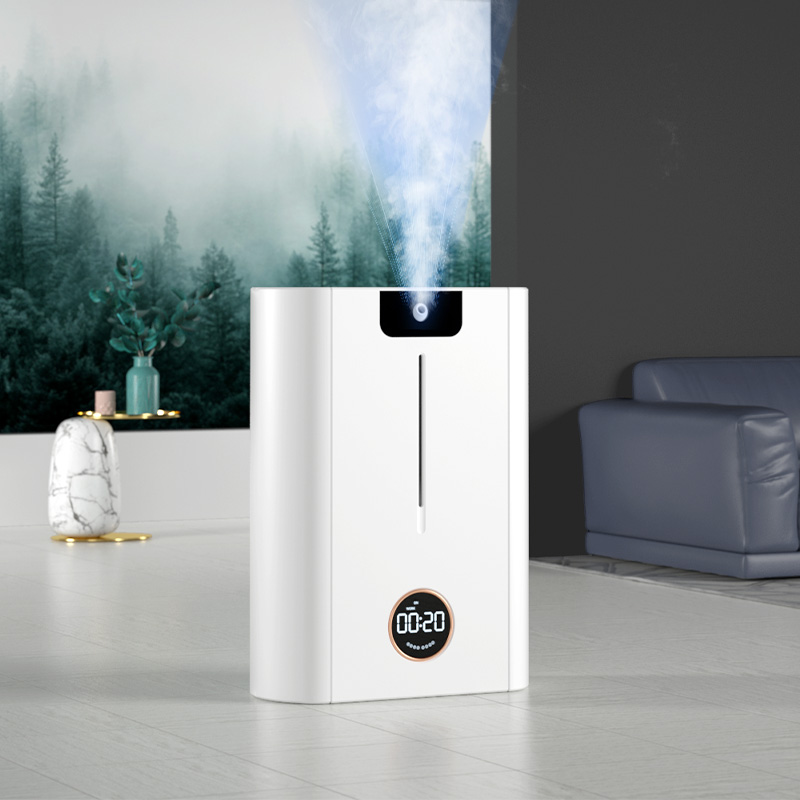
Nebulizing technology uses pressurized air to atomize pure oils into micro-particles. This process relies on Bernoulli's principle. An internal air pump forces air through a small tube, creating a vacuum that pulls the oil up from the reservoir. The pressurized air then blasts the oil against a glass or plastic baffle, breaking the liquid into an invisible, highly concentrated dry mist. This method requires zero heat and zero water.
Pros: This method delivers maximum scent concentration. It preserves the complex therapeutic integrity of the oil perfectly because it avoids heat degradation. The resulting micro-particles are incredibly light, allowing them to suspend in the air for hours. These devices cover large square footage rapidly and effectively.
Cons: The internal air pump generates higher noise levels. You will often hear an audible humming or vibrating sound, especially if the unit sits on a hard surface. They consume oils at a significantly faster rate than water-based models. Initial hardware costs are noticeably higher due to the complex internal pump mechanisms.
Evaporative systems operate on a remarkably simple principle. A small internal fan blows ambient room air across a disposable absorbent pad or tray saturated with oils. The airflow accelerates the natural evaporation process, carrying the scent molecules into the surrounding environment. These systems rely heavily on the Cubic Feet per Minute (CFM) rating of their internal fans. A low-CFM fan will barely push the scent past the immediate casing of the unit.
Pros: These units are highly portable. Many operate on batteries or USB power. They offer whisper-quiet operation. They add absolutely zero moisture to the air, making them safe for highly humid climates or near sensitive electronics.
Cons: Scent distribution is notoriously uneven. Essential oils consist of top, middle, and base notes. Lighter top notes evaporate much faster than heavier base notes, altering the fragrance profile over time. Users face frequent, ongoing purchases of replacement absorbent pads. You must replace the pad entirely when switching fragrances to prevent clashing scents.
Passive diffusion relies entirely on natural capillary action and ambient air circulation. Reeds draw scented liquids upward from a glass vessel. Porous ceramic or wood blocks absorb dropped oils and slowly release them as air moves across their surface. This process is heavily influenced by ambient room temperature and barometric pressure. A cold room will suppress the evaporation rate, rendering the scent almost undetectable.
Pros: They consume zero energy and require no electrical outlets. Operation is completely silent. There is absolutely zero mechanical failure risk.
Cons: The scent throw is exceptionally weak. You cannot adjust the scent intensity or turn the device off. The microscopic channels inside rattan reeds eventually become saturated with heavy oil molecules and dust from the air. You must flip the reeds weekly and replace them entirely every month to maintain any noticeable scent output.
Technology Type | Moisture Added | Ideal Room Size | Maintenance Level | Scent Intensity |
|---|---|---|---|---|
Ultrasonic | Yes (Light Humidity) | Small to Medium | High (Weekly Cleaning) | Moderate |
Nebulizing / Cold-Air | No | Large / Open Floor Plan | Medium (Periodic Flushing) | Very High |
Evaporative / Fan | No | Personal Space / Desk | Low (Pad Replacements) | Low to Moderate |
Passive (Reeds/Ceramic) | No | Bathrooms / Closets | Very Low | Very Low |
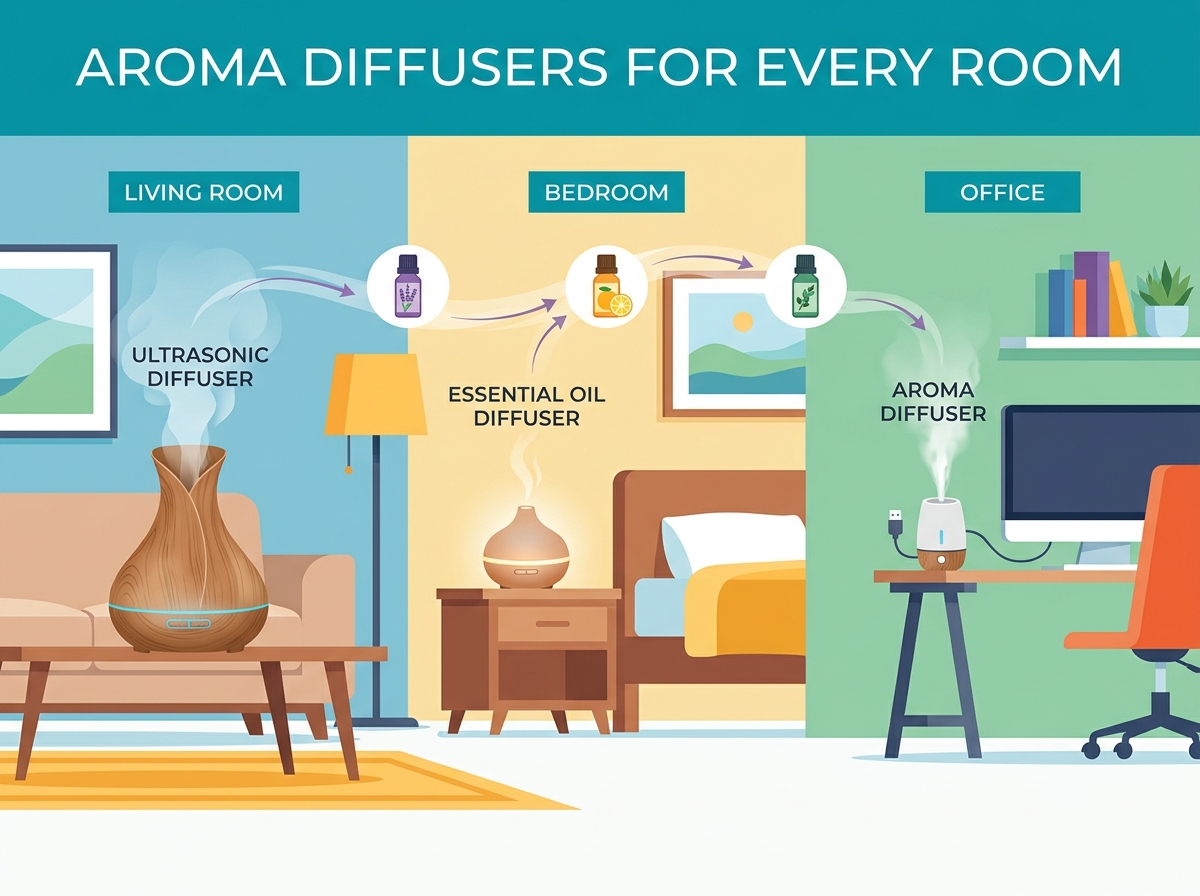
Selecting the right hardware requires matching the technology to the specific environmental challenges of each room. Airflow, humidity levels, and daily usage patterns dictate which device will succeed and which will fail.
Modern homes frequently feature open-concept designs connecting kitchens, dining areas, and living rooms. These massive volumes of air dilute fragrance rapidly. High ceilings and constant foot traffic further disrupt scent accumulation.
Success Criteria: You need high scent throw, the ability to combat lingering cooking odors, and consistent dispersion across varied airflow patterns.
Recommended Solution: Cold-air/nebulizing diffusers are mandatory here. Water-based units simply lack the output capacity for this square footage.
Implementation Note: Place the unit centrally. Keep it away from direct return-air vents to prevent your HVAC system from immediately extracting the scent. Position it on a solid surface to minimize vibration noise from the internal pump. Avoid placing it directly under ceiling fans, which will force the dry mist to the floor before it can disperse.
Bedrooms demand a delicate balance. The environment must remain conducive to sleep, meaning noise and light pollution must be strictly controlled.
Success Criteria: Whisper-quiet operation is critical. You need adjustable timer settings, optional ambient lighting, and gentle scent dispersion tailored for sleep and relaxation.
Recommended Solution: A high-quality essential oil diffuser using ultrasonic technology fits perfectly. It provides gentle output without overwhelming a closed room.
Implementation Note: Position the device at least three feet above the floor on a water-resistant surface. This prevents moisture accumulation on wood furniture or carpets. Pair the unit with calming oils like lavender or chamomile to support nighttime spa rituals and anxiety reduction.
Bathrooms present unique challenges due to fluctuating temperatures, high ambient humidity from showers, and limited counter space.
Success Criteria: Devices should require zero electricity for safety near water sources. They must provide continuous low-level odor neutralization without user intervention.
Recommended Solution: Reed diffusers or small wall-plugin evaporative diffusers are ideal.
Implementation Note: Strictly avoid ultrasonic models in bathrooms. Adding more moisture to an already humid environment encourages mold growth on walls and ceilings. Passive options deliver consistent background scenting without exacerbating moisture issues.
Workspace scenting requires precision. You want to experience the fragrance without distracting yourself with loud machinery or bothering others in shared environments.
Success Criteria: Look for a small footprint, USB or battery power options, and the ability to create a localized scent bubble.
Recommended Solution: Fan diffusers or miniature ultrasonic units excel here.
Implementation Note: Keep the device within arm's reach. This setup is ideal for pairing with focus-enhancing or stress-relieving oils like peppermint or rosemary during the workday. The scent remains confined to your immediate desk area.
For those seeking a luxury hotel experience, standalone units often fall short. True whole-home scenting requires tapping into the home's central respiratory system.
Success Criteria: Seamless, invisible scenting across multiple rooms simultaneously without managing multiple individual devices.
Recommended Solution: HVAC-connected cold-air diffusers.
Implementation Note: We must debunk the "Hallway Myth." Placing one powerful standalone diffuser in a central hallway will not scent a whole house due to walls, closed doors, and dead air zones. True whole-house fragrance requires connecting a specialized unit directly to your ductwork. The system must be installed on the supply side of the Air Handling Unit (AHU), past the furnace and air conditioning coils, to prevent the oils from coating the internal mechanical components. Installers use a bypass tube to inject the dry mist into the airstream. The HVAC fan must be running continuously to push the fragrance through the home.
Beyond room size, evaluating Aroma Diffusers requires looking closely at how manufacturer claims translate into real-world performance. Specifications on a box rarely tell the whole story.
Manufacturers calculate "coverage area" under highly controlled conditions. They test devices in empty, closed rooms with zero cross-ventilation. Your home is vastly different. High ceilings, open doorways, ceiling fans, and HVAC drafts dramatically alter air movement. These real-world factors routinely reduce effective coverage by up to 30%. When sizing a unit for a specific room, always purchase a device rated for slightly more square footage than you actually possess.
There is a massive difference between what an oil smells like and what it does when atomized. Heat alters the chemical structure of essential oils, destroying their therapeutic properties. Cold-air diffusers preserve these complex chemical structures perfectly. If your goal is targeted aromatherapy for stress relief or massage environments, waterless cold-air atomization is functionally superior. If you merely want your living room to smell like citrus, water-based dispersion is perfectly adequate.
The thickness, or viscosity, of your chosen oil directly impacts device performance. Heavy base notes like vetiver, sandalwood, and patchouli are thick and resinous. These oils frequently clog the micro-nozzles of cold-air nebulizers if not blended with lighter carrier oils or high-volatility top notes. Ultrasonic units handle thick oils slightly better because the water acts as a carrier, but the heavy oil molecules still tend to sink to the bottom of the reservoir, requiring more frequent cleaning of the transducer disc. Understanding the viscosity of your preferred scents helps dictate which hardware will require the least amount of daily maintenance.
Neglected maintenance is the primary reason these devices fail prematurely. Water-based units require a strict cleaning protocol. Failing to clean your device leads to clogged atomizers, mold dispersion into your breathing air, and voided warranties.
Follow these exact steps for cleaning an ultrasonic unit:
Unplug the device from the wall outlet to ensure electrical safety.
Empty any remaining water from the rear of the unit, avoiding the air intake vent.
Fill the reservoir halfway with clean water and add one teaspoon of white vinegar.
Let the solution sit for five minutes to dissolve mineral scale.
Dip a cotton swab in vinegar and gently wipe the ceramic ultrasonic disc at the bottom.
Rinse the reservoir thoroughly with distilled water and wipe dry with a microfiber cloth.
Nebulizers require different care. You must periodically run a few milliliters of rubbing alcohol through the system to dissolve sticky resin buildup in the micro-tubes.
The initial purchase price of the hardware is only a fraction of the expense. You must evaluate the ongoing oil burn rate. An ultrasonic unit might use 10 to 15 drops of oil per day, making it highly economical. A waterless nebulizer, however, can consume several milliliters of pure oil per week depending on the intensity settings. Fan diffusers introduce another recurring cost: disposable absorbent pads. You must factor these consumable rates into your decision before committing to a specific technology.
Introducing atomized liquids into your indoor air carries specific risks. Proper placement and oil selection are critical to protecting your family and your property.
Mammals metabolize volatile organic compounds differently. Cats lack a specific liver enzyme required to break down various chemical compounds found in essential oils. Inhaling atomized oils can lead to a toxic buildup in their system over time. Dogs have a better metabolic capacity but possess an olfactory system tens of thousands of times more sensitive than humans. Eucalyptus, tea tree, citrus, and peppermint can cause severe respiratory distress or liver damage in pets. Children also possess highly sensitive respiratory systems. In homes with vulnerable populations, avoid concentrated nebulization. Instead, utilize passive diffusion or highly diluted ultrasonic dispersion. Always ensure the room has adequate ventilation and that pets have an open door to leave the scented area.
Using tap water in an ultrasonic unit often results in "white dust." This dust consists of calcified minerals expelled into the air, which eventually settle on electronics and furniture. Always use distilled water to prevent this. Furthermore, pure oil droplets are highly corrosive. If a nebulizer is placed incorrectly, the heavy dry mist can settle onto polished wood finishes, stripping the varnish. Oils can also melt certain plastics upon contact. Always place any active aroma diffuser on a protective tray or a glass surface. Maintain a minimum clearance of three feet above the floor and two feet away from any walls or overhanging cabinets.
Common Issue | Probable Cause | Field Solution |
|---|---|---|
Weak Mist Output (Ultrasonic) | Mineral scale buildup on the ceramic disc. | Perform a deep clean using white vinegar and a cotton swab. |
Loud Humming Noise (Nebulizer) | Vibration transferring to a hard surface. | Place a dense rubber or neoprene mat under the device base. |
Water Pooling Around Unit | High ambient humidity preventing mist evaporation. | Lower the mist output setting or move the unit away from cold windows. |
Scent Fades Quickly | Using high-volatility top notes (e.g., citrus). | Blend with heavier base notes like cedarwood or patchouli. |
Device Won't Turn On | Water entered the internal air intake vent. | Unplug immediately. Let it dry completely for 48 hours before testing. |
There is no single perfect device on the market. Success comes from matching the correct technology to the specific room's size, your personal maintenance tolerance, and your desired therapeutic outcome. Choose an ultrasonic unit for bedrooms, spa rituals, and budget-friendly localized scenting. Opt for cold-air nebulizing systems for large living rooms and maximum therapeutic benefit. Rely on passive systems for bathrooms and zero-maintenance zones.
Take the following steps to finalize your setup:
Measure the exact square footage of your target room to establish a baseline capacity requirement.
Assess your weekly routine to determine if you can commit to the strict cleaning schedule required by water-based units.
Evaluate your household for pets or small children to rule out highly concentrated waterless systems if necessary.
Select a high-quality, pure oil free from synthetic carrier fluids to prevent hardware clogs.
A: The terms are largely interchangeable in the consumer market. Both refer to devices designed to disperse scent into the air. However, an essential oil diffuser usually implies the device is built with specialized plastics to handle the corrosive nature of pure, natural oils. An aroma diffuser might sometimes refer to devices meant for synthetic fragrance oils.
A: While many manufacturers state tap water is acceptable, it is highly discouraged. Tap water contains minerals like calcium and magnesium. The device will atomize these minerals, leaving a fine white dust on your furniture and potentially clogging the internal ceramic disc over time. Always use distilled water.
A: Nebulizers use an internal air pump to pressurize the oil and force it through a micro-nozzle. This mechanical process inherently creates vibration and a humming sound. Placing the unit on a soft, vibration-absorbing mat can significantly reduce the ambient noise level in the room.
A: You should empty standing water daily and wipe the reservoir dry. A deep clean using a mixture of water and white vinegar should be performed every five to seven uses. This prevents pink mold, bacterial growth, and hard water scale buildup that degrades performance.
A: No. Reed diffusers rely entirely on passive evaporation and ambient air currents. Their scent throw is extremely localized. They are only effective in small, enclosed spaces like bathrooms, walk-in closets, or placed directly on a bedside table.
A: Yes. Even pure, natural oils contain volatile organic compounds (VOCs). For individuals with hyper-reactive airways, asthma, or severe allergies, inhaling concentrated particulate matter can trigger respiratory spasms. Always consult a pulmonologist before introducing atomized oils into your home.


