
Choose a commercial scent machine around your space, installation and daily operating schedule. Find a scent machine for business reception areas, hotel lobbies, retail stores and showrooms — with equipment paths for procurement, facilities and operations teams.
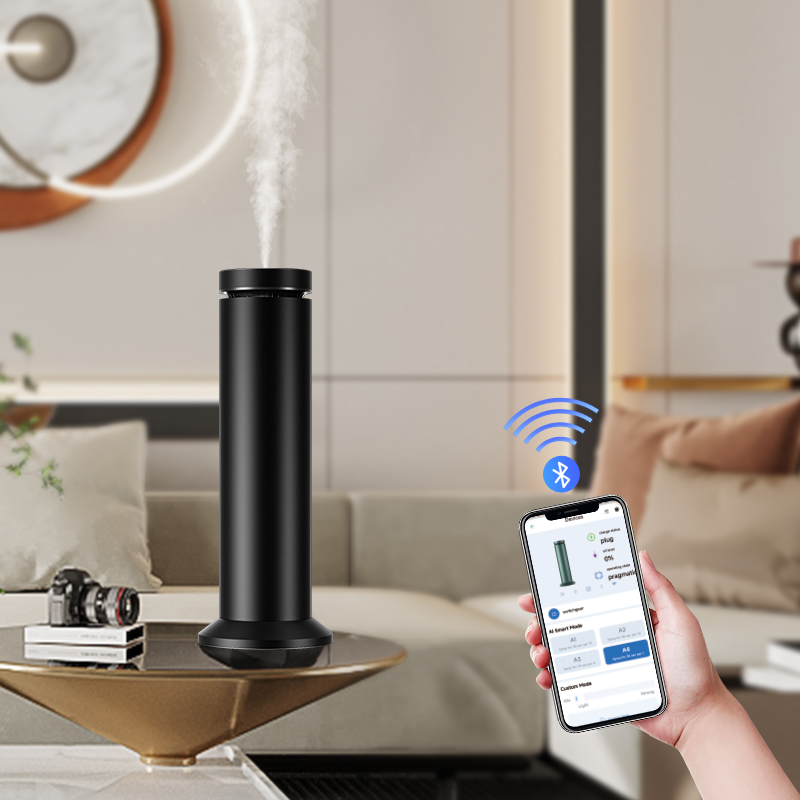
A commercial aroma diffuser releases fragrance into a business space. Begin with a local-zone device or a duct-connected project, then compare installation, control and service access. A commercial fragrance diffuser should fit both the space and the team responsible for daily operation.
3 equipment paths shown
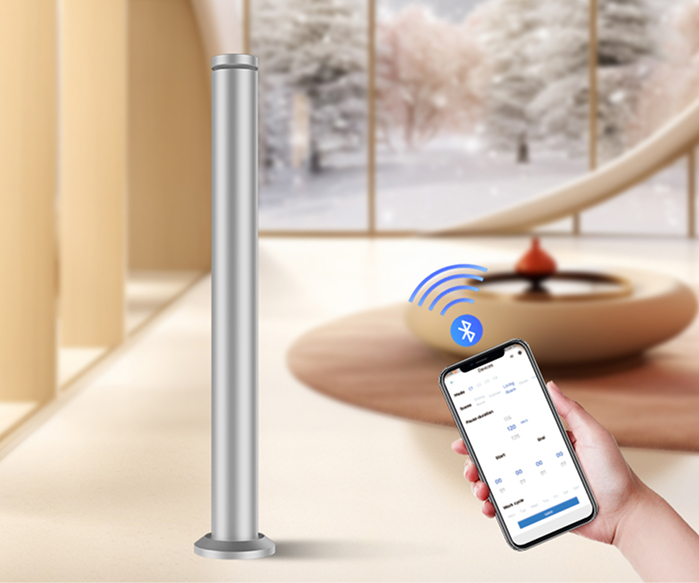
Consider this floor-standing path where a visible device and local Bluetooth control suit a reception zone. Check floor clearance, outlet location and refill access; use the commercial solution page to review K28S before requesting its model-specific datasheet.
View K28S in Commercial Solutions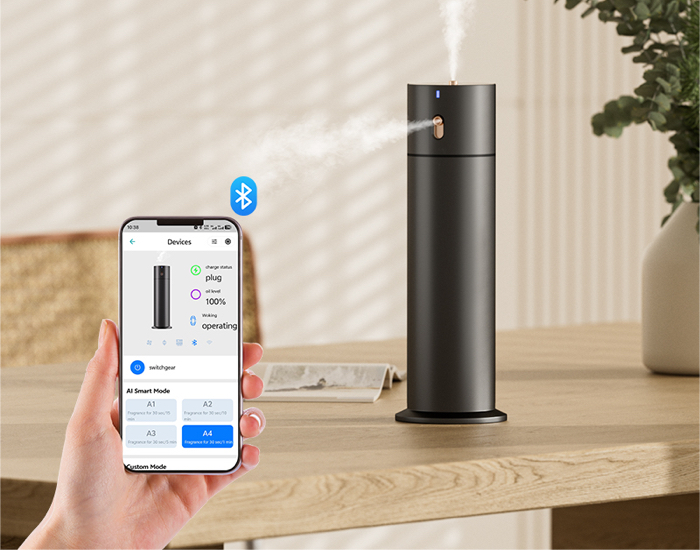
Consider this compact path where placement or outlet access limits the installation. Compare plug-in use with the AAA battery option for your planned duty cycle. Review K10S in the commercial solution page and request runtime conditions before choosing battery operation.
View K10S in Commercial Solutions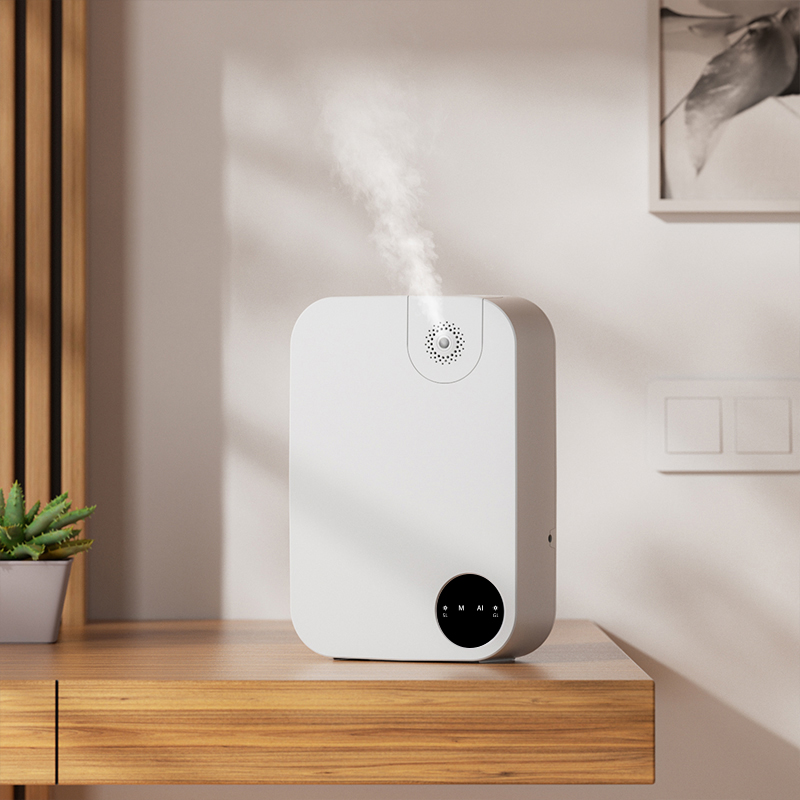
Consider this wall-mountable or desktop path for a local office reception or boutique-store zone. Review BLE control, mounting requirements and the exact power arrangement in the J39S product listing before specifying the installation.
View J39S Product DetailsConsider this listing when the project includes a suitable HVAC distribution route. Review the exact model, connection accessories, fan-operation requirements and access for refills with the installer. A duct-connected listing is a starting point for specification, rather than a universal fit for every air handler.
View HVAC equipmentConsider this listing when comparing app-based adjustment and oil-service requirements for an open commercial zone. Check the exact model, installation options and tested output. App control does not establish off-site Wi-Fi access or multi-device management.
View app-controlled equipmentLooking for another equipment format?
Browse all productsChoose the installation and power arrangement first. Bluetooth is local device communication; an app alone does not establish Wi-Fi or remote fleet management.
| Selection point | K28S | K10S | J39S |
|---|---|---|---|
| Equipment format | Floor-standing column | Compact standalone body | Wall-mountable / desktop |
| Control path | Bluetooth app / physical buttons | Bluetooth app / touch panel | BLE app control |
| Power planning | Include outlet location in the project brief | Plug-in or 4 × AAA batteries | Discuss USB Type-C and D-cell backup configuration |
| Placement decision | Allow floor space and refill access | Choose an accessible, stable location | Check mounting position and service access |
| Before a purchase order | Obtain the exact variant datasheet, approved oil requirements, schedule settings, noise test conditions and written warranty terms. | ||
| Project path | Why shortlist it? | What the specification must resolve | Product entry |
|---|---|---|---|
| HVAC listing · P01 | A duct-connected commercial scenting project | Exact model, adapter and tubing, supported airflow conditions, fan coordination, supply voltage and service access | HVAC equipment ↗ |
| App-control listing · P02 | App-based adjustment in an open commercial zone | Exact model, local vs remote control, mounting, compatible oil, output settings and refill requirements | App-controlled equipment ↗ |
Separate physical configuration from performance. The configuration table helps shortlist a commercial diffuser; use the following test criteria to compare coverage, noise and oil use before ordering.
| Measure | Use a common basis | Record for each candidate |
|---|---|---|
| Coverage | Room volume, ceiling height, ventilation, open doors, output setting and assessment points | Rated units and test conditions, plus scent distribution in your occupied zones |
| Oil consumption | Same compatible oil, output mode, spray / pause cycle and daily operating windows | Measured ml per operating day, remaining usable oil and refill workload |
| Noise | Same measurement distance, operating mode, background noise and mounting arrangement | Tested sound level and perceived noise at reception desks or seating |
| Installation & service | Required accessories, power access, refill position and the manufacturer’s maintenance procedure | Installation work, service access and staff time for each proposed location |
Coverage figures need matching test conditions. Do not compare m² with m³, or use a reservoir size as a coverage rating. Battery runtime depends on the selected schedule and configuration.
Business scent machines can serve different zones within the same property. Separate rooms by airflow and use, then decide where a local device, an HVAC project or a combination is practical.
Treat a tall lobby separately from smaller reception and corridor zones. Start with the HVAC listing for a suitable shared duct route; consider a K28S local-zone path where floor placement and Bluetooth control are practical. Shared HVAC distribution and separate local devices can coexist.
Review HVAC Equipment for the Project ↗Map entrances, display areas and frequently opened doors. Compare the app-controlled equipment listing for the open-zone project with J39S for a wall or desktop location. Review airflow and tested output before sizing the equipment, and schedule operation around store hours.
Compare the App-Controlled Project Path ↗Begin with the occupied reception zone. Compare J39S where wall or desktop placement is practical, or K10S where compact placement and the power options matter. Evaluate scent strength and noise near desks before extending the setup to other rooms.
Review J39S for a Local Zone ↗A scenting machine should be selected for room volume, airflow and a permitted operating schedule. Use a site trial to connect the equipment specification with the way your business operates.
Record floor area × ceiling height for each zone to estimate air volume. Mark open doors, fresh-air supply and separate air-handling routes. Compare coverage claims only when their units and test conditions match your project.
Specify weekday and weekend opening hours, spray / pause intervals and desired strength. Keep a duct-connected device coordinated with the approved HVAC operating arrangement; do not assume every app can provide a fan interlock.
Assess scent distribution and pump noise at reception desks, seating and distant points. Record the oil, settings and mounting arrangement, then adjust before testing another candidate.
Continuous power, operation across opening hours and uninterrupted atomization are different requirements. Specify the opening-hours schedule first, then check the exact model’s allowed duty cycle, spray / pause programming and service instructions. A plug-in supply removes battery-runtime limits, but does not by itself establish permission for continuous spraying.
For a battery option such as the K10S path, request runtime at the proposed settings. For any backup-power arrangement, check what happens to the schedule after a power loss. Place equipment where staff can refill and service it without interrupting the intended operation.
Use the output rate for the selected setting and compatible oil, multiplied by the time the atomizer is actually active. If the spray cycle repeats consistently, estimate:
Daily oil use (ml) ≈ output rate (ml/h while spraying) × scheduled hours × spray duty fraction
Spray duty fraction = spray seconds ÷ (spray seconds + pause seconds)
For different operating windows, calculate each window separately and add the results. If a datasheet already reports average consumption for the selected cycle, multiply that average by scheduled hours; do not apply the duty fraction again. Check start-up behaviour and actual oil use during a site trial before relying on the estimate.
Estimated refill interval = usable oil volume ÷ measured daily oil use. Allow for the manufacturer’s usable fill range and your chosen service threshold, rather than assuming the entire nominal reservoir is available.
When evaluating a commercial scent diffuser supplier, compare the complete installed setup and its recurring workload over the same period. A lower device price alone does not establish a lower project cost.
Request a quote for the exact device variant, quantity, accessories and delivery scope. Keep HVAC installation work separate from local-zone placement, and check what is included in commissioning, documentation and support.
Ask about sample availability and commercial terms, then define the acceptance criteria with your facilities and operations teams. A useful trial covers distribution, noise, measured oil use, app settings, power recovery and service access.
Discuss body colour, logo, label and packaging through RAMOND’s OEM / ODM service. Confirm the available options, order quantities, sample-approval steps and written terms for the chosen model.
| Cost item | What to include |
|---|---|
| Equipment & installation | Device quantity, power supplies, mounts, HVAC accessories, installation and commissioning labour |
| Fragrance & energy | Measured daily oil use × operating days × quoted compatible-oil cost; electricity or battery replacements |
| Maintenance & support | Refill and cleaning time, approved consumables, replacement parts and agreed service costs |
| Shipping & market requirements | Agreed freight scope, applicable import costs and model-specific documents required for the destination |
Resolve configuration and operating questions before committing to a project specification.
Start with standalone equipment for a local zone where placement and service access are practical. Consider a duct-connected setup when the target spaces share a suitable air-distribution route. Ask the installer to review the connection and fan operation before specifying an HVAC unit.
No. Bluetooth app control is a local communication path. If your project needs off-site access or multiple-device management, request the exact Wi-Fi variant, supported app functions and network requirements.
Compare coverage using the same units and room conditions. For noise, request the measurement distance and operating mode. For oil use, match the oil, output setting and operating intervals. Use a site trial to assess the shortlisted setup in your space.
That depends on the battery, output setting and duty cycle. Provide your daily schedule and ask for runtime information for the exact configuration. Use a plug-in path where the project requires operation beyond the tested battery schedule.
Ask the RAMOND team about sample availability, pricing and evaluation terms for the model you are considering. Include the target market, intended quantity and the requirements you want to test.
Request written warranty terms for the exact model and market, including exclusions and the service process. Also ask for the current manual, electrical specification, maintenance guidance and any compliance documents required by your purchasing team.
Choose the model against its permitted duty cycle and your opening-hours schedule. Continuous power does not mean continuous atomization. Check spray / pause settings, power recovery and servicing requirements before specifying all-day operation.
Multiply the selected output rate while spraying by scheduled hours and the spray duty fraction. If the stated rate already averages a spray / pause cycle, do not apply the duty fraction again. Treat the result as a planning estimate and measure actual use with the selected oil and settings.
Use the same operating period and required scenting zones. Add equipment and installation, compatible oil consumption, energy or batteries, service labour, parts and the agreed shipping scope. Confirm commercial terms for the exact variants; do not compare device prices in isolation.
Share your project constraints so the RAMOND team can discuss an equipment shortlist, configuration and quotation.
Prepare: country / market · zone area & ceiling height · airflow / HVAC layout · installation & power · daily operating hours · quantity · maintenance plan · sample or branding needs.


