
Specify a commercial HVAC scent diffuser around the air route, connection and fan schedule. Review RAMOND K51S equipment for a proposed installation, then confirm the variant, accessories and operating conditions with your HVAC team.
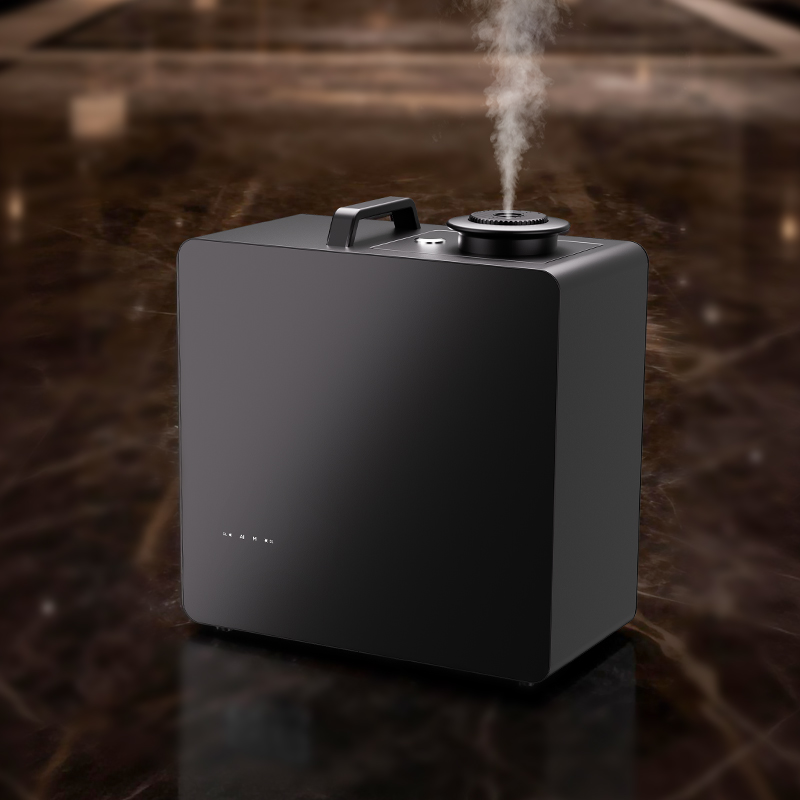
A scent diffuser for HVAC system use needs an approved equipment-and-building combination. Check the intended air route, connection arrangement, power and control conditions before selecting hardware.
Identify the air handler and the spaces served by its route. Separate independent units, return paths and excluded rooms; fragrance should follow the intended distribution rather than a floor-area total.
Review the exact outlet, delivery line, fitting and manufacturer’s connection instructions with the installer. A standalone mist outlet alone is not proof of a suitable duct connection.
Record when the fan runs, how it is controlled, where the diffuser can be powered and how staff will refill and service it. Match the permitted operation to these conditions.
Do not assume that a wall-mounted AC unit, fan-coil arrangement or any appliance described as an “air conditioner” provides a suitable injection point. If there is no approved connection, no practical service access or an uncontrolled route to excluded spaces, pause that duct-connected layout and assess another installation.
An HVAC scenting system includes the device, connection, operating method and zone plan. The words HVAC aroma diffuser or HVAC scent system do not by themselves establish compatibility with your building.
Review the current K51S product listing alongside RAMOND’s hotel HVAC solution. Use the exact variant datasheet and connection instructions to define the configuration for your project.
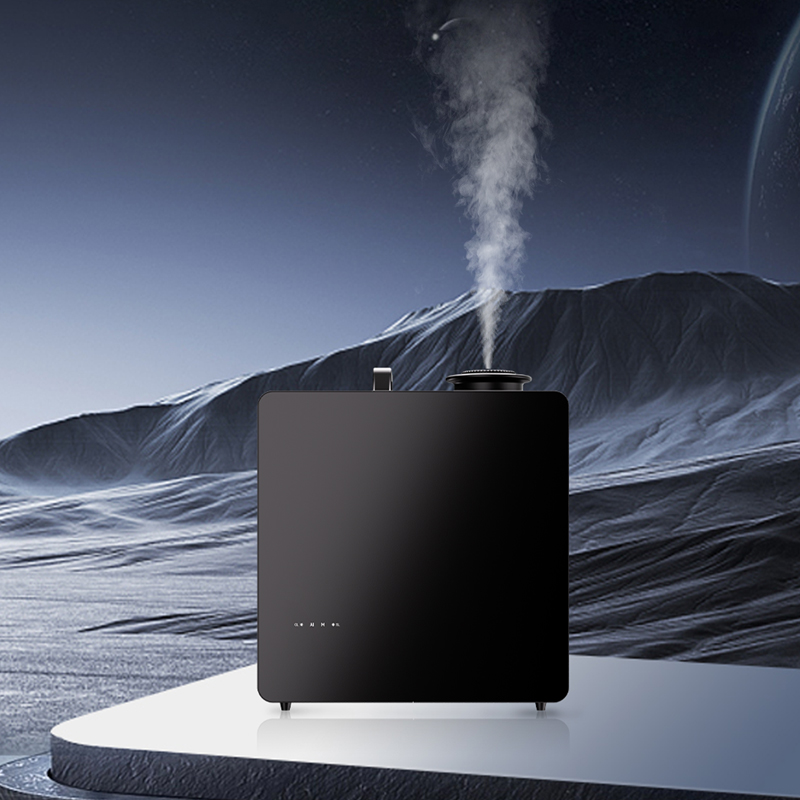
The product listing describes K51S for standalone and HVAC applications. Confirm the required duct accessories, permitted operating conditions and control interface before including it in an installation specification.
| Source | What it helps you review | What to request |
|---|---|---|
| K51S product listing | Equipment identity and the described installation paths | Current model revision, approved fittings and operating instructions |
| Hotel HVAC solution reference | The intended hotel use case and K51S solution direction | Exact variant and demonstrated control functions for the proposed setup |
The HVAC scent machine, delivery connection and air handler each have a role. Confirm the connection location and hardware against the model manual and the installer’s review; the following diagram explains the relationships, not a drilling or wiring instruction.
Fan status / operating arrangement → a documented, supported method of coordinating fragrance output. A timer or app is not automatically a fan-status interlock.
| Control arrangement | What it does | What it does not establish |
|---|---|---|
| Operating timer | Sets planned fragrance operating windows | That the fan is actually running at every moment |
| Local / app adjustment | Changes supported settings on the exact variant | Off-site Wi-Fi access, cloud group control or BMS integration |
| Proven fan-status interface | Coordinates output using the supported signal / logic | That any accessory or air switch is included without a written scope |
Room volume helps describe the space, but HVAC airflow, separate air handlers and operating periods determine which areas can be reviewed together. Do not select quantity by dividing total floor area by a catalogue rating.
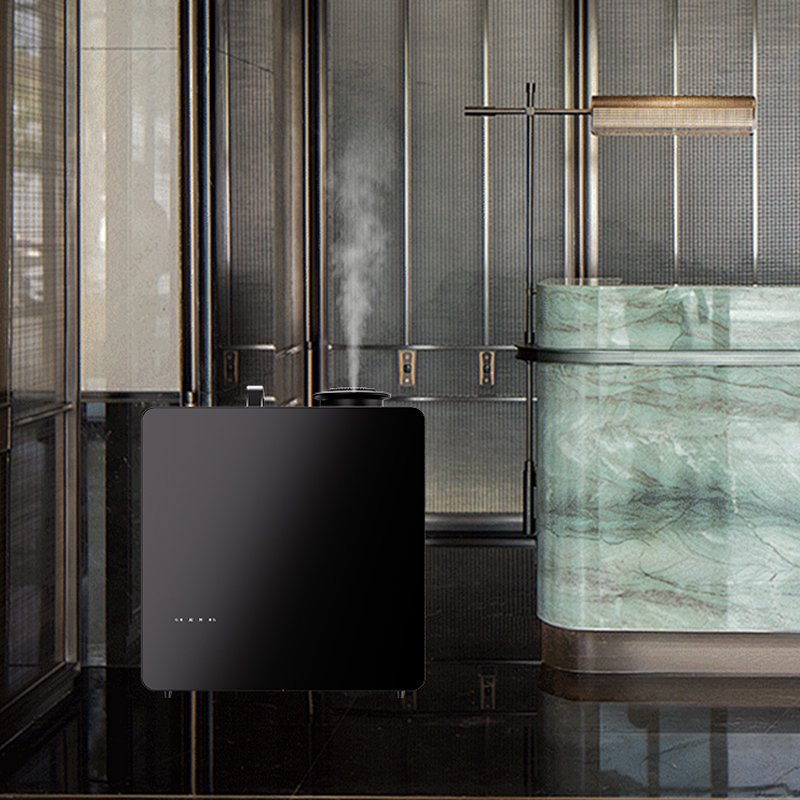
These choices adjust the review checklist. They do not calculate coverage or confirm compatibility.
Shared air route: provide the served-zone map, fan hours, airflow data and any rooms that must remain outside the fragrance route.
For each zone, record floor area and ceiling height to estimate volume. Add the design or measured airflow available from the HVAC team, fresh-air operation, open-door conditions and occupancy schedule.
| Building condition | Planning implication |
|---|---|
| Zones share the intended route | Review the actual served spaces, airflow conditions and operating times together |
| Independent air handlers or disconnected rooms | Evaluate each route separately; one device count cannot be assumed for the full property |
| Varying fan or occupancy schedules | Document the intended output response for each operating period |
| Service access differs by location | Include refill routes and maintenance workload in the proposed equipment positions |
The quotation should state who supplies the equipment, who approves and performs the site installation, and who manages fragrance and ongoing service. Agree these responsibilities before the purchase order.
| Work package | Agree the owner and deliverable | Ask the supplier / installer |
|---|---|---|
| Device & accessories | Supplier scope: exact variant, power supply, mounts, fittings, tubing and manuals | Which items are included, optional or supplied separately? |
| Site installation | Project / HVAC team: connection review, building access, mounting and any approved electrical / control work | Who reviews and signs off the site arrangement? |
| Control & commissioning | Supplier and installer: supported settings, fan coordination and acceptance checks | How will output behaviour be demonstrated during operation and fan shutdown? |
| Fragrance oil | Supplier / buyer: compatible formulation, handling and oil documents | Which oil is approved for this model and destination? |
| Maintenance & support | Operations and agreed service provider: refill access, cleaning procedure, parts and warranty process | Which tasks, instructions and support terms are included? |
Prepare the model and building conditions together when requesting documents. The manual and the site review should refer to the same variant and intended configuration.
That depends on the exact model and the documented control arrangement. A scheduled stop can follow planned fan hours, but it does not confirm real-time fan status. Ask for a demonstration of the required output behaviour and any supported interface before specifying the installation.
Do not treat the air-switch phrase as a standard accessory specification. Request the exact variant, supported switch or signal, connection method and failure response. Include any required accessory and installer work in the written scope.
Review the actual air-distribution routes and their operating schedules. Separate air handlers or disconnected areas require separate assessment. A floor count or total volume alone does not show that one proposed unit reaches every target space.
Use only the fragrance oil and handling instructions approved for the specific model. An oil diffuser for HVAC is not permission to inject an arbitrary oil into an air handler. Request compatible-oil guidance and the documents needed for your market and site.
Request the current variant datasheet, connection and operating manual, supported fan-control information, compatible-oil guidance, maintenance instructions, itemized accessories and written warranty terms. Ask for applicable destination documents covering the exact model.
Use this page to select a project path and assemble the review inputs. The actual connection location, fittings, wiring and commissioning method must follow the current model instructions and the approved site review.
Share the proposed air route, fan operation and equipment location. RAMOND can discuss the model configuration and documents needed for your project review.
Prepare: country / market · zone area and height · air-handler and airflow details · fan schedule / signal · connection and power location · service access · quantity · trial / sample and branding needs.


