
Views: 0 Author: Site Editor Publish Time: 2026-06-07 Origin: Site


Buyers often struggle to maintain a consistent scent in their spaces. Standard diffusers frequently run out of water before the day ends. They leave wet residues on furniture and fail to cover large rooms effectively. You might find yourself constantly refilling tiny tanks just to keep a faint aroma alive. This frustration prompts many people to seek professional-grade alternatives for their homes and businesses.
We know the choice involves more than just selecting a new device. It represents a fundamental shift in scenting technology. You must choose between water-based dispersion and waterless cold-air atomization. This core difference directly impacts scent consistency, daily maintenance, and spatial coverage. We created this comprehensive guide to help you navigate these options.
You will learn how each mechanism works and where they excel. We aim to equip homeowners, property managers, and retail operators with a clear framework. You can finally evaluate which system matches your daily operational capacity and long-term scenting goals.
Technology differences: Ultrasonic diffusers use water and vibration to create a diluted mist, while an aroma diffusion machine (cold-air nebulizer) uses pressurized air to atomize pure essential oils into micro-particles.
Coverage & Scalability: Ultrasonic units are limited to single rooms (up to 400 sq. ft.), whereas cold-air aroma scent machines can cover entire homes or commercial spaces (up to 5,000+ sq. ft.), often via HVAC integration.
Maintenance realities: Ultrasonic units require daily water refills and frequent cleaning to prevent mold; waterless machines require less frequent, but more expensive, pure oil refills and occasional atomizer cleaning to prevent clogs.
Total Cost of Ownership (TCO): Ultrasonic is cheap upfront but labor-intensive; professional diffusion machines have a higher initial cost but offer automated, set-and-forget efficiency.
To choose the right equipment, you must understand how they manipulate essential oils. The technology powering your device dictates everything from scent quality to daily maintenance requirements.
Ultrasonic devices dominate the consumer market. They offer a simple, accessible way to introduce fragrance into small spaces.
Mechanism: These devices rely on a small ceramic disc located at the bottom of a water reservoir. The disc vibrates at ultrasonic frequencies. This rapid vibration agitates the mixture of water and essential oil. It breaks the liquid surface tension to create a fine mist.
Output: The unit forces water vapor into the air. This mildly increases local room humidity. The scent dispersed is highly diluted because the ratio heavily favors water over oil.
Best Practices: Always use distilled water in your ultrasonic devices. Tap water introduces minerals that damage the vibrating disc over time.
Common Mistakes: Leaving water in the tank for multiple days is a frequent error. This stagnant water rapidly becomes a breeding ground for bacteria.
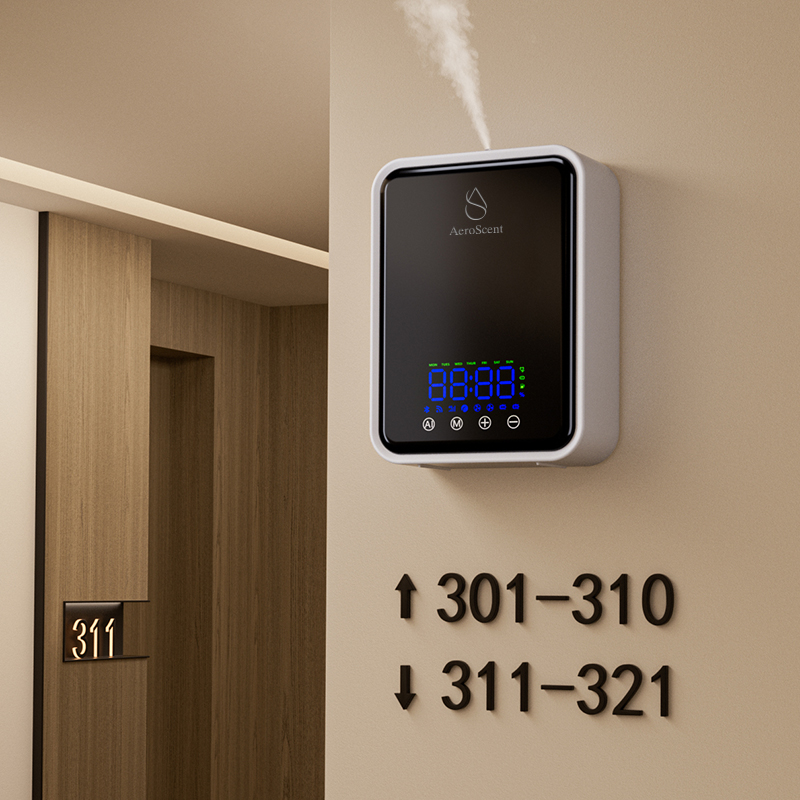
Commercial spaces require robust technology. A true aroma diffusion machine utilizes cold-air nebulization to deliver pure fragrance.
Mechanism: These professional units operate on Bernoulli’s principle. They force pressurized cold air through a small tube. This high-velocity air creates a vacuum. The vacuum pulls pure essential oil upward and forces it against a specialized baffle. The impact breaks the thick oil down into dry nanoparticles.
Output: The machine releases zero water. It produces a completely dry, invisible mist. This process leaves no wet residue on surrounding surfaces. It also maintains the therapeutic integrity of the essential oil because it uses no heat or dilution.
Performance varies wildly between these two technologies. We evaluate them across three core dimensions to highlight their practical differences.
A consistent scent profile defines a premium environment. Fluctuating aromas often frustrate users.
Ultrasonic units struggle with consistency. Essential oils naturally float on top of water. When you turn on an ultrasonic device, it primarily atomizes the oil sitting at the surface. Your room smells incredibly strong for the first hour. However, the scent fades rapidly. By the third hour, the device mostly disperses plain water vapor.
Conversely, an aroma fragrance machine pulls pure oil directly from the bottle. It delivers a continuous, uniform scent profile from the first drop to the last. Digital controls allow you to adjust the exact intensity. You can program the machine to run for two minutes and pause for one minute. This micro-dosing prevents olfactory fatigue. Your nose never stops noticing the fragrance.
Spatial coverage often dictates the final purchasing decision. Different environments demand varying levels of power.
Ultrasonic diffusers remain strictly localized. Their heavy water vapor falls quickly to the floor. They work beautifully for a small office desk, a nightstand, or a compact bedroom. They rarely cover more than 400 square feet effectively.
A modern aroma diffuser scent air machine is highly scalable. Standalone units easily cover expansive hotel lobbies or retail showroom floors. Furthermore, you can connect professional units directly to your HVAC system. They inject dry fragrance nanoparticles into the supply ducts. The existing air conditioning fan then distributes the scent uniformly across multi-zone floor plans.
Adding substances to your indoor air requires careful safety considerations.
Ultrasonic diffusers introduce excess moisture. In poorly ventilated spaces, this added humidity promotes mold growth. The falling wet mist can also warp antique wood furniture or damage nearby paper documents.
Waterless machines eliminate these risks. The dry nanoparticles are exceptionally light. They remain suspended in the air for hours without settling. They are completely safe for electronics, fine artwork, and delicate fabrics. Because they produce no aerosolized liquid residue, they integrate safely into complex HVAC systems without causing ductwork rust.
Feature Dimension | Ultrasonic Diffuser | Aroma Diffusion Machine (Cold-Air) |
|---|---|---|
Scent Consistency | Starts strong, fades quickly as oil depletes. | Uniform and continuous until the bottle is empty. |
Max Coverage Area | Up to 400 sq. ft. | Up to 5,000+ sq. ft. |
Output Type | Wet mist (water + oil). | Dry nanoparticles (pure oil). |
HVAC Capability | No. | Yes, integrates smoothly. |
Residue Risk | High (leaves water drops on surfaces). | None (completely dry dispersion). |
Every piece of equipment requires upkeep. You must match the maintenance requirements to your personal or organizational labor capacity.
Ultrasonic units demand significant daily labor. You must empty stale water every single day. You have to wipe down the internal tank to prevent slimy biofilm buildup. If you use tap water, hard mineral deposits will calcify on the ultrasonic plate. You must soak these plates in white vinegar weekly to restore functionality.
A professional aroma diffuser machine provides a "set and forget" experience. You simply screw a large bottle of pure oil into the device. It runs automatically for weeks or even months based on your scheduling. However, they do require occasional technical cleaning. You must flush the system with rubbing alcohol every few months. This prevents thick essential oils from solidifying and clogging the delicate nebulizer nozzle.
Best Practices: Always run 90% isopropyl alcohol through your cold-air nebulizer for 15 minutes before switching to a new fragrance. This clears out old scent profiles and keeps the micro-tubes pristine.
Many buyers misunderstand oil efficiency in waterless systems. They assume pure oil usage equates to extreme waste.
Ultrasonic diffusers seem efficient because they use only a few drops per tank. However, users frequently dump half-used water mixtures down the drain when cleaning. This wastes significant amounts of oil over a year.
Waterless machines use pure oil exclusively. Their micro-atomization process is incredibly efficient. A single 100ml bottle can last an entire month under normal daily scheduling. The machine breaks one drop of oil into millions of microscopic particles. These particles linger in the air much longer than heavy water droplets. This prolonged suspension reduces the overall volume of oil needed to scent a large space successfully.
Matching the technology to your environment ensures optimal results. Neither device is inherently bad; they simply serve different use cases.
Ultrasonic diffusers thrive in intimate residential environments. They serve specific, small-scale needs effectively.
Small footprint use cases: They fit perfectly in yoga studios, personal home offices, or on bedside tables.
Added humidity needs: When dry winter air irritates your sinuses, the slight moisture increase offers a desired side benefit.
Short-term needs: They work well for quick, one-hour meditation sessions where long-term automation is unnecessary.
Complex environments demand commercial-grade infrastructure. You should upgrade when consistency and scale become non-negotiable.
Retail stores, hotel lobbies, and medical clinics require a unified brand experience. Customers expect the environment to smell flawless from morning to night. A professional aroma scent machine guarantees this consistency.
Open-concept homes also require these upgrades. High ceilings and massive square footage render ultrasonic diffusers useless. The wet mist simply drops to the floor before reaching the next room. Waterless atomization ensures the scent travels effortlessly on natural air currents.
Finally, operational efficiency demands automation. Commercial units feature programmable digital timers. You can set the device to turn on exactly when your business opens and turn off when doors close. You never have to rely on employees to refill water tanks during busy shifts.
Choosing the right device requires a systematic approach. Follow these four steps to pinpoint the exact technology you need.
Define the Square Footage: Measure your actual open-air volume. Do not guess. Look at your floor plans. If your open space exceeds 500 square feet, eliminate ultrasonic options immediately. They will not provide adequate coverage.
Determine HVAC Accessibility: Inspect your home or commercial building. Check if you have accessible supply ductwork. A whole-home HVAC integration offers the most invisible, uniform experience. If you lack duct access, you will need a powerful standalone tower unit.
Assess Maintenance Tolerance: Be honest about your daily routine. Are you willing to carry a water pitcher to your diffuser every single morning? Do you have time to scrub tanks weekly? If you prefer minimal interaction, prioritize a system that requires only a monthly bottle swap.
Verify Oil Compatibility: Ensure your chosen aroma therapy machine supports your preferred oils. Cold-air nebulizers handle most essential and fragrance oils effortlessly. However, extremely viscous oils might require blending with lighter alternatives to maintain optimal airflow.
Common Mistakes: Do not buy a high-capacity commercial machine for a closed 100-square-foot bathroom. The concentration of pure essential oil will overwhelm the small space rapidly.
The choice between water-based diffusers and cold-air nebulizers comes down to scale, consistency, and labor. Ultrasonic diffusers serve wonderfully as entry-level lifestyle accessories for small rooms. They offer brief moments of pleasant fragrance alongside a gentle humidity boost. Conversely, cold-air diffusion systems act as functional infrastructure. They provide reliable, automated, large-scale ambient scenting without wet residue.
To move forward effectively, calculate your precise square footage today. Review your existing HVAC layout to see if duct integration makes sense for your property. Finally, explore professional waterless units that match your spatial requirements and daily maintenance preferences. A correctly sized machine transforms the entire atmosphere of your environment.
A: They use pure oil without water. A bottle drains faster than it would if you were just adding drops to a water tank. However, actual dispersion remains highly efficient. A single 100ml bottle in a cold-air machine can last a month with scheduled daily use. This provides vastly superior coverage compared to traditional methods.
A: Most machines require high-quality, pure essential or fragrance oils. Thick oils like vetiver or sandalwood often need blending with lighter oils to prevent clogging the delicate nozzle. You must never use essential oils diluted with heavy carrier oils, such as jojoba or coconut, in a waterless machine.
A: Most modern units feature surprisingly simple installations. They typically require drilling one small hole in the outgoing supply air duct. You then attach a basic tube connection. However, we highly recommend professional installation for complex commercial HVAC systems to ensure optimal airflow and precise pressure balance.
A: Yes, they often do. If you fill them with hard tap water, ultrasonic diffusers disperse microscopic minerals into the air. These minerals eventually settle, leaving a fine white dust residue on surrounding furniture. Professional waterless diffusion machines eliminate this risk entirely because they operate without water.


