
Views: 0 Author: Site Editor Publish Time: 2026-06-04 Origin: Site


You buy a premium candle hoping to transform your living room. A few hours later, the fragrance fades entirely. It leaves you feeling frustrated and disappointed. This common scenario happens far too often when traditional scenting struggles to fill a room evenly. Home and commercial scenting recently evolved far beyond traditional combustion methods. Modern spaces now transition away from burning wicks. They turn instead to automated nebulization through advanced devices. These innovative systems suspend fragrance in the air without relying on open flames.
This article evaluates both methods purely on scent longevity, consistency, and safety. We will explore how different delivery mechanics directly affect your daily experience. Ultimately, you will learn how to choose the exact system required for your specific spatial needs. By understanding these core differences, you can stop wasting money on products failing to deliver lasting results.
Longevity verdict: An aroma machine provides days or weeks of continuous, customizable scent, whereas a candle's lifespan is strictly limited by its wax volume and burn time (typically 30–60 hours).
Consistency: Candles experience "scent drop-off" as they burn down; aroma machines utilize cold-air nebulization to maintain a uniform fragrance profile from the first drop of oil to the last.
Cost-efficiency: While a high-quality candle has a lower upfront price, an aroma scent machine offers a significantly lower cost-per-hour of scenting for frequent users.
Use-case split: Candles are best for localized, ritualistic ambiance. Aroma machines are required for consistent, hands-free, "hotel-like" spatial scenting.
Candles rely entirely on heat to work. They evaporate the fragrance oil mixed directly into the wax. You light the wick to begin the process. The flame melts the surrounding wax slowly. This creates a small liquid area we call the melt pool. The heat then vaporizes the scent molecules into the surrounding air.
This traditional method introduces severe limitations for longevity. Heat alters delicate fragrance profiles easily. High temperatures quickly destroy sensitive top notes. Bright citrus or soft floral scents degrade almost instantly upon heating. Furthermore, your scent throw relies entirely on the exact size of the melt pool. Drafts, uneven wicks, or tunneling cause this pool to fluctuate constantly. When the pool shrinks, your scent disappears.
Modern devices operate on an entirely different scientific principle. An aroma diffusion machine uses pressurized cold air instead of heat. It breaks down pure fragrance oils into microscopic nanoparticles. This process requires zero water dilution and zero heat application.
This prevents the molecular breakdown of the oil completely. The device preserves the exact chemical structure designed by the perfumer. It creates a much purer suspension of scent. Because these micro-particles weigh practically nothing, they float freely. They stay suspended in your room for hours after the device stops running. This creates a noticeably longer-lasting ambient fragrance.
Here is a quick chart summarizing the delivery mechanics:
Feature | Candle (Combustion) | Automated System (Nebulization) |
|---|---|---|
Delivery Method | Heat and wax melting | Pressurized cold air |
Oil Integrity | Top notes destroyed by heat | Full fragrance profile preserved |
Particle Size | Heavy, settles quickly | Microscopic, suspends for hours |
Dilution | Diluted in wax medium | 100% pure oil used |
Candles almost always suffer from the dreaded burn down effect. A fresh candle smells incredible during the first few hours. It produces a strong scent throw initially. However, this intensity weakens significantly over time. The wax-to-oil ratio degrades as you reach the bottom of the jar. Heavier oils often settle unevenly during the manufacturing process. This means your expensive candle smells much weaker during its final ten hours of life.
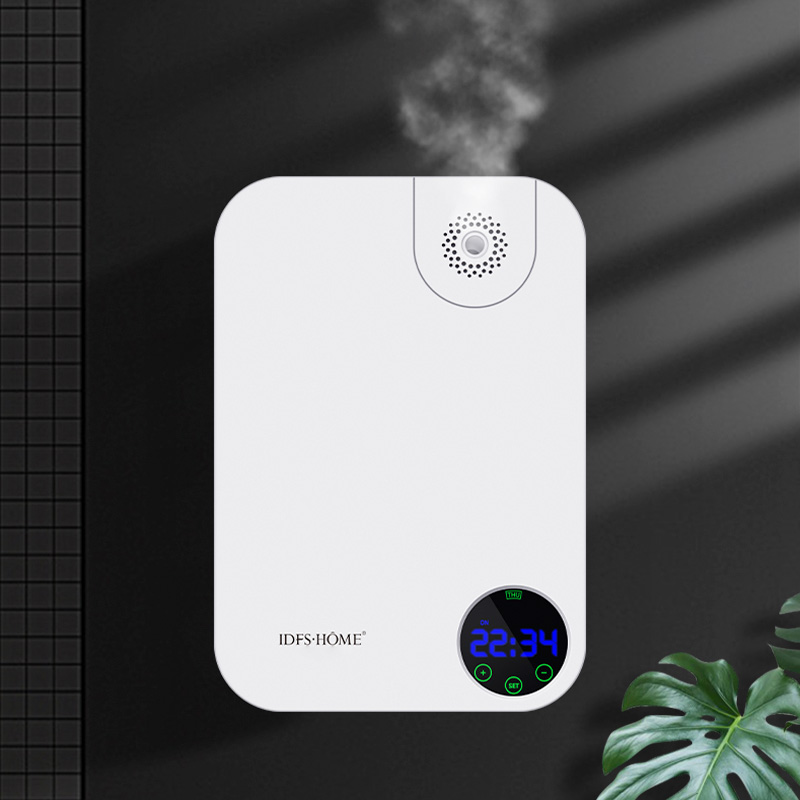
Technology removes this frustrating inconsistency completely. An automated aroma machine bypasses human error entirely. It ignores environmental variables like room drafts or cold temperatures. You use programmable timers to dictate the exact output. You control the intensity settings digitally. This guarantees the first day smells exactly like the thirtieth day. The device pulls the exact same amount of oil every single time it cycles on.
Even the strongest fragrances face one major biological hurdle. We call it olfactory fatigue. People casually refer to this as nose blindness. Your brain naturally stops registering a constant smell after a while. It perceives the continuous stimulus as safe background noise.
Automated devices solve this biological problem effortlessly. They utilize interval scenting to trick your brain. Follow these proven steps to maximize perceived longevity:
Set a strict interval schedule: Program the device to run for two minutes, then pause for one minute.
Allow the air to clear: The short pause lets your scent receptors rest briefly.
Re-trigger the senses: When the device kicks back on, your brain registers it as a brand new smell.
Adjust for room size: Use shorter run times in small rooms to prevent overwhelming saturation.
This simple interval strategy makes the fragrance feel incredibly persistent. It drastically outlasts the static output of a burning wick.
You must evaluate your actual square footage before buying any fragrance product. Traditional options face severe physical limitations regarding coverage. A standard single-wick candle usually covers about 50 square feet effectively. It works perfectly for a small bathroom or a bedside table. A premium three-wick candle might stretch to cover 200 square feet. However, it struggles immensely in large living rooms or open-concept homes.
When you try to scent a large space with traditional means, you create dead zones. The scent pools heavily near the flame. It barely reaches the opposite side of the room. Using multiple candles often results in clashing fragrance profiles.
Modern equipment scales effortlessly to match your floor plan. High-quality aroma scent machines easily handle open spaces between 500 and 1,000 square feet. You simply place the standalone unit in a central location. The pressurized nanoparticles travel naturally along the ambient air currents in your home.
For ultimate longevity and true scalability, professionals choose direct HVAC integration. You connect an aroma diffuser scent air machine straight into your property's ductwork. This creates a seamless, property-wide fragrance experience. The device utilizes your central fan to push the scent into every connected room simultaneously. It eliminates dead zones entirely. Hotels use this exact method to create their signature, unforgettable lobby environments.
Review this coverage comparison table to match your specific needs:
Product Type | Max Effective Area | Best Application Scenario |
|---|---|---|
Single-Wick Candle | 50 - 100 sq. ft. | Bathrooms, small offices, bedside tables |
Three-Wick Candle | 150 - 200 sq. ft. | Standard bedrooms, small enclosed living rooms |
Standalone Device | 500 - 1,000 sq. ft. | Open-concept living areas, retail boutiques, lobbies |
HVAC Integrated Device | 1,500 - 5,000+ sq. ft. | Whole homes, large commercial properties, hotels |
Safety remains a critical factor when choosing a daily fragrance solution. Open flames present inherent, unavoidable fire risks. You must never leave a burning wick unattended. Furthermore, combustion generates soot. This black residue damages painted walls over time. It clogs expensive air conditioning filters prematurely.
Air quality concerns extend beyond simple soot. Many cheaper paraffin waxes release volatile organic compounds (VOCs) when burned. These compounds include toluene and benzene. This creates major compliance issues for commercial spaces like retail stores or hotels. It also raises serious health priorities for residential homes housing pets, elderly family members, or young children. Moving away from combustion eliminates these dangerous respiratory irritants entirely.
Both systems require specific care, but the daily effort differs wildly. You must trim a wick before every single use. You must monitor the flame constantly. You must remember to snuff it out before leaving the house. This constant vigilance becomes exhausting.
Conversely, automated devices run mostly hands-free. However, transparently acknowledging their upkeep is important. They are not entirely zero-maintenance devices.
Consider these best practices for maintaining an aroma diffuser machine:
Monthly Refills: Check the oil reservoir every thirty days to ensure continuous operation.
Periodic Cleaning: Run rubbing alcohol through the system every few months to clear the atomizer nozzle.
Schedule Adjustments: Update the digital timer if your operational hours change seasonally.
Placement Checks: Ensure the nozzle remains unobstructed by new furniture or decor.
This predictable, monthly maintenance schedule feels vastly superior to the daily babysitting required by traditional open flames.
For measurable, continuous, and highly consistent scenting, the automated approach remains objectively superior. It bypasses the physical limitations of combustion completely. You gain precise control over intensity and coverage without exposing your family or customers to harmful soot.
We must validate that traditional wicks still retain specific value. They remain excellent choices for visual aesthetics. They work beautifully for temporary mood-setting during dinners. They also make wonderful, elegant gifts. However, they consistently fail as reliable, daily spatial scenting tools.
Your next step requires evaluating your actual square footage. Consider your daily routine and air quality needs. Once you map out your floor plan, browse a curated selection of HVAC or standalone units. Choose an aroma scent machine designed specifically for your space to experience true, lasting fragrance.
A: Most advanced units easily handle both types. However, commercial-grade fragrance oils often provide much longer-lasting results. They feature more complex, stable scent profiles compared to highly volatile essential oils. Essential oils evaporate quickly and occasionally clog nozzles due to their thick, natural resins.
A: Yes, you can leave it powered on, but running it continuously is not recommended. You should set the internal timer to specific intervals. Running it roughly thirty percent of the time during active hours prolongs your oil lifespan dramatically. It also prevents your brain from experiencing nose blindness.
A: A standard 120ml bottle typically lasts between thirty to forty-five days. This heavily depends on your chosen intensity settings and daily operating hours. This impressive duration vastly outperforms the short, limited lifespan of similarly priced luxury candles.


