
Views: 0 Author: Site Editor Publish Time: 2026-06-21 Origin: Site


Modern retail has shifted dramatically over the past decade. Physical stores are no longer just transactional spaces for grabbing goods off a shelf. They must function as immersive, experiential environments to survive fierce online competition.
Can a retail scent machine actually improve customer experience and drive tangible revenue? The answer is a definitive yes, but only when treated as a strategic, measurable operational investment rather than a superficial aesthetic choice. Simply masking odors or adding a random pleasant smell is rarely enough to move the needle on sales.
This guide provides a clear framework for executing scent marketing effectively. You will learn how to evaluate hardware technologies, select the right fragrance profiles, and accurately measure the financial return of your commercial scenting deployment.
Targeted ambient scenting can increase retail dwell time and measurably boost daily sales volume when aligned with consumer psychology.
Hardware selection dictates success; cold-air nebulization technology is the industry standard for avoiding residue, heat, and uneven distribution.
Effective deployment requires "zoned scenting" strategies, simple fragrance profiles, and strict adherence to clean, non-toxic formulations.
Scent marketing is highly measurable through KPIs like average transaction value (ATV), foot traffic patterns, and customer satisfaction scores.
Retailers often question the financial viability of ambient scenting. You must look beyond aesthetics to understand its value. Scent marketing operates on a subconscious level, directly influencing consumer behavior and purchasing decisions.
The olfactory bulb acts as your brain's processing center for smells. It connects directly to the limbic system. This specific brain region controls memory and emotion. Visual and auditory stimuli must process through cognitive filters first. Scents bypass these filters entirely. They shape brand perception instantly upon entry. When a customer walks into your store, their brain registers the ambient aroma before they consciously evaluate your product displays. This emotional shortcut makes olfactory marketing incredibly powerful for building immediate brand trust.
Relaxed consumers naturally extend their store dwell time. Extending this time directly correlates to higher purchase probabilities. Aggregate industry observations consistently highlight this trend. Shoppers browsing in a pleasantly scented environment feel less rushed. They take time to explore secondary aisles. They interact more frequently with store associates. Retailers deploying targeted ambient fragrances frequently report measurable increases in daily sales volumes. The logic remains simple: longer visits yield larger baskets.
Operational reality dictates a counterintuitive approach to fragrance selection. Simple scents often outperform complex blends. Think of single notes like bright citrus, crisp pine, or clean vanilla. They drive sales effectively because they reduce cognitive load. A highly complex fragrance demands subconscious processing power from shoppers. They expend mental energy trying to identify the individual notes. Simple scents provide a pleasant backdrop without causing distraction. Retailers must keep customers focused on the merchandise, not puzzling over the air quality.
Managers frequently overlook a crucial secondary metric. Thoughtfully scented environments drastically improve employee well-being. Retail staff spend long shifts inside the store. A pleasant aroma boosts their focus and overall mood. Better working conditions naturally lead to higher staff retention rates. Happy employees provide superior customer service. They engage shoppers with more enthusiasm. This positive staff attitude reinforces the overall brand experience, indirectly boosting your conversion rates further.
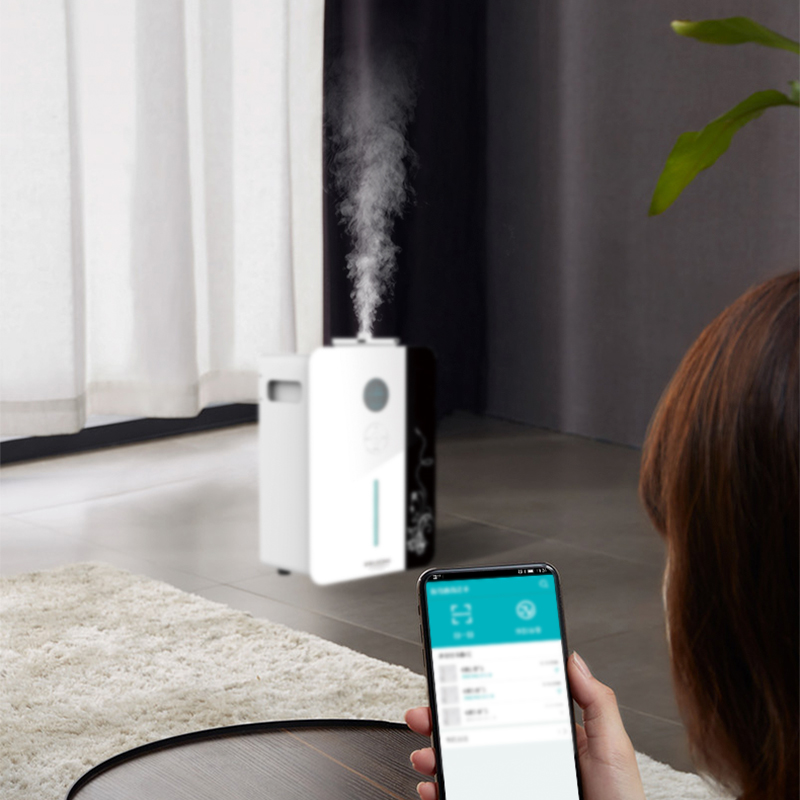
Your hardware selection dictates the success of your entire olfactory strategy. A poorly chosen device ruins the best fragrance formulation. Commercial buyers must approach hardware procurement with strict technical standards.
Commercial buyers must reject traditional water-based ultrasonic devices. You must also avoid heat-based diffusers entirely. Heat damages the delicate molecular structure of essential oils. Water-based units increase indoor humidity, creating massive mold risks. Instead, focus exclusively on cold-air nebulization. This technology converts concentrated oils into a dry, invisible micro-mist. You get no residue settling on expensive inventory. The dry mist remains suspended in the air longer, ensuring perfectly consistent dispersion across large retail footprints.
You must match the machine's output capacity to your specific square footage. Installing an undersized unit wastes money. Installing an oversized unit overwhelms the space.
System Type | Ideal Square Footage | Primary Use Case | Key Advantage |
|---|---|---|---|
HVAC-Integrated Systems | 2,000 to 10,000+ sq ft | Large department stores, massive showrooms, multi-level retail spaces. | Seamless visual integration. Uses existing ductwork for perfectly even, invisible distribution. |
Freestanding Units | 500 to 2,000 sq ft | Boutiques, medium-sized apparel shops, standalone lobby areas. | High mobility. Easy to relocate for changing floor plans or seasonal layouts. |
Wall-Mounted Units | Up to 1,500 sq ft | Restrooms, fitting room banks, specific promotional aisles. | Saves floor space. Secures the hardware out of reach to prevent tampering. |
HVAC-integrated systems represent the gold standard for large-footprint retailers. They provide centralized control over the entire environment. Freestanding or wall-mounted models offer agility for smaller boutiques and temporary pop-up shops.
Do not settle for basic on/off switches. Your chosen scent diffuser machine must include enterprise-grade functionality. Use this shortlisting checklist when evaluating vendors:
Programmable scheduling: The machine should automatically power down after store hours to conserve oil.
Precise intensity controls: You need granular adjustments (e.g., 1% to 100%) to adapt to varying foot traffic levels.
Ultra-quiet operation: The motor must remain inaudible to avoid distracting shoppers from the ambient music.
IoT/data-driven dashboards: Wi-Fi connectivity allows regional managers to monitor oil levels and adjust settings remotely across multiple store locations.
Purchasing the hardware only completes the first step. Deployment requires deliberate planning. You must align the fragrance with the spatial dynamics and customer journey mapping.
Advanced retailers utilize "zoned scenting" strategies. They map different fragrances to specific shopper mindsets within the same building. You might deploy calming lavender or jasmine near the fitting rooms. This reduces decision fatigue when customers evaluate clothing. Conversely, you can pump energizing citrus or peppermint into high-margin promotional aisles. These stimulating scents encourage quick decision-making and impulse buys. Transitioning subtly between these zones creates a dynamic, highly engaging retail journey.
Physical placement requires careful consideration. The hardware should blend seamlessly into your architectural aesthetic. Hide freestanding units behind decorative displays if they clash with your modern minimalist decor. Airflow mapping is equally critical. Position the machine in optimal airflow paths to maximize natural circulation. Keep units away from open exterior doors, heavy return vents, or open windows. Improper placement simply blows your investment straight outside.
Establish strict requirements for high-grade, sustainable fragrance oils. Emphasize the operational risk of cutting corners here. Low-cost oils often contain harsh chemicals. You must absolutely avoid products containing phthalates, parabens, or synthetic allergens. These cheap ingredients can trigger headaches or allergic reactions in sensitive customers. Demand safety data sheets from your vendor. Clean, non-toxic formulations protect your brand reputation and ensure a universally pleasant shopping environment.
Scent marketing represents a measurable growth strategy. You must track performance data just as you would with digital advertising or visual merchandising.
Decision-makers need clear before-and-after data. Before turning the machine on, establish your baseline metrics over a typical 30-day period. Record these figures accurately.
Baseline Metrics Tracking Chart | ||
Metric Category | Tracking Method | Target Goal Post-Installation |
|---|---|---|
Average Dwell Time | In-store thermal heat maps / Wi-Fi tracking | Increase average visit duration by 10-15% |
Sales Per Visit (ATV) | Point of Sale (POS) daily reports | Increase basket size by 5-8% |
Customer Satisfaction | Post-purchase email surveys / Kiosk ratings | Improve store ambiance scores by 20% |
Do not rely on guessing. Deploy rigorous testing methodologies to prove the financial impact. Follow this proven A/B testing framework:
Select two retail locations with similar demographics, square footage, and historical sales data.
Install the diffuser in Store A (the test group). Leave Store B unscented (the control group).
Run the test for 60 days to account for weekly traffic anomalies.
Compare the SKU velocity of specific products located near the scent source in Store A against the identical products in Store B.
Swap the test. Introduce a different scent profile into Store A to see if purchase patterns shift accordingly.
Quantitative data tells only half the story. You need qualitative feedback to optimize intensity levels. Deploy targeted micro-surveys to your staff every week. Ask them if the scent intensity enhances the environment or feels overwhelming. Customers rarely complain about a scent being too weak, but they will immediately leave a store if a fragrance gives them a headache. Keep the intensity subtle. The scent should float at the edge of perception.
Scaling a scent marketing program introduces several operational pitfalls. Anticipating these realities prevents costly disruptions and protects the customer experience.
Olfactory fatigue presents a massive risk. Store staff become "nose-blind" to the ambient fragrance after working inside for a few hours. The brain stops registering the smell to process new environmental inputs. Staff might mistakenly believe the machine broke or ran out of oil. They face a dangerous temptation to manually increase the intensity dial. This creates a suffocating wall of perfume for new customers entering the store. You must lock the machine interfaces. Base all intensity adjustments on customer feedback, never on staff perception.
A beautiful retail fragrance fails if it competes with foul background odors. Warn your store managers against scent clashing. Structural store smells interfere heavily with your chosen profile. Nearby food courts, industrial cleaning supplies, and cardboard unboxing odors ruin the aesthetic. You cannot simply cover up bad smells with heavy perfume. This creates an even worse sensory experience. Ensure your chosen machines utilize proprietary odor-neutralizing technology. The system must eliminate malodors at the molecular level prior to dispersing the premium fragrance.
Scent machines require consistent physical maintenance. Transparently discuss the realities of oil replenishment cycles with your operations team. A standard machine running ten hours daily usually requires a refill every four to six weeks. Do not let machines run dry; this damages the internal pump mechanism. Equipment servicing requires scheduled cleaning to prevent oil buildup in the nozzle. We highly recommend partnering with vendors offering managed services. They handle the refills, clean the nozzles, and monitor system uptime remotely, freeing your store staff to focus on selling merchandise.
A high-quality retail scent machine operates as a highly functional business tool, actively bridging the gap between brand identity and consumer spending behavior.
Simple, single-note fragrances generally outperform complex blends by reducing cognitive load and keeping shoppers comfortably focused on your inventory.
Prioritize cold-air nebulization hardware to ensure even dispersion, zero inventory residue, and seamless aesthetic integration.
Measure your success relentlessly. Track baseline metrics like dwell time and average transaction value to prove the financial impact.
We strongly advise B2B buyers to start small. Conduct a site assessment and launch a targeted pilot program in a single, high-traffic location. Gather the data before committing to a brand-wide rollout. Contact your preferred scent marketing partner today to request a custom fragrance consultation and a hardware evaluation tailored specifically to your store's square footage.
A: A standard 500ml commercial fragrance bottle typically lasts between 30 to 45 days. This timeline assumes the machine runs for 10 to 12 hours daily at a medium intensity setting. High-intensity settings or 24/7 operation will deplete the oil much faster, requiring bi-weekly replenishment.
A: Yes, if low-quality oils are used. However, professional cold-air nebulization combined with hypoallergenic, IFRA-compliant fragrance oils minimizes this risk. Unlike heavy aerosol sprays or synthetic plug-ins, premium commercial oils omit harsh chemicals, phthalates, and common allergens, ensuring a safe breathing environment for shoppers.
A: It depends on your budget and timeline. Pre-made commercial profiles offer immediate deployment, proven psychological benefits, and lower costs. A bespoke signature scent grants absolute brand exclusivity but requires months of development, formulation testing, and a significantly higher initial investment.


