
Views: 0 Author: Site Editor Publish Time: 2026-09-28 Origin: Site


Consumers often try to fix dry indoor air and add fragrance using a single device. You might see the visible mist from Aroma Diffusers and assume it adds meaningful moisture to your bedroom or office. This misunderstanding leaves dry air problems completely unresolved. You end up dealing with the same dry skin, irritated sinuses, and struggling houseplants. Worse, putting essential oils into a machine not built for them can destroy the water tank. We need to separate these devices from other air quality tools. Air purifiers trap particles, and dehumidifiers pull moisture out. Diffusers and humidifiers both push elements into the room, but their mechanical goals differ entirely. To make the right choice, you have to look at the hard numbers. We will evaluate water tank capacities, milliliter-per-hour output rates, and plastic compatibility. This data dictates whether you need a standalone unit or a specialized hybrid.
Output Discrepancy: Standard aroma diffusers output 15–30 ml of water per hour, whereas effective humidifiers output 200–500+ ml per hour; a diffuser cannot meaningfully alter the relative humidity (RH) of a standard room.
Material Incompatibility: Adding essential oils directly to the water tank of a standard humidifier can degrade the plastic components and void warranties, necessitating specialized devices.
The Hybrid Compromise: An "essential oil humidifier" (a humidifier with a dedicated essential oil tray) offers a viable two-in-one solution, but requires stricter maintenance protocols to prevent bacterial growth and oil residue buildup.
Use-Case Dependency: Device selection must be dictated by the primary goal: whole-room moisture control, localized plant care, or ambient scenting.
Understanding the engineering differences between these devices sets realistic performance expectations. Manufacturers build these units with entirely different end goals. One focuses on volatile organic compound dispersion. The other focuses on sustained moisture accumulation. You cannot swap their roles without facing severe performance drop-offs.
A standard ultrasonic diffuser relies on a small piezoelectric transducer located at the base of the water tank. This ceramic disc vibrates at high frequencies, typically around 2.4 million times per second. These rapid vibrations agitate the water and essential oil mixture. The mechanical energy breaks the liquid down into microscopic droplets, creating a cool fog.
A small internal fan then blows this fine mist out into the room. These devices feature very small water reservoirs. Typical tank capacities range from 100ml to 500ml. The primary design objective is volatilizing essential oils for scent dispersion. The water merely acts as a carrier mechanism for the heavy oil molecules. Engineers do not design these small tanks to run continuously for days. They design them to run for a few hours until the scent dissipates.
The internal components reflect this light-duty cycle. The fans are low-CFM (cubic feet per minute), meaning they barely push the mist above the device. The plastics used, typically Polypropylene (PP), are specifically chosen because they resist the corrosive nature of concentrated plant oils.
Humidifiers operate on a much larger scale. They generally fall into two categories: evaporative and ultrasonic. Evaporative models use a fan to blow air through a wet wicking filter. Ultrasonic humidifiers use a larger, more powerful version of the vibrating ceramic disc found in diffusers. Both types share a singular goal. They must output a massive volume of water to raise ambient relative humidity.
Humidifier tank capacities typically range from 1 liter to over 6 liters. Their internal components are built for sustained, high-volume water output. A quality humidifier can run continuously for 24 hours without needing a refill. The engineering prioritizes moisture accumulation over scent dispersion.
The internal fans in humidifiers are significantly stronger. They must push the heavy moisture high into the room's air column so it can evaporate before hitting the floor. If a humidifier had the weak fan of a diffuser, the high volume of water would simply puddle around the base of the machine, ruining your flooring.
Technical Specification | Standard Aroma Diffuser | Standard Room Humidifier |
|---|---|---|
Average Tank Capacity | 100ml - 500ml | 1,000ml - 6,000ml+ |
Moisture Output Rate | 15 - 30 ml/hour | 200 - 500+ ml/hour |
Primary Tank Material | Polypropylene (PP) - Oil Resistant | ABS Plastic - Vulnerable to Oils |
Fan Strength (CFM) | Low (Localized misting) | High (Room-wide dispersion) |
Average Continuous Run Time | 3 - 8 hours | 12 - 24+ hours |
Many users see the visible plume of mist escaping a diffuser and assume it is hydrating the room. We must analyze the mathematical reality of moisture output versus room volume to understand why this is a physical impossibility.
The visible mist from a diffuser is a deceptive indicator of actual humidity alteration. A standard scent device outputs roughly 20ml of water per hour. In a typical indoor environment, the natural evaporation rate heavily outpaces this output. HVAC systems constantly cycle air, pulling moisture out of the room through return vents. Drafty windows, open doors, and normal foot traffic further dilute any localized moisture gains.
When you compare the 20ml/hour output against the demands of a dry winter room, the deficit becomes obvious. A dedicated humidifier outputs up to 500ml per hour. It takes this massive volume of water just to fight back against the drying effects of central heating. A diffuser simply lacks the mechanical horsepower to compete with the physics of indoor air circulation.
Let us look at the psychrometric math required to alter a standard room. Imagine a 200-square-foot bedroom with 8-foot ceilings. This room contains 1,600 cubic feet of air. If the current relative humidity is 30% at 70°F, you need to add a specific amount of water to reach a comfortable 45% RH.
Calculations show you need to add approximately 300ml to 400ml of water per hour to achieve and maintain this target, assuming a standard air exchange rate of 0.5 ACH (Air Changes per Hour). A diffuser with a 300ml tank running at 20ml per hour would take 15 hours to output that volume. However, the room's air changes multiple times during that period. The moisture dissipates into the HVAC system long before it can accumulate. You cannot raise the overall room humidity with such a low-output device.
There is one specific scenario where a diffuser's moisture output matters. This involves creating a micro-climate. A micro-climate is a tiny, highly localized area of altered humidity. If you place a diffuser directly next to your face on a work desk, you will feel the moisture. The mist hits your skin before it has a chance to mix with the dry room air.
Similarly, placing a diffuser immediately adjacent to a small, humidity-loving houseplant can provide marginal benefits. The mist falls directly onto the leaves, temporarily reducing the vapor pressure deficit around that specific plant. However, this does not change the macro-climate. The moment you step two feet away from the device, the humidity drops back to the room's baseline level.
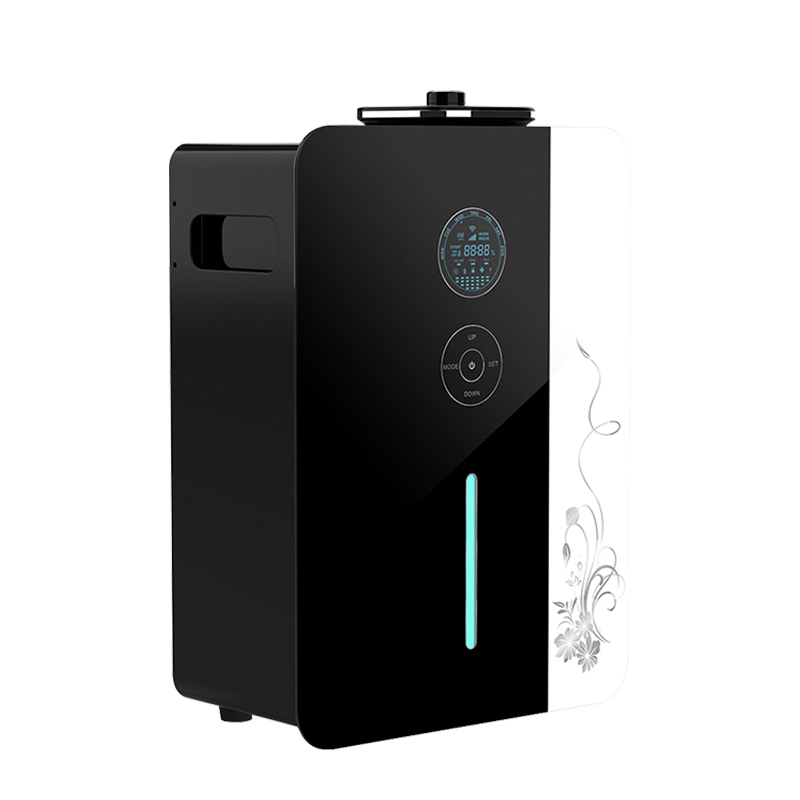
Manufacturers recognize the consumer desire for a unified device. This demand led to the creation of hybrid units explicitly engineered to handle both high-volume moisture and aromatherapy without destroying the machine.
A true essential oil humidifier combines the large water tank of a traditional humidifier with a specialized scent mechanism. These devices typically feature a 2-liter to 4-liter tank. This ensures they can successfully alter the macro-climate of a room. However, they do not mix the oil directly into the main water reservoir.
Instead, these hybrids feature a dedicated aroma pad or an isolated essential oil tray. You place a few drops of oil onto a small sponge located near the fan output. As the fan blows the humidified air out of the machine, it passes over the scented pad. This disperses the aroma into the room without contaminating the main water supply or exposing the tank plastics to corrosive compounds.
You must never attempt to create a DIY hybrid by dropping essential oils directly into a standard humidifier tank. Standard humidifiers use basic ABS (Acrylonitrile Butadiene Styrene) plastics to keep manufacturing costs down on large reservoirs. Essential oils contain volatile organic compounds. Citrus oils, for example, contain high levels of limonene. Limonene acts as a powerful natural solvent.
When these concentrated oils sit in an ABS plastic tank, a chemical reaction occurs. The oil eats away at the plastic structure. This causes crazing, cracking, and eventual leaking. It can also aerosolize microplastics into your breathable air. Furthermore, oil residue clogs the wicking filters in evaporative models and destroys the ultrasonic transducers in misting models. Using oils in a non-compatible device instantly voids the manufacturer warranty and ruins the equipment.
Hybrid devices require compromise. While they excel at adding moisture, their scent throw efficiency is often weaker than dedicated units. A humidifier with an aroma tray relies on passive evaporation from a small sponge. It provides a subtle background scent. It cannot match the potent, immediate fragrance burst of a dedicated ultrasonic or nebulizing diffuser.
This reality brings up the redundancy question. Many users find that pairing an essential oil humidifier for whole-room moisture with a separate scent diffuser yields the best results. The humidifier handles the heavy lifting of climate control. The diffuser provides targeted, potent aromatherapy exactly when you want it, without requiring you to change the humidifier's water or swap out aroma pads.
Aligning device capabilities with your specific success criteria is the only way to solve your indoor air quality problems. You must identify the tangible benefits you want to achieve before making a purchase.
Winter dryness wreaks havoc on the human body. Central heating strips moisture from the air, dropping indoor RH below 20%. This leads to cracked lips, bloody noses, dry skin, and irritated sinus passages. Dry air also impairs the cilia in your respiratory tract, making it harder for your body to filter out airborne pathogens.
If your primary goal is physiological relief, you require a high-capacity humidifier. Look for a unit with a built-in humidistat. A humidistat monitors the room's moisture levels and automatically turns the machine on and off to maintain a target RH of 40% to 50%. Diffusers are completely disqualified for this use case. They cannot provide the necessary moisture volume to soothe dry mucous membranes.
Plant enthusiasts often struggle to keep tropical species alive in dry indoor environments. Calatheas, monsteras, and ferns thrive in environments with 60% relative humidity or higher. Evaluating if a diffuser is sufficient depends entirely on the scale of your plant collection.
You can use the water-only hack. This involves running an ultrasonic diffuser without any essential oils purely as a localized plant mister. This works well for a single, small plant on a desk. However, if you have a large collection or an indoor greenhouse cabinet, you need a dedicated humidifier. A diffuser will not generate enough ambient moisture to prevent brown, crispy leaf edges on multiple tropical plants.
Sometimes, the goal is purely psychological. You want to enhance your mood, create a relaxing bedtime routine, or mask unpleasant household odors like pet smells or cooking fumes. In this scenario, moisture addition is irrelevant.
Your requirement here is a dedicated scent diffuser. You want a device optimized for maximum oil efficiency and scent throw. Ultrasonic diffusers are excellent for this. If you want an even stronger scent profile, consider a nebulizing diffuser. Nebulizers do not use water at all. They use pressurized air to atomize pure essential oil directly into the room, providing the most potent aromatherapy experience possible.
Operating water-based indoor air quality devices comes with hidden maintenance burdens. You must implement strict protocols to protect your health and keep your equipment functioning properly.
Standing water is a breeding ground for pathogens. When you mix organic plant oils with standing water in a warm environment, you drastically increase the risk of biofilm development. Biofilm is that slimy pink or black residue you see in neglected water tanks. It harbors harmful bacteria that the device will aerosolize into your breathing space.
You must adhere to strict cleaning cadences to prevent this contamination:
Empty the remaining water from your diffuser after every single use.
Wipe the inside of the tank with a dry microfiber cloth to remove oil residue.
Once a week, run a cleaning cycle with water and a tablespoon of white vinegar to descale the ceramic disc.
For humidifiers, empty and refill the main tank daily with fresh water.
Perform a deep clean on the humidifier with a mild bleach solution or vinegar every week during continuous winter operation.
Ultrasonic devices impact your indoor air quality in unexpected ways. Unlike evaporative humidifiers, which trap minerals in a wicking filter, ultrasonic devices aerosolize everything in the water tank. If you use standard tap water, the machine will atomize the dissolved calcium, magnesium, and other trace minerals.
This creates a fine white dust that settles on your furniture, floors, and electronics. More importantly, it drastically increases the PM2.5 (particulate matter) levels in your home. Inhaling these mineral particles can irritate your lungs and trigger asthma symptoms. To protect your respiratory health and prevent white dust accumulation, you must use distilled water or reverse osmosis water in both diffusers and ultrasonic humidifiers.
Many users want the benefits of both high humidity and strong aromatherapy. Running a dedicated humidifier and a separate aroma diffuser in the same room simultaneously is a common practice. This is perfectly safe, provided you follow a few field-tested rules.
First, monitor the room's humidity with an external hygrometer. Do not let the relative humidity exceed 60%. Excess moisture leads to condensation on cold windows and promotes mold growth inside wall cavities. Second, consider strategic placement. Place the humidifier near the room's air intake or a central location to distribute moisture evenly via the HVAC airflow. Place the diffuser closer to where you sit or sleep to maximize the localized scent profile. Always ensure both devices are elevated off the floor on water-resistant surfaces to prevent pooling.
Aroma diffusers cannot function as effective humidifiers. Their severely limited water capacity and low output rates make it mathematically impossible for them to alter the relative humidity of a standard room. They are distinct tools designed for distinct purposes. Attempting to force one device to do the job of the other will only lead to frustration, unresolved dry air, and potential equipment damage.
Use this shortlisting logic to guide your purchase. Buy a dedicated humidifier if your primary goal is raising room humidity for health, comfort, or plant care. Buy an aroma diffuser if your primary goal is scenting a space and masking odors. Buy an essential oil humidifier with a dedicated tray if you need heavy moisture but only want a mild, secondary scent benefit.
Take these actionable next steps to resolve your indoor air quality issues:
Purchase a digital hygrometer to measure your room's current baseline humidity before buying any equipment.
Calculate the square footage of your target room to ensure you buy a humidifier with an appropriate tank size and daily output rating.
Secure a reliable source of distilled water to maintain safe operation and prevent white mineral dust.
Inspect your current devices for any signs of plastic crazing or biofilm buildup and discard compromised units immediately.
A: Yes, but only for highly localized micro-climates. You can run a diffuser without oils as a localized plant mister for a single small plant. However, it will not raise the overall room humidity. For larger tropical plant collections, you ultimately need a dedicated, high-capacity humidifier.
A: No. Essential oils contain volatile organic compounds that act as solvents. Adding them directly to a regular humidifier tank will degrade the ABS plastic, cause cracking, and void your warranty. You must use a specialized hybrid unit with a dedicated aroma tray.
A: Diffusers provide subjective relief. Certain oils, like eucalyptus or peppermint, can make breathing feel cooler and more open. However, the device does not output enough moisture to physically soothe dry, irritated throat tissues. You need a traditional humidifier to provide actual physiological dry air relief.
A: Yes. Hybrids are best for providing massive moisture with a light background scent. Dedicated diffusers are superior for strong, immediate aromatherapy. Owning both is common for users who want maximum control over both whole-room humidity and targeted scent throw.
A: Yes, this is completely safe. Just ensure the room does not exceed 50-60% relative humidity to prevent mold growth on your walls. Place the humidifier centrally for even moisture distribution and keep the diffuser closer to your seating area for maximum scent impact.
A: The primary differences are tank size and mist output volume. A diffuser holds 100-500ml of water and outputs 20ml per hour to disperse scent. A humidifier holds liters of water and outputs hundreds of milliliters per hour to raise the room's ambient moisture levels.
A: It comes down to math. A diffuser outputs roughly 15-30ml of water per hour. This tiny volume cannot overcome the natural evaporation rate and the constant airflow from your HVAC system in a standard-sized room. The moisture dissipates faster than it can accumulate.


