
Views: 0 Author: Site Editor Publish Time: 2026-09-21 Origin: Site


Stepping into a sweltering car that smells distinctly of yesterday's drive-thru or stale morning coffee is a universal frustration. For years, the default solution was simple: hang a cheap, pine-shaped piece of cardboard from the rearview mirror. However, while these synthetic air fresheners promise a quick fix, they frequently deliver unwanted headaches instead. Consequently, modern drivers are actively seeking out healthier, more sophisticated scent solutions.
Today's car owners are upgrading their daily commutes, effectively transforming their vehicle interiors into mobile wellness spaces. If you are ready to elevate your driving environment, you have likely encountered two primary contenders in the natural scent space. This comprehensive guide breaks down the mechanics, engineering benefits, and drawbacks of traditional passive clips versus high-tech active machines. By understanding the functional differences, you can determine exactly which system aligns with your vehicle's airflow, your budget, and your lifestyle.
Before diving into the hardware, it is crucial to understand the current trajectory of the automotive aftermarket. Industry data reveals a sharp downward trend in the sales of synthetic aerosols and cardboard cutouts. Modern drivers increasingly treat their vehicles as extensions of their personal living spaces, heavily influenced by the clean-air technologies now standard in luxury EVs. Consumers no longer want to simply mask foul odors with heavy, artificial perfumes. Instead, there is a surging demand for natural, botanical-based scenting solutions that neutralize bad smells while offering aromatherapeutic benefits. This shift toward in-cabin wellness has popularized the modern automotive aroma diffuser, an accessory specifically engineered to handle pure essential oils safely without degrading interior plastics.
For decades, the market relied on synthetic gel pods and aerosol sprays. Unfortunately, a growing volume of consumer feedback highlights a glaring issue: the dreaded chemical headache. Traditional air fresheners rely heavily on synthetic phthalates—chemical binders designed to artificially prolong the scent's lifespan. When exposed to an enclosed, poorly ventilated car cabin baking at 140°F (60°C) in the afternoon sun, these chemicals vaporize rapidly. Inhaling such concentrated synthetic compounds frequently leads to migraines, nausea, and respiratory irritation.
From a mechanical standpoint, a passive scenting device relies entirely on ambient airflow and material absorption. Unlike complex electronic gadgets, a standard reed car diffuser requires no internal power source, lithium batteries, or charging cables. The operational concept is beautifully straightforward based on capillary action. Essential oils are absorbed by a highly porous medium, such as rattan reeds, high-density cotton felt pads, or unvarnished natural wood. As your vehicle's air conditioning or heating system blows across this saturated material, the volatile molecules naturally evaporate into the passenger area.
Pros of Passive Systems:
Cons of Passive Systems:
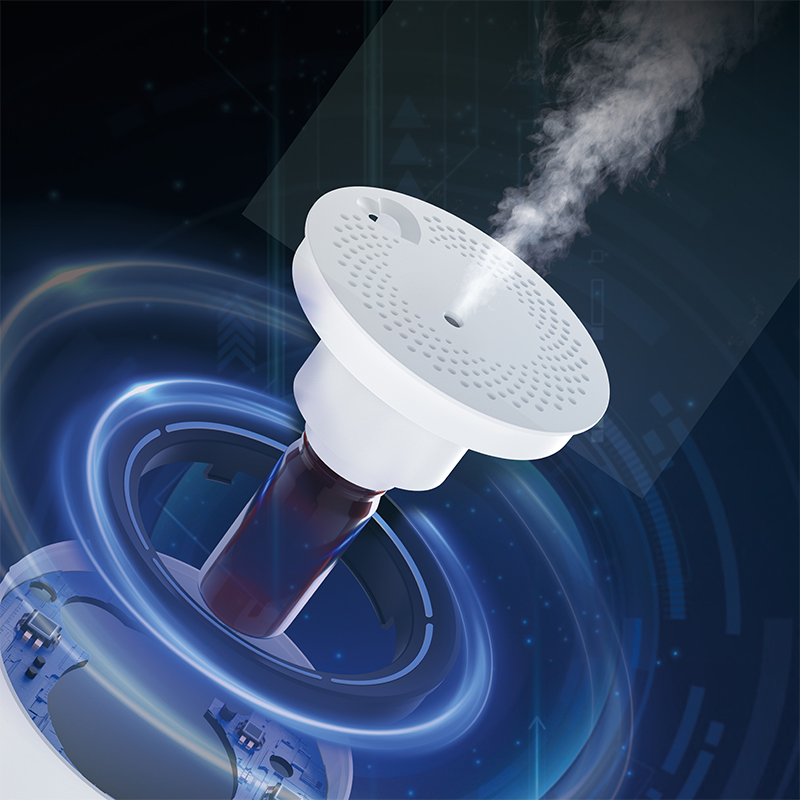
Representing the technological peak of portable scenting, active electronic devices abandon passive evaporation altogether. Instead, a waterless car diffuser utilizes cold-air atomization. Inside the sleek, often aerospace-grade aluminum alloy casing, a high-velocity air pump forces pure essential oil through a microscopic twin-fluid nozzle. This intense pressure shears the liquid down into a dry, micro-fine mist (typically under 5 microns in size). Because this advanced process uses absolutely no heat, the delicate chemical composition of the botanical oil remains intact. Furthermore, operating without water prevents unwanted humidity from building up inside your vehicle.
Pros of Active Nebulizers:
Cons of Active Nebulizers:
To facilitate an objective purchasing decision, we evaluated both options across four critical engineering and consumer metrics. Understanding how these devices perform in real-world environments is essential for proper selection.
| Feature / Metric | Passive Vent Clip / Reed Setup | Waterless Aroma Machine | The Winner |
|---|---|---|---|
| Scent Throw & Coverage | Weak to Moderate. Highly localized and dependent on AC/Heat airflow. | Powerful and Consistent. Dry micro-mist easily fills large cabin spaces. | Waterless Machine. Superior for large SUVs and consistent scenting. |
| Ease of Use & Installation | Extremely simple. Clip onto the dashboard louver and add oil drops. | Requires periodic Type-C charging, filling the reservoir, and setting timers. | Passive Clip. Unbeatable for immediate, plug-and-play simplicity. |
| Cost-Effectiveness | Very low upfront cost, but wastes oil through continuous evaporation. | High upfront cost, but conserves expensive oil efficiently over months. | Tie. Clips win for strict budgets; Waterless wins for long-term ROI. |
| Interior Integration | Often features natural materials (wood, glass) for a rustic, visible look. | Sleek, metallic cylinders designed to fit discreetly into standard cup holders. | Subjective. Depends entirely on your vehicle's specific interior aesthetic. |
Even the most highly-engineered diffuser is rendered useless if filled with low-grade liquids. The actual health benefits of upgrading your car's scent system rely entirely on the quality of the consumable you use. Understanding the chemical distinction between oil types is critical for both your health and the longevity of your hardware.
Synthetic fragrance oils are manufactured in laboratories to mimic natural scents. While they are generally cheaper, they offer no therapeutic benefits and frequently contain mild respiratory irritants. Conversely, pure essential oils are extracted directly from plants through steam distillation or cold pressing. When you utilize premium car fragrance oil, you introduce genuine aromatherapeutic properties into your commute. For instance, diffusing peppermint oil is clinically shown to increase alertness during long highway stretches, while lavender actively helps reduce stress during stop-and-go traffic.
Specifically, if you operate an active nebulizer, you must never use oils diluted with heavy carrier lipids (like fractionated coconut or jojoba oil). From an engineering perspective, the viscosity of carrier oils is far too high; they will permanently clog the microscopic twin-fluid nozzle of an active atomizing pump.
Selecting the right scent delivery system ultimately comes down to aligning the device's technical capabilities with your daily driving habits. Here is a practical breakdown to guide your choice:
Regardless of the system you choose, proper maintenance ensures your vehicle smells fresh while protecting your hardware investment.
To optimize a passive system, you must actively manage the absorption material. If you use a reed setup, invert the wooden sticks every two weeks to restart the capillary action. If your clip uses felt pads, replace the pad entirely when switching to a different oil to prevent muddy scent combinations. Furthermore, try to park in the shade; baking your dashboard in direct sunlight will cause your expensive oils to flash-evaporate in hours.
Active nebulizers, being precision instruments, require preventative maintenance. The internal micro-tubes can become restricted, especially if you use viscous, resinous oils like sandalwood or vetiver. To maintain a powerful mist, perform an isopropyl alcohol flush once a month. Simply fill an empty oil reservoir with a small amount of 90% rubbing alcohol, attach it to the machine, and run it for 10 minutes in a well-ventilated area. This safely dissolves sticky residue inside the pump mechanism.
Choosing the right scent device fundamentally improves your daily driving routine, turning a mundane commute into a moment of relaxation. A passive vent clip offers unbeatable simplicity and rustic charm, making it perfect for drivers on a strict budget. Meanwhile, a waterless nebulizing machine provides a luxurious, highly customizable engineering marvel that effortlessly fills large cabins with consistent, therapeutic aromas.
Evaluate your vehicle size, aesthetic preferences, and daily scent needs. By stepping away from toxic synthetic chemicals and investing in high-quality hardware paired with pure botanical oils, you actively protect your respiratory health. If you are ready to upgrade your daily commute with professional-grade scenting hardware, explore the premium collection of devices at Ramon Aroma to find the perfect fit for your vehicle.
The longevity of a passive diffuser depends entirely on ambient temperature and how often you run your climate control. Typically, a fully saturated felt pad or a small liquid reservoir in a vent clip will provide noticeable fragrance for 2 to 4 weeks. In stark contrast, a standard 10ml or 15ml bottle of oil placed inside a programmable waterless diffuser can stretch anywhere from 1 to 2 months, as the device only disperses micro-mist at specific, controlled intervals.
Yes, the vast majority of waterless machines are universally designed to accept any 100% pure essential oil. However, you must strictly avoid any product labeled as a "massage oil" or any essential oil pre-diluted with a carrier oil (like coconut or jojoba oil). Heavy carrier lipids are far too viscous and will permanently clog the delicate micro-nozzle of an active atomizing pump.
When functioning correctly, a high-quality waterless nebulizer will not leave any residue. The twin-fluid atomization process shears the essential oil into particles smaller than 5 microns. These microscopic particles are essentially dry and remain suspended in the air until they dissipate, rather than falling out of suspension and coating your interior surfaces.
While the aluminum hardware of a waterless machine can withstand the cold, the essential oils and the internal lithium battery cannot. Freezing temperatures can cause pure essential oils to thicken or crystallize, which will clog the pump mechanism upon startup. Additionally, extreme cold severely degrades lithium battery health. It is highly recommended to bring the device indoors during freezing winter nights.
High-quality clips are engineered with soft, silicone-coated prongs designed to grip the plastic louvers without scratching them. The primary danger comes from user error. If a passive diffuser contains a reservoir of liquid oil and is installed at a downward angle, it can easily leak. Because pure essential oils act as potent natural solvents, spilled oil can dissolve clear coats and permanently melt dashboard plastics. Always ensure the device sits perfectly upright.
They can be perfectly safe, provided you take necessary precautions. Dogs and cats have highly sensitive olfactory systems. Furthermore, certain botanical extracts—like concentrated tea tree, wintergreen, and pine—are toxic to pets if inhaled in heavy doses. Waterless machines are generally the superior engineering choice for pet owners because you can digitally lower the scent intensity to a barely perceptible level, ensuring the animal's respiratory comfort.


