
Views: 0 Author: Site Editor Publish Time: 2026-09-23 Origin: Site


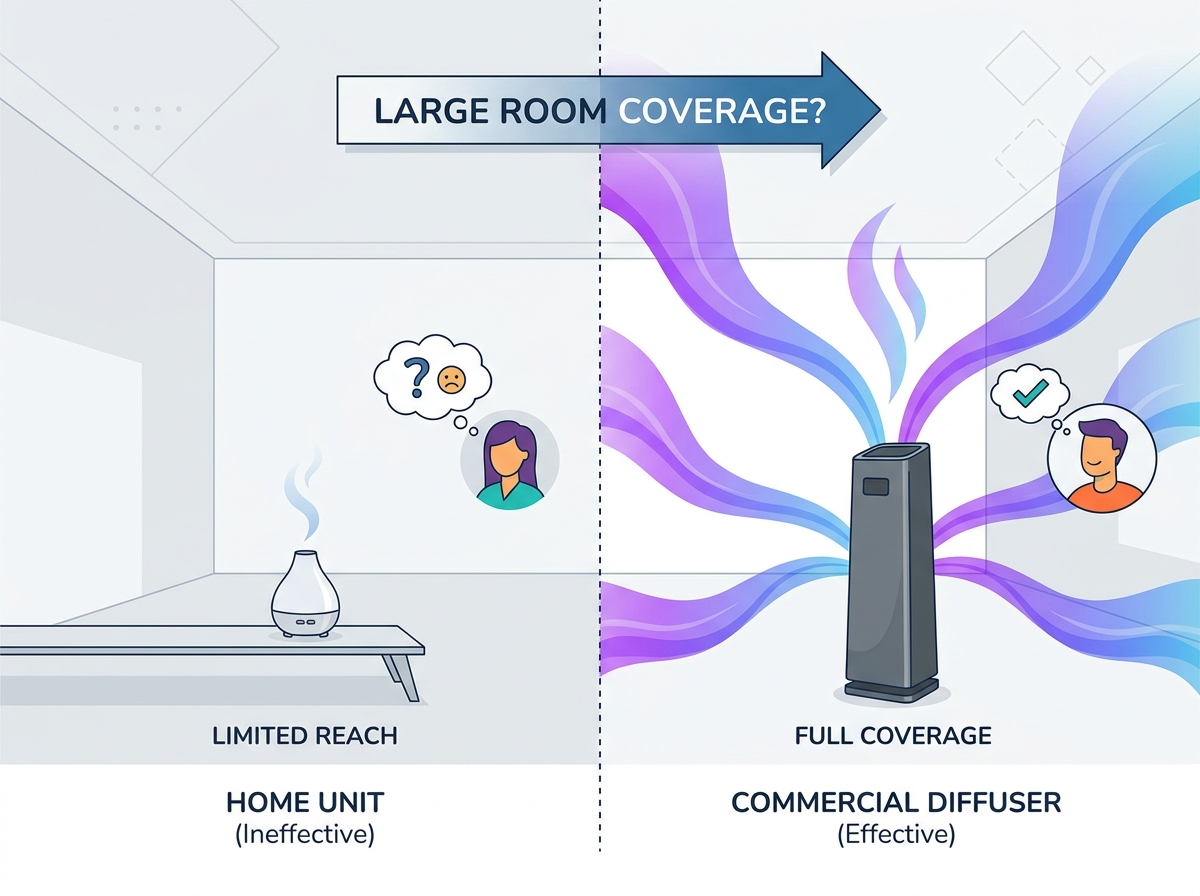
Many property owners buy standard diffusers for open-concept homes or expansive lobbies, only to find the fragrance vanishes within a few feet. You want a signature ambient scent that greets guests the moment they walk through the door. Candles and room sprays fail here because they only provide temporary, highly localized effects. Standard ultrasonic diffusers rely on water and weak dispersion mechanics. They physically cannot scent areas exceeding 1,000 square feet.
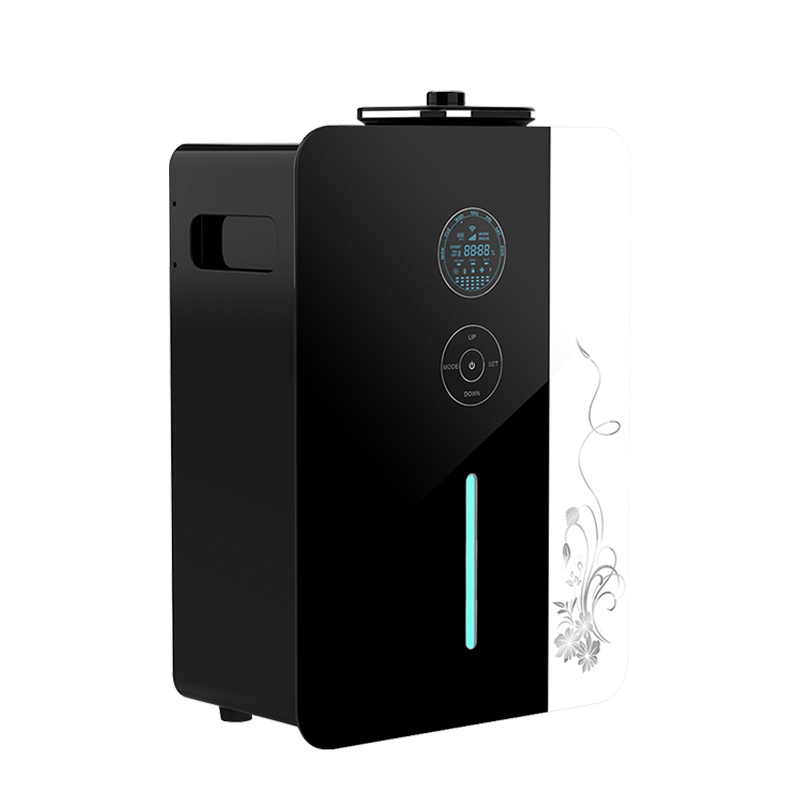
A Commercial Aroma Diffuser solves this exact problem. It is a purpose-built solution for large-scale environmental scenting. This technology shifts the focus away from aesthetic home decor toward functional, high-output performance. These devices utilize advanced cold-air nebulization or HVAC integration to cover massive floor plans. You will learn how to evaluate, select, and install the right equipment to achieve consistent, edge-to-edge fragrance coverage in any large room.
Technology Matters: Commercial units utilize cold-air nebulization rather than water and heat, preserving fragrance integrity and ensuring lighter-than-air dispersion.
HVAC vs. Standalone: The decision hinges on whether you need targeted scenting in a single large room (standalone) or uniform coverage across an entire property (HVAC integration).
True Cost of Ownership: While upfront hardware costs are higher, commercial units offer programmable intensity, significantly reducing long-term fragrance oil waste.
Placement is Critical: Even the most powerful large area air diffuser will fail if placed in dead air zones, trapped on high shelves, or positioned near exhaust vents.
You must understand the baseline metrics of environmental scenting before selecting equipment. Consumer units typically cover 200 to 400 square feet. They work adequately in standard bedrooms or small bathrooms where the walls contain the fragrance. However, a large room, open-concept living space, or commercial lobby often exceeds 1,000 square feet. These environments require industrial-grade dispersion. Standard units simply lack the mechanical power and the correct physical delivery method to push scent across vast distances.
Standard diffusers use ultrasonic technology. You fill a small reservoir with water and add a few drops of essential oil. A piezoelectric transducer at the bottom of the tank vibrates at a high frequency, creating a visible mist. This mist consists of heavy water droplets mixed with trace amounts of oil. Because water is heavy, gravity acts on these particles immediately. They fall to the floor rapidly, rarely traveling more than three to four feet from the unit. You end up with a damp surface, potential damage to wood furniture, and very little ambient fragrance in the air.
A commercial scent diffuser operates on entirely different physics. It uses cold-air nebulization, a process requiring zero water and zero heat. The machine utilizes a high-pressure internal air pump. This pump forces ambient air over a small tube submerged in pure fragrance oil, creating a Venturi effect. The vacuum pulls the oil upward, where it hits a baffle and breaks down into dry nanoparticles. These particles measure less than five microns in diameter. Because they are dry and microscopic, they float effortlessly. They ride the natural thermal currents of your room, remaining suspended in the air for hours rather than seconds.
Many users experience deep frustration when trying to force standard units to perform beyond their capabilities. They place a small water-based diffuser in a massive living room, turn it to the highest possible setting, and let it run for eight straight hours. Despite this effort, they notice zero scent throw. The machine empties its water tank, but the room smells exactly the same. This happens because the dispersion mechanics are fundamentally inadequate for the space. Pumping a higher volume of heavy water droplets into a localized area does not increase the travel distance of the scent. It only creates a larger puddle of water around the base of the machine.
Weak diffusers also create uneven scent distribution, which actively works against your olfactory system. You might smell the fragrance clearly when standing directly over the machine. Step five feet away, and the scent vanishes completely. This uneven distribution triggers olfactory fatigue. Your brain quickly tunes out the localized smell to focus on other environmental stimuli. We call this nose blindness. You assume the machine stopped working, but in reality, the scent never reached the rest of the room.
High-quality nebulizers prevent nose blindness. They distribute a consistent, subtle layer of fragrance across the entire cubic volume of the space. Your olfactory system registers a continuous, pleasant environment without becoming overwhelmed by a concentrated cloud of heavy perfume.
Specification | Ultrasonic Diffusers | Cold-Air Nebulizers |
|---|---|---|
Delivery Method | Water and vibration | Pressurized air and pure oil |
Particle Size | Large, heavy water droplets | Sub-micron dry nanoparticles |
Hang Time in Air | Seconds to minutes | Hours |
Residue Risk | High (water damage on surfaces) | Zero (dry mist leaves no residue) |
Maximum Coverage | Up to 400 sq. ft. | 1,000 to 10,000+ sq. ft. |
You have two primary paths when selecting high-capacity scenting equipment. You can choose a standalone unit or an HVAC-integrated system. Your choice depends entirely on your floor plan, your ownership status of the property, and your aesthetic preferences. Both utilize cold-air nebulization, but they deliver the nanoparticles into the environment using different methods.
Standalone units offer incredible versatility and immediate results. You simply plug them into a standard wall outlet. They require no technical installation, no ductwork modifications, and no tools. This makes them highly portable. You can move them from the living room to the home office or take them with you if you move to a new property.
These units utilize powerful internal fans. The fan pushes the nebulized nanoparticles up and out into the room. They depend on your room's existing air currents to carry the scent further. If you place the unit in a stagnant corner, the scent will struggle to disperse. You must position them strategically to maximize their reach.
Best use cases include open-concept living rooms, hotel lobbies, large retail floors without accessible ductwork, and dedicated home offices.
They provide plug-and-play installation, high portability, and zero duct modifications.
They are excellent for renters who cannot alter the building's HVAC system.
They rely entirely on the room's natural airflow and take up physical floor or surface space.
HVAC systems represent the pinnacle of environmental scenting. These machines connect directly to your home or building's ductwork. They inject the dry fragrance mist into the supply plenum. Your air conditioner or furnace fan then carries the scent to every room simultaneously, utilizing the building's existing infrastructure to distribute the fragrance.
HVAC integration guarantees the walk-in experience. Every vent in the building becomes a scent delivery mechanism. However, you must have physical access to your ductwork. You also need basic DIY skills or a professional technician to install the injection tube correctly. The machine itself sits hidden in a utility closet, basement, or attic, keeping your living spaces free of visible equipment.
To install an HVAC unit properly, you must follow specific technical steps:
Locate the supply plenum on your HVAC system, ensuring you are downstream from the air handler and the furnace heat exchanger.
Drill a small hole (usually 1/4 inch) into the sheet metal of the ductwork.
Insert the provided PTFE tube into the hole, ensuring the tip points in the direction of the airflow.
Seal the entry point with aluminum foil tape to prevent air leaks and maintain static pressure.
Wire the scent machine to an HVAC airflow switch or a smart thermostat relay so the nebulizer only operates when the main HVAC fan is running.
Selecting the right machine requires careful evaluation of your physical space. You cannot simply buy the first unit you see. You must match the machine's technical specifications to your specific environmental variables to ensure optimal performance.
Manufacturers categorize machines by their maximum square footage capacity. You must choose a tier that aligns with your floor plan. Entry-level commercial units typically handle up to 1,000 square feet. Mid-range units cover 1,500 to 2,500 square feet. Heavy-duty models can scent spaces exceeding 3,500 square feet. You must match your exact floor plan. Buying an undersized unit results in weak fragrance. Buying an oversized unit for a small room forces you to run it on the lowest possible setting, which can still feel overwhelming.
You must evaluate manufacturer claims critically. Square footage ratings assume standard eight-foot ceilings. They also assume closed doors and average air exchange rates. If your open-concept living room features twenty-foot vaulted ceilings, your cubic volume is massive. A machine rated for 1,000 square feet will struggle in a 1,000 square foot room with vaulted ceilings because it has to fill more than double the air volume.
To calculate your true requirement, multiply your square footage by your ceiling height to find the cubic footage. A 1,000 square foot room with 8-foot ceilings equals 8,000 cubic feet. That same room with 20-foot ceilings equals 20,000 cubic feet. You must account for open doors, drafty windows, and high-velocity ceiling fans. Always size up to the next machine tier if you have high ceilings or high air exchange rates.
Digital timers and intensity settings are non-negotiable features. A commercial unit must allow you to set specific operating hours. You do not need the machine running at 3:00 AM when everyone is asleep. Advanced units feature LCD screens or smartphone apps connected via Wi-Fi or Bluetooth. You can program the machine to run from 8:00 AM to 8:00 PM.
You must also adjust the concentration of scent particles. Most units allow you to set a work and pause cycle. For example, you can program the machine to spray for 30 seconds and pause for 90 seconds. This prevents the fragrance from overwhelming the space. In a residential setting, you might use a 20-second work cycle and a 120-second pause cycle. In a busy commercial lobby, you might increase the work cycle to 60 seconds to combat the constant influx of outside air from automatic doors.
Consumer units use tiny 100ml bottles. You must refill them constantly, turning scenting into a daily chore. Commercial units feature massive reservoirs. They typically hold 500ml to 1000ml of pure fragrance oil. This capacity directly impacts your maintenance schedule.
A large area air diffuser extends your refill frequency significantly. Instead of adding water and drops of oil every day, you simply swap out a 500ml bottle once a month or even once every two months. This set-it-and-forget-it capability defines the commercial scenting experience. You spend less time maintaining the machine and more time enjoying the environment.
Investing in commercial-grade equipment requires a shift in perspective. You are moving away from disposable plastic gadgets. You are investing in durable, efficient machinery designed for continuous operation. Evaluating the long-term efficiency of these machines reveals why they outperform standard consumer options.
The hardware investment for commercial units reflects their build quality. Entry-level standalone units utilize robust internal pumps, brushless DC motors, and heavy-duty casing. Heavy-duty HVAC systems feature industrial-grade compressors and metal enclosures. These components withstand the rigors of daily, continuous use. The performance gap justifies the investment. You are paying for the mechanical ability to atomize thick, viscous oils into microscopic, weightless particles without the motor burning out after a few months.
Commercial units use pure oil without water. Initially, purchasing large bottles of pure fragrance oil seems like a heavy commitment. However, the economics favor the commercial approach over time. Micro-nebulization is incredibly efficient. A machine running on a medium setting sips oil at a fraction of a milliliter per hour. Furthermore, programmable scheduling eliminates waste. The machine only runs when you actually occupy the space. You never waste oil scenting an empty room overnight or while you are away at work.
Build quality dictates hardware longevity. Standard diffusers rely heavily on cheap plastic components. Essential oils are highly corrosive to certain plastics. Over time, cheap units crack, leak, or suffer pump failures. Commercial units utilize metal internals. They feature aluminum nozzles, brass fittings, and robust pneumatic pumps. This superior build quality improves long-term efficiency. You avoid the cycle of replacing broken plastic diffusers every six months. A well-maintained commercial unit will operate reliably for years, providing consistent ambient scenting without mechanical degradation.
Even the best equipment fails if installed or placed incorrectly. You must understand airflow dynamics and maintenance requirements to achieve optimal performance. Improper implementation leads to wasted oil, weak scent throw, and potential damage to your HVAC system.
Placement dictates success for standalone units. You must tailor your strategy to specific rooms and architectural layouts.
Target high-impact areas like entryways. Placing a unit near the front door achieves the immediate walk-in scent effect.
For central living spaces, position the unit where natural cross-breezes can carry the mist. Observe how air moves from your air conditioning vents to the return grilles.
Never place a unit on a tall fireplace mantle or a high bookshelf. Cold-air nebulizers produce a mist that floats. If you start the mist near the ceiling, it stays trapped near the ceiling. Waist-to-chest height is optimal. This allows the scent to disperse at breathing level.
Do not place units near return air vents. The HVAC system will immediately suck the scent out of the room before you can enjoy it.
Avoid open windows or high-traffic doorways where the fragrance simply escapes outside.
HVAC integration carries specific risks that require careful attention. You must connect the injection tube to the supply plenum, never the return duct. If you inject oil into the return duct, the particles will coat your MERV filter. This clogs the filter, restricts airflow to your furnace, and prevents the scent from reaching the house. You must drill a precise hole for the injection tube. Ensure the tube points in the direction of the airflow so the air stream pulls the mist away from the nozzle.
Improper installation can void HVAC warranties. You must also ensure the scent machine only runs when the HVAC fan runs. If the scent machine sprays while the HVAC fan is off, the heavy concentration of oil will settle inside the ductwork, creating a sticky residue. Always use high-quality, compatible oils. Cheap oils contain carrier fluids that leave residues inside your ductwork, attracting dust and debris.
Neglect destroys commercial equipment. The nebulizer nozzle features a microscopic opening. Over time, thick essential oils can gum up this opening. You must perform routine maintenance to prevent clogging. Every time you change the oil bottle, pour a small amount of rubbing alcohol into an empty bottle. Run the machine for fifteen minutes. The alcohol dissolves any hardened oil residue inside the nozzle and flushes the pneumatic lines.
Clogging remains the most common point of failure for hotel scenting equipment. A simple monthly alcohol flush guarantees years of flawless operation. You should also inspect the PTFE tube on HVAC units annually to ensure it has not become brittle or cracked from temperature fluctuations inside the ductwork.
A commercial aroma diffuser is a necessary investment if your space exceeds 1,000 square feet. It easily handles high ceilings, open floor plans, and complex airflow dynamics. These machines deliver consistent, set-it-and-forget-it operation. They replace the daily chore of refilling water tanks with a sophisticated, automated scenting experience that elevates the atmosphere of any large environment.
Your shortlisting logic should remain simple. Choose a standalone unit if you rent your home or lack access to your HVAC ductwork. They offer immense power with zero installation hassle. Choose an HVAC-integrated unit if you own the property and demand invisible, whole-space coverage.
Take these next steps to upgrade your environmental scenting:
Measure the exact square footage and ceiling height of your target space to calculate the total cubic volume.
Inspect your utility room to determine if your HVAC supply plenum is easily accessible for a potential ductwork installation.
Request fragrance oil sample packs from manufacturers to test scent profiles before committing to a large 500ml bottle.
Identify optimal waist-high placement locations away from return vents and open windows if you decide on a standalone unit.
A: Yes, you can. You must utilize the machine's digital controls to turn down the intensity settings. By programming shorter burst cycles and longer pause times, you avoid over-scenting smaller rooms. This allows you to achieve a subtle, always-on ambient fragrance without overwhelming a standard-sized home.
A: No, they do not damage ductwork when installed and operated correctly. Commercial units use cold-air nebulization to create dry nanoparticles. Unlike water-based vapor, these dry particles do not create moisture or mold. They travel through the ducts without leaving a sticky residue, provided you use high-quality, pure fragrance oils.
A: A 500ml bottle typically lasts between one and three months. The exact duration depends heavily on your daily usage schedule and intensity settings. Running the machine for eight hours a day on a medium concentration setting usually yields about two months of continuous fragrance.
A: A commercial unit uses pressurized air to break pure oil into a dry mist. It uses absolutely no water and generates no heat. An ultrasonic humidifier uses vibrating discs to break water and oil into heavy, wet droplets. Commercial units do not add any humidity to your environment.
A: Safety depends entirely on the oil quality. You must source high-quality fragrance oils that comply with IFRA standards. Look for oils free of harmful VOCs, parabens, and phthalates. Always ensure the specific scent profile is designated as pet-safe by the manufacturer before operating the machine.
A: Place the unit at waist-to-chest height in an area with good natural airflow. Keep it away from exhaust vents, return air ducts, and open windows. Do not place the unit on high shelves or tall mantles, as the dry mist will become trapped near the ceiling and fail to reach breathing level.


