
Views: 0 Author: Site Editor Publish Time: 2026-08-18 Origin: Site


The transition from generic, off-the-shelf hardware to proprietary scent delivery systems marks a maturation point for retail brands, hospitality groups, and commercial environments. Brands often struggle to find manufacturing solutions that balance aesthetic guidelines, strict hardware compliance, and reliable atomization technology. You want to avoid unacceptable defect rates or oil compatibility issues. Successfully launching a branded diffuser requires moving beyond superficial design choices. A custom essential oil diffuser must align perfectly with your operational environment and brand identity. This guide breaks down the technical evaluation criteria, manufacturing pathways, and compliance requirements necessary to source or engineer a custom unit that protects brand equity and scales reliably.
Establishing the baseline requirements for a product to bear your brand's logo requires strict technical evaluation. Success is defined by aesthetic alignment, functional reliability, and user safety. A diffuser is an active electromechanical device handling corrosive liquids. If the hardware fails, leaks, or malfunctions, the end-user associates that failure directly with your brand. You must define operational success before engaging any manufacturing partner.
Balancing the design team's vision with manufacturing realities presents the first major hurdle. Design teams often propose unique shapes, sharp angles, or premium materials like ceramic, glass, or brushed aluminum. However, injection molding has strict physical constraints. Plastic parts require specific draft angles—typically 1 to 2 degrees—to release from steel molds without galling. Thick plastic sections cause sink marks during the cooling process. If your design requires complex undercuts, the factory must use slider mechanisms in the tooling, increasing complexity and potential failure points. You must reconcile aesthetic desires with the physics of mass production.
Differentiating hardware requirements based on the end-user dictates the internal architecture. A unit designed for spa retail needs specific features. It should operate quietly, feature ambient light controls, and offer a small footprint. Conversely, a unit destined for hotel lobbies requires a completely different engineering approach. It needs a high-capacity reservoir, tamper-proof locks, and robust internal pumps capable of running continuously. You cannot force a consumer-grade internal architecture into a commercial application. The target audience dictates the internal components, the housing material, and the user interface.
Breaking down the two primary sourcing models for branded hardware clarifies your project timeline and required capital. You must choose between utilizing existing factory designs or engineering a completely new product from scratch. Each path carries distinct operational trade-offs.
Selecting pre-existing, factory-designed molds and applying custom branding is the fastest route to market. When you choose a private label diffuser, you bypass the engineering phase entirely. You select a silhouette from the factory's catalog. You then customize the exterior colorway, apply your logo via silk-screen printing or laser engraving, and design custom retail packaging.
The primary advantages are rapid time-to-market and lower minimum order quantities. You can often launch a product in under sixty days. The baseline functionality is already proven. The factory has already resolved the internal assembly challenges. However, this route offers zero intellectual property ownership. You do not own the mold. Competitors can purchase the exact same silhouette from the same factory, apply their own logo, and compete directly against you. You rely entirely on brand strength and oil quality to differentiate your product.
Engineering a diffuser from scratch defines the Original Equipment Manufacturer approach. An OEM aroma diffuser requires custom CAD designs, proprietary PCB development, and cutting custom steel tooling. You dictate every specification, from the internal pump capacity to the exact thickness of the outer shell. Engineers must design the Printed Circuit Board (PCB) to handle continuous power draw without overheating. Surface-mount technology (SMT) ensures components remain secure despite the constant vibration of the internal pumps.
This path grants complete IP ownership. You own the molds, preventing any competitor from replicating your hardware. It allows for exact specification matching and unique market positioning. The drawbacks are significant upfront engineering timelines and extended prototyping phases. Prototyping and tooling typically take three to six months before mass production can even begin. Factories also demand significantly higher minimum order quantities to justify the dedicated assembly line setup. Tooling requires high-grade steel; standard runs use P20 steel, while high-polish finishes require NAK80 steel, adding to the timeline.
| Manufacturing Path | Time-to-Market | IP Ownership | Engineering Required | Customization Level |
|---|---|---|---|---|
| Private Label | 30 - 60 Days | None | Low (Packaging/Colors) | Surface Level |
| Custom OEM | 3 - 6 Months | 100% Owned | High (CAD, PCB, Tooling) | Complete Structural |
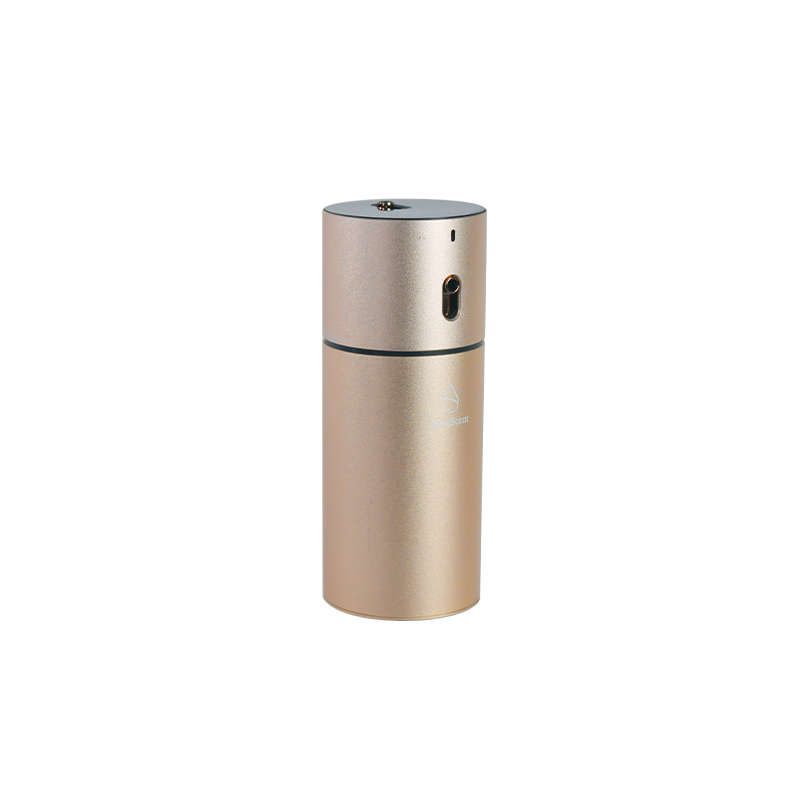
Evaluating how internal hardware choices impact the final product's performance is mandatory. A beautiful exterior housing is useless if the internal atomization technology fails. You must engineer the internal components to match the specific demands of your chosen fragrance oils.
Ultrasonic technology uses water and high-frequency vibrations to create a fine mist. A piezoelectric disc vibrates at ultrasonic frequencies—typically 2.4 MHz—breaking water and oil into microscopic droplets. This method is best for consumer retail. It provides a visual mist and adds localized humidity to a room. However, it dilutes the essential oil and requires frequent water refills.
Nebulizing, or cold air diffusion, uses pressurized air to atomize pure oil without water or heat. It relies on the Bernoulli principle. High-velocity air passes over a small tube, creating a vacuum that pulls the oil upward and shatters it into nanoparticles. This technology is mandatory for large commercial spaces and HVAC integration. It preserves the therapeutic integrity of the oil and provides highly concentrated scent delivery. When developing a custom scent machine for large-scale environments, nebulization is the only viable engineering choice. A commercial nebulizer relies on a diaphragm pump. Specifying a brushless DC motor extends the operational life from 2,000 hours to over 10,000 hours, reducing field failures.
The specific gravity and viscosity of your chosen essential oil blends must dictate the internal hardware specifications. Thick, resinous oils like vetiver or patchouli require significantly higher pump pressure in a nebulizer. If the pump is underpowered, the oil will clog the nozzle. In ultrasonic units, heavy oils can coat the piezoelectric disc, dampening the vibration and stopping mist production. Hardware must be engineered to handle the exact chemical profile of the oils you intend to sell. You cannot decouple the hardware engineering from the liquid chemistry.
Calculating the necessary reservoir size and output rate ensures you meet promised coverage claims. A unit designed for a 500-square-foot bedroom requires a different fluid dynamic approach than a unit covering a 5,000-square-foot retail floor. You must calculate the consumption rate against the reservoir capacity. This determines the maintenance interval. Commercial clients will reject hardware that requires daily refills. You must engineer the reservoir size to allow for at least thirty days of continuous operation in commercial settings.
Evaluating the return on investment for smart features requires careful consideration. Adding Bluetooth, Wi-Fi, app-based scheduling, and smart-home integration increases PCB complexity. It requires dedicated software development and ongoing app maintenance. You must ensure the PCB is protected with conformal coating to prevent essential oil vapor from corroding the microchips. While smart features enhance the user experience, they introduce new failure points. Ensure your factory has a dedicated software engineering team capable of maintaining the app infrastructure long after the hardware is delivered.
Ensuring the hardware, facility, and packaging are legally compliant for sale in target markets protects your brand from liability. Regulatory bodies do not care about your aesthetic design. They care about electrical safety, chemical exposure, and accurate labeling. You must verify compliance at every stage of the supply chain.
Mapping out mandatory testing is the first step in risk management. North American markets require UL or ETL certification. This testing ensures the device will not overheat, short-circuit, or cause a fire during continuous operation. European markets mandate CE marking. The FCC regulates electromagnetic interference, ensuring your device's PCB does not disrupt other electronics. RoHS compliance restricts the use of hazardous substances like lead and cadmium in the manufacturing process. You must demand verifiable testing reports from accredited third-party laboratories. Never accept unverified factory claims regarding electrical safety.
Vetting the manufacturing partner's quality management systems ensures consistent assembly line execution. A factory holding ISO 9001 certification demonstrates a documented, standardized approach to quality control. Good Manufacturing Practice (GMP) certifications ensure ethical labor practices and clean assembly environments. When auditing a factory, request their current ISO certificates and verify them with the issuing body. A clean, organized factory floor directly correlates with lower defect rates in your final product.
Addressing the corrosive nature of pure essential oils is a strict engineering requirement. Citrus oils contain high levels of limonene, a natural solvent that rapidly degrades standard plastics like ABS. Standard ABS plastic acts like a sponge when exposed to limonene. Within weeks, the plastic softens, warps, and eventually cracks. You must mandate the use of BPA-free, high-grade Polypropylene (PP) or Polyethylene Terephthalate (PET) for all internal reservoirs and oil pathways. Polypropylene offers superior chemical resistance, forming an impermeable barrier against aggressive essential oil compounds. External housings must also be evaluated for chemical resistance. If a user spills oil on the exterior shell, the plastic should not melt or discolor. Specify the exact polymer grades in your manufacturing contract.
| Polymer Type | Chemical Resistance | Common Application | Risk Level with Essential Oils |
|---|---|---|---|
| ABS Plastic | Low | External Housings | High (Melts/Cracks) |
| Polypropylene (PP) | High | Internal Reservoirs | Low (Highly Resistant) |
| PET | High | Oil Bottles/Tanks | Low (Highly Resistant) |
| Silicone | Medium | O-Rings and Seals | Medium (Requires High-Grade) |
While the hardware requires electrical certificates, your paired oils carry their own regulatory burden. You must ensure your oils carry proper Material Safety Data Sheets (MSDS) and Certificates of Analysis (COA). These documents detail the chemical breakdown and flash points of the liquids. Providing this documentation to your hardware manufacturer helps them select the correct internal tubing and seals. It prevents hardware clogging and protects you from user liability claims regarding allergic reactions or toxicity.
Ensuring the custom box, user manual, and marketing materials comply with regional regulations is your final compliance hurdle. You must provide clear operational warnings regarding electrical safety and oil handling. Avoid making unsubstantiated therapeutic claims on the packaging. Regulatory agencies strictly monitor medical claims related to essential oils. Focus your labeling on the hardware's functional specifications, coverage area, and operating instructions. Ensure all warning symbols meet the minimum size requirements for your target market.
Proactive steps protect your brand during the manufacturing phase. Overseas production introduces variables in communication, material sourcing, and quality control. You must implement strict protocols to catch defects before the product leaves the factory floor.
Mitigating risks requires formalizing the approval process. Never authorize mass production based on a digital render or a rough prototype. You must require a Golden Sample. This is a final, fully functional, cosmetically perfect pre-production prototype. It serves as the absolute standard for mass production. Both you and the factory manager must sign and date the Golden Sample. If the final mass-produced units deviate from this sample, the factory is liable for the rework.
The most critical step in diffuser manufacturing is physical stress testing. You must send your brand's specific essential oil blends to the factory. Instruct the engineering team to run continuous 72-hour stress tests on the Golden Sample using your exact liquids. This test reveals hidden flaws. It shows if the pump pressure is adequate for your oil's viscosity. It proves whether the plastic reservoir can withstand the chemical composition without degrading. Never assume generic factory testing applies to your specific fragrance formulations.
Relying solely on the factory's internal quality control is a massive operational risk. You must hire third-party inspection agencies, such as SGS or TÜV Rheinland, to conduct independent audits. Implement Acceptable Quality Limit (AQL) inspections before the product is loaded into shipping containers. An AQL 2.5/4.0 standard dictates exactly how many minor and major defects are acceptable in a randomized batch. If the batch fails the AQL inspection, the factory must rework the entire order at their own expense before shipment.
Protecting your custom designs requires robust legal frameworks. Standard Non-Disclosure Agreements are often insufficient when working with overseas manufacturers. You must utilize NNN agreements: Non-Disclosure, Non-Use, and Non-Circumvention. This legally binds the factory from sharing your CAD files, using your molds for other clients, or bypassing you to sell directly to your distributors. Ensure the NNN agreement is drafted in the factory's native language and enforceable in their local jurisdiction.
A: Fully custom OEM molds typically require minimum order quantities of 3,000 to 5,000 units. This volume is necessary for factories to offset the setup time, assembly line calibration, and custom steel tooling required for a new product. Private label options using existing molds can start as low as 500 units.
A: A complete OEM project takes three to five months. Expect 30 to 60 days for CAD design and PCB prototyping. Creating the custom steel molds takes another 30 to 45 days. Final mass production and assembly require an additional 30 to 40 days after the Golden Sample is approved.
A: A private label diffuser utilizes an existing, factory-owned design where you simply apply your logo and custom packaging. A custom mold is engineered entirely from scratch based on your unique CAD files, granting you exclusive intellectual property ownership and preventing competitors from using the same shape.
A: Yes. Nebulizing, or cold air diffusion machines, can be specifically engineered for HVAC integration. This requires precise airflow calculations, specialized high-pressure internal pumps, and specific output tubing to inject the atomized nanoparticles directly into the ductwork without causing condensation.
A: You should verify that the manufacturing facility holds current ISO 9001 certification for quality management and GMP certification for ethical production. Additionally, ensure they have a proven track record of producing hardware that passes UL, CE, FCC, and RoHS electrical and safety testing.


