
Views: 0 Author: Site Editor Publish Time: 2026-08-18 Origin: Site


Corporate facility management goes beyond visual aesthetics and temperature control. We now engineer sensory-optimized environments to drive focus, cut down on workplace distractions, and shape client perception. Consumer-grade diffusers fail in commercial spaces. They lack the output capacity for open-plan layouts, demand constant manual refills, and frequently trigger HR complaints due to unregulated scent dispersion. Scaling ambient scenting requires industrial-grade equipment and precise calibration. You need a structured evaluation framework to select the right hardware based on square footage, HVAC compatibility, and strict workplace compliance. Finding the best essential oil diffuser for office environments means ditching basic tabletop gadgets. You must focus on scalable, programmable technology that integrates seamlessly into your existing building operations.
Olfactory receptors wire directly into the limbic system. This neurological pathway allows specific scent profiles to influence sustained mental clarity and reduce error rates on the floor. Environmental psychology studies demonstrate clear correlations between ambient scent and task vigilance. Properly calibrated scenting minimizes workplace distractions without overpowering the senses.
Specific essential oils yield measurable cognitive results. Rosemary and peppermint stimulate alertness. We use them to support focus during complex data entry or analytical tasks. Bergamot provides mood elevation in high-stress departments. Vanilla and green tea reduce perceived stress in high-pressure environments like call centers or active trading floors. We approach office scenting strictly as an environmental tool. Essential oils do not replace proper ventilation. They optimize the ambient workspace, mask minor background odors, and establish a consistent sensory baseline. This helps employees maintain concentration throughout long shifts.
Scent branding transforms reception areas and executive suites. When a client walks through the doors, their first sensory input is olfactory. A carefully selected fragrance establishes immediate professionalism. High-end hotels have used this strategy for decades. Corporate facilities now adopt the same standard to shape visitor perception.
A subtle, high-quality commercial aroma diffuser improves perceived air quality. Commercial buildings naturally develop stale ambient odors. Carpet off-gassing, HVAC condensation, and dense human occupancy all contribute to a stagnant environment. Strategic diffusion effectively masks these odors. It signals cleanliness and attention to detail before a single word is spoken.
The scent profile in the main lobby must match the subtle notes in the executive boardrooms. This requires equipment capable of uniform dispersion. Patchy, localized scenting creates a disjointed experience. Professional scent mapping ensures the brand identity remains cohesive across the entire floor plan.
| Office Zone | Recommended Scent Profile | Primary Objective | Diffusion Intensity |
|---|---|---|---|
| Main Lobby / Reception | White Tea, Fig, Cedarwood | Brand identity, welcoming atmosphere | Medium-High |
| Open-Plan Bullpen | Peppermint, Rosemary, Lemon | Focus, error reduction, alertness | Low-Medium |
| Executive Boardroom | Sandalwood, Bergamot, Leather | Professionalism, perceived value | Low |
| Employee Breakroom | Sweet Orange, Grapefruit | Odor masking, mood elevation | Medium |
| High-Stress Call Center | Lavender, Vanilla, Green Tea | Stress reduction, calming | Low-Medium |
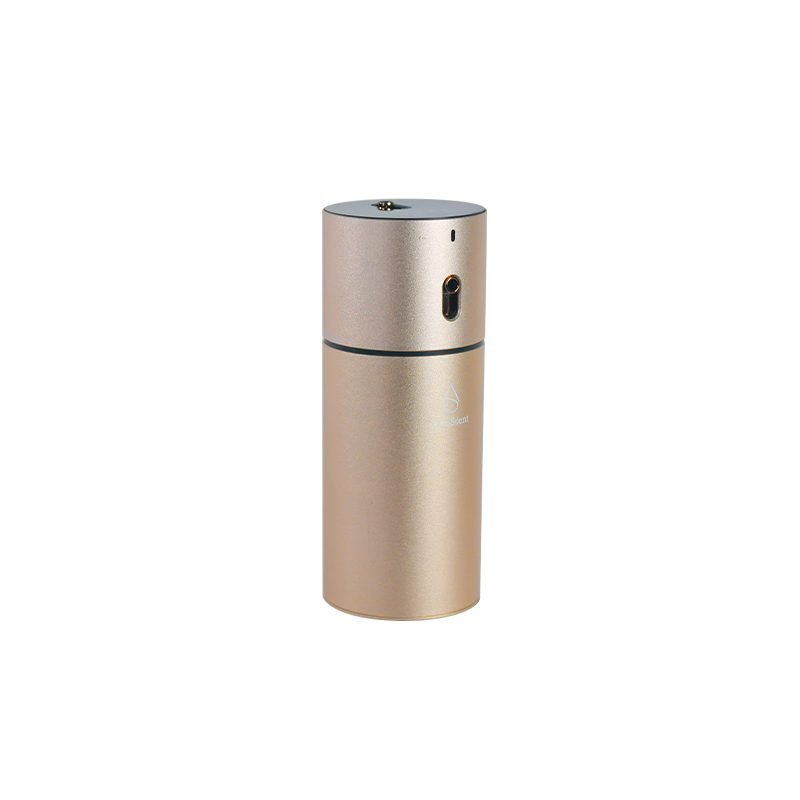
Ultrasonic units use water and high-frequency vibrations to disperse a fine mist into the air. A small ceramic disc vibrates at ultrasonic frequencies, breaking down the essential oil and water mixture into micro-particles. This technology dominates the consumer market due to its simplicity and quiet operation.
These units work best for individual desks, small private offices, or enclosed meeting rooms under 400 square feet. Some large-capacity consumer archetypes feature 500ml or larger reservoirs. These larger models handle slightly bigger enclosed spaces but still rely on the same basic water-mist technology.
The trade-offs make them unsuitable for large commercial areas. Ultrasonic diffusion increases local humidity. This causes problems near sensitive electronics, server racks, or paper archives. They require daily cleaning to prevent mold and bacterial growth inside the water tank. Furthermore, the scent throw remains highly localized, resulting in uneven distribution across a room.
Smart cartridge systems utilize pre-filled, waterless fragrance vials. They combine dry-air diffusion with smart-home technology and app-based scheduling. Users simply snap a sealed cartridge into the device. The unit uses low-heat or fan-assisted evaporation to release the scent profile into the surrounding environment.
These devices fit tech-forward medium offices, reception desks, and shared workspaces. Because they use no water, there is zero risk of spills, leaks, or mold growth. Facility managers appreciate the clean, dry operation. You can place them safely next to computers, servers, and sensitive architectural materials.
Adopting this technology locks the facility into proprietary scent cartridges. You cannot pour your own bulk essential oils into these machines. This reliance on proprietary consumables increases ongoing material usage and limits your selection to the manufacturer's specific fragrance library.
Nebulizing technology uses pressurized air to atomize pure essential oils into micro-particles. This process relies on the Bernoulli principle. High-velocity air passes over a small tube, drawing the oil up and shattering it into a fine, invisible vapor. It requires zero water and zero heat, preserving the exact chemical composition of the essential oil.
This method handles medium-to-large open-plan offices, lobbies, and high-traffic commercial zones. Nebulizers deliver a potent, pure scent throw that covers thousands of square feet. They connect to large bulk oil canisters, allowing them to run for weeks or months without requiring a refill.
The primary trade-off is intensity management. The stronger scent concentration requires careful calibration to avoid overwhelming the space. Additionally, the internal air pump generates a low hum. This motor noise disrupts ultra-quiet zones like libraries or focused bullpens. Because they atomize pure oil, they consume essential oils at a faster rate than ultrasonic models.
An HVAC-integrated scent system connects directly to the building’s ventilation ductwork. It uses advanced nebulization to create nano-particles of scent. The building's existing airflow then distributes these particles uniformly through the supply registers. This ensures every square foot of the facility receives the exact same ambient experience.
These systems handle enterprise environments, multi-floor offices, and massive commercial facilities. A single unit scents tens of thousands of square feet. Facility managers control the entire building's olfactory environment from a single mechanical room, completely removing the equipment from public view.
Connecting equipment to commercial ductwork requires facility manager approval and professional HVAC technicians. The maintenance protocols involve periodic checks of the insertion tubes and pressure gauges. You must ensure the atomized oils do not degrade internal duct linings over time.
| System Type | Mechanism | Ideal Coverage | Maintenance Level | Best Application |
|---|---|---|---|---|
| Ultrasonic | Water + Vibration | Under 400 sq. ft. | High (Daily cleaning) | Private offices, individual desks |
| Smart Cartridge | Dry Fan / Evaporation | 400 - 1,000 sq. ft. | Low (Cartridge swap) | Reception desks, tech spaces |
| Nebulizing | Pressurized Air Atomization | 1,000 - 3,000 sq. ft. | Medium (Monthly refill) | Open-plan offices, lobbies |
| HVAC-Integrated | Ductwork Nano-dispersion | 3,000+ sq. ft. | Medium (Technical checks) | Enterprise buildings, multi-floor |
Matching diffuser output capacity to specific office layouts prevents sensory imbalances. Output capacity is measured in square feet or cubic meters. You must calculate the total volume of the room, factoring in ceiling height. A 2,000 square foot room with standard 8-foot ceilings requires vastly different equipment than a lobby with 20-foot vaulted ceilings.
Relying on cheap, underpowered units leads to under-scenting. The fragrance pools around the device and dissipates before reaching the edges of the room. Conversely, placing a poorly calibrated commercial unit in a small space causes over-scenting. This saturates the air, causing headaches and employee complaints. Always map the cubic footage before selecting the hardware.
Airflow patterns dictate scalability. Supply vents, return registers, and open windows alter how scent travels. Place standalone nebulizers upstream of natural air currents. For larger spaces, deploying multiple medium-capacity units often provides better uniform coverage than relying on a single massive unit in the corner of the room.
To properly size your equipment, follow these field calculation steps:
Employees often want to use a personal office diffuser at their desks. This creates a common workplace dilemma. One employee's calming lavender might be another employee's migraine trigger. In dense cubicle farms, scent boundaries do not exist. Unregulated personal diffusion quickly leads to a chaotic, overwhelming olfactory environment.
Facility managers must establish clear guidelines distinguishing localized diffusion from ambient commercial scenting. If personal units are allowed, restrict them to low-throw ultrasonic models or passive reed diffusers. Mandate that employees only use approved, mild essential oils. The scent must remain undetectable beyond the individual's immediate workstation.
For shared environments, centralized ambient scenting is the only viable solution. By utilizing nebulizing or HVAC systems, management controls the intensity, schedule, and fragrance profile. This eliminates the friction between desk-mates. Centralized control ensures the environment remains professional, consistent, and respectful of all occupants.
Labor hours directly impact the viability of any facility initiative. Evaluating maintenance overhead is non-negotiable. Ultrasonic diffusers require daily water refills and frequent deep cleaning to prevent mold. If you deploy twenty ultrasonic units across an office, you have just created a significant daily chore for the cleaning staff or office manager.
Commercial applications demand large-capacity reservoirs or multi-cartridge systems. A high-quality nebulizer holds 500ml to 1000ml of pure essential oil. Depending on the duty cycle, this allows the machine to run completely unattended for 30 to 60 days. You swap the oil canister once a month, drastically reducing the facility management burden.
Consider the accessibility of the equipment. Standalone units placed on high shelves require ladders for refilling. HVAC units require access to mechanical rooms. Choose equipment that aligns with your maintenance team's existing workflows. Programmable alerts that notify staff when oil levels drop below 10% further streamline the maintenance process.
Acoustic comfort is just as important as olfactory comfort. Every piece of mechanical equipment generates noise. You must evaluate the acceptable decibel (dB) ratings for your specific environment. Open-plan offices typically target ambient noise levels around 45 to 50 dB. Introducing a loud air pump into this space disrupts concentration and causes immediate frustration.
Ultrasonic and smart-cartridge units operate almost silently. They usually register below 30 dB, making them virtually undetectable over normal office background noise. They fit perfectly in quiet zones, executive suites, and small conference rooms where absolute silence is required during presentations.
Waterless nebulizing diffusers rely on internal air compressors. These pumps generate a low, continuous hum, often ranging from 35 to 45 dB. While not overly loud, the frequency becomes noticeable in ultra-quiet environments. To mitigate this, place nebulizers in high-traffic areas, near existing HVAC return vents, or behind acoustic baffling to mask the motor noise.
Modern commercial scenting relies heavily on smart technology. Bluetooth and Wi-Fi app controls are necessary tools for facility managers. App integration allows you to adjust scent intensity remotely. If an area becomes too heavily scented, you dial back the output from your smartphone without physically accessing the machine.
Programmable duty cycles prevent olfactory fatigue, commonly known as nose blindness. If a scent runs continuously, the human brain eventually tunes it out. Smart diffusers pulse the fragrance. You program them to run for 2 minutes and pause for 8 minutes. You also schedule them to operate only during business hours, conserving expensive essential oils overnight and on weekends.
Security features protect the equipment in public-facing zones. Lobbies and reception areas require tamper-proof designs. Lockable settings prevent unauthorized personnel or curious visitors from altering the programming or stealing the essential oil canisters. Enterprise-grade units feature physical key locks and password-protected software interfaces.
Introducing ambient scent into a workplace carries inherent respiratory risks. Facility managers must navigate workplace allergies and sensitivities proactively. Before implementing any system, distribute an anonymous survey to all employees. Identify potential respiratory triggers, asthma conditions, or severe chemical sensitivities. This data dictates whether ambient scenting is viable for your specific workforce.
Understand the critical difference between 100% pure essential oils and synthetic fragrance oils. Synthetic oils often contain volatile organic compounds (VOCs) like phthalates, which act as scent binders. These synthetic VOCs frequently trigger headaches and respiratory distress. They actively degrade indoor air quality and should be avoided in commercial environments.
Pure essential oils also release natural VOCs, such as limonene in citrus oils. While generally better tolerated, they can still cause reactions in highly sensitive individuals. Always request Safety Data Sheets (SDS) from your oil supplier. Keep these documents on file to ensure compliance with occupational health and safety regulations regarding indoor air quality.
A successful implementation requires a formal, written scent-aware workplace policy. This document sets clear expectations for both management and employees. It outlines the specific goals of the ambient scenting program, the types of oils approved for use, and the strict prohibition of unauthorized personal fragrances or perfumes.
Mitigation strategies must be built into the policy. Create designated scent-free zones within the office. Employees who experience discomfort need a safe, unscented area to work. Utilize low-concentration diffusion strategies, keeping the scent barely perceptible. The fragrance should hover at the threshold of detection, never dominating the room.
Establish a clear feedback loop. Employees need a standardized, non-confrontational way to report discomfort. If HR receives complaints regarding the ambient scent, the policy must dictate an immediate reduction in intensity or a complete halt of the system until the issue is resolved. Prioritize employee well-being over environmental aesthetics.
Follow these steps to roll out a compliant scent policy:
Retrofitting scent systems into existing HVAC infrastructure presents significant technical risks. You introduce atomized oil particles directly into the building's respiratory system. If calibrated incorrectly, the oil accumulates on internal duct surfaces, fan blades, and filtration media. Over time, this buildup attracts dust and degrades HVAC efficiency.
Consult with certified HVAC technicians before installation. They must verify that the ductwork materials are compatible with atomized essential oils. Older fiberglass-lined ducts absorb the oil, creating permanent contamination. Smooth, galvanized steel ductwork is generally required for safe, long-term HVAC scent integration.
Review your commercial HVAC warranties carefully. Unauthorized modifications to the supply lines or the introduction of foreign particulate matter can instantly void expensive equipment warranties. Ensure the scent system manufacturer provides specific installation guidelines that comply with commercial building codes and do not violate existing service contracts.
A: The best scents depend on the zone's function. Peppermint, rosemary, and citrus enhance focus and mental clarity in work areas. Bergamot boosts mood and energy. For high-pressure zones, stress-reducing scents like lavender, vanilla, or green tea promote calmness without causing drowsiness.
A: Yes. Both synthetic fragrances and natural essential oils can trigger respiratory sensitivities or asthma. Synthetic oils carry higher risks due to artificial VOCs. Proper HR compliance, utilizing low-concentration diffusion, and ensuring excellent HVAC ventilation are critical to minimizing allergic reactions.
A: A single commercial-grade nebulizing diffuser typically covers 2,000 square feet if placed strategically near airflow currents. However, depending on the room's shape and partitions, deploying two medium-capacity units at opposite ends often provides more uniform coverage than one large unit.
A: Yes. Waterless nebulizing and smart-cartridge systems eliminate the risk of mold growth, require significantly lower maintenance, and prevent accidental water spills near electronics. They also provide consistent scent dispersion without increasing the ambient humidity of the office.
A: Maintenance is minimal but essential. For nebulizers, you must swap the bulk oil canister monthly. Every few months, run a small amount of rubbing alcohol through the system for 15 minutes to clear the atomizing nozzle and prevent oil clogs.
A: Waterless nebulizers and smart cartridges are completely safe around computers and servers because they emit dry particles. Ultrasonic diffusers emit water vapor. They should be kept away from sensitive electronics to prevent moisture accumulation and potential hardware damage.
A: Diffusers improve perceived air quality by effectively masking stale building odors. However, they do not physically purify the air or remove dust and pathogens. They must complement, not replace, proper HVAC filtration and dedicated HEPA air purifiers.


