
Views: 0 Author: Site Editor Publish Time: 2026-08-17 Origin: Site


Environmental psychology dictates how we function inside a workspace. Air quality, ambient scent, and humidity control directly influence employee comfort and cognitive performance. Confined office spaces frequently suffer from stale air. Harsh HVAC systems create uncomfortable dryness that irritates the respiratory tract. Environmental stressors and background odors easily break concentration and negatively impact baseline comfort. Traditional synthetic air fresheners fail to solve these issues. They often trigger headaches or introduce overpowering, unprofessional aromas into the work environment.
Deploying an essential oil diffuser for small office environments offers a strategic solution. This guide provides a technical and practical evaluation of workspace scenting. You will learn how to select the right hardware for your specific square footage. We will cover methods to mitigate workplace friction, such as navigating allergies and shared-space etiquette. Finally, we will measure the actual impact of ambient scenting on workspace comfort, sustained focus, and overall brand perception.
Workplace comfort requires measurable criteria. We define it through the reduction of perceived stress, the neutralization of disruptive building odors, the mitigation of dry air, and the improvement of sustained attention. A well-optimized environment removes friction. Olfactory distractions, like lingering lunch smells from a nearby breakroom or damp building odors from aging ductwork, force the brain to process unnecessary sensory data. Eliminating these distractions restores mental bandwidth.
Specific olfactory stimuli link directly to mental clarity. The olfactory bulb connects straight to the limbic system. This area of the brain governs emotion and memory. Introducing targeted botanical profiles can elevate mood and sharpen focus. A dedicated workspace diffuser acts as an active air quality management tool. It purifies indoor air naturally. It masks disruptive odors that break concentration during deep work sessions.
Beyond cognitive benefits, ambient scent alters environmental perception. High-end scenting creates a luxury hotel effect. This subconscious trigger improves client impressions immediately upon entering a reception area. It also boosts employee satisfaction within executive suites. Premium environments signal professionalism and attention to detail. When a client walks into a conference room that smells like white tea and cedar, their baseline perception of your operation elevates instantly.
Aromatherapy serves as a supplementary comfort measure. It does not replace proper HVAC ventilation. It cannot fix poor ergonomic design. It is not a substitute for commercial HEPA air purifiers. Scent delivery systems enhance an already functional space. They add a layer of sensory optimization. Treat ambient scenting as the final polish on your workspace environment, not a foundational structural fix. If your office lacks fresh air intake, you must address the mechanical ventilation first.
| Workspace Environmental Problem | Traditional Ineffective Solution | Diffuser-Based Solution | Expected Outcome |
|---|---|---|---|
| Lingering breakroom food odors | Synthetic aerosol sprays | Continuous diffusion of purifying citrus blends | Neutralized air without chemical residue |
| Harsh, dry winter HVAC air | Ignoring the discomfort | Ultrasonic diffusion adding micro-moisture | Reduced respiratory irritation and static electricity |
| Mid-afternoon cognitive slump | Excessive caffeine consumption | Intermittent diffusion of peppermint or rosemary | Natural stimulation of the limbic system |
| Stale air in windowless offices | Propping doors open to noisy hallways | Cold-air atomization of pine or eucalyptus | Perception of fresh, sanitized airflow |
Selecting the correct hardware determines your success. Professional environments require specific technical approaches. You must match the delivery mechanism to your room size, ventilation capacity, and acoustic limits. Buying a unit based solely on aesthetics often leads to poor performance. Here is a breakdown of the primary solution categories available today.
Ultrasonic units utilize water and high-frequency piezoelectric vibrations to create a fine mist. A small ceramic plate at the base of the water reservoir vibrates at roughly 2.4 million times per second. This action breaks the essential oil and water into microscopic particles, dispersing them into the air as a cool mist. They do not use heat, which preserves the chemical integrity of the oils.
Nebulizers use pressurized air and Bernoulli's principle to atomize pure essential oil into micro-particles. A small air pump forces air through a narrow tube, creating a vacuum that pulls the oil up from the reservoir. The oil hits a baffle and shatters into a fine, invisible vapor. They require no water or heat.
These units represent the professional tier of ambient scenting. They use cold-air diffusion technology to break oils down into dry nanoparticles. These particles are so small they remain suspended in the air for hours. You can operate them as standalone units or integrate them directly into the ductwork of your HVAC system.
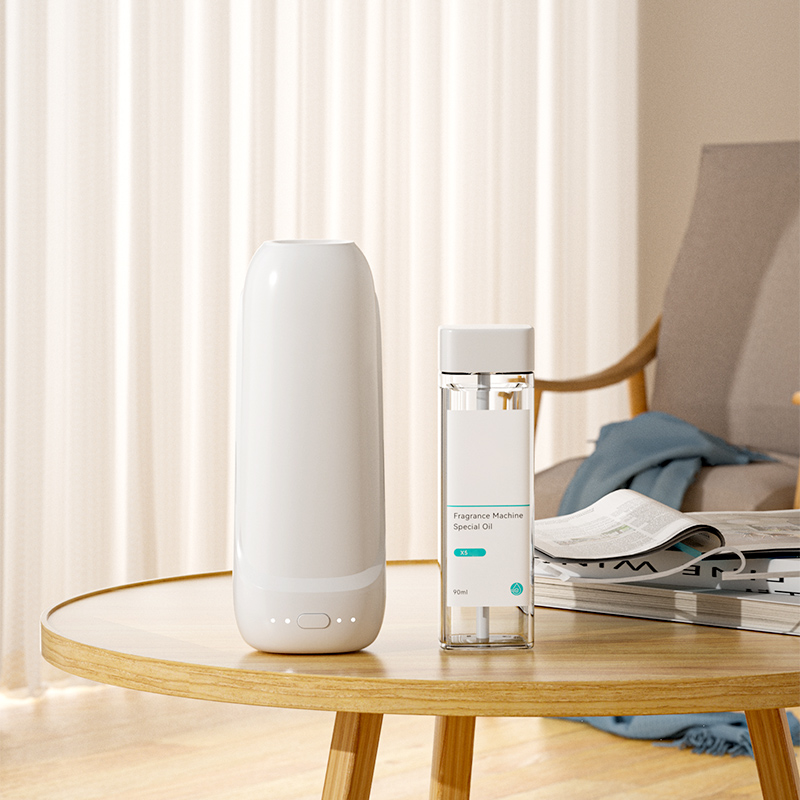
You must map technical specifications to your specific office layout. Evaluate the hardware against your actual environmental constraints. A device built for a large lobby will overwhelm a small cubicle, while a personal desk unit will fail to scent a conference room.
Calculate your required coverage area accurately. Under-scenting renders the device useless. Overpowering a small room causes immediate discomfort. Measure the length and width of your office to find the square footage. Check the manufacturer's rating. A standard small office diffuser typically covers 150 to 300 square feet. If you have high ceilings or strong HVAC airflow pulling air into return vents, you may need a unit rated for slightly larger spaces to maintain a consistent aroma.
Continuous diffusion leads directly to olfactory fatigue. Your olfactory receptors saturate, and you stop smelling the scent. To compensate, people often turn up the intensity, which causes headaches for others entering the room. Variable output settings are mandatory. Look for intermittent timers. The standard technical protocol dictates diffusing in bursts. Set the unit for 30 minutes on, followed by 30 minutes off. This prevents sensory overload, maintains a pleasant ambient aroma, and extends the life of your consumables.
Noise levels matter in professional settings. Evaluate the decibel (dB) ratings of different units before purchasing. Environments requiring deep work, client calls, or podcast recording demand near-silent operation. Ultrasonic units generally operate below 30 dB, similar to a quiet library. Nebulizers can reach 40 to 50 dB due to the mechanical air pump. If silence is critical, prioritize ultrasonic models or place a cold-air scent machine in an adjacent hallway where the noise will not disrupt focus.
The device must integrate seamlessly into your workspace design. Form factor matters. Look for spill-proof designs to protect your desk documents. Choose professional finishes like matte metal, glass, or ceramic. Avoid brightly colored plastics that degrade the visual professionalism of your office. The footprint should remain compact enough to sit on a credenza or bookshelf without cluttering the surface or blocking cable routing.
Interpersonal conflict remains the most common point of failure for office diffusers. Introducing scents into a shared environment requires careful navigation. You must address health sensitivities, personal preferences, and equipment safety proactively before turning on any device.
Never surprise your team with ambient scenting. Implement a framework for surveying office staff before introducing any aromas. Send a brief email asking about asthma, migraines, or specific fragrance aversions. Understand the difference between pure essential oils and synthetic fragrance oils. Synthetics often contain volatile organic compounds (VOCs) that trigger migraines and respiratory distress. Pure botanical extracts generally cause fewer issues, but strong profiles can still irritate sensitive individuals. Always prioritize hypoallergenic, universally tolerated profiles.
Deployment strategies change based on your floor plan and the level of autonomy you possess.
Water-based diffusers emit a constant stream of micro-moisture. Over time, this moisture accumulates on nearby surfaces. Keep ultrasonic units a minimum of 36 inches away from laptops, external monitors, keyboards, and paper archives. Micro-condensation damage voids warranties and destroys sensitive server equipment. If your office contains dense electronics or poor ventilation, default to a waterless nebulizer to eliminate the moisture risk entirely.
The consumable dictates the success of the hardware. Even the most advanced diffuser fails if you use the wrong oil. You must select profiles that align with your daily business objectives and the psychological state you want to induce.
Different tasks require different mental states. Tailor your scent profile to your schedule and workload.
Scent shapes perception. Clean air smells distinct. Luxury environments smell intentional and curated.
Certain scents do not belong in a professional setting. Avoid heavy florals. Ylang-Ylang, Patchouli, and heavy Jasmine profiles often feel cloying. They can be perceived as unprofessional, overpowering, or overly personal. Stick to crisp, clean, or woody notes that blend into the background rather than demanding attention. The goal is ambient enhancement, not a perfume counter experience.
Never diffuse cheap, adulterated oils in an enclosed workspace. Poor quality oils contain synthetic fillers and chemical solvents that cause respiratory irritation. Look for suppliers that provide GC/MS (Gas Chromatography/Mass Spectrometry) testing reports. This testing verifies the purity and exact chemical composition of the oil. High-quality sourcing ensures safety and delivers the actual cognitive benefits associated with the plant extract.
A: The best option features adjustable output, intermittent timers, and low-range dispersion. This allows you to keep the scent localized to your immediate desk area. Ultrasonic models with directional nozzles work well, ensuring you respect the personal boundaries of nearby coworkers without flooding the entire floor with scent.
A: Achieve this by using cold-air commercial scent machines paired with complex, designer oil blends. Single-note essential oils smell natural but lack sophistication. Look for multi-layered blends containing notes of white tea, sandalwood, fig, or bergamot to replicate high-end hospitality environments.
A: Yes, if placed incorrectly. Ultrasonic diffusers emit water vapor. Over time, this micro-condensation can damage internal computer components and warp paper. Keep water-based units at least 36 inches from electronics. Alternatively, use waterless nebulizers, which pose zero moisture risk to equipment.
A: Implement a strict maintenance schedule. Wipe out the water reservoir of ultrasonic units weekly with a dry cloth to prevent residue buildup. Perform a deep clean monthly by running a cycle with water and a tablespoon of white vinegar or rubbing alcohol to clear the ultrasonic plate.
A: Yes. Cold-air scent machines offer superior longevity, programmability, and professional scent profiles. They atomize oil without water, covering larger square footage evenly. You can program them to run only during business hours, making them hands-off compared to consumer diffusers requiring daily refills.
A: Mild citrus blends are the safest choice. Sweet orange, lemon, and grapefruit are generally well-received by most people. They boost mood, combat stale air, and are strongly associated with cleanliness and energy without being overpowering or polarizing.
A: You must exercise extreme caution. Certain oils, including eucalyptus, tea tree, peppermint, and citrus, are highly toxic to cats and dogs. They lack the liver enzymes to process these compounds. Always use pet-safe alternatives, keep the room well-ventilated, and ensure pets can leave the space freely.


