
Views: 0 Author: Site Editor Publish Time: 2026-08-15 Origin: Site


Retail and hospitality sectors no longer rely solely on visual and auditory merchandising. They now prioritize multi-sensory environments to engage consumers fully. Industry benchmarks show a clear correlation between optimized ambient environments and consumer behavior. Strategic ambient enhancements routinely lift dwell time by 5 to 15 percent. They also drive direct sales increases of 2 to 8 percent. Scent marketing works effectively because of human neurology. The brain directly links aroma to emotion and memory. This neurological connection builds immediate brand recognition. It increases long-term customer loyalty and distinguishes a facility from competitors.
However, a massive execution gap exists in the industry. Many businesses invest heavily in custom fragrance design to evoke specific moods but fail entirely at deployment. Inconsistent dispersion, rapid scent fatigue, and reliance on consumer-grade diffusers ruin the intended experience. A successful strategy is fundamentally a hardware and logistics challenge. Enterprise-grade aroma scent machines provide the critical infrastructure required. They deliver a controlled, measurable, and safe ambient experience across any facility.
Commercial environments demand robust infrastructure. Moving beyond consumer diffusers is the first mandatory step in a professional deployment. Residential units typically use water or heat to disperse oils. These methods fail completely in large-scale applications. Heat alters delicate fragrance notes and degrades the essential oil profile. When you apply heat to a complex fragrance, the lighter top notes evaporate too quickly. The heavier base notes burn, leaving a synthetic, unpleasant odor in the room. Water-based ultrasonic diffusers introduce unwanted moisture into the air. Pumping humidity into a commercial space creates significant mold risks, especially inside HVAC ductwork. Furthermore, the mist created by water diffusers is heavy. It falls to the floor within a few feet, creating slip hazards on hard surfaces and damaging wood finishes.
Consumer units simply lack the output capacity for large spaces. They leave massive dead zones and create uneven fragrance distribution. A hotel lobby should not smell overwhelming at the entrance and smell like nothing near the elevators. You need equipment designed specifically for high-volume air exchange. Defining success criteria requires looking at operational realities. A successful deployment requires perfectly uniform distribution across varying air pressure zones. You need programmable intensity based on actual foot traffic patterns. Accurate dispersion of complex notes maintains your exact brand identity.
On-site staff should rarely intervene with the equipment. Strict adherence to safety standards remains completely non-negotiable. The hardware must operate invisibly in the background while delivering consistent results. To achieve this, facility managers must evaluate hardware based on specific performance metrics. These metrics ensure the system meets the rigorous demands of high-traffic commercial spaces.
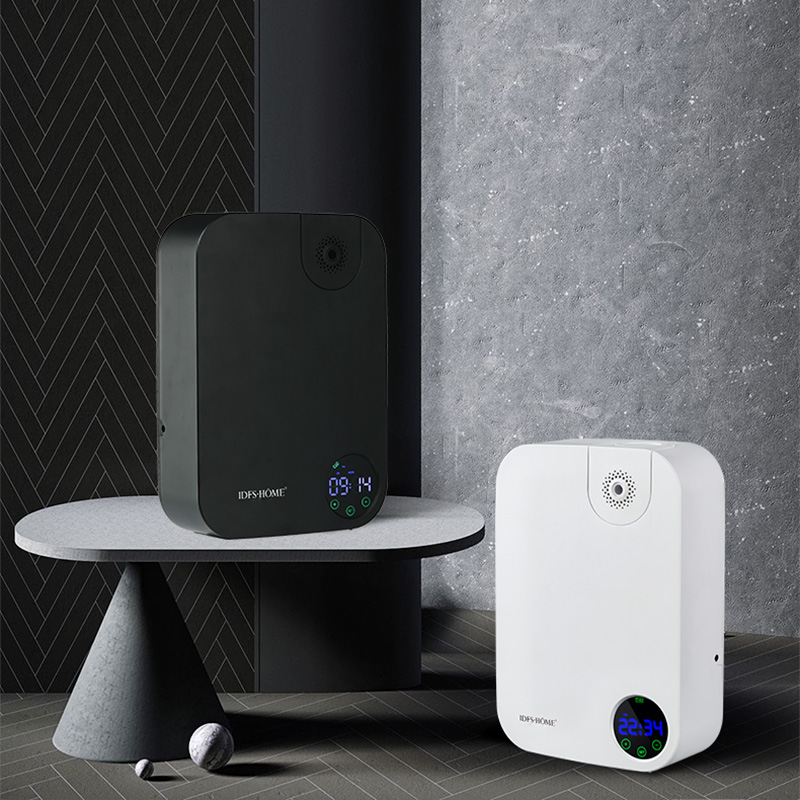
Selecting the right equipment depends entirely on your building's architecture. There is no universal solution for every commercial space. You must match the hardware to your specific environmental constraints. A comprehensive brand scenting system often utilizes a combination of different machine types to achieve uniform coverage across distinct zones.
These units connect directly to the ductwork of a building's HVAC system. They utilize the existing airflow to carry fragrance throughout the facility. Contractors install a small pitot tube into the supply air plenum. The machine sits safely outside the duct in a mechanical room. They are best for large-scale environments like hotels, casinos, and large retail stores. They provide seamless, invisible coverage across thousands of square feet.
The primary trade-off is installation complexity. They require professional installation and compatible HVAC infrastructure. You must have accessible supply ducts. More importantly, the scent machine must be interlocked with the HVAC fan relay. If the scent machine runs while the HVAC fan is off, the dry mist will accumulate in the ductwork. This eventually causes oil pooling and damages the sheet metal. Proper installation ensures the machine only disperses fragrance when the air handler is actively moving air.
These are plug-and-play or permanently mounted units. They disperse scent directly into the immediate room. They are best for lobbies, boutiques, corridors, or segmented zones. They work perfectly where HVAC integration is impossible or unnecessary. Trade-offs include being visible to the public and having localized coverage limits. They require highly strategic placement.
You must map the airflow of the room before placing a standalone unit. If you place a unit directly under a return air vent, the HVAC system immediately sucks the scent out of the room. You must place them near supply vents or high-traffic choke points. Human movement helps distribute the air naturally. Wall-mounted units should be installed at least six feet high to allow the nanoparticles to cascade down into the breathing zone.
Nebulization is the mandatory technology for commercial applications. It breaks essential oils into dry nanoparticles using pressurized air. This process is called cold-air diffusion. It utilizes the Venturi effect. Pressurized air pulls the liquid oil up a small tube and blasts it against a baffle. This shatters the oil drops into sub-micron particles. These particles are so small they behave like a gas. They stay suspended in the air for hours.
This ensures residue-free, consistent coverage across massive areas. Most importantly, it does not alter the chemical composition of the fragrance. The scent remains pure and accurate to the original design. When sourcing a commercial fragrance machine, verify that it utilizes true sub-micron nebulization technology rather than basic fan evaporation.
| Feature | HVAC-Integrated Systems | Standalone / Wall-Mounted Units |
|---|---|---|
| Coverage Area | 2,000 to 10,000+ sq. ft. per unit | 500 to 3,000 sq. ft. per unit |
| Installation Requirements | Requires professional HVAC technician and duct access | Plug-and-play or simple drywall mounting |
| Visibility | Completely hidden in utility or mechanical rooms | Visible to public; requires aesthetic matching |
| Maintenance Access | Centralized in mechanical rooms away from guests | Requires accessing units directly on the retail floor |
| Airflow Dependency | Relies entirely on the building's air handler fan | Relies on natural room drafts and internal fans |
Procuring the right hardware requires looking past marketing claims. You must evaluate the technical specifications against your actual physical environment. Failing to account for architectural variables leads to underperforming systems and wasted consumable budgets.
Evaluate manufacturer claims regarding square footage very carefully. A machine rated for 2,000 square feet assumes standard eight-foot ceilings. High architectural ceilings drastically increase the total cubic volume of air. A 2,000 square foot lobby with a 10-foot ceiling contains 20,000 cubic feet of air. That same footprint with a 30-foot atrium contains 60,000 cubic feet. The machine must handle the cubic volume, not just the floor space.
Open doors, drafty windows, and ambient airflow change dispersion patterns completely. Factor in the natural air exchange rate of your building. A high-end retail store might exchange its air six times per hour. That means the scent machine must constantly replenish the fragrance to maintain the desired intensity. Always calculate your requirements based on cubic feet and Air Changes per Hour (ACH).
Digital or app-based scheduling is an absolute necessity. You need variable intensity settings to manage peak versus off-peak hours. High traffic requires higher intensity to overcome ambient body odors and increased air exchange from opening doors. Low traffic requires lower intensity to prevent overwhelming the space. Smart scheduling optimizes consumable usage efficiently. It evokes the right mood at the exact right time. Look for systems that allow multiple daily events. For example, you might want a higher intensity during the lunch rush and a lower intensity during the mid-afternoon lull.
Evaluate whether the equipment utilizes active malodor counteractant technology. Masking bad odors with heavy perfumes creates a terrible customer experience. Mixing a floral scent with the smell of sweat just creates a floral-sweat odor. Active neutralization works differently. It binds to malodor molecules at a chemical level. Malodors like isovaleric acid (sweat) or ammonia (urine) have specific molecular shapes. Counteractants pair with these shapes, rendering them too large for human olfactory receptors to detect. This neutralizes the bad smell before introducing the pleasant fragrance. This capability is crucial for fitness centers, public restrooms, and hospitality environments.
Safety is the most critical evaluation dimension. You must use oils and machines that comply with IFRA standards. The International Fragrance Association sets strict guidelines for safe usage levels. Monitor VOC regulations in your specific region. Volatile Organic Compounds impact indoor air quality. Follow OSHA guidelines to ensure a safe environment for your employees who breathe the air daily.
Evaluating the operational impact requires looking at both immediate deployment and long-term sustainability. The efficiency of your hardware directly dictates the success of the program. Cheap hardware often results in massive consumable waste.
Frame the operational evaluation around longevity and efficiency. Low-tier hardware burns through fragrance oil much faster. Inefficient nebulizers create larger particles. These larger particles are too heavy to stay airborne. They fall to the floor instead of circulating through the room. You end up using twice as much oil to achieve half the coverage. High-efficiency nebulizers maximize the airborne time of every single drop of oil. They shatter the liquid into true nanoparticles that ride the natural air currents of the building.
Some systems require proprietary, locked cartridges. This limits your flexibility and impacts the long-term viability of the program. Open-fill systems generally offer better operational flexibility. You can source oils from multiple vendors and adjust your strategy without replacing the entire hardware fleet.
You need a strict framework for tracking success. Correlate the deployment with specific, measurable KPIs. Effective scent branding creates a measurable shift in how consumers interact with your physical space. Scent bypasses the thalamus and goes straight to the olfactory bulb. This triggers immediate emotional responses and memory recall. You must quantify this biological response.
Deploying commercial hardware comes with inherent environmental challenges. Anticipating these risks prevents operational failures and ensures a consistent guest experience. You must treat scent deployment with the same rigor as lighting or audio design.
The biggest risk is scent getting trapped in return ducts. If installed incorrectly, the fragrance never reaches the target area. Positive or negative air pressure causes uneven dispersion across different rooms. If a room has negative pressure, it will pull scent in from the hallway. If it has positive pressure, it will push the scent out. Mitigation requires mandatory site surveys. Conduct thorough HVAC audits prior to any installation. Identify the exact supply ducts that feed your target zones. Ensure the HVAC fan runs continuously during scheduled scenting hours. Balance the air pressure in the building to ensure the fragrance stays where you want it.
Scent fatigue is a biological defense mechanism. Olfactory adaptation happens in about fifteen minutes. The brain stops registering a constant smell to remain alert to new smells. Employees spend eight hours a day in the environment. They quickly become nose-blind to the fragrance. They will complain they cannot smell it anymore. If they have access to the machine, they will manually turn up the intensity. This completely alienates incoming customers who experience a wall of overwhelming perfume.
Mitigation involves physically locking the machine settings. Utilize automated duty cycles. Programming the machine to run for three minutes on and two minutes off prevents olfactory fatigue. It allows the scent to pulse through the room. It keeps the scent noticeable to employees without becoming oppressive to guests.
Operational reality includes clogged nebulizer nozzles and empty oil canisters. Essential oils oxidize over time. They become thick and sticky. Neglected machines stop working entirely. Mitigation requires establishing clear Service Level Agreements with your vendors or internal facilities team. Schedule regular maintenance for nozzle cleaning. Choose advanced systems equipped with automated low-oil alerts. These alerts notify facility managers before the canister runs dry.
A: Commercial machines use cold-air diffusion to break oils into dry nanoparticles without water or heat. They cover thousands of square feet, feature programmable duty cycles, and integrate directly with HVAC systems. Standard diffusers use water, cover small rooms, and lack precise scheduling controls.
A: A single commercial HVAC unit typically covers between 2,000 and 10,000 square feet. The exact coverage depends heavily on the building's ductwork layout, ceiling height, cubic volume, and the continuous operation of the HVAC fan system.
A: Yes, professional systems use oils that comply strictly with IFRA standards. They feature hypoallergenic formulations, adhere to regional VOC limits, and do not use harmful chemical propellants. This ensures safe indoor air quality for both guests and employees.
A: Calculate ROI by A/B testing scented versus unscented environments. Track specific metrics like increased dwell time via Wi-Fi analytics, average transaction size, and loyalty program sign-ups. Compare these quantitative metrics alongside qualitative feedback regarding brand recognition.
A: Yes, provided they use active malodor counteractant technology. Instead of simply masking bad smells with heavy perfumes, counteractants chemically bind to and neutralize malodor molecules at the source. This leaves only the intended clean fragrance in the environment.
A: Standard maintenance schedules require monthly visual inspections and oil refills. Nebulizer nozzles typically require flushing with rubbing alcohol every three to six months. This prevents clogs from oxidized oils and ensures consistent nanoparticle dispersion.
A: It depends entirely on the hardware. Many commercial units require specific oil viscosities to function properly in the nebulizer. Using unapproved oils often voids the manufacturer warranty. Additionally, many systems use proprietary cartridges designed exclusively for their specific machines.


