
Views: 0 Author: Site Editor Publish Time: 2026-06-24 Origin: Site


Many businesses rely on basic air fresheners to manage commercial odors. This often leads to inconsistent scent experiences and escalating consumable expenses. You might walk into a lobby and hit a wall of overpowering fragrance. A few steps later, you find the scent completely gone. This procurement dilemma forces facility managers into an endless cycle of manual replacements. We need to shift from merely making a room smell good to mastering sensory marketing and environmental control. Standard options offer temporary, localized fixes. In contrast, commercial systems provide programmable, scalable infrastructure. This guide gives procurement teams and retail owners an objective framework. You will learn the technical and operational differences between these two approaches. We will explore how making the right choice impacts everything from customer dwell time to indoor air quality. This knowledge ensures you invest wisely in your brand ambient experience.
Mechanism: Standard fresheners mask odors temporarily; commercial machines use cold-air diffusion to break down compounds and distribute scent evenly.
Scalability: A single retail scent machine can cover 2,000 to 10,000+ sq ft (often via HVAC integration), replacing dozens of wall-plug or aerosol units.
Safety & Compliance: Commercial-grade systems prioritize low-VOC, EPA/CARB-compliant fragrances designed for safe, long-term exposure for employees and customers.
ROI / TCO: Despite higher initial hardware costs, automated scent diffuser machines yield a significantly lower Total Cost of Ownership (TCO) per square foot over a 12-to-24-month period.
Standard air fresheners rely on an outdated masking approach. They use aerosol sprays, heated plugins, or passive gel blocks. These products release heavy synthetic fragrances into the immediate area. They attempt to overpower existing odors instead of eliminating them. This masking effect often creates a phenomenon known as scent fatigue. You experience an uneven concentration of smell across the room. It feels incredibly overpowering near the source. Yet, it becomes completely undetectable just a few feet away. This uneven distribution confuses the human olfactory system.
Modern commercial environments require a much more sophisticated method. This is where retail scent machines excel via cold-air diffusion. These advanced systems utilize cold-air nebulization technology. They use pressurized air to break down liquid aroma oils. The machine turns the heavy liquid into a dry, microscopic mist. This ultra-fine mist remains permanently suspended in the ambient airflow. The particles are so small they do not fall to the ground. They never settle on nearby surfaces or merchandise.
The result is a perfectly uniform concentration across your entire floor plan. Furthermore, commercial formulations do more than smell pleasant. Chemists formulate them to neutralize odor molecules at the chemical level. They bind to bad smells and destroy them completely. You achieve genuine environmental control instead of simply covering up bad air.
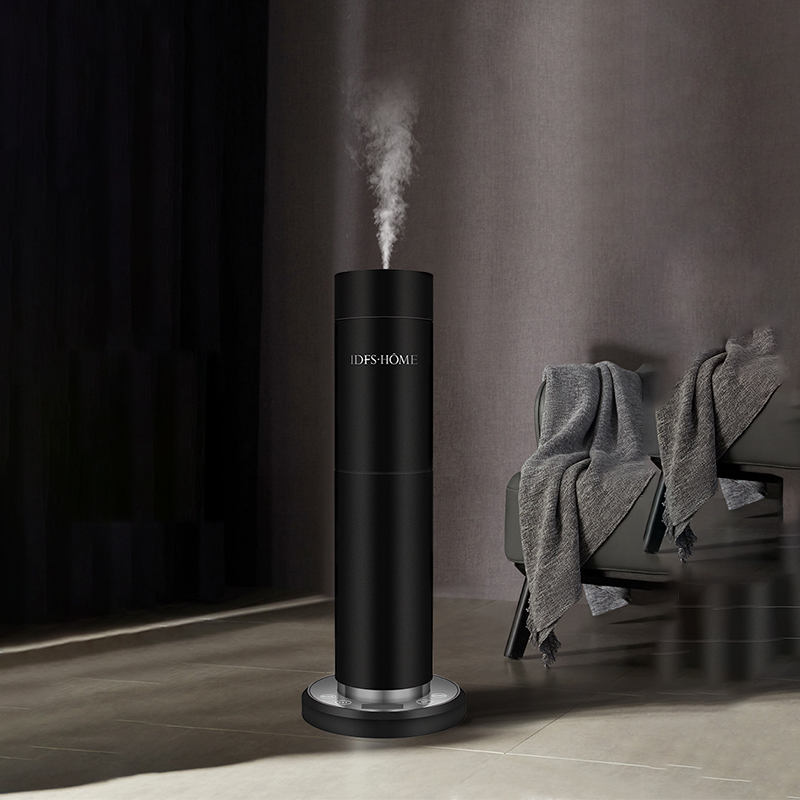
Spatial scalability defines the massive gap between consumer and commercial scenting. Traditional air fresheners struggle to cover large areas effectively. They typically handle small spaces between 10 and 200 square feet. You would need dozens of independent units for a standard retail store. Maintaining those multiple units becomes an absolute logistical nightmare. Commercial standalone units easily cover 1,500 square feet from a single corner. If you integrate them into a commercial HVAC system, a single central unit can scent up to 10,000 square feet.
Connecting a system directly into your building ventilation creates a seamless experience. The machine injects the dry micro-mist directly into the main supply ductwork. The existing air conditioning or heating fans distribute the fragrance evenly. You get an invisible, silent, and highly cohesive brand experience across multiple zones. Customers never see the hardware or the mist. They simply experience the perfectly balanced atmosphere.
Automation completely transforms how your staff manages the environment. You move away from constantly checking and replacing empty aerosol cans. Commercial units embrace a true set-it-and-forget-it philosophy. Software-driven control allows highly granular scheduling for each day. You can program the machine to increase intensity during peak weekend foot traffic. You can also tell it to turn off completely after closing time. This precision scheduling saves expensive oil and requires zero daily human intervention.
Below is a comparison chart summarizing these crucial spatial and operational differences:
Feature | Standard Air Fresheners | Commercial Scent Machines |
|---|---|---|
Primary Mechanism | Odor masking via heavy particles | Cold-air nebulization and neutralization |
Coverage Area | 10 to 200 sq ft per unit | 1,500 to 10,000+ sq ft per unit |
Control System | Manual operation and replacement | App-controlled granular scheduling |
HVAC Integration | Impossible | Fully supported via duct injection |
A thoughtfully designed ambient scent directly influences consumer psychology. Retail industry benchmarks show a strong correlation between pleasant environments and increased dwell time. Customers stay significantly longer in stores smelling fresh and inviting. This extended dwell time often transitions passive shoppers into an active buying mode. Subtle, consistent scents build deep brand memory in the consumer mind. The human olfactory bulb connects directly to the limbic system. This brain area processes memory and emotion. When people encounter your specific fragrance again, they instantly recall your store. You achieve this emotional connection without overwhelming the consumer.
Businesses often completely ignore the employee factor when selecting fragrance systems. Constant exposure to harsh aerosol sprays harms staff well-being. It can cause chronic headaches, nausea, or respiratory irritation. Employees working long eight-hour shifts suffer the most from cheap, synthetic plugins. Implementing a consistent, high-quality ambient scenting system changes this dynamic completely. It dramatically improves employee morale and reduces sensory fatigue. A pleasant workspace naturally boosts mood and daily productivity. Over time, providing a healthy, well-scented environment can even positively impact your overall staff retention rates.
Indoor air quality requires careful attention during any facility procurement process. Standard aerosols introduce significant health risks into your enclosed facility. They contain harsh volatile organic compounds (VOCs) and synthetic propellants. These toxic chemicals degrade the air your customers and employees breathe daily.
Commercial systems prioritize strict safety standards above all else. They utilize pure, low-VOC formulations extracted from natural sources. To ensure optimal indoor air quality, you should always look for specific regulatory compliance markers.
Consider these essential safety considerations during your evaluation:
Toxin-Free Formulations: Reputable vendors supply allergen-free oils containing zero harmful phthalates or parabens.
Regulatory Compliance: Always verify strict EPA (Environmental Protection Agency) and CARB (California Air Resources Board) certifications.
Vulnerable Populations: Select fragrance lines explicitly tested and certified as safe for children and pets.
Residue Prevention: Heat-based and water-based diffusers carry massive hidden risks. Standing water promotes dangerous mold growth. Heated oils leave sticky, damaging residues on expensive retail inventory. True cold-air technology eliminates both problems by generating a completely dry mist.
Transitioning to commercial scenting requires careful hardware evaluation. Many buyers make expensive mistakes by purchasing cheap, white-labeled equipment. You must assess several critical technical factors before buying a scent diffuser machine.
Hardware Quality and Leak Risks: Poorly constructed units often suffer from catastrophic oil leaks. Escaping essential oils will rapidly damage internal electronic components. They can also ruin expensive hardwood flooring or custom retail fixtures. Always demand secure, anti-leak structural designs featuring reinforced internal piping.
Acoustic Footprint: Cold-air diffusion relies on internal mechanical air compressors. Some cheaper machines generate loud, noticeable humming noises. This actively disrupts quiet environments like day spas, high-end boutiques, or corporate zoom meetings. Always check the official decibel (dB) ratings to ensure whisper-quiet operation.
Software and Connectivity Reliability: Consumer-grade control apps frequently fail in commercial settings. They might only support outdated 2.4GHz Wi-Fi networks. They often drop Bluetooth connections entirely when you walk away. Enterprise-grade systems offer stable IoT connectivity. They also provide flexible API options and direct BMS (Building Management System) integration.
Service Level Agreements (SLAs): Commercial equipment represents a serious long-term investment. Review the vendor warranty terms very carefully. Understand the specific return policies and hardware replacement protocols. A strong SLA protects your business operations if a primary unit unexpectedly becomes defective.
Standard air fresheners serve a very basic, limited purpose. They work adequately for temporary, localized odor control inside single restrooms. However, they fail entirely when deployed in larger commercial spaces. Programmable scent technology is absolutely required for businesses looking to standardize their premium brand experience. These advanced commercial systems ensure safe indoor air quality and dramatically lower manual maintenance demands over time.
You should take immediate action to upgrade your environmental branding strategy. Start by conducting a thorough facility audit today. Assess your exact retail square footage, HVAC duct accessibility, and natural indoor airflow patterns. Reach out to a reputable commercial vendor. Request an onsite commercial trial or an extensive scent sample kit. Testing the equipment in your actual retail space guarantees the best possible sensory outcome.
A: Yes. Standalone models exist specifically for open-floor plans. They operate independently and diffuse fragrance directly into the immediate space. This works perfectly for areas lacking accessible ductwork.
A: You typically need to refill them every 1 to 3 months. The exact timeframe heavily depends on your daily operational hours and the programmed intensity settings.
A: No. True cold-air diffusion produces a microscopic dry mist. This technology ensures the fragrance remains suspended in the air and leaves absolutely zero residue on surfaces.
A: Yes. Commercial systems are exceptionally safe provided the vendor uses certified low-VOC, non-toxic fragrance formulations. Always verify pet and child safety certifications before finalizing your purchase.


