
Views: 0 Author: Site Editor Publish Time: 2026-09-07 Origin: Site


Ambient scenting operates as a structural component in luxury environments. It dictates dwell time, spatial memory, and brand perception. Replicating a five-star hospitality experience requires moving beyond consumer-grade candles or reed diffusers. You need stable, commercial-grade formulations. These liquids must disperse evenly across large square footages without degrading indoor air quality or leaving sticky residue on surfaces.
Building a signature scent demands a highly systematic approach. You must select the precise formulation, match it with appropriate diffusion technology, and mitigate implementation risks. Common failures include olfactory fatigue, HVAC strain, and uneven spatial saturation. Mastering these variables transforms an ordinary room into a memorable, multi-sensory environment. We will break down the exact chemistry, hardware, and maintenance protocols required to execute a flawless scenting strategy.
Commercial-grade hotel fragrance oil is formulated specifically for cold-air diffusion, offering superior stability and longevity compared to standard essential oils.
Successful ambient scenting relies on a structured olfactory pyramid (top, middle, and base notes) tailored to the specific psychological goals of the space.
Waterless cold-air diffusion is the industry-standard delivery mechanism, preventing the dilution, mold risks, and uneven dispersion associated with ultrasonic water diffusers.
Implementation requires strict adherence to IFRA (International Fragrance Association) standards, proper baseline odor neutralization, and careful calibration of HVAC or standalone systems to prevent overpowering the environment.
Commercial ambient scenting relies on precise chemical engineering. Consumer products prioritize short-term bursts of fragrance for small rooms. Commercial systems demand sustained, uniform output over thousands of hours across massive floor plans. Achieving this requires a specialized liquid formulation. A true hotel fragrance oil blends synthetic molecules and natural extracts. This combination ensures the liquid aerosolizes perfectly when subjected to high-pressure air inside a mechanical diffuser.
Many property managers assume pure essential oils represent the highest quality option for spatial scenting. This assumption fails in commercial applications. Pure botanical extracts exhibit extreme volatility. They degrade rapidly when exposed to oxygen, light, or temperature fluctuations. This degradation alters the scent profile entirely within hours, leaving a stale or sour smell in the room.
Engineered aroma oils solve this stability problem. Chemists design these blends specifically for mechanical diffusion. They maintain structural integrity from the first drop in the reservoir to the last. The chemical differences dictate operational success.
Chemical Property | Pure Essential Oils | Commercial Aroma Oils |
|---|---|---|
Flash Point | Often low (highly flammable in motorized units) | Elevated via carrier solvents for safe continuous operation |
Viscosity | Highly variable (causes frequent nozzle clogging) | Normalized and consistent for smooth aerosolization |
Allergenic Profile | Contains hundreds of unpredictable natural VOCs | Engineered to remove specific allergenic proteins |
Oxidation Rate | Rapid (citrus terpenes turn rancid quickly) | Stabilized synthetically to last for months |
Natural essential oils contain hundreds of volatile organic compounds. Many of these trigger respiratory allergies in a percentage of the population. Synthetic-blend fragrance oils allow chemists to isolate and remove specific allergenic proteins. This creates a predictable, hypoallergenic profile suitable for public spaces with high foot traffic.
Fragrance does not exist as a single flat note. It operates as a three-dimensional structure known as the olfactory pyramid. Each layer evaporates at a different rate based on its molecular weight. Understanding this evaporation curve dictates how a space smells at the entrance versus deep inside the room.
Top Notes (The Hook): These molecules possess the lowest molecular weight. They evaporate immediately upon leaving the diffuser nozzle. Top notes provide the initial impression when a guest walks through the front door. Common examples include bergamot, sweet orange, eucalyptus, and peppermint. They create a sense of freshness but vanish from the air within fifteen to thirty minutes.
Heart Notes (The Core): As the top notes dissipate, the heart notes emerge. These form the actual character of the signature scent. They carry medium molecular weights and linger in the air for several hours. Spices, heavy florals, and herbs dominate this layer. Think of jasmine, cardamom, lavender, and ylang-ylang. The heart notes dictate the emotional response to the room and carry the bulk of the brand identity.
Base Notes (The Anchor): These heavy molecules evaporate incredibly slowly. They bind the entire fragrance together and anchor it to the physical space. Base notes provide longevity and depth. Woods, ambers, musks, and resins live here. Sandalwood, cedar, vanilla, and patchouli serve as excellent anchors. A well-constructed base ensures the room retains a subtle, luxurious aroma even when the diffuser powers down for the night.
You cannot simply purchase a machine, fill it with liquid, and expect a luxury experience. You must define what constitutes a successful scenting strategy first. This requires analyzing the physical environment, calculating air volume, and preparing the space for olfactory integration.
Introducing a premium fragrance into a room with existing odors creates olfactory cross-contamination. The resulting smell is often worse than the original odor. You must establish a blank canvas before deploying any scenting hardware. Masking bad odors with heavy perfume fails in commercial environments.
Execute Baseline Neutralization: Target soft surfaces specifically. Carpets, drapes, and upholstery trap pet dander, cooking grease, and stale smoke. Steam clean these materials using hot water extraction. Use enzymatic cleaners to break down organic odor sources at the molecular level.
Sanitize the HVAC System: Inspect ductwork and replace all air filters. Mold, mildew, or dust buildup inside the HVAC system will push stale air into the room, constantly competing with your fragrance.
Deploy HEPA Filtration: Utilize HEPA filtration systems independently of your scent diffusers. HEPA filters strip particulate matter from the air. Dispersing fragrance into highly purified air maximizes the clarity and crispness of the intended scent profile.
Conduct a Chemical Audit: Evaluate your daily cleaning supplies. Harsh bleach or heavy pine-scented floor cleaners will clash with delicate luxury fragrances. Switch to unscented or mildly scented commercial cleaning products to prevent chemical clashes.
Scenting is a volume-based mathematical equation. Square footage means nothing without factoring in ceiling height. You must calculate the total cubic footage of the target zone to determine the required output capacity of your equipment.
Multiply the length, width, and height of the room. A 1,000-square-foot lobby with 10-foot ceilings equals 10,000 cubic feet. A 1,000-square-foot lobby with 20-foot ceilings equals 20,000 cubic feet. The latter requires twice the output capacity, even though the floor plan remains identical. Under-sizing your equipment leads to overworked motors and invisible scent profiles.
Next, map the airflow dynamics. Identify supply vents, return vents, and natural drafts. Place standalone diffusers upstream of the primary airflow. Let the natural currents carry the mist across the room. Avoid placing diffusers directly under exhaust fans or near open windows, as the fragrance will immediately exit the building before guests can experience it.
Scent must align with the visual and tactile elements of the environment. A mismatch creates cognitive dissonance for the occupant. You must map the scent to the specific architectural and design goals of the space.
Evaluate the psychological impact of specific notes. A sleek, modern, minimalist space pairs well with crisp, ozonic, and citrus profiles. These notes communicate sterility, energy, and efficiency. Conversely, a dimly lit, wood-paneled lounge demands warm, heavy base notes. Leather, tobacco, amber, and sandalwood reinforce feelings of comfort, warmth, and exclusivity.
Map the scent to specific micro-zones. You might deploy an energizing white tea and thyme blend in the main lobby to wake up arriving guests. You can then transition to a relaxing lavender and chamomile profile in the spa or bedroom areas to promote decompression.
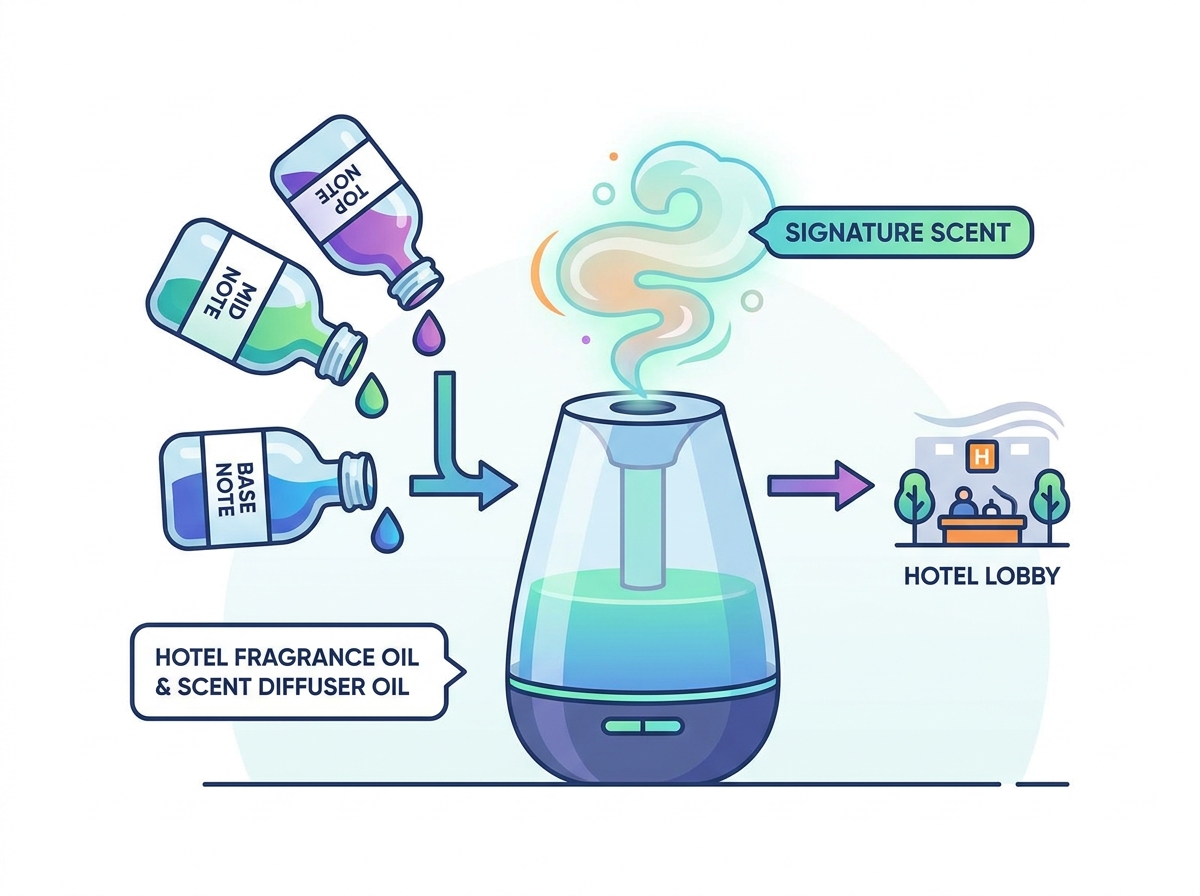
The hardware dictates the success of the liquid. Pouring premium scent diffuser oil into substandard equipment yields terrible results. You must understand the mechanics of modern diffusion technology to make an informed decision on deployment.
Luxury properties exclusively use waterless cold-air diffusion. This technology relies on the Venturi effect. The machine forces highly pressurized air through a narrow tube containing the fragrance oil. The sudden pressure change shatters the liquid into a dry, sub-micron mist.
This dry mist behaves like a gas. It floats evenly throughout the space for hours, riding the natural air currents. Because the process uses no heat, the chemical structure of the fragrance remains intact. The delicate top notes do not burn off prematurely. Because the process uses no water, the scent remains highly concentrated. The mist leaves zero sticky residue on furniture, artwork, or hardwood flooring.
You must choose how to deploy the cold-air diffusion technology. The choice depends on the size of the property, the existing ductwork infrastructure, and the desired level of control.
Deployment Feature | HVAC Integrated Systems | Standalone / Tower Diffusers |
|---|---|---|
Coverage Area | Massive (Entire properties, multi-level zones) | Targeted (Single rooms, lobbies, hallways) |
Installation Process | Requires drilling into the supply plenum | Plug-and-play, easily relocatable |
Scent Consistency | Perfectly uniform across all connected vents | Stronger near the unit, fades at the perimeter |
Maintenance Workflow | Centralized (one large reservoir to refill monthly) | Decentralized (multiple small bottles to check) |
HVAC systems offer the ultimate invisible experience. Guests smell the fragrance but cannot locate the source. The installation requires tapping a small tube directly into the HVAC supply duct, downstream from the fan and heating elements. However, HVAC integration requires the fan to run continuously to move the scent. Standalone units offer immense flexibility. You can move a tower diffuser from the living room to the dining room in seconds to accommodate different events.
A true signature scent strategy extends beyond the primary machine. Luxury properties layer their fragrance across different mediums to create a cohesive brand experience that follows the guest.
Match the core diffuser oil with localized applications. Use identical fragrance profiles in room mists, linen sprays, and hand soaps. Spray the linen mist onto pillows during turndown service. Place matching scented soaps in the powder room. This reinforces the olfactory memory at every physical touchpoint.
Reserve high-end candles and reed diffusers for confined spaces. A candle cannot scent a 2,000-square-foot lobby, but it works perfectly as supplementary decor in a small bathroom or on a bedside table. These analog methods provide visual warmth while supporting the primary cold-air system.
Avoid ultrasonic water diffusers for large-scale applications. These devices drop a few drops of oil into a tank of water and use ultrasonic vibrations to create steam. This method dilutes the fragrance instantly. The heavy water droplets fall to the floor within a few feet, creating wet spots and damaging wood finishes. Furthermore, standing water in the reservoir breeds mold if not cleaned daily.
Evaporative systems use heat or fans to blow air over a saturated pad. Heat destroys the delicate top notes of the fragrance profile. The scent starts strong but fades rapidly as the pad dries out. Neither method meets the operational standards required for a commercial environment.
The market is flooded with cheap, synthetic knock-offs. Identifying a premium supplier requires vetting their formulations against strict safety and performance standards. You must demand transparency regarding the chemical makeup of the liquids.
Safety is non-negotiable when aerosolizing liquids into breathable air. You must verify that the supplier adheres strictly to IFRA (International Fragrance Association) standards. IFRA dictates the safe usage levels of specific aromatic compounds to prevent respiratory irritation.
VOC Compliance: Ensure the oils comply with regional Volatile Organic Compound regulations. High-quality blends utilize safe carrier solvents that do not contribute to indoor air pollution or trigger smoke alarms.
Phthalate-Free Formulations: Phthalates are often used to make scents last longer, but they are known endocrine disruptors. Demand strictly phthalate-free formulations for any space occupied by humans or pets.
Paraben-Free: Ensure the absence of parabens, which are unnecessary preservatives in pure oil blends.
Cruelty-Free Certifications: Verify that neither the raw materials nor the final blends undergo animal testing during the research and development phase.
You face a choice between buying off-the-shelf collections or commissioning a bespoke scent from a fragrance house.
Pre-blended collections offer immediate deployment. Suppliers often model these after famous luxury properties. They are highly cost-effective and heavily tested for diffusion performance. If you want your space to smell exactly like a famous Miami resort, pre-blended options provide an exact match instantly without the R&D costs.
Custom formulation requires significant upfront investment and months of lead time. You work directly with a perfumer to build a scent from scratch, iterating through multiple revisions. The primary advantage is exclusivity. You can trademark the final formula, ensuring no other property or individual can replicate your exact environmental experience.
Deploying the system is only the first step. Long-term success requires strict operational discipline. Neglecting maintenance leads to clogged machines, wasted oil, and a degraded guest experience.
Physical setup requires precision. Rushing this process often damages the internal motor of the diffuser or causes massive oil spills.
Access the Reservoir: Carefully remove the outer shell of the diffuser. Unscrew the internal oil bottle. Keep the bottle perfectly upright to avoid spilling oil onto the internal circuitry.
Fill the Bottle: Pour the fragrance oil into the reservoir. Never fill the bottle past the maximum fill line. Over-pouring causes the pressurized air to push raw liquid into the motor, destroying the unit instantly.
Secure the Assembly: Screw the bottle back into the nozzle assembly tightly. A loose connection breaks the vacuum seal, preventing the Venturi effect from occurring.
Execute Initial Programming: Always start with conservative settings. Program the machine to run at 20% intensity. Allow the scent to circulate for two hours. Leave the room, clear your nose, and walk back inside to assess the saturation level. Increase the intensity slowly over several days.
The human olfactory system is designed to detect changes in the environment, not constant states. If you smell the same odor continuously, your brain stops processing it within 30 minutes. This biological reality is called olfactory fatigue, or nose blindness.
If you run a diffuser continuously, you will think the scent has faded. You will turn up the intensity. The room will become overwhelmingly strong to new guests, but you still won't smell it. This results in massive oil waste and a suffocating environment.
Mitigate this by utilizing programmable interval timers. Set the diffuser to run for 15 minutes, then pause for 15 minutes. This constant fluctuation prevents the brain from adapting. The scent remains noticeable to occupants all day without wasting oil or overpowering the space.
Establish a strict maintenance schedule. Track your baseline consumption rate. Document how many milliliters of oil the machine consumes per week at your preferred intensity setting. This data allows you to order refills proactively, preventing downtime.
Heavy base notes, like vetiver and patchouli, are highly viscous. Over time, they leave microscopic residues inside the diffusion nozzle. If left unchecked, this residue hardens and blocks the airflow, causing the machine to run loud without producing mist.
Execute a cleaning protocol every 60 days. Empty the fragrance reservoir. Fill it with a quarter inch of 90% isopropyl rubbing alcohol. Run the diffuser at maximum intensity for fifteen minutes in a well-ventilated area. The alcohol dissolves the hardened oil residue and flushes the nozzle clean. Pour out the remaining alcohol, let the bottle dry completely, and refill it with your fragrance oil.
Audit your HVAC system and replace all existing filters with HEPA-rated alternatives to establish a neutral olfactory baseline before introducing any fragrance.
Calculate the exact cubic footage of your target zones to determine the required output capacity for your cold-air diffusion hardware.
Order a sample discovery kit to test fragrance profiles on-site under your specific lighting, temperature, and airflow conditions.
Verify the IFRA compliance documentation and phthalate-free status from your shortlisted vendors before authorizing any bulk oil purchases.
Program your installed diffusers on a strict interval schedule to maximize oil lifespan and prevent olfactory fatigue among permanent occupants.
A: Commercial fragrance oils blend synthetic molecules with natural extracts to ensure extreme stability. They are engineered specifically for mechanical cold-air diffusion. Standard essential oils are highly volatile, oxidize rapidly, possess low flash points, and often clog commercial diffusers due to inconsistent viscosities.
A: While technically possible, it is highly inefficient. Commercial oils are formulated for waterless cold-air systems. Dropping them into water dilutes the scent, alters the intended olfactory profile, and limits the coverage area strictly to the immediate vicinity of the machine.
A: Remove the outer casing and unscrew the internal reservoir. Fill the bottle with your chosen oil, ensuring you do not exceed the maximum fill line. Reattach the bottle securely to create a vacuum seal. Program the interval timer to match your room's cubic footage.
A: Consumption depends heavily on machine settings and operating hours. As a general baseline, a standard 120ml bottle running in a 1,000-square-foot room at medium intensity for eight hours a day will last approximately one to two months.
A: Yes, provided you source IFRA-compliant, phthalate-free, and paraben-free formulations. It is crucial to run diffusers on interval timers rather than continuous output to prevent heavy concentrations. Always ensure the room has adequate natural or mechanical ventilation.
A: Hotels utilize commercial-grade cold-air diffusers integrated directly into their HVAC systems. They program these machines on precise interval schedules to prevent olfactory fatigue. Furthermore, they layer the scent by using matching room sprays, cleaning products, and hand soaps throughout the property.


