
Views: 0 Author: Site Editor Publish Time: 2026-06-23 Origin: Site


The commercial scenting market often confuses procurement teams and facility managers. Overlapping branding tactics blur the lines between top competitors. You might struggle to separate genuine enterprise hardware from clever consumer marketing. Ambient scenting in commercial spaces demands highly robust hardware. Retail environments and hospitality lobbies require entirely different systems compared to residential spaces. You cannot simply plug in a basic consumer unit and expect whole-building coverage.
We must look far beyond aesthetic social media advertisements. This guide strips away the lifestyle marketing entirely. You will learn how these robust systems integrate into complex HVAC setups. We evaluate them strictly on commercial viability, maintenance access, and operational reliability. By the end, you will understand exactly which platform fits your specific enterprise environment.
Water-based diffusers fail miserably in large commercial spaces. They introduce heavy moisture into the ambient air. This excess humidity damages inventory and encourages mold growth. Heat-based diffusers perform poorly as well. Heat rapidly destroys the delicate notes inside essential oils. This leaves a burnt, inconsistent smell lingering in your lobby. Commercial spaces require absolute consistency. Both brands rely entirely on nebulizing cold-air diffusion to solve this problem.
Nebulizing technology uses highly pressurized air. It forces this air through pure fragrance oils. The process breaks the liquid down into dry nanoparticles. These microscopic particles float naturally in the air for hours. They leave no oily residue on your furniture. They do not damage expensive retail merchandise.
Marketing materials frequently boast massive square footage capabilities. They often claim coverage up to 3,000 square feet. Real-world results vary wildly depending on physical barriers. High ceilings instantly dilute the scent concentration. Aggressive HVAC return vents suck the fragrance away rapidly. Drafty entryways disrupt the intended airflow completely. Standalone tower diffusers struggle heavily in partitioned areas. Centralized HVAC units perform much better overall. They utilize your building's existing airflow patterns.
You must carefully evaluate technical specifications before making a purchase. A thorough aroma diffuser comparison reveals what really matters. Spaces exceeding 3,000 square feet demand specific baseline requirements. Below, we break down these crucial hardware specifications.
| Specification Metric | Entry-Level Commercial (Standalone) | Enterprise HVAC Unit | Why It Matters |
|---|---|---|---|
| Coverage Range | 1,000 - 2,000 sq ft | 3,000 - 6,000+ sq ft | Determines if scent reaches building extremities. |
| Oil Capacity | 120ml - 500ml | 500ml - 800ml+ | Dictates how frequently staff must refill machines. |
| Particle Size | Sub-micron | Sub-micron (High Velocity) | Ensures dry mist leaves absolutely no residue. |
| Control Panel | Basic Bluetooth App | Advanced Wi-Fi / B2B Dashboards | Allows remote management across multiple locations. |
Common Mistake: Relying solely on square footage claims leads to disappointment. Always calculate your total cubic footage instead. You must account for high vaulted ceilings.
Connecting these units requires specific technical skill. You cannot just tape a plastic tube to an air vent. Technicians must physically drill into the HVAC supply duct. They must install the nozzle directly into the primary airflow stream. Proper placement prevents the scent from exhausting straight outdoors.
Static pressure presents a major implementation challenge. Commercial HVAC systems push air forcefully. If duct pressure pushes back against the diffuser nozzle, problems occur. The fragrance oil stays trapped inside the delivery tube. This causes severe localized leaking around the machine. Your technicians must measure airflow dynamics prior to installation.
Follow these standard steps for proper commercial HVAC integration:
Maintenance creates a significant operational burden. HVAC-connected units require regular oil replenishment. Facilities teams must check the oil levels monthly. You must also clean the atomizing nozzle periodically. Over time, thick fragrance oils cause partial clogging. Clogged nozzles drastically reduce the output efficiency. Routine rubbing alcohol flushes prevent these blockages entirely.
Facilities management teams need incredibly easy physical access. Do not install the unit inside a cramped ceiling crawlspace. Mount it securely on an accessible utility wall. Evaluate the actual oil canisters used by the vendor. Some canisters feature proprietary locking mechanisms. They require specialized keys to open and refill. Lost keys cause massive delays during routine maintenance cycles.
Best Practice: Always consult your primary HVAC contractor before drilling. Incorrect duct placement can inadvertently void your existing climate control warranties.
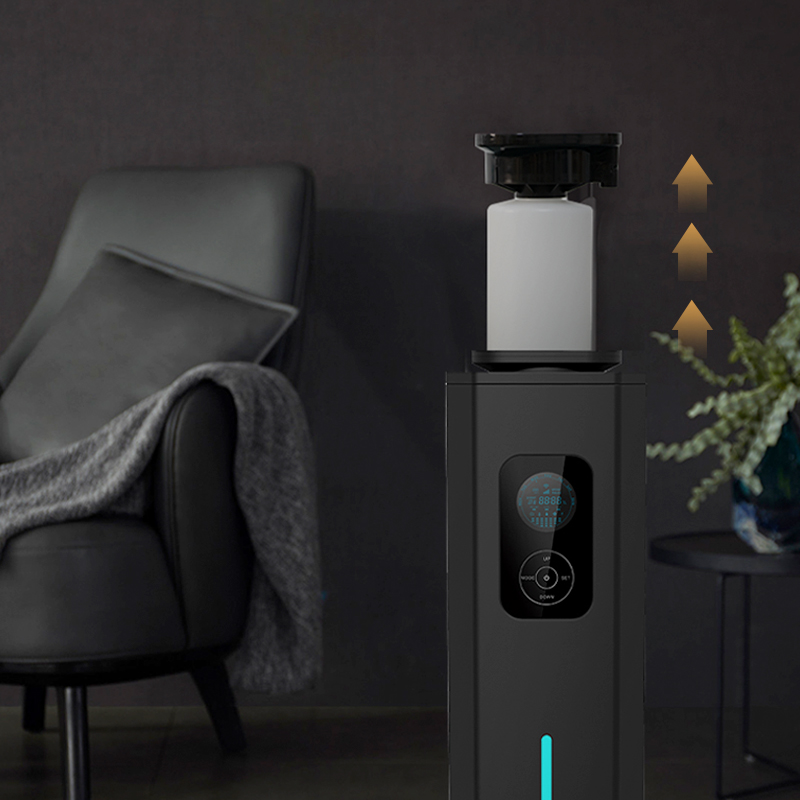
Fragrance libraries differ quite significantly between the two brands. Aroma360 offers an incredibly broad corporate selection. They design diverse scents suitable for retail shops, car dealerships, and offices. Hotel Collection focuses almost exclusively on luxury hospitality clones. They mimic recognizable scents from famous international hotel chains. Your brand identity dictates which library works best.
Safety matters deeply in public commercial spaces. You must ensure the environment remains safe for patrons. International Fragrance Association (IFRA) compliance acts as the global standard. You should demand IFRA compliance documentation from any vendor. Transparent brands openly share their safety testing results.
Volatile Organic Compounds (VOCs) require strict monitoring. Excessive VOCs trigger allergies and respiratory discomfort. Proper cold-air diffusion naturally keeps VOC levels extremely low. However, you must still verify the chemical makeup of the oils. Pet safety also remains a critical concern. Pet-friendly hotels must choose fragrance formulas free of toxic phenols.
Enterprise clients often outgrow pre-made fragrance libraries. They seek entirely bespoke scent creation. Custom scenting builds profound brand recognition. Customers smell the unique fragrance and instantly remember your business. You must evaluate if the vendor employs in-house master perfumers. Developing a signature scent usually requires several months of testing. It demands a highly collaborative vendor relationship.
The recurring subscription model traps many unwary businesses. Aggressive auto-ship contracts dominate this industry. Vendors lock you into mandatory monthly oil deliveries. You might actually use less oil than they regularly ship. Unused bottles quickly pile up in your back storage room. You must look very closely at the contract terms. Read the cancellation policies thoroughly before signing anything. Procurement teams often cite restrictive cancellation clauses as their biggest frustration.
Hardware acquisition models vary across the market. Some brands require you to purchase the machine outright. Others lease the hardware in exchange for a long-term oil commitment. Leasing seems appealing because it lowers initial hurdles. However, leasing strictly binds you to their proprietary oil ecosystem. You lose the freedom to source fragrances elsewhere. If you break the lease, they remove the equipment immediately.
Customer support experiences differ wildly in the B2B sector. Residential support typically relies on slow email ticketing systems. Consumer reps often take days to answer simple questions. Commercial outages demand immediate phone support instead. If a busy hotel lobby suddenly smells stale, you need answers today. You must secure a dedicated B2B account manager. Generic support queues simply do not work for enterprise operations.
What to Watch Out For: Vendors pushing auto-ship tiers based solely on theoretical consumption rates. Always demand a custom consumption calculation based on your exact operating hours.
Deciding between aroma360 vs hotel collection depends entirely on your operational goals. Each brand serves slightly different commercial niches. You must align their strengths with your facility constraints.
You should choose Aroma360 when managing diverse corporate environments. They excel when you need a broader variety of ambient moods. Their dedicated B2B account structures generally support medium-sized enterprises well. If you eventually want to develop a custom brand scent, they offer deeper resources. They fit nicely into luxury car dealerships and sprawling fitness centers.
You should choose Hotel Collection for highly specific aesthetic goals. Boutique hoteliers love their pre-configured luxury profiles. Smaller boutique retail spaces benefit heavily from their standalone tower units. Their branding aligns perfectly with upscale, modern aesthetics. If you simply want your lobby to smell like a five-star resort immediately, they deliver efficiently.
Sometimes, neither brand fits your operational scale. Massive multi-site deployments often break these semi-commercial frameworks. If you operate five hundred retail locations globally, you need enterprise infrastructure. You require dedicated on-site technicians and robust API integrations. In these massive scenarios, look toward purely industrial providers like ScentAir.
| Scenario/Requirement | Optimal Choice | Reasoning |
|---|---|---|
| Boutique hotel mimicking luxury resorts | Hotel Collection | Ready-made clones of famous resort fragrances. |
| Corporate office needing bespoke scent | Aroma360 | Stronger focus on custom corporate brand identities. |
| Single high-end retail shop (No HVAC access) | Hotel Collection | Aesthetically pleasing standalone towers fit decor well. |
| 500+ global retail locations | Enterprise Alternatives | Requires massive on-site SLA support and API management. |
The core hardware differences between these platforms remain surprisingly minimal. Both deliver competent cold-air diffusion via standalone units and HVAC connections. The true decision rests heavily on contract flexibility and preferred scent profiles. You must also prioritize seamless HVAC compatibility for larger spaces. The aesthetic design matters far less than reliable nebulization technology.
We recommend facilities managers take immediate, cautious action. You should demand a 30-day trial period before committing. Review the fine print on all auto-ship oil subscriptions closely. Finally, consult your dedicated HVAC technician before you sign any multi-year contract. Protecting your building infrastructure always remains the top priority.
A: Yes, the oil viscosity remains highly similar between the two brands. However, interchanging oils almost always voids your commercial hardware warranty. Using unapproved liquids risks severe nozzle clogging. If the atomizing core fails, you cover the replacement completely out of pocket.
A: Properly installed cold-air diffusers leave absolutely no residue inside ductwork. The micro-particles float freely without sticking to metal surfaces. However, improper installation causes major issues. Wrong duct placement or ignoring static pressure creates localized oil buildup. This eventually degrades internal HVAC components.
A: Consumption rates vary based on machine settings and airflow. Running a unit for a standard 10-hour business day at medium concentration yields predictable results. A 500ml bottle typically lasts between one to two months. High ceilings and drafty spaces deplete oil much faster.
A: They operate as distinct brands but share significant market overlap and structural similarities. They share manufacturing origins and overlapping corporate histories. This shared DNA explains their almost identical diffusion technologies. Understanding this helps buyers focus strictly on service differences rather than exaggerated hardware claims.


