
Views: 0 Author: Site Editor Publish Time: 2026-06-28 Origin: Site


Olfactory marketing is rapidly becoming a necessity in competitive B2B environments. You see it at trade shows, corporate events, and large commercial spaces. Scent is a proven driver of visitor dwell time. However, successful execution depends entirely on your chosen hardware.
Consumer-grade diffusers consistently fail in large-scale event spaces. They suffer from insufficient coverage and rapid oil depletion. They also struggle with highly inconsistent fragrance dispersion. You simply cannot rely on residential tech for demanding commercial applications.
This article demystifies the mechanical principles behind commercial scenting. We provide a rigorous, evaluation-focused framework. This guide will help you select the ideal commercial perfume atomizer for your specific event and retail needs. You will learn exactly how to balance mechanical performance, ambient distribution, and ongoing maintenance.
How does a thick liquid transform into a floating mist? Commercial units completely avoid heat. They also avoid water. Instead, they rely strictly on pressurized cold air. This process leverages the Venturi effect and Bernoulli's principle. High-velocity air rushes over a tiny internal tube. This creates a sudden, sharp pressure drop. The low pressure pulls the heavy fragrance oil upward from the reservoir. The high-speed air stream then shears the oil against a baffle. It breaks the liquid down into a fine, dry mist.
Heat destroys premium fragrances. It aggressively alters their delicate chemical composition. Heat burns off top notes too quickly. It often leaves behind a distorted, synthetic smell. Cold-air atomization prevents this degradation entirely. It protects the original scent profile perfectly. It ensures your brand-accurate olfaction remains fully intact. You get the exact scent profile intended by the perfumer.
Commercial machines create incredibly small droplets. They typically measure under one micron in diameter. Why does droplet size matter so much? Smaller droplets stay suspended in the air significantly longer. They act almost like a gas. They float effortlessly on ambient air currents. They travel much further across your event space. Most importantly, they act as a dry vapor. They do not leave sticky, oily residue behind. Your expensive trade show booths stay clean. Your retail merchandise remains completely safe from stains.
What defines a truly successful scent deployment? We look for very specific performance metrics. Increased booth foot traffic is a primary goal. Elevated brand perception is another crucial target. You also want to mask stale venue odors effectively. A properly scented environment feels premium. It makes a memorable first impression on incoming attendees.
Sensory engagement drives visitor retention directly. You want people to linger longer at your display. A welcoming ambient scent encourages this exact behavior. Visitors feel noticeably more relaxed in your commercial space. Increased dwell time creates more lucrative sales opportunities. You gain more time to pitch your product or service. Subtle scenting bridges the gap between casual browsing and active listening.
You must find the right intensity balance. Subtle mood enhancement works beautifully. Overwhelming, aggressive scenting ruins the customer experience entirely. It drives valuable prospects away immediately. You want a pleasant background ambiance. It should register subconsciously. You never want the scent to dominate the conversation. Precision hardware control maintains your professional credibility.
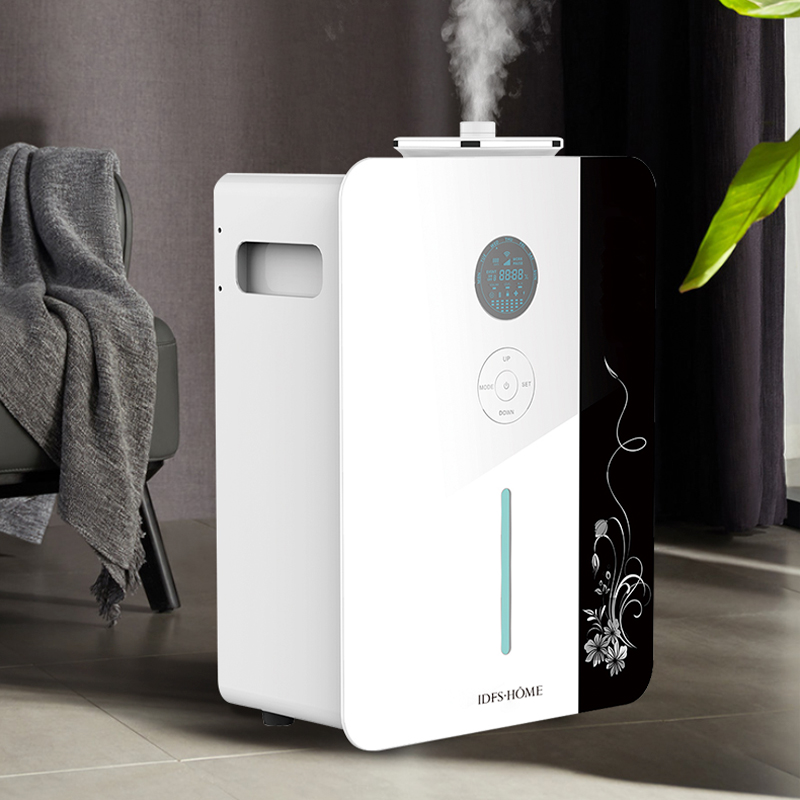
How do you evaluate different machines accurately? Coverage area is your most critical metric. You must map machine specifications to physical venue dimensions. A unit built for 1,000 square feet fails in larger spaces. Ten thousand square feet requires industrial-grade power. You must also measure ceiling heights carefully. High ceilings trap scent near the rafters. They dramatically increase the total cubic volume of your room. Higher cubic volume demands significantly higher oil output capacity.
Digital programmability is absolutely essential today. Look for reliable Wi-Fi or Bluetooth connectivity. You need tight control over operating duty cycles. What exactly is a duty cycle? You set the machine to spray for 30 seconds. Then, you set it to pause for 60 seconds. This cycling maintains a consistent ambient level. It prevents the space from becoming overwhelming. It also conserves your expensive essential oils efficiently.
You must check internal material integrity. Highly concentrated essential oils are aggressive. Synthetic fragrance oils often act like strong solvents. They quickly corrode cheap internal plastics. High-grade aluminum is a much safer choice for core components. Glass components resist chemical wear excellently. Specialized industrial polymers offer superior durability. Proper materials prevent internal leaks. They ensure long-term hardware reliability during crucial events.
Tying an atomizer into a venue's central air system sounds ideal. However, it presents major integration challenges. You must calculate system static pressure carefully. Pushing scent against high static pressure causes internal condensation. Duct material compatibility is another significant hurdle. Some older fiberglass ducts absorb scent permanently. Furthermore, commercial venues often restrict central air modifications. You must secure explicit permission from facility management beforehand.
Olfactory adaptation is a serious operational risk. We commonly call this "nose blindness." Your staff works the booth all day. Their scent receptors become saturated very quickly. After just 30 minutes, they will stop smelling the fragrance entirely. They might ask you to turn the machine intensity up. You must never do this. Do not adjust settings based on staff perception. Rely strictly on your pre-programmed duty cycles to serve fresh attendees.
You must plan for routine, realistic maintenance. Commercial machines require regular, simple care to function properly. You need to clean the diffusion nozzles frequently. This simple task prevents oil buildup and clogging. You must track your oil refill frequencies closely. Do not let the glass reservoir run completely dry. Finally, manage your power sources carefully. Temporary event setups often suffer from unreliable power grids.
You generally face two primary hardware paths. You can choose portable standalone units. Alternatively, you can select HVAC-integrated systems. Each serves a very distinct commercial purpose.
Portable standalone units offer fantastic flexibility. They are perfect for 10x10 or 20x20 trade show booths. We also highly recommend them for pop-up shops. Localized retail displays benefit from them greatly. The pros are quite obvious. They are entirely plug-and-play devices. You require absolutely no venue approval to run them. You can reposition them easily throughout the day. If foot traffic shifts, you simply move the machine.
HVAC-integrated systems serve much larger environments. They are best for massive convention center halls. Permanent retail flagships use them extensively. Hotel lobbies rely on them for massive, uniform coverage. They offer a completely invisible footprint. They provide highly uniform distribution across thousands of square feet. Because they sit in mechanical rooms, they are largely tamper-proof.
| Feature | Portable / Standalone Units | HVAC-Integrated Systems |
|---|---|---|
| Best Space Size | 10x10 to 20x20 booths, pop-up shops | Large convention centers, hotel lobbies |
| Installation | Plug-and-play, no venue approval needed | Complex, requires HVAC access and permission |
| Distribution | Localized, directional airflow | Invisible footprint, highly uniform spread |
| Flexibility | Easily repositioned based on foot traffic | Permanent, fixed infrastructure |
The effectiveness of commercial scent marketing relies on precision engineering. It depends entirely on the precise mechanical breakdown of oils. It also requires strategic spatial placement across your venue. You cannot achieve premium results using cheap residential diffusers.
Your hardware strategy should prioritize programmable digital control. You must demand sub-micron cold-air technology over aesthetic exterior design. A highly effective atomizer for shows perfume deployment balances output capacity against ambient noise and maintenance needs. It operates quietly in the background.
We encourage you to audit your physical space dimensions today. Consult directly with professional scenting vendors. Discuss your expected oil consumption metrics openly. Map out your duty cycles before your next big event. Thorough planning ensures your brand leaves a lasting, positive olfactory impression.
A: It depends heavily on the programmed duty cycle and bottle capacity. A standard 500ml bottle running on a medium intensity setting typically lasts 30–45 days. This means it will easily survive a standard 3-to-5-day commercial show without needing any refills.
A: No, provided it is a true cold-air nebulizer. Because the oil is broken down into sub-micron nanoparticles, it acts as a dry vapor. Systems using water or cheap ultrasonic tech are the ones prone to causing residue and moisture damage.
A: Most high-quality standalone units operate below 40 decibels. This is similar to a quiet library or a low mechanical hum. This sound level is entirely masked by ambient trade show or busy retail noise.
A: No. Oils must be specifically formulated for cold-air diffusion. They must be entirely free of heavy carrier oils like jojoba or coconut, which cause severe nozzle clogging. Always verify viscosity compatibility directly with your hardware manufacturer.


