
Views: 0 Author: Site Editor Publish Time: 2026-06-30 Origin: Site


Fragrance defines the modern commercial experience today. Retail fragrance counters, luxury hotel lobbies, and premium boutiques rely heavily on precise ambient scenting. This strategy builds lasting brand memory for consumers. At the very center of this complex sensory system sits the atomizer mechanism. However, delivering a consistent olfactory experience presents serious operational challenges for operators. Businesses must actively manage fluid leaks in their environments. They must prevent persistent nozzle clogs. They also need to minimize expensive product waste in demanding, high-traffic spaces. Standard consumer-grade packaging simply fails under heavy daily commercial use. You need robust, engineered solutions to ensure long-term reliability. Reliable hardware protects your profit margins and brand reputation. In this comprehensive guide, we will break down the technical mechanics of these commercial devices. You will learn how to accurately evaluate physical durability. We will also explore how to handle routine maintenance. Finally, you will discover how to scale your commercial deployment efficiently.
Mechanical Efficiency: Atomizers rely on the Venturi effect to transform liquid into a fine mist without chemical propellants, preserving scent integrity.
Commercial Durability: High-volume commercial environments require crimped or heavy-duty screw-top pumps to prevent tampering and evaporation.
Operational Scrutiny: The core evaluation criteria for bulk deployment are leak resistance, pump lifespan (actuation count), and material inertness (glass or anodized aluminum).
Maintenance Realities: Long-term ROI depends heavily on standardizing refill protocols and preventing nozzle clogs from high-viscosity fragrance oils.
Understanding the basic physics of spray mechanisms helps buyers make informed purchasing decisions. Atomizers operate on a simple but powerful pressure differential mechanism. We call this the Venturi effect. Pressing the external actuator forces air rapidly through the internal pump chamber. This sudden air movement creates a localized low-pressure zone. The pressure drop forcefully draws the liquid formulation up the plastic dip tube. The fluid then hits a restrictive micro-screen inside the nozzle. This barrier shatters the liquid surface tension. The physical impact breaks the fluid apart to create a highly dispersed fine mist.
Commercial buyers strongly prefer mechanical atomizers over pressurized aerosols. This preference stems from several strict safety and quality standards. Aerosol cans rely on volatile organic compound (VOC) propellants. Gases like butane or propane chemically alter delicate top notes. Mechanical atomizers eliminate these harsh chemical propellants entirely. They preserve the raw fragrance notes exactly as the perfumer intended. Furthermore, eliminating highly flammable pressurized gases creates a much safer environment. Retail spaces face strict fire codes. Mechanical dispensing easily passes these safety audits.
Every reliable dispensing system features four critical structural components. First, the actuator serves as the user-facing spray head. Second, the hidden pump mechanism houses a tension spring and a tiny ball valve. The ball valve prevents fluid from dropping back down. Third, the dip tube extends downward to pull liquid from the bottom. Finally, the main perfume container serves as the secure reservoir holding the valuable formulation.
Different commercial settings demand completely different hardware solutions. Manufacturers engineer specific atomizers to survive unique environmental stressors.
Retail Tester Bottles: Department stores subject tester bottles to extreme daily abuse. These units feature heavy glass reservoirs to provide physical stability. Manufacturers pair them exclusively with crimped atomizer pumps. Crimped seals prevent unauthorized tampering. They also stop customers from opening the bottles. The pumps are explicitly designed for thousands of rapid actuations. They prioritize a heavy aesthetic weight to signal luxury.
Hospitality & Amenity Travel Atomizers: High-end hotels often provide refillable, pocket-sized containers to VIP guests. These typically feature an aluminum-clad outer shell protecting an inner glass vial. Engineering focuses heavily on advanced leak-proof technology. Pocket atomizers experience rapid temperature shifts. They also face varying air pressures during commercial flights. Secure gasket designs prevent embarrassing leaks in guest luggage.
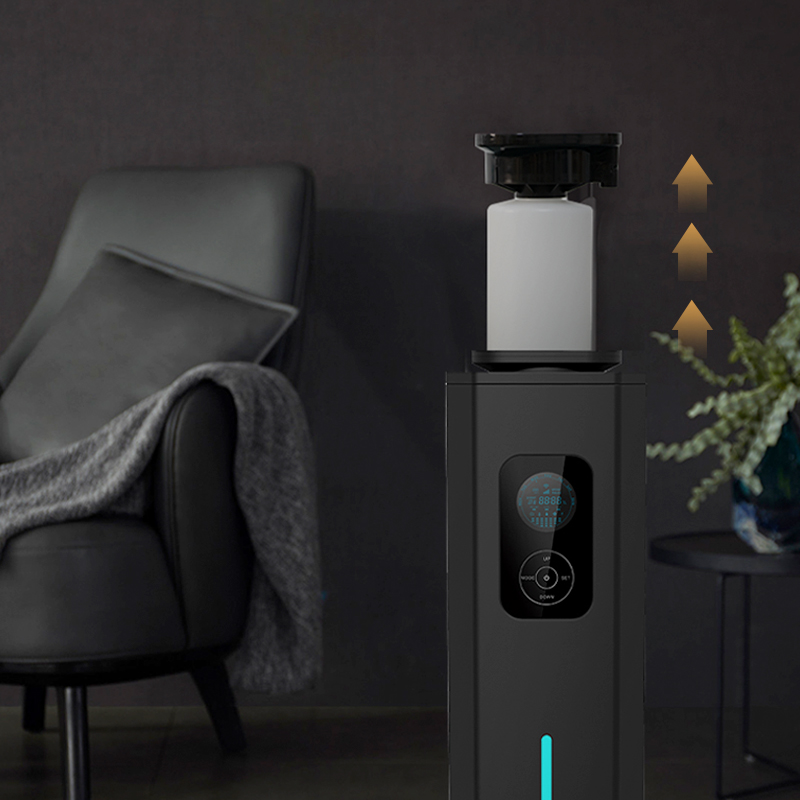
Automated / HVAC Scenting Atomizers (Nebulizers): Large commercial spaces utilize cold-air diffusion units for ambient scenting. These advanced nebulizers abandon manual finger pumps completely. Instead, they use continuous high-pressure air streams. The intense air pressure forcefully atomizes liquid into sub-micron nanoparticles. This extreme atomization allows the scent to travel through vast HVAC systems. They efficiently cover massive square footage without leaving wet residue on surfaces.
Procurement teams must evaluate hardware beyond simple aesthetic appeal. The daily demands of a busy retail floor quickly expose cheap manufacturing. You must scrutinize material composition and structural integrity. Selecting the right atomizer perfume container requires strict adherence to technical specifications.
Material compatibility remains the most critical success factor. Fragrance oils and high-proof ethanol act as aggressive solvents. Prolonged exposure causes cheap plastics to leach chemicals. This leaching alters the scent profile and ruins the liquid. Glass and anodized aluminum represent mandatory materials for the primary reservoir. They remain completely chemically inert over years of use.
Sealing mechanisms directly dictate product longevity and security. Buyers generally choose between two primary closure systems.
Sealing Type | Primary Use Case | Key Advantages | Main Drawbacks |
|---|---|---|---|
Crimped Seal | Retail Testers | Prevents oxidation. Zero tampering risk. Lowest evaporation rate. | Cannot be refilled. Requires specialized crimping machinery to assemble. |
Threaded (Screw-top) | Eco-friendly Refill Programs | Allows easy commercial refilling. Lowers packaging waste. | Prone to leaks if gaskets fail. Vulnerable to unauthorized opening. |
Actuation lifespan separates consumer goods from commercial equipment. A standard drugstore perfume bottle might survive 500 sprays before the spring fails. Commercial environments demand vastly superior endurance. You should require supplier documentation proving pumps are rated for 10,000+ actuations. Spring metal fatigue leads to stuck actuators and angry customers.
Finally, evaluate the actual spray profile. Mist output is measured in micron size and plume shape. A precise, tight plume drastically reduces product waste. Large droplets fall rapidly to the floor. This creates slippery residue on expensive retail flooring or display counters. Sub-micron mists linger in the air longer and distribute scent evenly.
Even the finest hardware requires structured operational oversight. Deploying mechanical atomizers at scale introduces several logistical hurdles. Facility managers must proactively address potential failures.
The most common operational failure is nozzle blockage. Resinous fragrance notes naturally increase the clogging risk. Heavy woods, dark patchouli, and natural vanilla absolutes contain sticky particulate matter. These dense molecules dry rapidly inside the micro-nozzle. Temperature fluctuations in commercial spaces accelerate this drying process. Once dried, the resin acts like a hardened glue, seizing the actuator completely.
Eco-friendly refillable systems introduce another layer of complexity. You must standardize refill protocols to protect margins. Open pouring leads to expensive spills and messy counters. Provide staff with specialized tools. Use narrow glass funnels or industrial bulk syringes. Some advanced brands utilize proprietary docking valves. These bottom-fill mechanisms connect directly to bulk vats. They completely eliminate open-air pouring, minimizing labor time and preventing cross-contamination.
Routine cleaning extends hardware lifespan significantly. Implement a strict maintenance schedule for all reusable hardware.
Disassembly: Remove the actuator head and unscrew the threaded pump mechanism from the empty reservoir.
Initial Flush: Pump warm distilled water through the dip tube to clear loose residue.
Solvent Clean: Fill a small cup with pure perfumer’s alcohol (high-proof ethanol).
Internal Scrub: Place the dip tube in the alcohol and actuate the pump 15 to 20 times. This dissolves hardened resins inside the hidden spring chamber.
Air Dry: Allow all components to air dry completely before refilling with a new fragrance batch.
Sourcing commercial hardware requires rigorous quality control verifications. Never accept supplier claims at face value. Demand comprehensive leak testing documentation. Quality manufacturers utilize vacuum leak testing chambers. These tests simulate extreme pressure changes. Require ISO certifications for all packaging facilities. This ensures consistent manufacturing tolerances across large bulk orders.
Environmental factors destroy complex fragrance formulas. Commercial spaces utilize incredibly bright LED retail displays. Luxury hotel lobbies feature massive floor-to-ceiling windows. Prolonged UV exposure rapidly degrades delicate essential oils. The liquid changes color and smells sour. You must protect the formulation. Mandate UV-coated glass for transparent bottles. Alternatively, utilize completely opaque or darkly tinted glass to block light radiation.
Establish a strict framework for procurement before signing contracts. Follow these actionable shortlisting steps to mitigate financial risk.
Request Evaluation Samples: Never buy bulk shipments based on photographs. Order five to ten physical samples.
Conduct Stress Tests: Subject the samples to a rigorous 30-day trial. Actuate the pump several hundred times daily. Perform controlled drop tests on retail flooring.
Verify Supply Chain: Confirm the supplier maintains sufficient bulk availability. Shortages disrupt your operational deployment calendar.
Selecting the right commercial dispensing hardware requires a careful balance. You must weigh luxurious aesthetic appeal against rigorous mechanical reliability. Beautiful glass means nothing if the spray nozzle clogs after one week of use. Commercial environments actively punish fragile consumer-grade components.
We highly advise commercial buyers to prioritize internal pump quality. Insist on absolute material inertness. Choose anodized metals and heavy glass over superficial design trends when sourcing for high-traffic areas. A robust pressure differential mechanism ensures your scent strategy remains effective and economical.
Take immediate action to protect your sensory branding investments. Request detailed technical spec sheets from your packaging suppliers. Order physical evaluation samples today. Consult directly with a specialized packaging engineer to perfectly match your hardware to your specific fragrance viscosity.
A: Clogs are usually caused by high-viscosity oils drying out inside the micro-nozzle. Resinous base notes are particularly problematic. You can prevent this by implementing periodic flushing with pure perfumer's alcohol. Additionally, you should specify pump engines specifically designed to handle higher fluid viscosities.
A: Yes, they are completely safe if engineered correctly. They must utilize highly secure docking mechanisms. Features like proprietary bottom-fill valves or lockable threaded necks are essential. These security measures prevent unauthorized customer tampering and stop accidental product contamination on the retail floor.
A: A high-quality commercial pump should effortlessly withstand daily use for the entire lifecycle of the contained liquid. Industry standards dictate they should be rated for 5,000 to over 10,000 continuous actuations. They must achieve this volume without suffering from metal spring failure or seal degradation.
A: Standard manual atomizers generally struggle with pure, undiluted essential oils. The extreme thickness causes immediate clogs. Furthermore, pure oils rapidly degrade and melt standard plastic dip tubes. Deploying pure essential oils requires specialized nebulizing nozzles and exclusive use of metal and glass internal components.


