
Views: 0 Author: Site Editor Publish Time: 2026-06-09 Origin: Site


Moving from simple residential aroma products to enterprise-grade scent marketing demands a fundamental shift in technology. You cannot rely on basic evaporative methods when managing vast commercial footprints. Businesses face a strict challenge today. They must achieve consistent, safe, and controllable ambient scenting across complex environments. They need robust solutions that prevent sticky residues, eliminate uneven coverage, and reduce high-maintenance breakdowns. Understanding the underlying technology, particularly waterless nebulization and HVAC integration, is your critical first step. You must grasp these mechanics before evaluating vendors, managing installation risks, or calculating returns on investment. We will explore exactly how these advanced systems operate. You will learn how to match equipment to specific floor plans. Finally, we will outline what evaluation criteria truly matter for successful procurement.
Why do commercial spaces reject standard residential humidifiers? They turn to cold-air diffusion instead. This advanced method serves as the definitive commercial standard across industries. We often call this technology waterless nebulization. Inside the unit, pressurized cold air forces pure fragrance oils through a highly engineered micro-nozzle. This intense pressure breaks the liquid oil down into microscopic dry particles. These resulting nanoparticles typically measure well under 50 microns in diameter. Because they are infinitely lighter than traditional droplets, they float effortlessly through your commercial space. They do not require any heat to disperse. Furthermore, they do not require water to act as a carrier.
Safety and residue prevention form the biggest advantages of this technology. Traditional methods rely heavily on heat to evaporate oils. Heat alters the delicate chemical composition of essential oils. It easily destroys their therapeutic benefits and rich aromatic profiles. Traditional methods also rely on water. Adding constant moisture to commercial air risks dangerous mold growth inside building ductwork. Water-heavy diffusion also leaves a noticeable sticky residue behind. This residue gradually settles on expensive retail merchandise, lobby furniture, and sensitive electronics. Cold-air technology eliminates these operational risks entirely. The dry nanoparticles disperse without adding dampness to the room. You protect your valuable physical assets while scenting the environment safely.
Consistency over time is another major benefit you cannot ignore. A standard plug-in fades significantly after just a few days. Evaporative reeds lose their aromatic potency quickly as dust settles on them. However, a highly rated commercial scent diffuser machine maintains absolute fragrance integrity over its entire cycle. It delivers uniform intensity from the first day you install the cartridge until the oil finally runs out weeks later. The micro-particles remain suspended in the ambient air for hours at a time. This constant suspension creates a smooth, uninterrupted olfactory experience for every guest stepping through your doors.
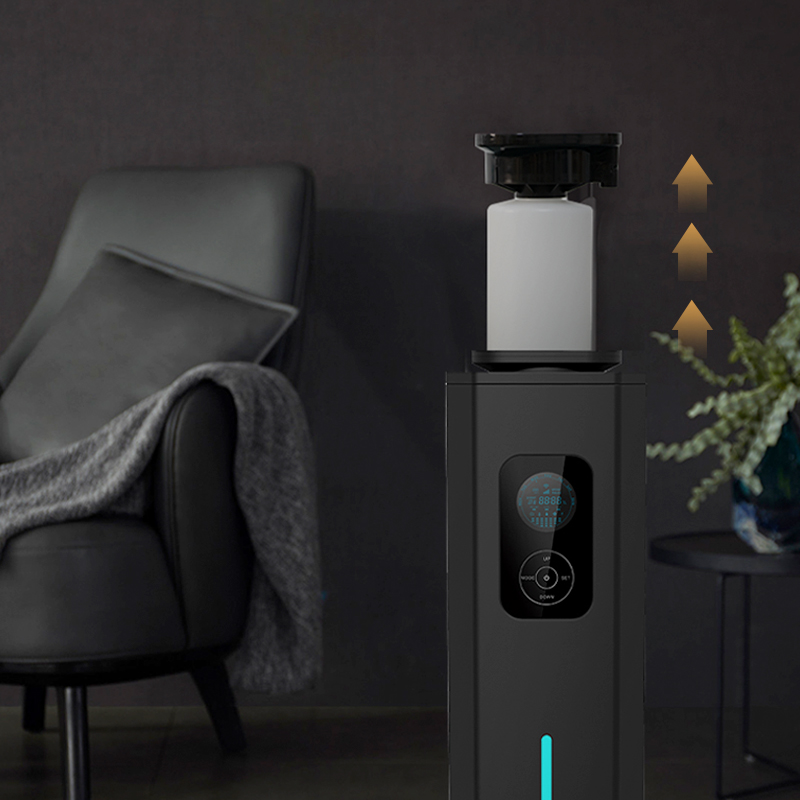
You must carefully match your hardware to your unique floor plan. One size certainly does not fit all in ambient scenting. We generally divide these professional solutions into two distinct categories. They include HVAC-integrated systems and localized standalone units.
HVAC-integrated systems represent the absolute pinnacle of invisible scenting. These advanced units connect directly into your building's existing ductwork infrastructure. Professional technicians typically install them on the supply side of the HVAC system. This strategic setup pushes the newly scented air through the exact same vents that deliver your heating and cooling. They work exceptionally well for large, multi-zone facilities. Think of expansive luxury hotel lobbies, sprawling casino floors, and massive retail showrooms. The primary advantage is ultra-consistent, completely invisible coverage. Guests never see the machine itself. They only experience the pleasant ambient aroma. However, you face some specific drawbacks. These complex systems require professional installation. You must also configure your HVAC fan to run continuously to move the scented air properly.
Wall-mounted and standalone units offer an excellent, flexible alternative. They operate completely independently within targeted zones. You can easily program them via Bluetooth or Wi-Fi using a smartphone app or a desktop portal. These compact units fit perfectly in specialized spaces. They work well in smaller lobbies, long hotel corridors, public restrooms, and mid-sized retail shops. They shine particularly in areas where you cannot easily access HVAC ductwork.
Their main advantage is plug-and-play simplicity. You gain highly localized scent targeting. For example, you can scent a specific spa hallway without affecting the adjacent dining restaurant. The downside is physical visibility. Customers might see the plastic or metal units mounted on the wall. You must carefully plan their placement. Poor placement near strong drafts can create distinct "dead zones" where the aroma fails to reach the customer.
Let us look at a detailed breakdown of how these distinct options compare against each other.
| Feature | HVAC-Integrated Systems | Wall-Mounted / Standalone Units |
|---|---|---|
| Installation Mechanism | Connects directly to supply-side ductwork. | Operates independently via wall brackets or floor stands. |
| Best Application | Casinos, large hotels, multi-zone showrooms. | Restrooms, corridors, small to mid-sized retail shops. |
| Key Advantages | Invisible hardware, perfectly uniform coverage across massive areas. | Plug-and-play setup, highly targeted localized scenting. |
| Primary Limitations | Requires professional technicians, relies on constant HVAC fan operation. | Visible hardware, risk of scent "dead zones" if placed poorly. |
Choosing a unit involves far more than just checking the upfront price tag. You must evaluate several critical dimensions before making a final procurement decision.
First, consider actual coverage capacity versus real-world airflow. Many first-time buyers mistakenly look only at square footage metrics. You must evaluate units based on cubic footage instead. Total air volume matters heavily in commercial spaces. You must accurately account for high ceilings, vaulted entryways, and constant drafts. A lobby with a 20-foot ceiling requires twice the output of a standard office room, even if their floor footprints match perfectly. Always calculate the total volume of air you need to treat before selecting hardware.
Second, prioritize digital control and robust programmability. Commercial environments experience vastly fluctuating foot traffic throughout the day. You need highly customizable intensity levels. You should program higher oil intensity during peak afternoon hours. You must turn the machine off entirely during overnight closed hours. This precise digital scheduling helps you manage oil consumption strictly. It prevents unnecessary chemical waste. A programmable scent diffuser saves significant operating budget over time.
We can summarize the core evaluation criteria chronologically:
Let us expand on security and tamper resistance. Public commercial spaces naturally invite curiosity. Unfortunately, they also invite vandalism and tampering. You must secure your expensive equipment. Look for units featuring durable, lockable oil compartments. Ensure they come with heavy-duty mounting brackets that hide the release mechanisms. You cannot risk unauthorized personnel altering the delicate intensity settings or removing expensive oil cartridges.
Finally, strictly verify safety compliance and scent sourcing. The equipment must use verified safe formulations. Always demand IFRA-compliant fragrances. The International Fragrance Association sets the world's strictest safety benchmarks for commercial aromas. Ensure the oils are VOC-compliant and certified hypoallergenic. You must proactively protect the respiratory health of your employees and your visiting customers.
Even the most expensive equipment faces harsh environmental challenges. You must fully understand the "airflow and exhaust" reality of your building. Negative air pressure can completely disrupt your scent dispersion strategy. Busy restaurants face this challenge frequently. Strong kitchen exhaust hoods pull ambient air aggressively away from dining rooms. Open front doors let expensive ambient scent escape outside. You must map your building's natural airflow carefully. Place diffusers where natural currents carry the scent inward. You may need to artificially boost diffusion intensity near problematic entrance zones.
Next, face the strict realities of routine maintenance. Cold-air technology requires minimal daily upkeep, but it is certainly not zero-maintenance. You must clean the tiny nebulizer nozzles periodically. You should wipe them with standard rubbing alcohol to prevent thick clogs. You will need to replace internal plastic tubing occasionally as it stiffens. You must also swap out the empty oil canisters. The frequency of these swaps depends heavily on your daily operating hours. Transparency here is vital for operational success. Assign a dedicated staff member to check the oil levels routinely every single month.
Olfactory fatigue poses a massive operational risk to your brand. We commonly call this going "nose-blind." Your retail employees work in the scented environment for eight hours daily. Their brains eventually tune out the specific fragrance entirely. They might mistakenly think the machine stopped working. They manually turn up the intensity settings. Suddenly, the scent becomes aggressively overpowering for new customers walking in. You must systematically mitigate this risk. Lock the digital settings behind a secure passcode. Rely strictly on customer feedback rather than employee perception to gauge appropriate ambient levels.
You understand the underlying technology now. You know the maintenance risks. How do you properly manage the procurement phase? You must start by defining exceptionally clear success criteria. What does a successful rollout actually look like for you? Perhaps you want specific brand recognition metrics. Maybe you need to completely neutralize strong malodors in a busy fitness center lobby. You might track positive guest feedback through post-visit email surveys. Define these specific goals clearly before spending any capital.
Next, decide between outsourced vendor support and internal DIY management. You can buy the diffusion equipment outright. This involves an upfront capital expenditure (CapEx). Your internal maintenance team will handle all routine refills, nozzle cleaning, and hardware troubleshooting. Alternatively, you can sign a comprehensive full-service scenting contract. This shifts the financial model to an ongoing operational expense (OpEx). The vendor manages the physical hardware completely. They automatically ship liquid refills based on usage. They send trained technicians for any maintenance issues. Choose the operational model that best fits your internal staffing capabilities.
Finally, never deploy a system-wide rollout immediately. Always start with a controlled pilot program. Run a strict trial in a single location first. Choose a highly controlled zone, like one specific hotel lobby or a single retail branch. Monitor the building's airflow meticulously. Test three different fragrance intensities. Gather honest, anonymous feedback from both guests and staff members. A controlled pilot highlights installation challenges early. It ensures you perfect the deployment process before scaling across a massive multi-property portfolio.
A professional scenting system serves as an engineered air-quality tool. It is far more than a simple aesthetic add-on for your lobby. It relies on precise cold-air technology to deliver safe, dry, and consistent aromas without damaging your property or alienating your guests. By understanding the science behind the diffusion, you can make smarter procurement decisions that enhance your brand environment.
We highly recommend the following action steps for decision-makers:
A: Typically 30 to 90 days, heavily dependent on the programmed running hours, intensity settings, and the cubic volume of the space.
A: Yes, provided it utilizes dry-mist cold-air nebulization. Because the particles are microscopic and waterless, they travel through ducts without leaving moisture or residue.
A: Measure total square footage and multiply by ceiling height to get cubic footage. Factor in the layout (open floor plan vs. segmented rooms) to determine if one large HVAC unit or multiple standalone units are needed.


