
Views: 0 Author: Site Editor Publish Time: 2026-09-05 Origin: Site


Enterprise scent marketing is shifting from continuous, high-waste dispersion to targeted, event-driven fragrance delivery. Continuous diffusion in variable-traffic commercial spaces leads to rapid consumable depletion. It causes olfactory fatigue for employees who occupy the space for extended periods and results in highly inefficient spatial coverage during off-peak hours. Facility managers face the challenge of maintaining a consistent brand scent without burning through essential oil reserves unnecessarily. Motion-activated and sensor-driven diffusion technology provides a measurable solution to these challenges. By releasing scent only when occupants are present, these systems optimize fragrance yield and control ambient scenting costs effectively. They improve the visitor experience by delivering a fresh, noticeable scent burst exactly when someone enters the target zone. Understanding the mechanics behind these devices helps facility operators select the right hardware for their specific environmental requirements.
Sensor Mechanics: Motion-activated diffusers utilize Passive Infrared (PIR) or optical sensors to trigger timed fragrance bursts, typically effective within a 0.2m to 6.0m range.
Diffusion Technology: Enterprise-grade units primarily rely on cold-air nebulization to convert liquid fragrance into dry nanoparticles, avoiding the moisture and residue issues of ultrasonic models.
Operational Efficiency: Transitioning to a smart aroma diffuser with motion capabilities can reduce fragrance oil consumption by up to 60% in low-to-medium traffic zones.
Implementation Reality: Successful deployment requires precise spatial planning to avoid false triggers from HVAC drafts or non-target movement, alongside strict adherence to maintenance schedules.
Passive Infrared (PIR) sensors serve as the primary detection mechanism in modern motion-activated scenting systems. PIR technology detects infrared energy fluctuations. Every human body emits heat in the form of infrared radiation. When a person walks into the sensor's field of view, the PIR component registers the sudden change in ambient heat against the background temperature. This temperature differential triggers the activation sequence. This method does not rely on continuous video or optical monitoring. It ensures complete privacy compliance in sensitive areas like restrooms, fitting rooms, or medical waiting areas.
Standard commercial specifications dictate how these sensors perform in real-world environments. Most units feature a 120-degree field of view. The activation range typically spans from 0.2 meters to 6.0 meters. These specifications directly dictate device placement. If you mount the unit too high on a wall, the sensor may miss shorter individuals or children walking below the detection cone. If you mount it too low, physical obstructions like retail displays or furniture might block the infrared detection path. Installers must map the exact traffic flow to position the sensor where human movement crosses the detection zone laterally, as PIR sensors detect lateral movement better than head-on approaches.
Photocell technology offers a different approach to automated scenting. A light sensor fragrance sprayer activates diffusion only when ambient lighting indicates the facility is open or occupied. When the lights turn off, the device automatically enters standby mode. This provides a simpler alternative to PIR sensors for spaces with highly predictable lighting schedules. Facility teams often deploy these in office restrooms or hallway corridors where lighting directly correlates with human presence. While it lacks the precise, individual-targeted response of motion detection, it prevents the unit from spraying into an empty, dark room overnight.
Programmable logic boards control the exact behavior of the device once the sensor detects movement. A detected movement triggers a specific release window. This burst duration usually lasts between 10 and 30 seconds, depending on the room's cubic footage. The logic board sends an electrical signal to the internal pump, initiating the diffusion cycle for the programmed duration.
Lockout intervals are mandatory pauses between activations. A standard reset interval ranges from 1 to 5 minutes. This pause prevents system flooding. If a person stands directly in front of the sensor for ten minutes, the device will not continuously spray. This mitigation strategy prevents olfactory fatigue in high-dwell areas and protects the immediate environment from heavy oil saturation. You can adjust these intervals based on the specific application. A high-traffic retail entrance might need a 5-minute lockout to avoid overwhelming the greeters, while a low-traffic executive washroom might use a 1-minute lockout.
The fluid dynamics of the burst rely on precise mechanical actions. The sequence follows a strict mechanical pathway:
The PIR sensor detects a heat signature anomaly and signals the logic board.
The logic board verifies the lockout timer has expired.
The internal air pump activates, drawing in ambient air and pressurizing it.
The pressurized air flows over the siphon tube connected to the fragrance cartridge.
The resulting vacuum pulls the liquid essential oil up into the atomizer chamber.
The high-velocity air shears the liquid oil against a baffle, breaking it into sub-micron particles.
The dry mist exits the nozzle and disperses into the room's air currents.
High-velocity air pressure drives cold-air nebulization. This mechanism breaks down odiferous compounds into dry nanoparticles. These particles typically measure under 1 micron in diameter. The process requires no heat. It requires no water. The mechanical force alone transforms the liquid essential oil into a weightless, dry vapor.
Dry mist offers significant commercial advantages. It leaves zero residue on merchandise, flooring, or glass surfaces. The sub-micron particles possess a longer suspension time in the air compared to heavier droplets. Because the system uses no heat, it preserves the chemical integrity of the essential oil. The scent profile remains exactly as the perfumer intended, without thermal degradation altering the top or base notes.
This technology stands as the industry standard for premium spaces. You will find a cold-air Commercial Aroma Diffuser in retail point-of-sale displays, luxury hotel lobbies, and high-end automotive showrooms. It delivers consistent, safe, and highly controllable scenting without damaging the surrounding environment. Facility managers prefer this technology because it eliminates the risk of slip-and-fall hazards associated with wet sprays settling on hard floors.
Ultrasonic systems use vibrating plates to create water and oil droplets. The rapid vibration agitates the water, dispersing a visible plume of moisture and scent into the air. Fan-evaporation systems use internal fans to accelerate the natural evaporation of essential oils from a saturated pad. The fan quickly pushes the resulting scent into the immediate room.
These mechanisms introduce severe operational trade-offs in commercial settings. Ultrasonic units introduce unwanted humidity into the air. They require frequent water refills, increasing labor demands on facility staff. Their square footage coverage remains highly limited because the heavy water droplets fall to the ground quickly. In environments with sensitive electronics, paper goods, or unsealed wood, the added moisture can cause permanent damage.
We recommend against ultrasonic and fan-based systems for unmonitored commercial applications. The high maintenance overhead makes them impractical. The inconsistent scent distribution fails to meet enterprise standards. They are better suited for small, monitored residential spaces rather than dynamic commercial environments where reliability and low maintenance are required.
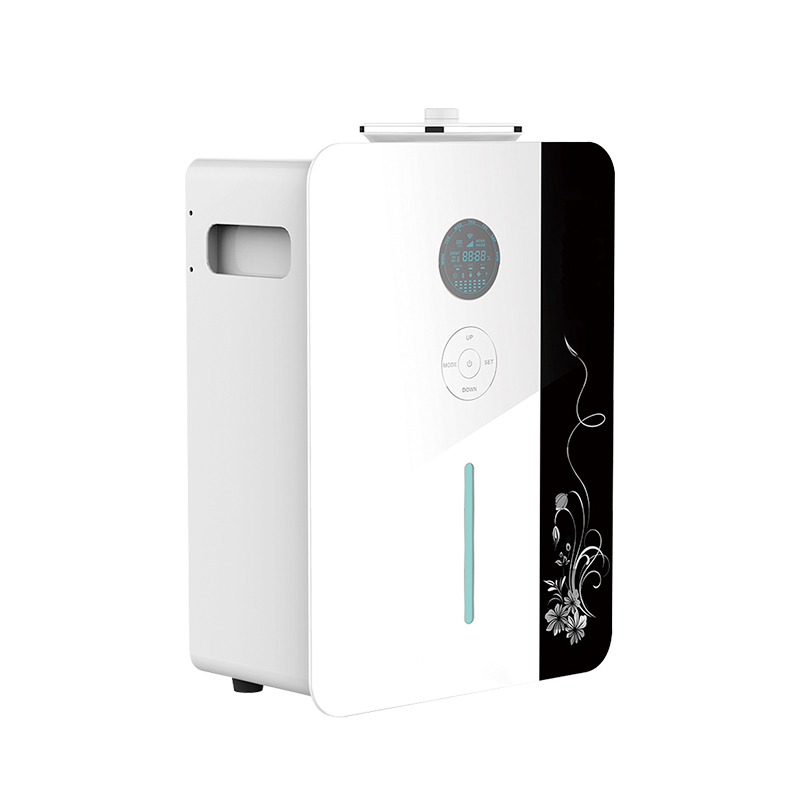
Spatial mapping requires differentiating between the sensor's detection zone and the total olfactory coverage area. The detection zone is the physical space where a user must stand to trigger the device. The olfactory coverage area is how far the scent travels post-diffusion. A sensor may only detect movement within 3 meters, but the resulting scent burst might cover 50 square meters.
Existing airflow dictates the dispersion of the triggered scent burst. HVAC currents carry the dry mist throughout the space. Doorway drafts can pull the scent out of the intended zone. High ceilings require more output to achieve the desired scent concentration at ground level. You must map these airflow patterns before mounting the hardware. If you mount a diffuser directly under an HVAC return vent, the system will immediately suck the fragrance out of the room before occupants can experience it.
Expert calibration ensures the space is adequately scented without overwhelming occupants. A scenting professional adjusts the measured rate of distribution to match the room's cubic footage. They account for the air exchange rate and the typical dwell time of visitors. This calibration prevents the scent from becoming a nuisance.
Airflow Condition | Sensor Placement Strategy | Expected Dispersion Impact |
|---|---|---|
Heavy HVAC Supply Draft | Mount below the draft line, facing traffic | Rapid dispersion; requires shorter lockout intervals |
Near Exterior Doorways | Mount 2 meters inward to avoid wind triggers | High scent loss to exterior; requires higher burst intensity |
Stagnant Air (Restrooms) | Mount near entry door to catch immediate traffic | Scent lingers longer; requires maximum lockout intervals |
High Ceilings (Lobbies) | Mount at 1.5m height, angled slightly upward | Vertical dispersion loss; requires extended burst durations |
Remote management transforms a basic unit into a smart aroma diffuser. Bluetooth and Wi-Fi integration allow facility managers to adjust burst intensity from a smartphone app. You can monitor consumable levels without opening the physical device. You can update operating schedules instantly to match holiday hours or special events. This connectivity eliminates the need for technicians to climb ladders just to change a timer setting.
Advanced commercial units combine targeted scent diffusion with audio capabilities. Multi-sensory point-of-sale features include integrated Bluetooth speakers. When a customer triggers the motion sensor, the device releases a scent burst and plays a specific audio message or sound effect. This creates an immersive, multi-sensory retail experience. Retailers use this to draw attention to new product displays or seasonal promotions.
Networking multiple units creates distinct scent zones within a single facility. You can program the entryway diffuser to release an energizing citrus scent. You can program the lounge area diffusers to release a relaxing lavender blend. Zoning capabilities allow for precise environmental control across massive floor plans.
Calculating the return on investment requires a cost-to-run analysis based on foot traffic data. Continuous diffusion burns oil at a flat rate, regardless of occupancy. Motion-sensing diffusion only consumes oil when necessary. In a space with variable traffic, the savings accumulate rapidly. You pay only for the scent that visitors actually experience.
Targeted, 10-second bursts extend the life of standard fragrance cartridges significantly. A 100ml to 500ml cartridge might last 30 days under continuous operation. That same cartridge can last 90 days or more when managed by a motion sensor with appropriate lockout intervals. This efficiency reduces both consumable costs and the labor required for cartridge replacement. Facility teams spend less time servicing units and more time on core maintenance tasks.
Environmental interference causes false activations. Direct sunlight hitting a PIR sensor can mimic the heat signature of a human body. Moving reflective surfaces, like glass doors catching the sun, can confuse the sensor. Heavy HVAC drafts can cause rapid temperature fluctuations. You must identify these environmental factors before installation.
Strategic positioning mitigates these risks. Mount the device at a height of 1.5 to 2.0 meters to capture human traffic. Angle the sensor away from windows and direct sunlight. Position the unit so it ignores pets walking on the floor. Ensure the field of view does not capture automated machinery or exterior movement through glass storefronts. If a glass door faces a busy sidewalk, a poorly aimed PIR sensor will trigger every time a pedestrian walks past outside, wasting expensive fragrance oil.
Oil buildup in cold-air nebulizers is an operational reality. The atomizer nozzle deals with highly concentrated essential oils. Over time, these oils can thicken and cause clogging. You must run rubbing alcohol through the system periodically. This dissolves the hardened oil and maintains nozzle integrity.
Follow this standard maintenance protocol every time you change the fragrance cartridge:
Power down the diffuser unit completely.
Remove the empty essential oil cartridge from the device.
Fill a spare cleaning cartridge with 50ml of 90% isopropyl alcohol.
Attach the cleaning cartridge and power the unit on.
Set the device to continuous mode and let it run for 15 minutes.
Remove the cleaning cartridge and let the nozzle air dry for 2 minutes.
Install the new fragrance cartridge and reset your motion sensor parameters.
Sensors require their own maintenance. Dust accumulation on the PIR lens or the photocell reduces responsiveness. Periodic dusting ensures the motion and light sensors function correctly. Recalibration may be necessary if the device starts missing triggers or activating randomly.
Occupant safety relies on using International Fragrance Association (IFRA) compliant oils. These standards dictate the safe usage levels of specific aromatic compounds. Using non-compliant oils in a commercial space exposes visitors to potential allergens and respiratory irritants. Always verify the safety data sheets of your chosen fragrance.
Metered, motion-activated bursts help facilities manage Volatile Organic Compounds (VOCs). Continuous diffusion can push a room's VOC levels near regulatory thresholds. By releasing scent only when triggered, a commercial aroma diffuser keeps the ambient air quality well below these limits. This ensures a safe, pleasant environment without compromising indoor air quality.
Audit your facility's foot traffic patterns to identify optimal zones for motion-activated scenting.
Map the existing HVAC airflow and doorway drafts in your target areas to determine precise mounting locations.
Request a spatial scenting consultation to calculate the exact cubic footage requirements for your space.
Download technical specification sheets to compare sensor ranges, lockout programming capabilities, and maintenance requirements.
A: Most commercial units feature a Passive Infrared (PIR) sensor with a detection range between 0.2 meters and 6.0 meters. The sensor typically covers a 120-degree field of view. Proper mounting height is required to maximize this range and capture human movement accurately.
A: Transitioning to motion-activated diffusion can reduce fragrance oil consumption by up to 60% in low-to-medium traffic zones. By utilizing lockout intervals and short burst durations, the device only consumes oil when occupants are present to experience the scent.
A: No. A light sensor (photocell) fragrance sprayer relies on ambient light to trigger activation. When the lights turn off or the space goes dark, the sensor detects the absence of light and automatically puts the diffusion system into standby mode.
A: Cold-air nebulizing uses high-velocity air pressure to break pure essential oil into dry nanoparticles without heat or water. Ultrasonic diffusers use vibrating plates to create a visible mist of water and oil droplets, which introduces humidity and requires frequent water refills.
A: Professionals use the device's logic board or mobile app to program the burst duration and the pause interval. They calculate the room's cubic footage and airflow patterns, adjusting the output intensity to maintain a consistent scent level without overwhelming the space.
A: You utilize the programmable lockout interval. This feature enforces a mandatory pause, typically between 1 and 5 minutes, after a scent burst. Even if motion continues in front of the sensor, the device will not spray again until the lockout period expires.
A: You should perform basic maintenance every time you replace the fragrance cartridge, typically every 30 to 90 days. This involves running rubbing alcohol through the system for 15 minutes to clear oil buildup from the atomizer nozzle and wiping dust from the external sensors.

