
Views: 0 Author: Site Editor Publish Time: 2026-08-12 Origin: Site


Have you ever noticed a beautifully scented room loses its fragrance after an hour? This is olfactory fatigue, commonly called nose blindness. Running a continuous stream of scent into a room forces your olfactory receptors to adapt. They stop registering the smell. Continuously running a device wastes expensive essential oils and creates a stagnant room atmosphere. You end up pouring more drops into the water tank, hoping to bring the scent back. This only overwhelms anyone newly entering the space.
Consumers struggle to maintain a consistent ambient scent profile throughout the day. Without manually turning devices on and off, you face two frustrating outcomes: overwhelming fragrance peaks or rapid scent dissipation. The hardware delivering the oil dictates fragrance performance. Upgrading your setup shifts fragrance management from manual guesswork to automated, controlled dispersion. Pacing the release of scent maintains a perfect ambient background from morning until night.
Good fragrance control establishes a consistent baseline scent. It lingers pleasantly without becoming overpowering. Success means walking into a room and noticing a fresh aroma that does not trigger headaches or respiratory irritation. It also involves highly efficient oil usage. You want your chosen scent to last throughout your entire workday or evening routine. Constant refills or manual adjustments ruin the experience. A timer diffuser achieves this by strictly regulating the output. The concentration of aromatic molecules in the air remains steady. It prevents the scent from spiking and crashing. Commercial spaces utilize this exact principle. Hotels do not pump fragrance continuously. They use precise intervals to maintain a subtle background note. You can replicate this at home with the right hardware.
The physical placement of your device interacts directly with its programmed intervals. Placing a unit directly under an HVAC return vent pulls the aromatic molecules out of the room before they can circulate. Placing it near a supply vent pushes the scent across the space. When you combine proper placement with a programmed interval, you maximize the coverage area without increasing the oil drop count. The intermittent pauses allow the room's natural air currents to distribute the mist evenly. This prevents heavy scent molecules from pooling on the floor directly beneath the unit.
The human brain detects changes in our environment. This includes new smells. Once a scent becomes a constant background factor, scent receptors stop sending signals to the brain. This is olfactory adaptation. If a device pumps out a continuous mist, you stop smelling it within thirty to sixty minutes. Intermittent exposure prevents the brain from filtering out the fragrance. Cycling the mist on and off drops the scent concentration slightly. Then it refreshes. This subtle fluctuation forces your olfactory receptors to continually re-register the aroma. The scent perception stays alive for hours on end.
Essential oils are highly volatile organic compounds. They evaporate quickly when exposed to air. Different oils have different evaporation rates. Top notes like pine, sweet orange, lemon, and eucalyptus flash off rapidly. If you run a continuous mist, these bright scents dominate the first hour. Then they vanish completely. You are left with only the heavier base notes. Timers help sustain these highly volatile top notes. Releasing the oil in short bursts paces the evaporation process. This preserves the complex profile of your essential oil blends. The bright citrus or sharp pine notes remain detectable long after you turn the unit on.
| Note Type | Common Examples | Evaporation Rate | Ideal Timer Strategy |
|---|---|---|---|
| Top Notes | Lemon, Pine, Eucalyptus, Sweet Orange | 1 - 2 Hours | 30-sec on / 30-sec off |
| Middle Notes | Lavender, Rosemary, Chamomile, Tea Tree | 2 - 4 Hours | 1-min on / 2-min off |
| Base Notes | Cedarwood, Frankincense, Patchouli, Sandalwood | 5+ Hours | 5-min on / 10-min off |
High-quality essential oils represent a significant investment. Pouring fifteen drops into a continuous output device gives you three hours of strong scent. The tank then runs dry. This is an inefficient setup. A programmable unit stretches a standard ten-drop application to a full workday. Utilizing a thirty-second on, thirty-second off intermittent setting doubles the lifespan of your water and oil mixture. This automated conservation means you spend less time refilling the reservoir. You also spend less money replacing empty bottles of premium oils.
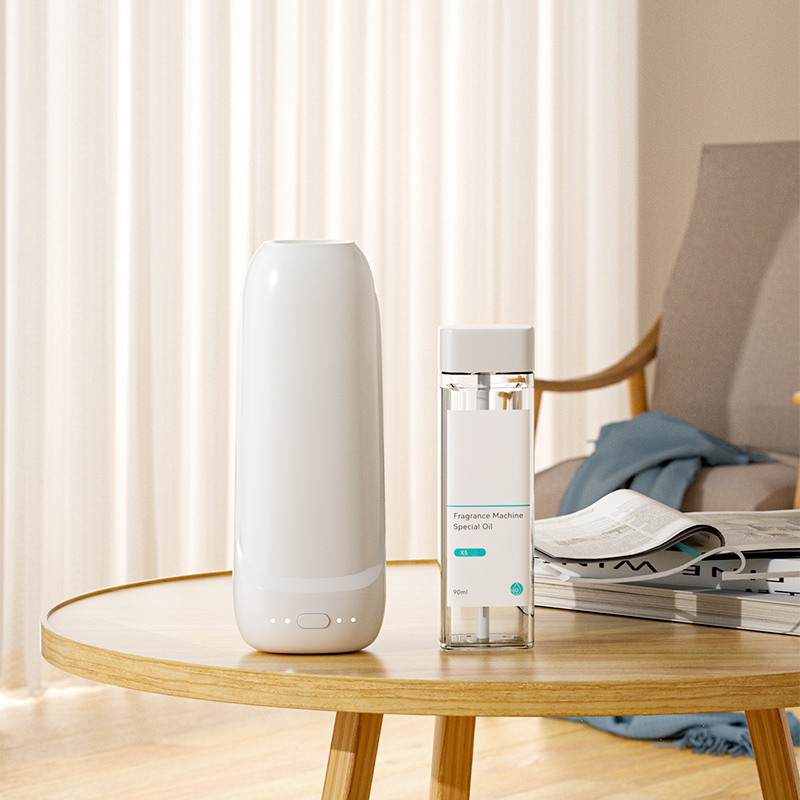
Understanding the underlying technology helps you select the best essential oil diffuser with timer for your space. Ultrasonic models use water and high-frequency vibration to create a fine mist. The internal plates vibrate at 2.4 million times per second, breaking water and oil into micro-particles. They work best for subtle, long-lasting background scents. They also add light moisture to dry air. For ultrasonic units, the timer focuses on misting intervals to prevent over-humidification. You do not want your windows and furniture becoming damp. Nebulizing models use pressurized air to atomize pure essential oil. They do not use water. They rely on Bernoulli's principle, forcing air across a small tube to create a vacuum that pulls the oil up and shatters it against a glass surface. They fit large spaces and deliver a strong scent. Because they use pure oil, a nebulizing timer focuses on strict, short bursts. These bursts are often just a few seconds long. This prevents the potent aroma from overpowering the room.
Modern innovation introduces waterless, pod-based systems. These utilize pre-filled scent capsules. These devices eliminate the messy process of measuring water and counting oil drops. You insert a capsule, and the machine handles the rest. These models feature one-touch capsule ejection and precise scheduling. This represents ultimate hands-off control. You can swap between an energizing citrus pod in the morning and a relaxing lavender pod at night. You never have to clean a water tank. The internal timers on these pod systems are meticulously calibrated. They match the specific viscosity of the fragrance inside, guaranteeing optimal dispersion.
The industry is moving beyond basic built-in hardware buttons. A modern smart diffuser connects to your home Wi-Fi network. You control it via a smartphone application. This allows users to program specific days, hours, and misting intensities. The precision is granular. You can set the device to activate at twenty percent intensity thirty minutes before you arrive home. Then you can switch to a heavier output during the weekend. This customization ensures a space is scented exactly when occupied. It conserves your valuable fragrance resources when the house is empty.
Older technologies lack the precision required for true fragrance control. Candle-heated bowls or plug-in evaporative pads fall into this category. We explicitly dismiss these outdated methods. Heat alters the delicate chemical composition of essential oils. It destroys their therapeutic properties and burns off the fragrance unevenly. The top notes burn away almost instantly. You are left with a sticky, scorched residue of base notes. Cold-air dispersion methods are vastly superior. They preserve the integrity of the oil. They allow for the precise, automated control necessary to maintain a balanced atmosphere.
When evaluating an automatic aroma diffuser, look closely at its interval settings. Standard industry settings usually include one-hour, three-hour, and six-hour auto-shutoff timers. While useful for sleep, these do not solve olfactory fatigue. The most critical feature is intermittent cycling. Look for thirty seconds on and thirty seconds off, or customizable minute-by-minute intervals. Intermittent misting stretches the scent longevity. It prevents nose blindness and keeps the ambient fragrance perfectly balanced. Always verify that the device offers a true intermittent mode rather than just a delayed shutoff.
Matching the water tank size to your room square footage is a foundational step. A massive tank is useless if the timer forces it to run continuously and overwhelm a small room. A tiny tank on an intermittent setting might still run dry too quickly in a large living area. Use the framework below to match capacity to your needs.
| Tank Capacity | Ideal Room Size | Recommended Drop Count | Intermittent Runtime (Estimated) |
|---|---|---|---|
| 90ml - 100ml | Small (Bathrooms, Desks) | 3 - 5 Drops | 6 - 8 Hours |
| 200ml - 300ml | Medium (Bedrooms, Offices) | 6 - 10 Drops | 12 - 16 Hours |
| 400ml - 500ml+ | Large (Living Rooms, Open Plans) | 12 - 20 Drops | 20 - 24 Hours |
Long automated runs mean essential oils sit inside the reservoir for extended periods. Essential oils, particularly citrus varieties like lemon and grapefruit, are highly corrosive to cheap plastics. Material safety is paramount. Look for devices constructed with BPA-free plastics, medical-grade glass reservoirs, or premium ceramic and stone covers. High-end benchmarks in the industry utilize matte stone or thick ceramic to house the internal components. These materials prevent essential oil degradation. They ensure no toxic plastic compounds leach into the water and become aerosolized into your breathing space.
The physical interaction with your device matters. Evaluate the real-world usability of physical remotes versus tactile buttons versus mobile applications. Tactile buttons are reliable but require you to walk over to the unit. Included physical remotes allow users to adjust intermittent settings from across the room. You can turn off the LED lights or change the mist output without interrupting your workflow. Mobile apps offer the deepest level of control for scheduling. They require a stable Wi-Fi connection and initial setup time. Choose the interface that best fits your daily habits.
There is a direct trade-off between minimalist design and utilitarian functional capacity. Beautiful, sculptural stone designs look incredible on a bookshelf. They frequently feature smaller water tanks around 90ml to 100ml. They also have shorter timer options. They prioritize blending into your home decor. Larger, utilitarian models built for 24-hour interval running look like functional appliances. They hold up to 500ml of water and offer robust scheduling. They command a larger visual footprint. You must choose between visual aesthetics and maximum automated runtime.
A commonly overlooked factor in automated fragrance control is the noise profile. When a device cycles on and off in intermittent mode, it produces an audible click from the internal relay. This is followed by a low motor hum and the sound of trickling water. In a bustling living room, this is unnoticeable. In a quiet bedroom or a focused home office, these intermittent sounds become distracting. If you plan to use the device while sleeping or working, prioritize models engineered for whisper-quiet operation. Check reviews regarding the sound of the timer relays.
It is easy to balk at the upfront cost of a premium, app-controlled unit compared to a basic model. A realistic assessment reveals a clear advantage. A premium device requires a larger initial investment but drastically reduces the volume of expensive essential oils wasted through over-diffusion. Utilizing precise interval timers cuts your oil consumption in half. You maintain a better scent profile. Over the course of a year, the savings on premium organic essential oils cover the initial cost difference of the upgraded hardware.
Automated scheduling makes it easy to forget about the physical device. This leads to leaving water and oil sitting in a reservoir for days. This stagnant mixture is a breeding ground for mold, mildew, and mineral scale buildup from tap water. If you live in an area with hard water, calcium and magnesium deposits quickly form a white crust on the vibrating plate. This restricts the mist output. Strict cleaning schedules are required to maintain optimal performance. You do not want to spray bacteria into the air.
Follow these steps to maintain your unit:
Failure to maintain the unit clogs the ultrasonic plate and permanently damages the motor.
Scheduling a device to run when unsupervised introduces specific safety risks. This is particularly true in households with pets and small children. Animals metabolize essential oils differently than humans. Oils like eucalyptus, tea tree, peppermint, and citrus are highly toxic to cats and dogs. You must address the risks of scheduling a run time when you are not there to monitor your pets. Always provide an open door so pets can leave the scented room. Use safe intervals and strictly select pet-safe oils when programming your automated routines.
Motorized timers, smart chips, and ultrasonic vibrating plates have a finite lifespan. Water and electronics are inherently at odds. Even the best-built units eventually experience wear and tear. When investing in automated hardware, carefully review the manufacturer's guarantee. Check for a one-year minimum warranty. Lifetime warranties are the gold standard for premium brands. This protects your investment against premature hardware failure, malfunctioning timer relays, or app connectivity drops.
Achieving an all-day, perfectly balanced fragrance profile is impossible without interval control. Running a device continuously leads to olfactory fatigue, wasted resources, and an overwhelming environment. A programmable timer is an indispensable feature. It shifts the burden of fragrance management from manual intervention to automated precision.
To shortlist the right device, determine your room size to establish the necessary tank capacity. Choose your preferred technology. You might want the humidifying effect of an ultrasonic model, the potent output of a nebulizing unit, or the mess-free convenience of a pod-based system. Filter your choices by their specific interval settings. Prioritize those offering true intermittent cycling over simple countdown shutoffs.
Take these next steps to upgrade your home scenting:
A: You should run it for 30 to 60 minutes at a time. Continuous exposure leads to olfactory fatigue, meaning you stop smelling the fragrance. Timers automate this process by cycling the mist on and off, preventing overexposure and keeping the scent fresh.
A: Continuous mist provides a non-stop output of water and oil until the tank is empty. Intermittent mist alternates between on and off cycles, such as 30 seconds on and 30 seconds off. Intermittent settings drastically improve scent longevity and conserve oil.
A: Fast-fading top notes evaporate quickly. Using an automated device on a 30-second intermittent setting paces the evaporation process. This slow, controlled release sustains volatile scents much longer than continuous diffusion.
A: Yes, provided it has an auto-shutoff feature when the water runs low. Waterless safety mechanisms and sleep-friendly intermittent intervals ensure the device operates safely and quietly without overwhelming the bedroom with heavy fragrance while you sleep.
A: Yes. By preventing unnecessary continuous diffusion and utilizing intermittent cycles, these devices cut oil consumption significantly. You achieve a better, longer-lasting ambient scent while using half the amount of essential oil.
A: Your scent fades quickly due to nose blindness, or olfactory fatigue. Your brain filters out constant smells. An automated device combats this by cycling the fragrance on and off, forcing your scent receptors to continuously re-register the aroma.
A: It allows you to automatically limit exposure times, preventing heavy accumulation of scent in the air. This hardware control, paired strictly with the use of pet-safe essential oils and ensuring the room is well-ventilated, minimizes risks to animals.


