
Views: 0 Author: Site Editor Publish Time: 2026-08-01 Origin: Site


Scenting constrained environments—such as cubicles, bathrooms, closets, or vehicle interiors—presents a unique spatial challenge where standard aromatherapy devices often cause olfactory fatigue or moisture damage. Utilizing oversized diffusers in micro-environments leads to wasted essential oils, excessive humidity, and overpowering aromas, while passive air fresheners lack consistency and control. Evaluating a mini essential oil diffuser requires shifting focus from maximum output to precision control, portability, and appropriate technology types suited for close-proximity use. You must prioritize devices engineered for tight square footage. Scenting a small room successfully depends on establishing a subtle baseline rather than flooding the area with heavy fragrance. We will examine the mechanics of scent dispersion, compare atomization technologies, and outline strict operational protocols for micro-spaces.
Airflow behaves differently in enclosed spaces. Interior rooms, windowless offices, and vehicle cabins lack the cross-ventilation found in larger living areas. When you place a high-output device in a room under 150 square feet, scent molecules accumulate rapidly. This lack of air exchange traps the fragrance. The dense cloud of aroma cannot dissipate through natural drafts or HVAC returns.
This rapid accumulation triggers olfactory fatigue. Your nose detects the strong scent initially. Within minutes, your scent receptors become overwhelmed and shut down. You stop smelling the fragrance entirely. Users often mistakenly add more oil when this happens, which severely worsens the problem. High concentrations of essential oils in small volumes of air increase the risk of volatile organic compound (VOC) saturation. Exceeding the room's volume capacity turns a pleasant scent into a respiratory irritant.
Stuffy environments require careful odor neutralization. Windowless cruise cabins, closets, and small bathrooms hold onto stale air. You need a device that addresses these odors without overwhelming the limited square footage. Precision matters more than sheer output. We calculate room volume by multiplying length, width, and height. A standard 8x8 foot bathroom with an 8-foot ceiling contains only 512 cubic feet of air. A standard diffuser designed for 2,000 cubic feet will saturate this space in under five minutes. You must match the device's output capacity directly to the cubic footage of the target environment.
Passive diffusion methods rely entirely on natural evaporation. Reed diffusers, cotton balls, and unheated ceramic stones fall into this category. They suffer from rapid scent degradation. The top notes of an essential oil—like citrus or peppermint—evaporate within hours. This leaves only the heavier base notes behind, altering the intended aroma profile. You cannot control the intensity or stop the diffusion once it starts.
Passive systems fail in micro-environments for several reasons:
A compact aroma diffuser provides an active, hands-free approach. It uses mechanical force to disperse the scent evenly. This active method maintains a consistent aromatic baseline over extended periods. You control exactly when the scent releases and how strong it gets. Mechanical atomization ensures that all components of the essential oil—top, middle, and base notes—are dispersed simultaneously, preserving the true scent profile.
Personal space aromatherapy requires strict operational parameters. You must aim for a subtle, consistent baseline aroma rather than overwhelming bursts. The scent should linger gently in the background, barely noticeable until you leave and re-enter the space.
Moisture control dictates device selection. Standard devices pump heavy mist into the air. In a small space, this mist settles quickly. You must avoid condensation on desks, keyboards, and upholstery. Excessive moisture damages electronics and promotes mold growth in unventilated closets. A device operating near a computer must not raise the localized relative humidity above 60 percent.
Acoustic requirements also dictate device selection. Close quarters amplify sound. You need to ensure motor and water sounds do not disrupt work or sleep. A device sitting two feet from your keyboard must operate below 30 decibels (dB). Anything louder becomes a distraction in a quiet office or a nuisance on a nightstand. The physical footprint must also remain minimal. Desk real estate is valuable. The device should occupy no more space than a standard coffee mug.
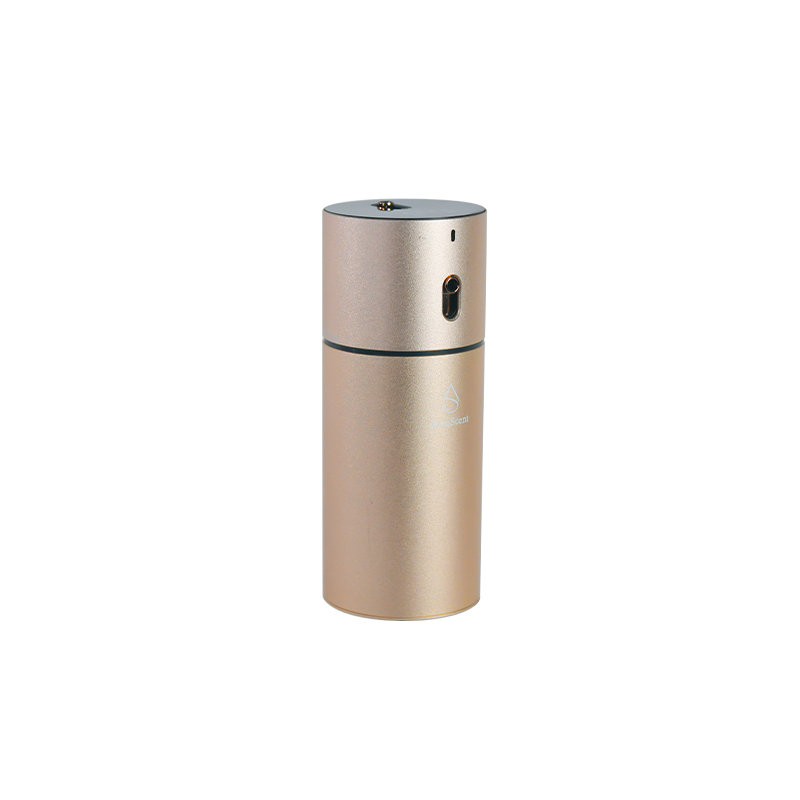
Ultrasonic models utilize high-frequency vibrations to disperse a water and oil mist into the air. A small piezoelectric ceramic disc vibrates rapidly at the bottom of the water reservoir, typically at frequencies around 2.4 MHz. This intense vibration breaks the oil and water into microscopic particles, propelling them upward as a fine mist.
These devices add micro-humidity to the air. This slight moisture increase benefits dry, climate-controlled offices or winter environments where heating systems strip moisture from the air. They generally offer quieter operation compared to compressor-based units, often running below 25 dB. They also come with a lower upfront hardware cost, making them highly accessible for basic desktop use.
However, ultrasonic units require access to clean water. Filling them at a desk introduces spill risks around sensitive equipment. The water also dilutes the potency and alters the therapeutic profile of the essential oil. You must use distilled water to prevent mineral buildup on the ceramic disc. Tap water contains calcium and magnesium, which calcify on the transducer and permanently reduce the mist output over time.
Nebulizing technology atomizes pure essential oil directly from the bottle. It uses pressurized air and Bernoulli’s principle to create a vacuum. This vacuum pulls the oil up through a tiny glass or plastic tube, shattering it against a baffle into millions of micro-particles.
A waterless small diffuser adds zero humidity to the environment. This makes it incredibly safe for tech-heavy desks, server rooms, or vehicle interiors. It delivers a stronger, cleaner aromatic experience because the oil remains completely undiluted. The lack of a water tank makes these units highly spill-resistant and ideal for travel. You can pack them in luggage without worrying about residual water leaking onto your clothes.
The trade-off involves oil consumption and viscosity limits. Nebulizers use oil at a higher rate than ultrasonic models. They also struggle with highly viscous oils like vetiver or sandalwood, which can clog the microscopic atomizing nozzles. The internal compressor motors generate slight vibration and can be marginally louder, often hovering around 35 dB. These units typically require a higher initial investment due to the complex internal air pumps.
Evaporative models utilize internal fans to blow ambient air across an oil-soaked pad or filter. Heat-based units use low-heat plates to accelerate oil evaporation. Both methods rely on changing the liquid oil into a gas through environmental manipulation rather than mechanical atomization.
These units are ultra-portable. A heat-based desktop diffuser operates entirely independently of water. They frequently run on USB power or small AA batteries, making them easy to move around a temporary workstation or hotel room.
The main drawback is uneven scent release. Essential oils contain different chemical components that evaporate at different rates. This causes oil fractionation. Lighter citrus notes evaporate quickly in the first ten minutes, while heavier wood notes linger on the pad for days. This results in lower overall efficacy and a constantly changing scent profile. The reusable pads also degrade over time and require frequent replacement to prevent cross-contamination of different oil blends.
| Technology Type | Atomization Mechanism | Moisture Added | Noise Level (dB) | Best Application |
|---|---|---|---|---|
| Ultrasonic | Piezoelectric vibration (2.4 MHz) | Low to Moderate | < 25 dB | Dry offices, bedside tables, general small rooms |
| Nebulizing (Waterless) | Pressurized air (Bernoulli’s principle) | None | 30 - 40 dB | Vehicles, tech-heavy desks, travel luggage |
| Evaporative / Heat | Fan airflow or low-heat plate | None | < 20 dB | Temporary workstations, ultra-portable needs |
You must map the device output to your specific square footage. Verify the unit is rated for micro-spaces, typically up to 100 cubic meters. Using a device meant for an open-concept living room in a small closet will cause immediate scent saturation. Check the manufacturer's specifications for the maximum coverage area and ensure it aligns with your target room.
Interval timers play a major role in small rooms. Look for devices that offer programmable duty cycles, such as 10 minutes on and 20 minutes off. This intermittent operation maintains the ambient scent without overpowering the limited air volume. It gives your olfactory receptors time to rest and reset. Continuous operation in a 100-square-foot room is never recommended.
Adjustable intensity settings allow you to customize the output based on proximity. You need a lower setting if the device sits right next to your keyboard. You might want a higher setting if it sits across a small bathroom. High-end models offer variable mist output controls, allowing you to dial back the atomization rate to match the exact dimensions of your personal space.
Footprint analysis determines where the device can actually live. Assess the physical dimensions carefully. If you plan to use it in a vehicle, it must fit securely in a standard car cupholder (typically 2.5 to 3 inches in diameter). If it goes on a nightstand, it needs a stable, weighted base to prevent tipping when you reach for your phone in the dark.
Evaluate the power source flexibility based on your daily routine. USB-C tethered units work well for permanent desk setups, drawing power directly from your monitor or laptop dock. Rechargeable lithium-ion batteries (look for ratings above 2000 mAh) offer true wireless freedom for moving between the bathroom, car, and office. Standard AC adapters restrict placement to wall outlets and add unnecessary cable clutter to a small desk.
Assess weight and travel readiness if you move frequently. Look for leak-proof designs that can survive transit in luggage without ruining your clothes. Waterless models generally travel better because they lack a residual water tank. If you must travel with an ultrasonic model, ensure it features a locking lid and a secure silicone gasket.
Wellness devices should blend seamlessly with your interior design. Select a model that complements your home or office decor without adding visual clutter. A constrained space looks messy quickly if devices clash with the environment. The device should look like a deliberate design choice, not a piece of medical equipment.
Evaluate the material finishes. Matte plastics resist fingerprints and look modern on a minimalist desk. Brushed aluminum or anodized metals offer a premium, industrial feel that pairs well with high-end laptops. Wood-grain accents bring warmth to sterile office environments. Choose a finish that elevates the aesthetic of your personal space. Pay attention to LED lighting features. While color-changing LEDs might look appealing in a living room, they can be distracting on a workstation. Look for models that allow you to completely disable the indicator lights for distraction-free work or sleep.
Consider the ease of sanitation before purchasing. Ultrasonic models require regular wiping of the water reservoir to prevent mold and bacterial growth. Nebulizing models require flushing the microscopic nozzles with rubbing alcohol to prevent clogs from oxidized oils. Choose the maintenance routine you are most likely to follow. Neglected devices break down quickly and emit musty odors.
Follow this basic cleaning protocol for waterless units:
Material durability directly impacts lifespan. Essential oils are highly corrosive to cheap plastics. Citrus oils, in particular, will melt standard polystyrene. Ensure the device uses medical-grade, essential-oil-resistant plastics like PP (Polypropylene) or PET. Glass components offer excellent chemical resistance but increase the risk of breakage during travel. Aluminum alloy shells provide the best combination of durability, chemical resistance, and travel readiness.
Utilizing standard oil quantities in an unventilated interior room poses a significant risk. Dropping 10 or more drops of oil into a device inside a cruise cabin, small office, or closet leads to rapid over-saturation. This causes headaches, stuffiness, and respiratory irritation. The air becomes heavy, and the therapeutic benefits of the oil are lost to sheer overwhelming intensity.
Mitigate this risk through strict adherence to the 3–5 drop rule for ultrasonic models. Less is always more in small spaces. If using a waterless model, lock it onto the lowest possible output setting and utilize the longest off-cycle available on the timer. Always ensure the room has some form of air exchange, even if it just means leaving the door cracked open an inch. Monitor your physical reaction; if you develop a slight headache, the concentration is too high.
Continuous ultrasonic mist causes localized moisture damage. If the mist falls directly onto laptops, monitors, or paper documents, it will ruin them over time. Condensation builds up quickly on cold surfaces. The micro-droplets of water and oil settle on keyboards, creating a sticky residue that attracts dust and degrades electrical contacts.
Mitigate moisture risks by utilizing directional nozzles to point the mist away from sensitive items. Maintain a minimum 24-inch clearance from all electronics. Place the unit on a coaster or small mat to catch any immediate fallout. If you cannot guarantee this clearance on a cramped desk, opt exclusively for waterless nebulizing models that produce zero humidity. Never place an ultrasonic unit directly under a low shelf or cabinet, as the moisture will warp the wood and peel the paint.
Imposing unwanted scents on coworkers in open offices or roommates in shared dorms creates friction. Scent is highly subjective. What relaxes you might trigger a migraine or allergic reaction in someone else. You must respect the shared air quality in communal environments.
Select low-throw devices designed specifically for personal bubbles. Utilize intermittent timers to keep the scent radius tight, ideally confined to your immediate desk area. Choose universally tolerated, low-allergen oils like sweet orange, lemon, or peppermint. Avoid heavy florals like ylang-ylang or strong earthy scents like patchouli in shared environments. Communicate with your neighbors before introducing any scent into a shared workspace. Position the device so the airflow pushes the scent toward you, rather than out into the common walkways.
A: Use exactly 3 to 5 drops. Small rooms lack ventilation, meaning scent molecules accumulate rapidly. Using fewer drops prevents overpowering aromas and potential respiratory irritation while maintaining a pleasant baseline scent.
A: Yes, ultrasonic models release moisture that can cause condensation on sensitive electronics over time. Maintain a minimum 24-inch clearance from laptops and monitors, or switch to a waterless nebulizing unit for tech-heavy desks to eliminate moisture risks entirely.
A: A standard humidifier adds significant moisture to a room using large water tanks to alter the climate. A compact aroma diffuser holds much less water and focuses primarily on scent dispersion, adding only minimal micro-humidity to the immediate area.
A: Yes, provided you use intermittent timers and very low oil concentrations. Operating the device on a strict cycle, such as 10 minutes on and 20 minutes off, prevents volatile organic compound saturation in unventilated spaces.
A: Most rechargeable units last between 10 and 50 hours depending on the intensity setting and the timer mode. Using intermittent cycles significantly extends the battery life compared to continuous operation.
A: Yes. Because they atomize pure oil without water dilution, they consume oil at a faster rate. However, they provide a much stronger, cleaner aromatic experience and eliminate all moisture-related risks for nearby electronics.


