
Views: 0 Author: Site Editor Publish Time: 2026-08-26 Origin: Site


Maintaining personal wellness while moving between offices, rental cars, and temporary accommodations creates real friction. You want to control your environment, but transient spaces rarely feel like home. Traditional aromatherapy requires tethered power sources and stable, flat surfaces. This renders standard units completely useless for commuters, frequent flyers, or digital nomads who need to manage travel stress and unfamiliar environments. You cannot easily pack a fragile, water-filled device into a carry-on bag without risking a massive spill. The solution lies in a structural shift toward battery-operated, cord-free technology. Modern mobility demands devices engineered specifically for movement. We will evaluate how specific design mechanisms—such as waterless atomization, universal USB charging, and spill-proof seals—actively remove mobility barriers. Understanding these features dictates smart purchasing decisions for anyone looking to maintain their wellbeing routines on the road.
To understand what makes a device truly mobile, you first have to look at why standard units fail outside the home. Traditional diffusers are built for stationary life. They assume you have unlimited electricity, a perfectly level surface, and easy access to a sink. When you introduce movement, vibration, or limited space, these devices immediately become liabilities rather than wellness tools.
Standard diffusers rely entirely on AC adapters and short power cords. This restricts usage to specific zones within a room. You cannot seamlessly transition a running unit from your kitchen counter to your vehicle. If a hotel room lacks an accessible outlet near the bed or desk, the device becomes useless. This tethered design prevents you from creating a consistent aromatic environment as you move through your day. True mobility requires cutting the cord entirely. I have seen travelers struggle with extension cords in airport lounges just to get five minutes of aromatherapy. It defeats the purpose of stress relief. You need a device that operates independently of the local power grid.
Physical limitations become obvious when you try to move a traditional ultrasonic unit. These devices rely on open water reservoirs to function. Subjecting them to movement, vibration, or slight tilting causes immediate spills. If you hit a bump while driving, water sloshes over the internal electronics. Carrying a half-full water diffuser from the office to your car guarantees a mess. The inherent design of a water basin fundamentally contradicts the concept of transit. Water damage ruins laptops, travel documents, and the diffuser itself. A mobile lifestyle requires a completely sealed system that can withstand being knocked over or stored sideways in a bag.
Standard materials present another major barrier to travel. Many home units feature glass domes or heavy ceramic covers. These materials easily shatter when packed inside luggage or daily carry bags. Traditional diffusers often feature bulky footprints designed to look like home decor. They take up too much valuable space in a laptop bag or carry-on suitcase. You need a device built from impact-resistant materials that prioritizes a compact, streamlined shape. A travel unit must survive being dropped on a concrete airport floor or crushed under a heavy textbook in a backpack.
Travel forces you into spaces you cannot control. Rental cars often harbor stale smoke or heavy chemical cleaning odors. Hotel rooms can feel sterile or hold lingering smells from previous guests. Tethered, water-dependent units simply cannot deploy fast enough to address these high-stress atmospheres. You cannot wait to find an outlet, fill a cup with water, and measure drops of oil when you just want to neutralize a bad smell immediately. You need rapid, on-demand environmental control. A proper mobile unit allows you to pull it out of your bag, press a button, and instantly change the olfactory landscape of your immediate surroundings.
Removing the barriers of traditional aromatherapy requires specific engineering. A rechargeable portable essential oil diffuser utilizes integrated power and advanced atomization to function anywhere. Breaking down these core mechanisms reveals exactly how this technology enables true mobility.
Power independence starts with lithium-ion battery integration. Mobile units typically feature battery capacities ranging from 1000mAh to 4000mAh. This capacity directly translates to how long the device can run without a charge. A 2000mAh battery might provide two hours of continuous mist, or up to fifteen hours on an intermittent setting. Intermittent modes—where the device runs for a few seconds and then pauses—extend battery life during long flights or road trips. The internal battery eliminates the need to hunt for wall outlets in airport lounges.
| Battery Capacity | Estimated Continuous Runtime | Estimated Intermittent Runtime | Best Travel Application |
|---|---|---|---|
| 1000mAh | 1 - 2 Hours | 5 - 8 Hours | Daily commutes, short office stints. |
| 2000mAh | 2 - 4 Hours | 10 - 15 Hours | Cross-country flights, full workdays. |
| 4000mAh+ | 4 - 8 Hours | 20 - 30 Hours | Multi-day camping, long road trips. |
A battery is only useful if you can charge it easily. Modern travel demands universal compatibility. USB-C charging ports are now a strict necessity for any mobile device. This allows you to charge your diffuser using the exact same cables you use for your laptop, smartphone, or wireless headphones. You can plug it directly into a portable power bank, a vehicle's USB port, or a laptop while working at a coffee shop. Universal charging ensures you never have to pack a proprietary AC adapter again. It streamlines your packing list and guarantees you can always find a compatible power source, even internationally.
The most significant leap in mobile aromatherapy is cold-air nebulizing technology. Unlike ultrasonic units, nebulizers do not require water. They use pressurized air to draw essential oil directly from the bottle. The air forces the oil through a microscopic nozzle, breaking it down into an ultra-fine, dry mist. This bypasses the need for a water source entirely. You simply screw the oil bottle into the device and turn it on. This waterless approach removes the spill risk, prevents mold growth in transit, and delivers a much more concentrated aroma. It represents the pinnacle of travel-friendly design because it eliminates the messiest variable: water.
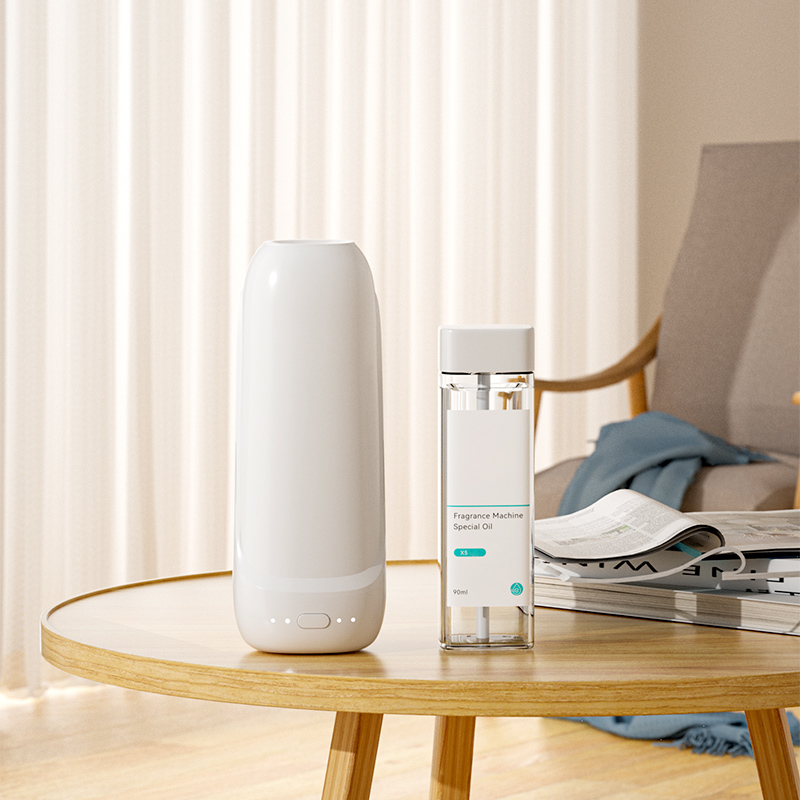
Not all travel units perform equally in every scenario. You must map specific product features to your tangible mobility outcomes. Evaluating a portable aroma diffuser requires matching its design to the environments you navigate most frequently.
The physical shape of the device dictates where you can use it. Cylindrical designs mirror the dimensions of a travel coffee mug. These are heavily optimized for car cup holders, ensuring the unit stays upright and secure during sharp turns or sudden stops. Conversely, flat, compact designs resemble a thick smartphone or a small power bank. These are optimized for sliding into slim laptop bags and sitting discreetly on hotel nightstands. You must choose the form factor that aligns with your primary mode of travel.
| Form Factor | Primary Advantage | Ideal Environments |
|---|---|---|
| Cylindrical / Tumbler | Fits standard cup holders securely. | Rental cars, personal vehicles, RVs. |
| Flat / Rectangular | Slides easily into laptop sleeves. | Briefcases, hotel nightstands, airplane tray tables. |
| Clip-On / Mini | Attaches directly to air vents. | Car vents, small personal desk fans. |
You must compare the square footage capabilities of a compact unit against the realities of your transient spaces. A small mobile unit easily fills an enclosed vehicle cabin within minutes. This rapid deployment is highly effective for masking unwanted smells in rental cars. However, in an open-plan office or a large hotel suite, a compact device provides localized scent rather than whole-room coverage. It creates a personal scent bubble around your immediate workspace rather than attempting to scent a massive room. Adjust your expectations based on the airflow and square footage of your location.
Consistent access to aromatherapy directly impacts how you handle travel. Delivering a familiar scent in an unfamiliar space reduces travel-induced stress. Using peppermint or rosemary oils can uplift your mood and boost focus while working from a temporary remote workspace. A reliable mobile unit ensures you can trigger these olfactory responses on demand. The therapeutic efficacy relies heavily on the device's ability to output a consistent, unaltered scent profile without the dilution caused by water basins. Pure nebulization delivers the exact chemical profile of the oil directly to your olfactory system.
Acoustics matter when you travel. You cannot use a loud, vibrating device on a quiet train car or in a shared coworking space. Evaluating the decibel rating is critical. Whisper-quiet operation, typically rated below 35dB, ensures you do not disturb others. Nebulizing units use small air pumps, which can sometimes produce a faint humming sound. High-quality travel models isolate this pump with dampening materials to keep noise levels acceptable for public transit and flights. Always test the unit in a quiet room before taking it into a shared public environment.
Every piece of travel gear requires compromises. You cannot have maximum output, infinite battery life, and zero weight all at once. Guiding your purchasing decision means understanding the trade-offs inherent in mobile aromatherapy technology. A rechargeable diffuser balances these elements differently based on its engineering.
The biggest decision involves choosing between atomization technologies. Each approach offers distinct advantages and drawbacks for the traveler.
| Feature | Waterless (Nebulizing) Travel Models | Ultrasonic Travel Models |
|---|---|---|
| Mobility Level | Maximum. Works at any angle, zero spill risk. | Moderate. Must remain upright to prevent water leaks. |
| Preparation | None. Screws directly onto the oil bottle. | Requires access to clean or distilled water. |
| Oil Consumption | Higher. Uses pure essential oil rapidly. | Lower. Dilutes a few drops of oil into water. |
| Output Type | Dry, highly concentrated scent mist. | Humidifying water vapor with a lighter scent. |
| Best Use Case | Rental cars, flights, immediate odor masking. | Dry hotel rooms where added humidity is desired. |
You must balance how strong you want the scent against how long you need the device to run. Higher mist output settings exponentially drain battery life. If you run a unit on continuous high output, a standard battery might die in two hours. If you switch to an intermittent setting—misting for 10 seconds and pausing for 50 seconds—that same battery can last all day. Buyers must prioritize either aggressive scent strength for immediate odor neutralization or extended time-between-charges for long travel days. Managing your settings based on your daily itinerary is a required skill for mobile aromatherapy.
Travel gear takes a beating. You have to choose between lightweight materials and heavy-duty protection. Lightweight plastics keep your luggage weight down, but certain plastics degrade over time when exposed to highly concentrated essential oils like citrus. Aircraft-grade aluminum alloys offer superior durability and resist oil degradation perfectly. However, metal housings add noticeable weight to your daily carry bag. You must decide if long-term durability outweighs the desire for an ultra-lightweight pack. Frequent flyers usually benefit from aluminum housings that can survive the rough handling of airport security bins.
Traveling with liquids and electronics introduces practical challenges. A travel diffuser requires specific handling to ensure it survives the trip and complies with transit regulations.
Air travel requires strict adherence to security rules. Essential oils are liquids and fall under the TSA 3.4 oz (100ml) rule. You must pack your oil bottles in a clear, quart-sized bag if you carry them onto the plane. Standard oil bottles easily meet this requirement. Additionally, devices containing lithium-ion batteries must generally be packed in your carry-on luggage, not your checked bags. Always empty the device of any attached oil bottles before sending it through the security scanner to prevent questioning or accidental leaks.
Even waterless units can leak pure oil if handled improperly. Changes in cabin air pressure during flights can force oil up through the nebulizer nozzle. To mitigate this, always remove the essential oil bottle from the device before packing it away. Cap the oil bottle tightly. Store the empty device in a dedicated travel case. This protects the delicate atomizing nozzle from accumulating dust, lint, or crumbs from the bottom of your bag, which will quickly clog the micro-pump. A hard-shell case provides the best protection against pressure and impact.
You will eventually need to clean your device, often without access to a proper sink or dish soap. Pure essential oils leave sticky residues over time. To perform on-the-go maintenance, carry a small bottle of rubbing alcohol. The alcohol acts as a solvent, dissolving the thick oil resin and clearing out the nebulizer clogs instantly. This sink-free method keeps your unit functioning perfectly on long trips.
A: Consistent access to aromatherapy promotes relaxation and reduces travel-induced stress. Deploying familiar scents in transient spaces like hotel rooms helps neutralize unfamiliar odors, creating a comforting environment. Using specific oils, such as peppermint or citrus, can also boost focus and productivity when working from temporary remote workspaces or coffee shops.
A: Battery life depends heavily on the chosen output mode. On a continuous mist setting, a standard unit typically lasts between 2 to 4 hours. However, utilizing an intermittent mode—where the device pauses between bursts—can extend the battery life significantly, often ranging from 10 to 15 hours on a single charge.
A: Yes. Many travel units feature a cylindrical design specifically engineered for cup-holder compatibility. It is crucial to use waterless nebulizing models in vehicles to prevent dashboard spills caused by sharp turns or sudden stops. They are highly effective at neutralizing stale rental car odors quickly.
A: Yes, but you must follow TSA regulations. The device contains a lithium-ion battery, so it must be packed in your carry-on bag, not checked luggage. Any essential oils you bring must comply with the liquid limits, meaning bottles must be under 3.4 oz (100ml) and fit in your quart-sized liquids bag.
A: Yes. Waterless nebulizing technology draws pure essential oil directly from the bottle without diluting it in water. This creates a much stronger, more concentrated scent profile, but it does consume the oil at a faster rate compared to traditional ultrasonic units that use only a few drops per tank.
A: Yes. Modern travel units utilize standard USB or USB-C charging ports. This universal compatibility allows you to charge the device using a laptop, a portable power bank, or a standard vehicle USB port, operating on standard 5V voltage requirements without needing a proprietary wall adapter.
A: You can clean a nebulizing unit without a sink. Fill an empty essential oil bottle with a small amount of isopropyl alcohol. Attach it to the device and run it for five minutes. The alcohol dissolves built-up oil resin and clears micro-clogs in the nozzle quickly and efficiently.


