
Views: 0 Author: Site Editor Publish Time: 2026-08-01 Origin: Site


The increasing consumer focus on optimizing indoor environments has blurred the lines between air purification and air scenting, leading to conflicting claims about what diffusers actually achieve. Buyers seeking to improve their home’s ambiance often struggle to separate verifiable sensory benefits from exaggerated health claims—such as the false premise that diffusers reduce allergens—risking investments in devices that do not meet their specific environmental goals. This guide deconstructs the mechanical realities of how a room essential oil diffuser alters indoor air atmosphere, providing a framework to evaluate technologies, mitigate adoption risks, and select the right unit for your space.
A pervasive misconception in the wellness industry is the idea that dispersing botanical extracts actively cleans the air. Marketing campaigns frequently suggest that these devices can neutralize airborne pollutants, capture dust, or eliminate pet dander. These claims lack empirical scientific backing. Devices designed to disperse scent do not possess the mechanical filtration media required to trap particulate matter or volatile organic compounds (VOCs). High-Efficiency Particulate Air (HEPA) filters physically capture particles down to 0.3 microns by forcing air through a dense mesh. Scenting devices perform the exact opposite function: they emit particles into the air space. While certain essential oils exhibit antimicrobial properties in concentrated, liquid laboratory settings, dispersing highly diluted micro-droplets into a large volume of room air does not replicate these sanitizing effects. Relying on a scenting device to manage asthma triggers or seasonal allergies is ineffective and distracts from proven air quality interventions like dedicated HVAC purifiers.
Instead of altering the measurable particulate count of Indoor Air Quality (IAQ), scenting devices fundamentally transform the air atmosphere. This atmosphere comprises ambient scent, perceived freshness, and localized humidity. When volatile aromatic compounds enter the nasal cavity, they interact directly with olfactory receptors. These receptors send immediate signals to the brain's limbic system, which governs emotion and memory. This biological response explains why a room smelling of eucalyptus feels instantly cleaner and more breathable, even if the actual air composition remains unchanged. The enhancement is strictly sensory and psychological, creating an environment that feels curated, intentional, and relaxing. You are modifying how the space is perceived by its occupants rather than altering the physical composition of the oxygen and nitrogen in the room.
To maximize the utility of a room fragrance diffuser, you must align your expectations with the device's actual mechanical capabilities. Success should be measured by scent throw, which indicates how effectively the aroma permeates the target square footage. Operational duration, ease of refilling, and the ability to customize output settings are practical metrics for evaluation. Discard clinical health outcomes or air filtration metrics when judging these devices. A successful implementation results in a consistent, pleasant olfactory backdrop that elevates the mood of the space without causing respiratory irritation or requiring excessive daily maintenance. You should look for consistent vapor output, reliable timer functions, and materials that resist chemical degradation from the oils.
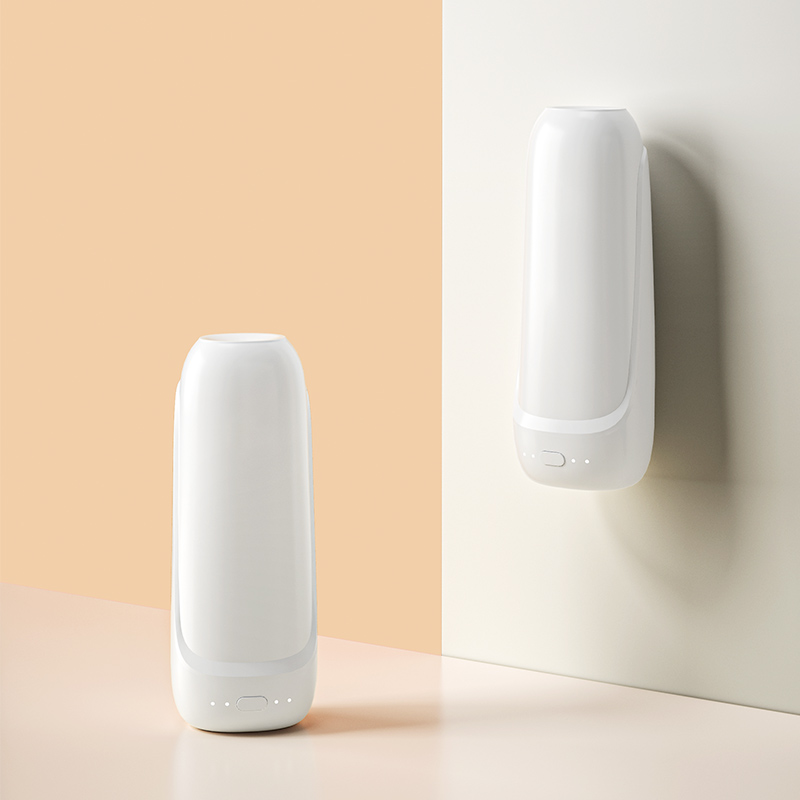
Ultrasonic technology dominates the consumer market due to its accessibility and dual-action output. These units utilize a piezoelectric transducer, typically a small ceramic disc located at the base of a water reservoir. This component converts electrical energy into high-frequency mechanical vibrations. Operating at frequencies around 2.4 megahertz, the ceramic disc oscillates millions of times per second. This rapid movement creates a standing wave on the surface of the water. As the amplitude of this wave increases, it forms capillary waves that eventually break the surface tension of the liquid. The result is the ejection of microscopic droplets—usually between 1 and 5 microns in diameter—into the air space above the water. A small internal fan then propels this dense mist out of the device's nozzle and into the room.
The primary advantage of this cold-dispersion method is therapeutic preservation. Because the entire process relies on mechanical agitation rather than thermal energy, the complex chemical integrity and delicate volatile compounds of the essential oils remain entirely intact. The atmospheric impact includes the addition of slight, localized moisture to the air, which provides relief in dry winter climates or heavily air-conditioned spaces. The resulting scent profile is subtle and diluted, making it appropriate for sustained daily use.
The technology presents specific operational trade-offs. The reliance on water necessitates regular refills, limiting continuous operational time. If tap water is used, the ultrasonic vibrations aerosolize dissolved minerals, leaving a fine white dust on surrounding surfaces. Because the essential oil is heavily diluted in water, the overall scent concentration is noticeably weaker compared to waterless alternatives.
Nebulizing technology represents the most potent method of dispersing aroma. These devices operate entirely without water, relying instead on fluid dynamics principles, specifically the Venturi effect and Bernoulli's principle. The device contains a small air pump that forces pressurized ambient air through a highly restricted micro-tube. As the air passes through this bottleneck, its velocity increases dramatically while its static pressure drops. This creates a localized vacuum at the tip of a secondary tube submerged in pure essential oil. The vacuum draws the oil upward into the path of the high-velocity air stream. When the oil hits the air stream, it is violently atomized against a glass baffle, shattering the liquid into nanoparticles.
The atmospheric impact of a scent diffuser using nebulizing technology is profound. It delivers a highly concentrated, robust aroma without introducing any additional moisture into the environment. These ultra-fine particles are lightweight enough to remain suspended in the air for hours, traveling on natural convection currents throughout the space. This makes nebulizers exceptionally effective for rapid scenting of large, open-concept spaces and for maximizing the delivery of pure botanical extracts. The scent throw is immediate and dense.
The trade-offs involve operational intensity. These units consume pure essential oil at a significantly faster rate than water-based models. The internal air pump generates a slight mechanical humming noise, which is noticeable in perfectly quiet environments like bedrooms or meditation spaces. The intricate glass components require careful handling and specialized cleaning to prevent clogs from oxidized, sticky oils.
Evaporative and heat-based devices rely on passive diffusion methods to release aroma. Fan-assisted evaporative models blow ambient air across a pad or filter saturated with essential oil, accelerating the natural evaporation process based on vapor pressure. Heat diffusers utilize gentle warming elements—such as a low-wattage bulb or a ceramic heating plate—to volatilize the oil.
The atmospheric impact of these devices is highly localized. They provide subtle scenting suitable for micro-zones, such as an individual office desk, a small bathroom, or a bedside table. They operate silently and require minimal setup, making them ideal for areas where power outlets are scarce or absolute silence is required.
The significant trade-off with heat-based diffusion is the potential alteration of the oil's chemical composition. Applying heat degrades delicate terpenes and esters, fundamentally changing the aromatic profile and diminishing intended therapeutic benefits. Evaporative methods often result in an inconsistent scent throw; lighter top notes evaporate rapidly, leaving heavier base notes to linger, which creates an unbalanced olfactory experience over time.
Understanding exactly how a device makes a room smell good requires looking at the behavior of volatile aromatic compounds (VOCs). When essential oils are atomized, these microscopic VOCs are suspended in the air space, riding on natural room currents and HVAC airflow. Their presence physically displaces stagnant air molecules, introducing a new olfactory baseline.
You must distinguish between odor neutralization and odor masking. Masking occurs when a heavy, dominant scent—such as patchouli or ylang-ylang—is introduced to overpower underlying smells like cooking odors or pet dander. The original odor remains, but the human nose is overwhelmed by the stronger fragrance. Neutralization involves a chemical interaction. Certain essential oils, particularly those rich in limonene (found in citrus oils like lemon and sweet orange) or specific phenols (found in tea tree), bind to and alter the molecular structure of certain odor-causing compounds. This interaction neutralizes the unpleasant smell at a chemical level, resulting in a genuinely fresher atmosphere rather than a heavily perfumed one.
| Essential Oil Profile | Primary Chemical Components | Atmospheric Impact & Application |
|---|---|---|
| Citrus (Lemon, Orange, Grapefruit) | Limonene, Citral | High odor neutralization. Breaks down airborne grease and stale odors. Ideal for kitchens. |
| Herbaceous (Tea Tree, Eucalyptus) | Cineole, Terpinen-4-ol | Creates a perceived sense of clinical cleanliness. Opens nasal passages. Ideal for bathrooms. |
| Floral (Lavender, Chamomile) | Linalool, Linalyl Acetate | Promotes limbic system relaxation. Masks mild odors. Ideal for bedrooms and sleep hygiene. |
| Woody (Cedarwood, Sandalwood) | Cedrol, Santalol | Heavy base notes that linger for hours. Grounds the atmosphere. Ideal for large living rooms. |
Ultrasonic models are frequently praised for their humidifying properties, but you must manage expectations mathematically. A standard ultrasonic unit typically outputs between 20 to 50 milliliters of water per hour. Over an eight-hour runtime, this equates to roughly one to two cups of water dispersed into the air.
Compare this output to a dedicated room humidifier, which routinely disperses one to three gallons of water per day to actively raise the relative humidity of a space. The moisture added by an ultrasonic device is strictly localized. It provides slight respiratory comfort or minor relief from dry skin if placed directly next to a bed or desk, but it lacks the mechanical capacity to alter the overall humidity percentage of a standard-sized room or reduce static electricity across the home.
The strategic use of a home diffuser allows occupants to create distinct spatial zones and support daily wellness routines through olfactory cues. Scent mapping involves assigning specific aromas to different areas or times of day to trigger desired psychological responses. Dispersing lavender or chamomile in the bedroom establishes a sensory boundary that promotes relaxation and sleep hygiene. Utilizing peppermint or rosemary in a home office stimulates the limbic system, enhancing focus and cognitive alertness.
A critical factor in maintaining these benefits is avoiding olfactory fatigue, commonly known as nose blindness. When exposed to a constant scent, olfactory receptors quickly adapt and stop sending signals to the brain, causing the aroma to seemingly disappear. Utilizing intermittent diffusion settings—such as operating for 30 minutes on and 30 minutes off—prevents this fatigue. Intermittent operation ensures sustained atmospheric improvement, keeps the limbic system engaged, and prevents the room air from becoming uncomfortably saturated with heavy VOCs.
Matching the mechanical output of the device to the physical dimensions of the room is the most critical step in the selection process. An undersized unit fails to impact the atmosphere, while an oversized unit causes headaches and respiratory discomfort. You must account for cubic footage, not just square footage, as vaulted ceilings require significantly more output to achieve the same scent density.
Evaluating the long-term viability of a scenting device requires understanding the ongoing operational efficiency, specifically regarding essential oil consumption. Different technologies utilize raw materials at vastly different rates.
Nebulizing units, while highly effective, consume pure essential oil rapidly. Operating a nebulizer for several hours a day depletes a standard 15ml bottle of premium essential oil within a week or two. Ultrasonic models stretch oil consumption significantly by using water as a carrier. A few drops of oil in a 300ml water reservoir provides hours of subtle fragrance, making ultrasonic technology far more efficient for daily, sustained use.
Maintenance and replacement parts also factor into operational efficiency. Ultrasonic units eventually experience degradation of the ceramic oscillating disc, requiring device replacement. Nebulizers feature delicate glass reservoirs and micro-tubes that break during cleaning, necessitating the acquisition of specific replacement parts to keep the unit functional.
The physical construction of the device impacts both its longevity and how it integrates into your home decor. Build materials must be evaluated for chemical resistance. Citrus essential oils are highly corrosive and degrade low-quality plastics over time. Ensure any plastic components are explicitly labeled as BPA-free and constructed from Polypropylene (PP), which is chemically resistant to essential oils. Glass, ceramic, and treated wood exteriors offer superior durability and aesthetic appeal, though they require more careful handling.
Decibel levels (dB) are a crucial consideration for devices intended for bedrooms or quiet study areas. Ultrasonic units are generally whisper-quiet, producing only the faint sound of trickling water and a muted internal fan. Nebulizers produce distinct mechanical noise due to the internal air pump required to atomize the oil. This slight vibrating or humming sound disrupts light sleepers or individuals highly sensitive to background noise.
| Feature | Ultrasonic Technology | Nebulizing Technology |
|---|---|---|
| Dispersion Method | Water and ultrasonic vibrations | Pressurized air (Waterless) |
| Scent Concentration | Subtle, diluted | Highly concentrated, robust |
| Humidity Impact | Adds localized moisture | No impact on humidity |
| Oil Consumption | Highly efficient (stretched with water) | Resource-intensive (uses pure oil) |
| Noise Level | Whisper-quiet (faint water sounds) | Noticeable mechanical hum |
| Ideal Room Size | Small to Medium spaces | Large, open-concept spaces |
Introducing concentrated botanical extracts into a shared living environment carries specific biological risks that you must manage. Many common essential oils are highly toxic to household pets. Cats lack specific liver enzymes required to metabolize phenols and ketones found in oils like eucalyptus, tea tree, peppermint, wintergreen, and citrus. Inhalation or dermal exposure to these dispersed VOCs leads to severe neurological and respiratory distress in animals.
For humans, continuous exposure to atomized oils triggers individuals with asthma, chronic obstructive pulmonary disease (COPD), or reactive airway diseases. Heavy particulate concentration irritates the mucosal lining of the respiratory tract.
Mitigation requires strict operational discipline. Implement 30-minute diffusion intervals rather than continuous operation. Ensure the room has proper ventilation, allowing fresh air to circulate and dilute the VOC concentration. Consult veterinary guidelines before introducing new botanical scents into a home with pets, and ensure animals have an open door to leave the scented area freely.
The most significant hidden risk of ultrasonic models is the potential for microbial growth. The internal water reservoir provides a dark, damp environment. If water is left stagnant between uses, bacteria, mold, and mildew rapidly colonize the tank and the ceramic disc, forming a stubborn biofilm. When the device is turned back on, these harmful microbes are aerosolized and dispersed directly into the breathing zone, actively degrading indoor air quality and posing a severe respiratory hazard.
Mitigation relies on a non-negotiable cleaning protocol. Follow these exact steps to maintain a sanitary unit:
The physical output of scenting devices causes localized property damage if placed carelessly. The mist generated by ultrasonic models carries both moisture and microscopic oil droplets. As this mist settles, it leaves a damp, oily residue on surrounding surfaces. Over time, this residue dissolves clear coats on wood furniture, degrades the finish on painted surfaces, and short-circuits nearby unsealed electronics.
Mitigation involves strategic placement guidelines. Follow these rules when setting up your unit:
A: No. Despite some marketing claims, there is no empirical evidence that diffusers effectively filter or remove particulate matter, VOCs, pollutants, or allergens from the air. While some oils have antimicrobial properties in liquid form, diffusing them does not purify the room.
A: A humidifier is designed to significantly increase room moisture levels, outputting gallons of water per day to alter relative humidity. An ultrasonic scent diffuser primarily disperses aroma, adding only a negligible amount of moisture to the immediate vicinity.
A: It is recommended to run a diffuser intermittently—typically 30 to 60 minutes at a time. Continuous operation can lead to olfactory fatigue and over-saturate the air, which may cause headaches or respiratory irritation.
A: It depends on the goal. Nebulizing diffusers provide a stronger, purer scent without adding water, making them better for large spaces. Ultrasonic diffusers are more affordable, use less oil, preserve therapeutic properties via cold-dispersion, and add a slight mist, ideal for smaller rooms.
A: Yes, if placed improperly. The mist from ultrasonic diffusers can leave moisture or oil residue that may warp unsealed wood or damage electronics. Always place the unit on a water-resistant surface with clear space above it.
A: Caution is required. Many common essential oils are highly toxic to cats and dogs when inhaled or absorbed. Always research specific oils and ensure pets can freely leave the room while the device is operating.


