
Views: 0 Author: Site Editor Publish Time: 2026-08-10 Origin: Site


Hospitality operators know sensory marketing drives customer behavior. Relying on active brewing to scent a cafe leaves the customer experience entirely to chance. Natural coffee aromas are highly volatile. They dissipate quickly upon extraction. These delicate scent notes fail to reach the storefront exterior. Competing odors from food preparation, dairy spills, and commercial cleaning agents frequently mask them. To maintain a consistent sensory environment, operators shift from passive brewing scents to engineered commercial scenting solutions. Relying on an espresso machine alone cannot guarantee a welcoming olfactory environment throughout a twelve-hour operating window. This guide evaluates the technical requirements and operational realities of implementing a dedicated scent system. You will learn how to bypass environmental variables and establish a standardized sensory baseline that actively influences customer purchasing decisions.
Espresso extraction releases hundreds of volatile organic compounds. These compounds create the signature smell of fresh coffee. You pull a shot. The crema forms. Volatiles release into the immediate airspace. However, these organic molecules oxidize rapidly upon exposure to air. The scent peaks within seconds of the shot pulling and degrades almost immediately. This rapid dissipation makes it impossible to rely on natural brewing to scent a large commercial space consistently.
Modern commercial buildings utilize high-efficiency HVAC systems designed to aggressively cycle indoor air. A standard commercial air handler cycles the room air completely every fifteen minutes. High air exchange rates strip natural scents from the environment to maintain baseline air quality. By the time a natural coffee aroma travels from the barista station to the seating area, the HVAC return vents have already pulled it out of the room.
Furthermore, cafes deal with intense odor competition. Walk into any high-volume shop at two in the afternoon. You smell oxidized milk in the drip trays. You smell toasted sourdough from the panini press. You smell quaternary ammonia from the sanitizer buckets behind the counter. These heavy, lingering odors easily overpower the delicate top notes of roasted coffee beans. Without mechanical intervention, a cafe often smells more like toasted bread and bleach than fresh espresso.
Scent receptors in the human nose connect directly to the olfactory bulb, which feeds straight into the limbic system. This brain region governs emotion, memory, and behavior. When a customer inhales a specific coffee aroma, it triggers immediate neurological associations with comfort, alertness, and anticipation. This biological response bypasses rational thought. You cannot logic a customer into feeling relaxed, but you can scent them into that state.
Ambient scenting also manipulates time perception. During peak morning rushes, a line out the door causes anxiety. Introducing a warm, familiar coffee fragrance lowers heart rates and reduces perceived wait times. Customers waiting in line feel more relaxed and engaged when enveloped in a pleasant sensory environment. The olfactory stimulation distracts the brain from the passage of time. Operators see improved overall satisfaction scores even when physical wait times remain unchanged.
Deploying a scent system requires strict success criteria to avoid alienating customers. You want an inviting atmosphere, not a perfume counter. The primary metric is consistent scent dispersion. The aroma must remain uniform across targeted zones without creating heavy, localized clouds of fragrance.
The hardware footprint must remain virtually undetectable. Visible diffusers or noisy compressors break the illusion of a naturally occurring scent. Hypoallergenic safety serves as a non-negotiable baseline. The chosen solution must utilize safe, compliant fragrance oils that do not irritate the respiratory systems of staff or patrons. Operators must carefully identify the threshold between an inviting atmosphere and an overpowering artificial scent. A successful deployment operates just at the edge of conscious perception. Customers should notice the cafe smells incredible without immediately realizing a machine is doing the work.
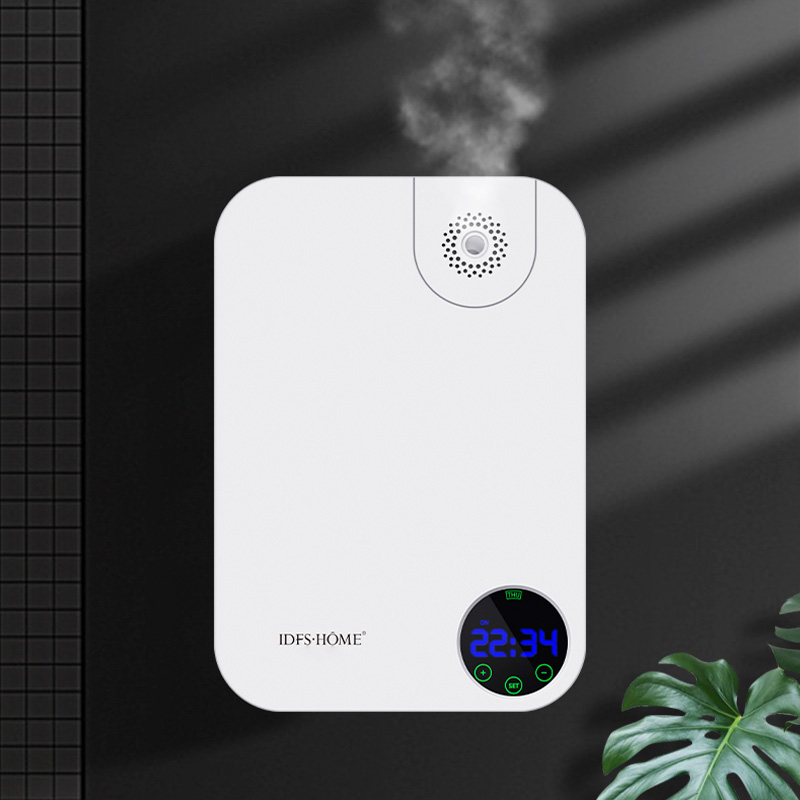
Technology selection determines the quality of the ambient scent. Cold-air nebulization stands as the industry standard for commercial environments. This technology uses high-velocity pressurized air to break liquid fragrance oils into sub-micron nanoparticles. The physics rely on the Venturi effect. Pressurized air shoots across a small tube, creating a vacuum that pulls the heavy oil upward and shatters it against a baffle. These microscopic particles behave like a dry vapor. They float evenly on ambient air currents and remain suspended for hours. Cold-air technology preserves the complex top and base notes of espresso fragrances because it does not alter the molecular structure of the oil.
Conversely, ultrasonic and heat-based diffusers fail in commercial settings. Heat destroys the delicate chemical profile of heavy coffee oils. Applying heat to these oils often produces an artificial, burnt, or plastic-like odor. Ultrasonic diffusers mix oil with water and use a vibrating transducer to create a mist. This creates heavy droplets that fall to the ground quickly. This results in uneven dispersion, wet surfaces, and severe residue buildup on cafe furniture. Heat and water-based systems simply cannot process dense coffee fragrance oils effectively.
| Technology Type | Mechanism of Action | Particle Size | Commercial Viability | Residue Risk |
|---|---|---|---|---|
| Cold-Air Nebulization | Pressurized air shatters oil into dry vapor | Sub-micron (Suspends in air) | Excellent (Industry Standard) | None (Dry output) |
| Ultrasonic Diffusion | Vibrating disc mixes oil and water into mist | Large (Falls quickly) | Poor (Uneven coverage) | High (Wets surfaces) |
| Heat Diffusion | Warming plate evaporates oil | Variable | Unacceptable (Alters scent) | Medium (Sticky buildup) |
Operators must choose between standalone units and HVAC integration based on their physical space. A standalone cafe scent diffuser offers plug-and-play simplicity. These units work perfectly for independent operators seeking localized zoning. You can place a standalone unit near the entryway to attract foot traffic while leaving the back seating area un-scented. They require lower upfront capital and offer complete portability if you redesign your floor plan.
HVAC-integrated systems suit multi-zone or high-square-footage environments. By connecting directly to the ductwork, these systems leverage existing airflow to distribute scent uniformly across massive spaces. Installation involves drilling a small hole into the supply plenum downstream from the air handler fan and inserting a pitot tube. The building's existing static pressure carries the scented nanoparticles evenly through the vents. They offer centralized maintenance, keeping the hardware completely hidden in the utility room.
Physical cafe conditions dictate the required technology. Open-door policies, high ceilings, and drafty entryways often necessitate the sheer output power of an HVAC-integrated solution. A standalone unit simply cannot fight the cross-breeze of two open patio doors.
Modern scenting hardware requires precise digital controls. Look for machines featuring programmable intensity levels and built-in scheduling software. Bluetooth or Wi-Fi connectivity allows managers to adjust settings remotely via smartphone applications. Day-parting capabilities represent a mandatory operational feature. You can program the machine to output a higher intensity during the chaotic morning rush when door openings are frequent and odor competition is high. As traffic slows in the afternoon, the system automatically dials back to a subtle ambient scent, conserving oil and preventing olfactory fatigue.
A machine's output capacity must align with your actual floor plan. Manufacturers measure output in square footage or cubic feet. Always calculate your space using cubic feet if your cafe features high, exposed ceilings. A fifteen-foot ceiling requires double the output of a standard eight-foot drop ceiling. Mapping the machine output against your layout prevents under-scenting or over-saturation.
Variable output settings allow you to adjust how far the scent permeates. You might want a strong coffee aroma at the ordering counter but prefer a much lighter concentration in the quiet study zones. Matching the hardware capacity to your specific airflow patterns ensures optimal performance. You must map the supply and return vents in your ceiling before placing any hardware.
Safety overrides all other considerations in food-service environments. You must exclusively use fragrance oils certified by the International Fragrance Association (IFRA). IFRA compliance guarantees the oils meet strict safety standards for inhalation and environmental impact. The oils must be VOC-compliant to ensure safety for both staff working eight-hour shifts and customers enjoying their beverages.
Utilizing cheap, unregulated synthetic oils poses severe respiratory risks and opens your business to significant liability. Unverified oils often contain synthetic solvents that cause headaches and nausea. A professional coffee aroma machine paired with certified oils guarantees a safe, hypoallergenic environment.
Selecting the correct fragrance profile requires strategic alignment with your physical menu. The ambient scent must authentically represent your cafe's specific offerings. A third-wave roaster specializing in single-origin pour-overs should select a pure, slightly bitter espresso note. This reinforces the perception of artisanal quality. If you serve Ethiopian Yirgacheffe known for floral and citrus notes, a heavy caramel ambient scent confuses the palate.
Conversely, a commercial chain focusing on blended, syrupy drinks benefits from a sweeter fragrance profile featuring vanilla, caramel, or baked pastry notes. The scent acts as a silent menu, priming the customer's palate before they even reach the register. You must audit your top-selling items and select a fragrance that complements those specific flavor profiles.
| Cafe Concept / Core Menu | Recommended Fragrance Profile | Customer Expectation Set |
|---|---|---|
| Third-Wave Artisanal Roaster | Pure Espresso, Dark Roast, Earthy | High-quality, unadulterated coffee focus |
| Commercial Chain / Drive-Thru | Vanilla Latte, Caramel, Sweet Cream | Indulgent, sweet, comforting beverages |
| Bakery Cafe Hybrid | Cinnamon Roll, Fresh Bread, Mocha | Focus on food pairings and baked goods |
| Modern Minimalist Matcha Bar | Green Tea, Bergamot, Light Citrus | Clean, health-conscious, refreshing |
Ambient scent sets a distinct customer expectation. If the scent drastically contradicts the actual taste and quality of the coffee served, it creates cognitive dissonance. Imagine a customer smelling a rich, dark roast upon entering, only to receive a weak, watery beverage. This mismatch instantly breaks customer trust. The perceived deception damages brand loyalty far more than having no ambient scent at all. Your fragrance profile must serve as an honest preview of the culinary experience you provide.
Empirical data links olfactory stimulation directly to consumer spending habits. A well-calibrated scent environment encourages customers to linger. Increased dwell time naturally leads to secondary purchases. When patrons sit longer, they are highly likely to order a second beverage or an impulse pastry. A fifteen-minute increase in average seating duration often translates directly to a secondary transaction at the register.
Furthermore, premium scents create a halo effect. The high-quality ambient aroma elevates the perceived quality of the actual coffee served. Customers willingly pay premium prices when the total sensory environment feels upscale and carefully curated. The scent validates the price point of a six-dollar latte.
Operators must track specific metrics to validate the investment in an aroma marketing system. A/B testing provides the clearest data. Run the scent system for two weeks, then turn it off for two weeks. Compare the Point of Sale (POS) data between these periods. Look for specific sales lifts rather than just general revenue increases.
Track afternoon pastry sales. Monitor the volume of large-sized beverage upgrades. Look at the ratio of single-item tickets versus multi-item tickets. Correlating scent deployment schedules with specific product movement allows you to calculate a definitive return on investment and adjust your fragrance strategy accordingly. If pastry sales jump 12% during the weeks the vanilla-mocha scent runs, you have hard data proving the system works.
Olfactory adaptation, commonly known as nose blindness, poses a significant risk to scent marketing. Baristas and staff working long shifts will stop noticing the ambient fragrance within forty-five minutes. If staff control the machine manually, they will inevitably turn up the intensity because they think the machine stopped working. This leads to massive over-saturation, creating a hostile environment for new customers walking through the door.
You must calibrate machines strictly to customer perception. Establish baseline testing with individuals who just walked in from outside. Lock the digital controls to prevent unauthorized incremental intensity adjustments by nose-blind staff.
Customers occasionally ask about ambient scents, especially if they possess chemical sensitivities. Develop clear communication strategies for your staff. Transparency builds trust. Train your team to explain the exact technology in use.
Instruct staff to say: "We use a hypoallergenic, cold-air diffusion system with IFRA-certified oils." Assure inquiring patrons that the system uses no heat, no aerosols, and no harmful VOCs. Handling these inquiries professionally transforms a potential complaint into an opportunity to showcase your commitment to a premium, safe environment.
Commercial hardware demands consistent maintenance to function properly. Cold-air nebulizers process thick, dense oils. Over time, oil viscosity changes can clog the internal mechanisms. You cannot install a machine and ignore it for a year. Maintenance protocols must be strictly followed to prevent hardware failure.
If you use standalone units, positioning is critical. Improperly placing a high-output machine too close to walls, low ceilings, or food prep areas risks depositing microscopic oil residue on surfaces. Always direct the output nozzle toward open airspace to ensure the nanoparticles disperse cleanly into the room's natural air currents.
A: Professional systems utilizing IFRA-certified fragrance oils are hypoallergenic and safe for commercial use. Cold-air nebulization creates dry nanoparticles rather than heavy droplets, minimizing respiratory irritation. However, operators must strictly avoid cheap, unregulated synthetic oils, which can contain volatile organic compounds that trigger sensitivities.
A: Cold-air nebulization uses pressurized air to break pure oil into dry, sub-micron nanoparticles that float evenly. Ultrasonic diffusion mixes oil with water and uses vibrations to create a heavy mist. Ultrasonic mist falls quickly, wets surfaces, and fails to distribute scent uniformly across large commercial spaces.
A: Analyze your core menu offerings. If you serve light-roast, acidic pour-overs, select a bright, pure espresso fragrance. If your revenue relies on flavored lattes and mochas, choose a warmer profile with vanilla, chocolate, or baked pastry notes to accurately preview the customer's flavor experience.
A: When using proper cold-air nebulizing technology, the machine produces a dry vapor that leaves no residue. Residue only occurs if you use water-based ultrasonic diffusers, apply heat-based systems, or position a cold-air nozzle directly facing a wall or table at close range.
A: HVAC integration involves tapping a small tube from the scent compressor directly into the supply ductwork, downstream from the air handler fan. The building's existing airflow then carries the scented nanoparticles evenly through the vents. This requires professional installation to ensure proper pressure balancing.
A: Implement A/B testing by alternating weeks with the system active and inactive. Analyze POS data to track changes in Average Order Value, dwell time, and specific impulse purchases like pastries. Compare these metrics against foot traffic data to isolate the financial impact of the scent.


