
Views: 0 Author: Site Editor Publish Time: 2026-08-12 Origin: Site


Retail environments face a persistent challenge. Visual merchandising and auditory cues suffer from diminishing returns as shoppers easily tune out traditional stimuli. Store owners struggle with stagnant foot traffic and short dwell times. They need practical ways to engage visitors without eroding margins through aggressive discounting. Deploying an aroma retail scent machine offers a direct, measurable solution. It shifts a store from a purely transactional space into a rich experiential environment. Olfactory triggers directly influence buyer behavior. They build immediate emotional connections and improve staff productivity. This guide explores how ambient scenting transforms the customer journey and details the mechanics of commercial diffusion technology.
The human olfactory system operates differently than sight or hearing. When a person inhales a fragrance, the scent travels directly to the olfactory bulb. This biological structure connects immediately to the amygdala and hippocampus. These brain regions process emotion and memory retention. Scent bypasses cognitive filters entirely. It creates immediate psychological responses before a customer even consciously registers the smell. This biological shortcut makes ambient scenting a powerful tool for environmental control.
Strategic application requires moving past simply masking unpleasant odors. A modern retail fragrance system establishes a distinct brand identity. Customers recognize the scent instantly upon entering. This recognition builds familiarity and trust. Retailers use specific fragrance profiles to communicate their brand values silently. A high-end boutique might use rich leather and sandalwood notes to convey luxury. A modern tech store might deploy crisp citrus and white tea to project innovation and cleanliness. The goal is to create a sensory signature that shoppers associate exclusively with your physical locations.
Facility managers and retail operators must understand that scent acts as an invisible architecture. It defines spatial boundaries without physical walls. You can use a robust coffee and pastry scent to draw customers toward an in-store café, or a calming lavender profile to reduce anxiety near high-stress areas like checkout lines or customer service desks. This level of environmental control directly influences how shoppers navigate the floorplan.
First impressions dictate the entire shopping experience. An optimized scent strategy creates a powerful threshold experience. The fragrance greets the customer the second they walk through the door. It sets the baseline mood for the entire visit. This immediate positive disruption stops shoppers from rushing. It encourages them to transition from a hurried state of mind into a relaxed browsing mode.
Optimal ambient scenting directly extends dwell time. Pleasant environments reduce the perceived passage of time. Shoppers linger longer in spaces that smell inviting. They explore more inventory and interact with more displays. Extended dwell time naturally increases the probability of a purchase. Furthermore, specific fragrance notes subconsciously elevate the perceived quality of merchandise. Customers often associate vanilla or cedarwood with premium craftsmanship. This elevated value perception forges deep emotional bonds that drive repeat visits.
The benefits extend beyond the customer base. A pleasant, mood-enhancing environment impacts staff psychology positively. Happier employees experience less fatigue during long shifts. Reduced stress levels lead to significantly higher-quality customer interactions. Staff members working in an optimized sensory environment demonstrate better patience and product knowledge retention. This secondary benefit creates a positive feedback loop on the sales floor, directly impacting daily conversion rates.
| Fragrance Profile | Primary Emotional Trigger | Ideal Retail Application |
|---|---|---|
| Citrus & Peppermint | Energy, alertness, cleanliness | Tech stores, gyms, modern apparel |
| Leather & Sandalwood | Luxury, exclusivity, warmth | High-end boutiques, automotive showrooms |
| Lavender & Chamomile | Relaxation, stress reduction | Spas, fitting rooms, waiting areas |
| Vanilla & Baked Goods | Comfort, nostalgia, homeliness | Home goods, real estate staging, bakeries |
Choosing the right hardware dictates the success of your scent strategy. Standalone units include portable or wall-mounted machines. They serve specific use cases effectively. Retailers deploy them for targeted zones, boutique footprints, and spaces lacking centralized ductwork. They offer plug-and-play simplicity. Store managers can move them easily to highlight specific product displays. Prosumers also utilize these units for high-end residential spaces demanding commercial-grade reliability. When placing standalone units, you must position them near natural airflow pathways, avoiding direct proximity to exhaust vents or open doorways where the scent will immediately escape.
Large-scale operations require a different approach. Deploying a shopping mall scent machine demands HVAC integration. This method utilizes existing air handlers to distribute fragrance. It ensures uniform coverage across massive square footage. HVAC integration eliminates dead zones and scent pooling. The technical requirements involve connecting the diffusion unit directly to the supply duct. The system then uses the building's natural airflow to carry microscopic scent particles throughout the entire retail footprint.
Executing an HVAC integration requires specific mechanical steps to ensure proper dispersion:
Commercial environments require robust diffusion technology. Cold-air diffusion, or nebulization, stands as the commercial standard. This technology uses pressurized air to break essential oils into dry nanoparticles. It relies on the Venturi effect, forcing high-velocity air over a small tube of liquid oil. This creates a fine mist of particles typically measuring under one micron in diameter. These particles are so light they bounce off surfaces and remain suspended in the ambient air currents for hours. It preserves the chemical integrity of the oils entirely.
Legacy technologies fail in commercial settings. Heat alters the molecular structure of fragrances, degrading their quality and destroying delicate top notes. Ultrasonic diffusers use water to create a mist. This adds unwanted humidity to the retail space, which can damage dry goods, warp wood displays, and promote mold growth inside HVAC ductwork. Aerosol sprays release heavy droplets that fall quickly to the floor. These older methods leave sticky residues on merchandise and display cases. They require constant maintenance and offer poor coverage in large commercial spaces.
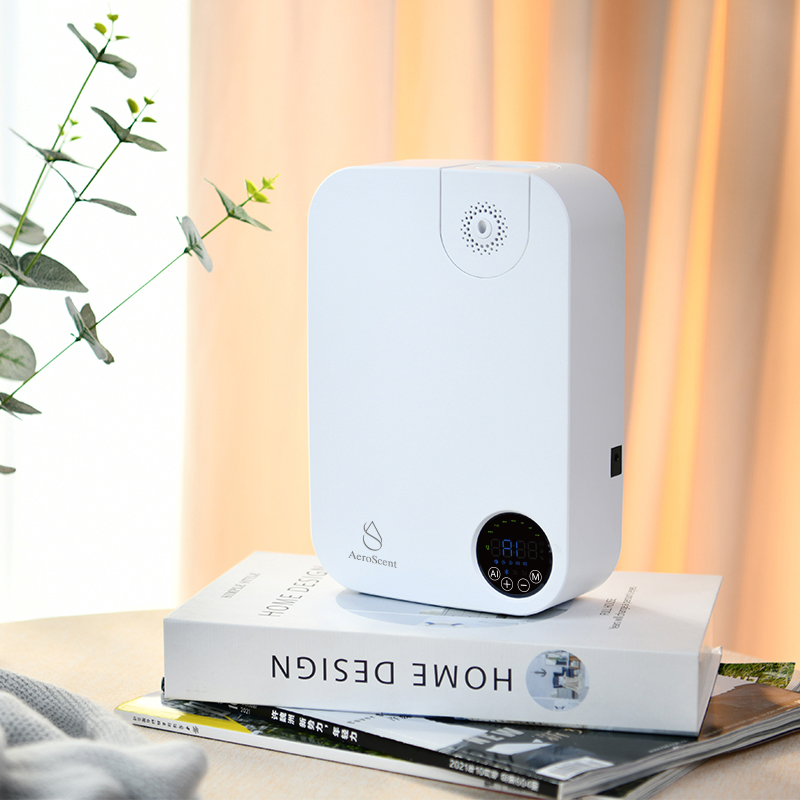
Modern retail environments demand flexibility. Variable intensity control allows managers to adjust scent output based on real-time needs. You can increase the diffusion rate during foot traffic peaks. You can lower it during quiet morning hours. Programmable systems adapt to specific store hours automatically. Retailers also leverage this flexibility for specific product launches or holiday shopping rushes. A sudden influx of shoppers requires a stronger scent presence to overcome the increased body heat and ambient odors.
Duty cycles represent a critical feature for commercial applications. Automated on/off scheduling prevents olfactory fatigue. When a scent runs continuously, the human nose stops registering it. This phenomenon is known as scent blindness. Employees working 8-hour shifts will stop smelling the fragrance if it diffuses without pause. Setting the machine to run for three minutes and pause for two minutes solves this problem. It keeps the scent noticeable and fresh for both staff and new customers entering the store. Advanced units allow facility managers to program these duty cycles down to the second.
Large retail footprints often require diverse sensory experiences. Zoning strategies allow managers to deploy different scent profiles across distinct departments. You can use calming lavender and chamomile scents in fitting rooms to reduce anxiety. You can deploy energizing citrus and peppermint notes at the main entrance to stimulate excitement. This multi-zone approach guides the customer journey through targeted olfactory cues, creating a dynamic environment that changes as the shopper moves deeper into the store.
Chain retailers face the challenge of brand consistency. Centralized management systems solve this issue. Wi-Fi or Bluetooth-enabled machines allow corporate teams to monitor and adjust settings remotely. A single dashboard controls the scent output across hundreds of storefronts. This ensures that a customer walking into a location in New York experiences the exact same brand scent as a customer in London. Remote management also allows maintenance teams to monitor oil levels and schedule refills before a machine runs dry.
Deploying fragrances in public spaces requires strict adherence to safety standards. Regulatory compliance protects both customers and the brand. Always source fragrances that adhere to IFRA (International Fragrance Association) guidelines. These standards ensure the oils do not contain banned or restricted chemical compounds. Compliance guarantees that the ambient scenting strategy remains safe for daily public exposure. The IFRA regularly updates its standards based on new dermatological and respiratory research, so working with a compliant vendor is non-negotiable.
Indoor air quality remains a primary concern for facility managers. Address concerns regarding VOCs (Volatile Organic Compounds) proactively. Ensure your vendor supplies hypoallergenic formulations. High-quality commercial oils contain no synthetic propellants or harmful solvents. Cold-air diffusion technology further protects air quality by producing dry nanoparticles that do not settle in the lungs. Maintaining safe indoor air quality accommodates all demographics, including children, the elderly, and individuals with respiratory sensitivities.
Understanding the operational efficiency of your equipment ensures long-term sustainability. Commercial-grade machines optimize oil consumption through precise nebulization. A typical commercial unit might consume between one and three milliliters of oil per hour of active diffusion. If a store operates for ten hours a day and runs a fifty percent duty cycle, the machine actively diffuses for five hours. This results in a daily consumption rate of five to fifteen milliliters. By calculating this burn rate, facility managers can accurately forecast consumable requirements and establish a reliable refill schedule.
The efficiency of the machine directly impacts the frequency of maintenance. High-quality nebulizers produce smaller micron sizes, which means less oil is required to achieve the desired scent density in the air. When evaluating equipment, always review the manufacturer's stated consumption rates at various intensity levels. This data allows you to project the exact volume of fragrance oil needed annually for each location, ensuring you maintain consistent brand standards without unexpected interruptions in service.
To validate the impact of ambient scenting, retailers must establish clear performance baselines before installation. You cannot measure what you do not track. By isolating the olfactory variable, you can observe direct changes in shopper behavior.
The most common implementation failure is over-scenting. Alienating customers with overpowering fragrances damages the brand experience instantly. A scent that is too strong triggers sensitivities and drives shoppers out of the store. Poorly calibrated machines create a hostile environment rather than an inviting one. The risk multiplies when store managers, suffering from olfactory fatigue, manually turn up the intensity because they can no longer smell the fragrance themselves.
Mitigation requires strict protocols. Utilize programmable duty cycles exclusively. Never run a commercial machine on continuous output. Conduct regular intensity audits from the perspective of a new entrant. Have a staff member step outside for ten minutes to clear their nasal palate. When they re-enter, they can accurately judge the scent level. Always start with conservative output settings. It is much easier to increase the intensity gradually than to air out an over-scented retail space.
Hardware failure disrupts the carefully planned customer experience. Clogged diffusion nozzles stop scent delivery completely. Inconsistent output creates a disjointed brand presentation. Hardware fails primarily due to neglect. Essential oils possess varying viscosities. Thicker oils can build up inside the internal tubing over time. When a system goes offline, the retail space loses its experiential edge immediately.
Establish routine cleaning schedules to prevent downtime. Run a small amount of rubbing alcohol through the system every time you change the fragrance bottle. This clears the micro-tubes and keeps the nebulizer functioning perfectly. Select scent marketing equipment designed with easily accessible maintenance components. Secure vendor service level agreements for rapid replacement parts. Proper maintenance ensures the equipment operates efficiently for years.
| Maintenance Task | Frequency | Action Required |
|---|---|---|
| Oil Level Check | Weekly | Visually inspect the canister to ensure sufficient fragrance remains for the upcoming week. |
| Nozzle Cleaning | Monthly | Run isopropyl alcohol through the diffusion core for 15 minutes to dissolve resin buildup. |
| Tubing Inspection | Quarterly | Check the PTFE tubing for cracks, hardening, or discoloration. Replace if brittle. |
| Core Replacement | Annually | Replace the nebulizer core entirely to maintain optimal micron size and diffusion efficiency. |
Take the following steps to deploy your ambient scenting strategy effectively:
A: Coverage varies strictly by technology. Standalone units typically cover 500 to 2,000 square feet effectively. HVAC-integrated systems can scent massive spaces exceeding 10,000 square feet. Always verify the manufacturer's specific capacity rating and match it to your store's exact dimensions before installation.
A: Installation requires basic HVAC knowledge but is straightforward. A technician drills a small hole into the main supply duct. They insert a flexible diffusion tube connected to the scent unit. The entire process usually takes under an hour and does not disrupt your standard building airflow.
A: Refill lifespan depends entirely on your usage settings and the machine's capacity. A standard 500ml bottle running on a medium intensity duty cycle for 10 hours daily generally lasts between 30 to 45 days before requiring replacement.
A: Yes, provided you use high-quality, commercial-grade oils. Always select fragrances that strictly comply with IFRA standards. Cold-air diffusion produces microscopic dry nanoparticles that leave no residue and maintain high indoor air quality for all shoppers.
A: Most manufacturers strongly recommend using their proprietary blends. Standard essential oils possess different viscosities. Thick, unrefined oils can easily clog the delicate nebulizing nozzles, causing hardware failure and often voiding the equipment warranty.
A: Cold-air diffusion uses pressurized air to break oils into dry nanoparticles without using heat or water. Ultrasonic humidifiers use water and vibration. This dilutes the scent profile and adds unwanted humidity to the retail environment, which can damage merchandise.
A: Utilize programmable duty cycles on your machine. Set the equipment to run for a few minutes and then pause. This intermittent diffusion prevents olfactory receptors from becoming overwhelmed. It ensures the scent remains noticeable and pleasant for both staff and customers.


