
Views: 0 Author: Site Editor Publish Time: 2026-08-23 Origin: Site


Managing the ambient environment in a wellness facility requires precise control over air quality and scent. You need a reliable method to disperse botanical extracts without degrading the air or altering the oil's chemical structure. Thermal evaporation destroys delicate compounds. Passive diffusion lacks the reach needed for a 400-square-foot yoga studio or clinical waiting room. We rely on ultrasonic technology to solve this operational problem. By using high-frequency vibrations instead of heat, an aromatherapy diffuser ultrasonic essential oil diffuser delivers a consistent, potent mist while maintaining strict environmental safety. This approach gives facility managers a scalable, safe tool to integrate therapeutic aromas into specialized spaces without risking fire hazards or toxic byproducts.
Understanding the core mechanism of scent dispersion begins with the piezoelectric transducer. Located at the base of the water reservoir, this small ceramic disc generates intense ultrasonic waves. When electrical current hits the transducer, it rapidly expands and contracts. These transducers typically operate at frequencies around 2.4 million vibrations per second. This rapid shape change creates an acoustic wave that travels through the water column.
As the sound waves move through the liquid, they create alternating high and low-pressure phases. During the low-pressure phase, microscopic vacuum bubbles form in the water. When the high-pressure phase hits, these bubbles violently collapse. This process, known as cavitation, ejects tiny droplets of water and oil from the surface, instantly atomizing the liquid into a cool vapor. A small internal fan then pushes this vapor up and out of the directional nozzle.
This mechanical process provides a massive operational advantage over traditional thermal evaporation. Heat fundamentally alters the molecular structure of volatile organic compounds found in botanical extracts. When subjected to high temperatures, delicate terpenes and esters denature, losing their intended therapeutic properties. Heating certain compounds also triggers oxidation, producing unwanted toxic byproducts. By relying entirely on kinetic energy, an ultrasonic aromatherapy diffuser ensures the aromatic profile remains completely intact from the reservoir to the room.
The efficiency of any atmospheric scenting device depends heavily on particulate size. The ultrasonic cavitation process shatters the oil-water mixture into microscopic droplets, typically measuring between 1 and 5 microns in diameter. Particles of this size achieve optimal airborne suspension. They are light enough to catch ambient air currents, allowing the scent to travel efficiently across a room without immediately dropping to the floor.
The physics of mist travel dictate how a space feels and smells. According to Stokes' Law, smaller particles fall at a significantly slower rate than larger ones. In a standard wellness room environment, these micro-particles disperse evenly, creating a consistent olfactory background. Larger droplets would settle rapidly, creating localized scent puddles and leaving the rest of the room odorless. The 1-5 micron range ensures the mist remains suspended long enough to interact with the occupants' olfactory receptors.
| Particle Size | Settling Rate | Dispersion Range | Typical Application |
|---|---|---|---|
| 1 - 5 microns | Very Slow | High (Room-wide) | Ultrasonic Diffusion |
| 10 - 20 microns | Moderate | Medium (Localized) | Standard Humidifiers |
| 50+ microns | Fast | Low (Immediate drop) | Manual Spray Bottles |
Auditory interruptions severely degrade the user experience in meditation rooms, massage clinics, and quiet therapeutic spaces. Acoustic design holds equal weight to visual and olfactory elements. Ultrasonic units excel in these environments due to their exceptionally low decibel output. Most high-quality models operate well under 30dB. They register as a faint, rhythmic water trickle or a near-silent hum, which often acts as a pleasant white noise that masks background facility sounds.
Compare this to air-pump nebulizers, which force highly pressurized air through a glass nozzle. Nebulizers produce a distinct low-frequency vibrating noise that easily penetrates the quiet atmosphere of a treatment room and can even travel through thin drywall. Maintaining a distraction-free environment requires equipment that operates invisibly in the background. The near-silent acoustic profile of a wellness diffuser ensures that the scent enhances the space without introducing mechanical noise pollution.
Climate-controlled and heavily air-conditioned commercial spaces often suffer from chronically low humidity levels. Dry air irritates respiratory tracts and degrades the comfort of wellness facility patrons. Because ultrasonic technology requires a water base, it inherently provides localized humidification. A standard unit outputs between 30ml and 50ml of water per hour. While it does not replace a dedicated whole-room humidifier, this steady output of moisture subtly improves ambient air quality in the immediate vicinity of the device, preventing dry mucous membranes.
The micro-mist also interacts with airborne particulates. As the microscopic water droplets disperse, they attach to floating dust and common allergens. The added mass causes these contaminants to settle out of the breathing zone faster than they would in dry air. You must monitor moisture output thresholds, however. Excessive localized humidity can negatively impact room materials. Placing a unit directly on an unsealed hardwood floor or running it continuously in a room with zero airflow can warp wood and create slip hazards on yoga mats.
Continuous manual intervention disrupts the flow of a professional wellness environment. Devices deployed in these settings require robust automation features to handle extended operational hours. Auto-shutoff mechanisms serve as a critical safety baseline. A capacitive sensor detects when the water level drops below the transducer plate and instantly cuts the 24V DC power. This prevents the ceramic disc from overheating and extends the lifespan of the internal components.
Intermittent misting cycles define the operational efficiency of commercial units. Settings that alternate misting—such as 30 seconds on followed by 30 seconds off—prevent olfactory fatigue among occupants while doubling the effective run time of the reservoir. For full-day operations, you need large-capacity water tanks ranging from 300ml to 1000ml. These larger reservoirs allow a single unit to run through an entire shift of fitness classes or therapy sessions without requiring staff to break protocol for mid-day refills.
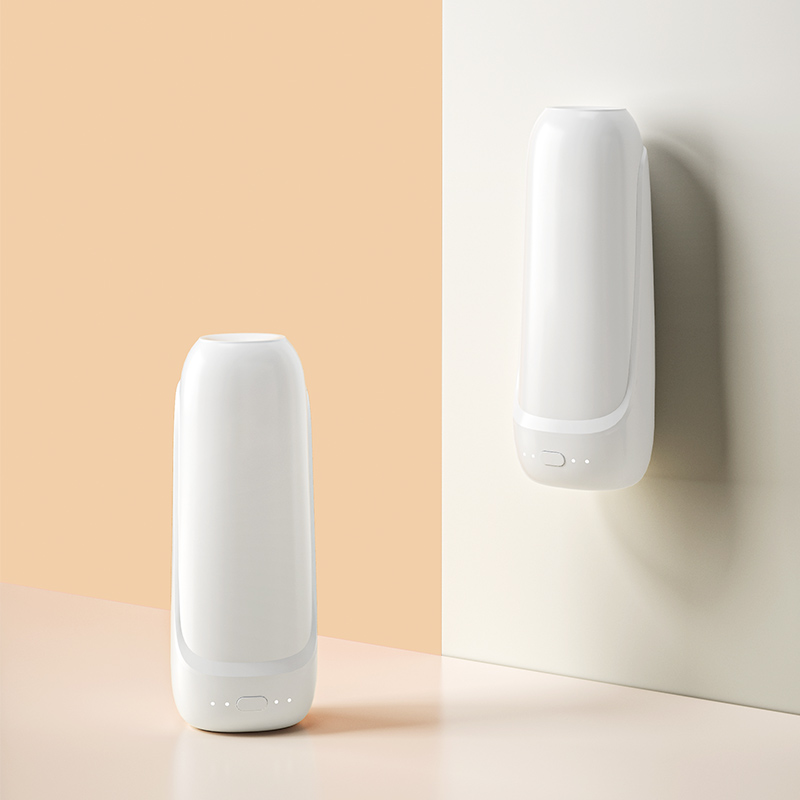
Selecting the correct scenting technology requires understanding the distinct operational parameters of different devices. Nebulizing diffusers and ultrasonic models represent the two primary active dispersion methods, yet they serve entirely different spatial needs and operational budgets.
Nebulizers operate without water, using pressurized air to atomize undiluted extracts. This results in maximum scent throw and a highly potent aromatic profile. They saturate a room quickly but consume expensive extracts at a rapid pace, often burning through 2ml to 3ml of oil per hour. Ultrasonic models offer a diluted, subtler aroma. By suspending a few drops of extract in a large volume of water, they provide a gentle, continuous background scent. This efficiency means an essential oil machine utilizing ultrasonic technology consumes roughly 0.1ml to 0.2ml of raw material per hour, drastically lowering operational costs for wellness businesses.
| Technology Type | Dispersion Method | Material Consumption | Noise Level |
|---|---|---|---|
| Ultrasonic | Water & High-Frequency Vibration | Low (~0.1ml/hr) | Very Low (<30dB) |
| Nebulizing | Pressurized Air (No Water) | High (~2.0ml/hr) | Moderate to High |
| Thermal / Heat | Evaporation via Heat Element | Low | Silent |
| Passive (Reed/Ceramic) | Natural Airflow Evaporation | Moderate | Silent |
Active dispersion relies on mechanical force to push scent into an environment. Passive devices, such as reed diffusers or unheated porous ceramics, depend entirely on ambient room airflow to carry evaporating molecules. While passive options require zero electricity, they lack immediate room-filling capabilities. An active motorized misting system actively projects the aroma, achieving full spatial coverage in minutes rather than hours.
Safety and consistency further separate these categories. Ultrasonic units eliminate the severe fire hazards associated with candle-warmed evaporators. Open flames have no place in clinical or high-traffic fitness environments. Evaporative diffusers also suffer from inconsistent scent profiles. Lighter top notes evaporate quickly, leaving behind heavier base notes. The ultrasonic process atomizes the entire water-oil mixture simultaneously, ensuring the aromatic profile remains completely consistent throughout the entire lifespan of the tank.
Spatial experience relies heavily on olfactory triggers. The human olfactory bulb connects directly to the limbic system, specifically the amygdala, which processes emotion and memory. Introducing specific botanical profiles into a room immediately shapes the psychological framing of the occupants. Wellness designers leverage this biological response to prime clients for specific activities before a session even begins.
Mapping specific profiles to desired spatial outcomes yields measurable results in client satisfaction. Lavender and chamomile activate parasympathetic nervous system responses, promoting deep rest and calm in massage therapy rooms. Peppermint and rosemary enhance cognitive focus, making them ideal for wellness co-working spaces or administrative reception areas. Eucalyptus and citrus blends create a perception of respiratory clarity and high energy, perfectly suited for high-intensity fitness studios. The precise delivery mechanism ensures these triggers remain subtle enough to influence mood without causing sensory overload.
Managing indoor air quality requires distinguishing between beneficial botanical compounds and harmful synthetic fragrance particulates. High-quality botanical extracts release naturally occurring volatile organic compounds. While these offer mild therapeutic benefits, synthetic fragrances often contain phthalates and artificial stabilizers that degrade air quality and trigger respiratory distress. Facility operators must source pure, third-party tested extracts to maintain environmental integrity.
Implementation requires strict adherence to safety contraindications. Scenting public or shared spaces demands caution regarding vulnerable populations. Spaces accommodating pregnant individuals or young children require highly diluted, gentle profiles. Pet safety presents a critical operational factor. Cats and dogs lack specific liver enzymes required to process certain compounds, such as tea tree, eucalyptus, and citrus. Facilities that welcome animals must restrict the use of these specific extracts to prevent accidental toxicity and liver damage in pets.
The primary failure point of any water-based atmospheric device lies in poor maintenance. Neglected reservoirs rapidly develop biofilm buildup. Bacteria like Pseudomonas can grow in stagnant water, which the device will then aerosolize into the breathing zone. Hard water usage leads to severe mineral scaling directly on the sensitive transducer plate, insulating the ceramic disc and halting mist production entirely.
Mitigating these risks requires a strict, facility-grade maintenance schedule. Operators must enforce daily water changes; reservoirs should never sit full overnight when powered down. Weekly deep cleans are non-negotiable. Follow this exact protocol to maintain equipment longevity:
A single tabletop unit possesses strict physical limitations. Standard devices cover between 150 and 400 square feet effectively. Deploying a single unit in an open-concept yoga studio or a commercial space with high HVAC turnover rates will result in highly uneven scent distribution. The aroma will pool heavily around the device while the rest of the room remains un-scented.
Scaling requires strategic multi-unit placement. Facility managers must map the airflow patterns of the room, identifying supply and return vents. Placing units near supply vents helps push the mist into the room, while placing them near return vents simply wastes the extract by sucking it directly into the exhaust. For spaces exceeding 1,000 square feet, operators must deploy multiple synchronized units spaced evenly along the perimeter.
Botanical extracts act as powerful natural solvents. Highly corrosive profiles, particularly citrus extracts rich in limonene, aggressively attack cheap plastics. Limonene is a hydrocarbon solvent, and standard ABS plastic is a hydrocarbon polymer. The solvent breaks the polymer chains, causing the plastic to cloud, crack, and eventually leak. This material degradation ruins the device and risks water damage to surrounding furniture.
Procurement criteria must prioritize material science. Buyers should select units constructed with medical-grade, BPA-free polypropylene (PP) plastics, which possess a different molecular structure that resists chemical degradation. For premium environments, reservoirs made from glass or glazed ceramic offer total immunity to solvent action and provide a longer operational lifespan, easily justifying a higher initial investment.
A: They do not filter air like active HEPA purifiers. However, certain dispersed botanical compounds possess mild antimicrobial properties. The micro-mist also adds localized humidity, which helps weigh down and settle airborne dust and allergens faster than in dry air.
A: While possible, tap water often contains heavy minerals that cause rapid scaling on the transducer plate and produce a fine white dust in the room. Using distilled or filtered water significantly extends device longevity and maintains cleaner ambient air quality.
A: Coverage depends on tank size and room airflow. A standard 100ml to 200ml tank effectively covers 150 to 250 square feet. Larger commercial units with 500ml or greater capacities can cover up to 400 to 500 square feet under optimal conditions.
A: Reduced mist output usually stems from three common culprits: heavy oil residue coating the ultrasonic plate, hard water mineral scaling insulating the transducer, or overfilling the reservoir past the designated maximum water line, which restricts kinetic agitation.
A: Continuous all-day exposure can lead to olfactory fatigue and potential respiratory irritation. Safety guidelines recommend utilizing intermittent settings, such as 30 minutes on and 30 minutes off, rather than running the device continuously for an entire 8-hour shift.
A: Proper placement and high-frequency misting should not cause dampness, as the micro-droplets evaporate quickly. However, placing the unit directly under low-hanging shelves, near unsealed wood, or in a room with zero airflow can cause localized moisture damage over time.


