
Views: 0 Author: Site Editor Publish Time: 2026-08-23 Origin: Site


Manual scenting systems frustrate users with inconsistent output, rapid oil depletion, and constant refilling. Water-based units dilute essential oils, spike room humidity, and demand daily physical intervention to maintain a steady aroma. If you want reliable environmental fragrance, you need to move away from manual operation. Modern automation solves these friction points through programmable logic, cold-air nano-vaporization, and direct HVAC integration. Understanding the mechanics behind these devices helps you match the right hardware to your specific square footage and layout. We will break down how programmable logic controllers, motion sensors, and airflow synchronization manage scent delivery autonomously. This guide strips away marketing jargon to show you exactly how an automated system operates, why waterless technology is mandatory for precision control, and how to deploy these units effectively in residential or commercial spaces.
Traditional ultrasonic devices rely on water to carry scent particles into the air. This mechanism introduces unwanted humidity and fundamentally dilutes the fragrance profile. Modern automated systems utilize cold-air diffusion, a process technically known as nebulization. This method forces highly pressurized room-temperature air through a specialized micro-tube containing pure essential oil. The sheer velocity of the air breaks the liquid down into a dry micro-mist. It creates nanoparticles that are significantly lighter than water droplets. These dry particles float on natural air currents for hours rather than dropping immediately to the floor.
Waterless systems are an absolute requirement for precise automation. When you remove water from the operational equation, you immediately eliminate unpredictable variables. You no longer worry about evaporation rates, water tank capacity limits, or mineral buildup from hard tap water. Eliminating water prevents mold and bacterial growth within the internal components. Mold remains a primary failure point in older manual units that sit stagnant between uses.
Cold-air diffusion protects the chemical integrity of the fragrance. Heat alters the complex molecular composition of essential oils. It degrades their therapeutic properties and flattens the scent profile. By utilizing pressurized air rather than heat or water, the system preserves the full potency of every drop. High-pressure air pumps easily handle varying fluid viscosities. They ensure output consistency whether you diffuse a thin, volatile citrus oil or a thick, heavy base note like sandalwood.
At the core of any automated scenting device sits a Programmable Logic Controller (PLC) or a dedicated microprocessor. This internal hardware acts as the brain of the machine. It processes automation commands received from external inputs. When you configure a schedule via a smartphone application or an onboard digital display, the microprocessor translates these digital instructions into physical mechanical actions. It dictates exactly when the internal air pump activates, the speed at which it operates, and the duration of the cycle.
These microprocessors manage highly complex work and rest cycles. The logic board will instruct the motor to run for precisely 30 seconds and then pause for 120 seconds. This granular, second-by-second control separates a high-end unit from a basic manual device that simply runs until the tank runs dry.
Internal memory serves as another critical component in this architecture. High-quality units feature non-volatile memory chips. They retain your custom-programmed schedules even during unexpected power outages or temporary network disconnections. Once electrical power is restored, the device references its internal memory. It immediately resumes its exact operating cycle without requiring any manual reprogramming or recalibration.
| Feature | Manual Ultrasonic Diffuser | Automated PLC Nebulizer |
|---|---|---|
| Output Control | Basic On/Off, continuous run | Precise second-by-second work/pause ratios |
| Memory Retention | None. Resets on power loss | Non-volatile memory keeps schedules intact |
| Moisture Added | High (requires water tank) | Zero (dry cold-air nano-vapor) |
| Maintenance Frequency | Daily water refills, weekly scrubbing | Monthly oil swaps, bi-monthly alcohol flush |
The most prevalent method a smart scent machine uses to operate is time-based scheduling. Users establish daily routines, adjusting fragrance intensity on an hour-by-hour basis. You program the unit to run at maximum output during busy morning hours, lower the intensity during the afternoon, and shut off completely at night. This level of customization ensures the environment always smells appropriate for the time of day.
Connectivity protocols dictate how these schedules are managed and executed. Bluetooth offers a stable, localized connection. It works well for users who prefer to adjust settings while physically standing in the same room as the device. Wi-Fi connectivity provides robust remote management capabilities. With a Wi-Fi connection, you monitor and adjust your scenting schedule from anywhere. You ensure your space smells perfect right before you walk through the door.
The set-and-forget utility of programmable cycles proves highly valuable for large residential spaces. Once the initial configuration is complete, the device operates entirely autonomously. The only human intervention required is the occasional physical replacement of the essential oil bottle when it runs empty.
Beyond static time-based schedules, environmental triggers offer dynamic, responsive scenting. Passive Infrared (PIR) sensors detect ambient body heat and physical movement. They activate the unit only when a person actively enters the space. This technology works exceptionally well in small rooms, guest bathrooms, and entryways. Continuous, all-day scenting in these isolated areas wastes oil.
Vehicle-specific units often rely on mechanical vibration sensors rather than motion detectors. The diffuser detects the physical vibration of the engine starting or the car moving along the road. It automatically delivers fragrance during the commute. It systematically shuts down a few minutes after you park the vehicle and turn off the engine.
Motion-activated systems carry specific limitations. False triggers caused by roaming pets or rapidly fluctuating sunlight cause unnecessary operation. Delayed shut-off timers might leave the unit running longer than desired after a person leaves the room. Physical placement dictates success. The sensor must maintain a clear, unobstructed line of sight to the primary traffic area. You cannot block it with furniture, doors, or decorative objects.
For comprehensive, whole-building coverage, integrating a fragrance dispenser directly into the central HVAC system represents the most efficient method available. These specialized systems inject the dry nano-vapor directly into the main supply ductwork. They utilize the building's existing airflow infrastructure to distribute the scent evenly across multiple rooms simultaneously.
Synchronization with the HVAC fan is absolutely vital for safe operation. The diffuser must disperse scent only when the HVAC fan actively circulates air through the ducts. You achieve this synchronization through air pressure sensors installed directly inside the duct or via direct electrical relays wired to the fan motor control board. If the diffuser runs while the fan is off, the heavy vapor settles inside the ductwork. This wastes expensive oil and causes sticky residue buildup on the internal sheet metal.
Safe installation requires strict adherence to mechanical protocols. Follow these standard field steps for HVAC integration:
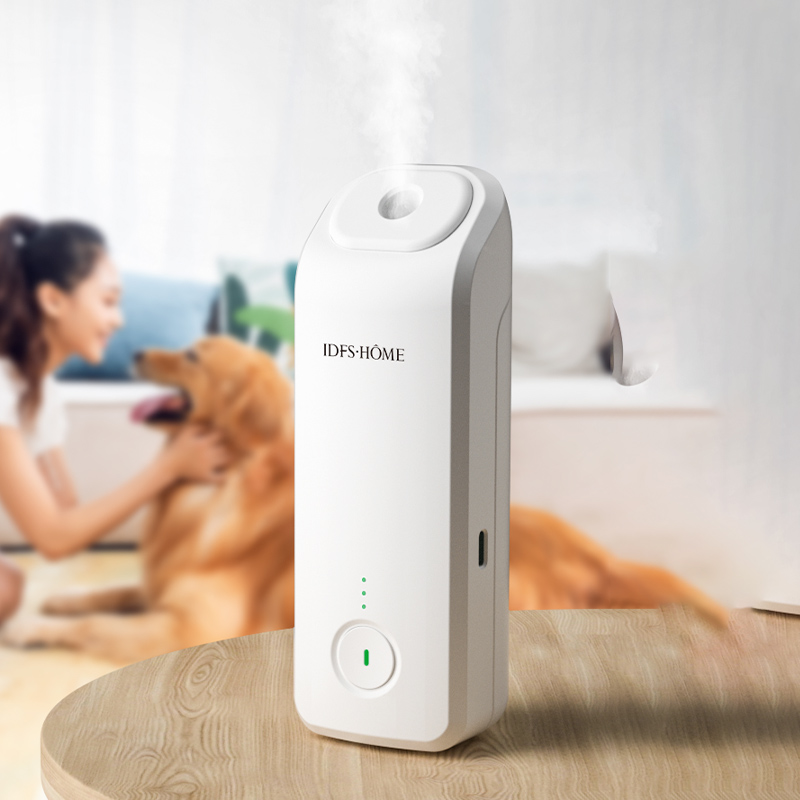
Automation extends far beyond simply turning a device on and off. It fundamentally micro-manages the output to achieve a specific atmospheric result. Precision control relies heavily on work/pause ratios. A standard operating cycle might involve the internal air pump working for 30 seconds and then pausing for 60 seconds.
This intermittent dispersion technique prevents olfactory fatigue. Olfactory fatigue is the biological phenomenon where the human nose becomes temporarily blind to a continuous, unchanging scent. By allowing the fragrance to dissipate slightly during the pause cycle before introducing more vapor, the human brain continues to register the aroma consistently throughout the day.
You must map intensity settings carefully to the specific physical environment. A high work-to-pause ratio is necessary for spaces with high ceilings, open floor plans, or rapid air exchange rates. A low ratio is perfectly sufficient for a standard enclosed bedroom, preventing the scent from accumulating and becoming overpowering.
| Space Type | Ceiling Height | Recommended Work Cycle | Recommended Pause Cycle |
|---|---|---|---|
| Small Bedroom / Office | 8 to 9 feet | 10 seconds | 120 seconds |
| Large Living Room | 10 to 12 feet | 30 seconds | 90 seconds |
| Commercial Lobby | 15+ feet | 60 seconds | 60 seconds |
| Open Warehouse / Gym | 20+ feet | 90 seconds | 30 seconds |
The current landscape of smart home integration for scenting devices evolves rapidly. Many premium units offer native compatibility with popular voice assistants like Amazon Alexa and Google Assistant. This allows you to trigger specific scent profiles, adjust intensity levels, or turn the unit off entirely using simple voice commands.
Achieving native integration with more complex, open-source ecosystems like HomeAssistant presents challenges due to strict API limitations. Manufacturers restrict third-party access to their proprietary software to maintain security and functionality. Users frequently rely on creative DIY home automation workarounds. A common method involves using smart plugs to cut electrical power to the unit based on external presence sensors. This method bypasses the internal scheduling logic of the device itself and relies entirely on the external smart home hub for control.
Unexpectedly running out of fragrance leaves the space unscented for days until a replacement arrives. Advanced automated models solve this issue through proactive maintenance automation. Some high-end devices utilize internal weight sensors to measure the exact physical volume of liquid oil remaining in the canister.
Other models rely on algorithmic time-tracking. The internal microprocessor calculates oil consumption based on the specific intensity settings chosen and the total accumulated run time. When the calculated or measured oil level drops below a critical threshold, the companion application sends a push notification directly to your smartphone.
These automated alerts ensure continuous operation without the need for manual daily checks. You can program similar push notifications to remind you to perform routine cleaning cycles. This ensures the internal nozzle remains clear of blockages.
You must carefully choose between standalone units and HVAC-integrated systems based on your spatial requirements. A standalone automatic diffuser offers immediate plug-and-play convenience. It requires absolutely no permanent installation. You can easily move it between different rooms as needed. You configure it within minutes via a smartphone app.
Scaling this standalone approach for a large house presents logistical challenges. Achieving uniform coverage across a multi-story home requires purchasing multiple individual units. This complicates daily management and increases hardware maintenance. Whole-home HVAC systems require professional installation. Yet, their coverage efficiency is vastly superior for large footprints. A single HVAC-integrated unit scents 3,000 square feet efficiently. Achieving the same seamless coverage with standalone units requires managing three or four separate devices.
A common misconception persists that automated systems consume significantly more essential oil than manual diffusers. Automation actively conserves fragrance. Because the system relies on programmed downtime during the pause cycle and operates only during scheduled hours, it completely eliminates the waste associated with leaving a manual diffuser running continuously in an empty room.
To calculate realistic monthly usage, look at the consumption rate per hour of active work time. A typical nebulizer consumes between 1ml and 2ml of oil per hour of continuous, non-stop operation. If you program the unit to run at a 30% intensity ratio (20 seconds on and 40 seconds off) for 8 hours a day, the actual daily consumption remains remarkably low. This precision makes high-quality fragrance oils much more efficient when calculated over an entire year.
Waterless nebulization requires a mechanical internal air pump to generate the necessary pressure. This introduces specific acoustic trade-offs. During the active work cycle, the pump generates a slight, audible humming sound. Modern units use heavy insulation and sound-dampening materials to keep noise levels below 40 decibels. They are quiet, but they are not entirely silent like traditional ultrasonic water models.
Continuous automated cycling impacts hardware longevity. The constant starting and stopping of the air pump puts mechanical stress on the internal motor over time. High-end units mitigate this by utilizing brushless air pumps specifically designed for thousands of hours of continuous operation. The nebulizing nozzle itself requires regular maintenance to ensure a long lifespan. Pure essential oils leave behind sticky, viscous resins as they dry.
To ensure long-term reliability and maximize the lifespan of the hardware, you must proactively mitigate common adoption risks associated with automated scenting systems.
The transition to automated scenting represents a massive upgrade in environmental control and daily convenience. By replacing outdated water-based dilution with precise, programmable cold-air nebulization, you achieve consistent, high-quality fragrance delivery. You eliminate the daily hassle of manual refilling and monitoring.
When shortlisting devices, match the core technology to the specific environment. Choose motion-sensor models for vehicles or small bathrooms where human presence is highly intermittent. Opt for app-controlled standalone units for living rooms and open-plan spaces to leverage custom scheduling. For comprehensive, invisible whole-home coverage, HVAC-integrated systems provide the most efficient and uniform distribution.
Before making a final purchase, take the following actionable steps to ensure successful implementation of your auto essential oil diffuser:
A: Yes, automated diffusers feature built-in scheduling capabilities managed via smartphone apps. Once programmed, these devices automatically turn on and off at specific times each day. Some models utilize passive infrared motion sensors or mechanical vibration detectors to trigger operation without any manual input.
A: Automatic diffusers rely on internal microprocessors connected to various inputs. They trigger fragrance release based on digital clock schedules set via an app, physical detection from motion sensors, or electrical relays tied directly to a building's HVAC fan operation.
A: No, they generally use less. Smart machines utilize precise work/pause ratios and strict operating schedules. They only disperse oil when necessary. This programmed downtime prevents the continuous, wasteful operation typical of manual diffusers left running in empty rooms.
A: Many modern units offer native compatibility with popular voice assistants like Amazon Alexa and Google Assistant. Deeper integration into complex, open-source smart home ecosystems like HomeAssistant may require third-party workarounds due to closed manufacturer APIs.
A: Traditional diffusers use ultrasonic vibrations to create a mist from a mixture of water and essential oil. This dilutes the scent and adds humidity. Waterless diffusers use pressurized cold air to nebulize pure essential oil into a dry micro-mist, preserving full potency without altering room humidity.
A: Refill frequency depends on the internal bottle capacity and your programmed intensity settings. A standard 100ml bottle running at a moderate intensity for 8 hours a day typically lasts between one to two months before requiring a physical refill.


