
Views: 0 Author: Site Editor Publish Time: 2026-08-11 Origin: Site


Passive scenting methods like reed diffusers and candles fail to maintain consistent fragrance levels across varying room sizes. They rely entirely on natural evaporation. Ambient airflow, room humidity, and temperature dictate the scent intensity rather than your actual preference. This lack of active regulation leads to olfactory fatigue, uneven scent distribution, delayed room-filling capabilities, and the rapid depletion of essential oils. You cannot achieve a reliable, steady fragrance profile in any space larger than a small bathroom using passive diffusion.
Upgrading to active dispersion technologies solves these inherent limitations. By utilizing an electronic essential oil diffuser, you gain precise, mechanical control over intensity, duration, spatial coverage, and therapeutic integrity. This transition ensures fragrance delivery matches both the physical environment and the specific chemical properties of the oils, providing a highly customizable olfactory experience.
Understanding the mechanical limitations of passive scenting establishes exactly why powered intervention is required. Reed diffusers operate via capillary action. They draw oil up porous sticks where it evaporates into the surrounding air. Standard evaporation relies entirely on the ambient environment. If a room is cold or lacks air circulation, the scent remains stagnant and localized. If you place the vessel near a heating vent, the oil evaporates rapidly, overwhelming the immediate area and draining the reservoir prematurely. These methods offer zero adaptability to changing environmental conditions.
Active dispersion changes this dynamic entirely. Electric power enables the use of forced air, water agitation, or pressurized atomization to dictate exactly when, how fast, and how much scent enters an environment. Instead of waiting for natural evaporation, an electric diffuser actively pushes fragrance molecules into the atmosphere. This mechanical force overcomes ambient temperature fluctuations and stagnant air. You get a consistent delivery rate regardless of external variables.
The difference in time-to-scent is massive. Passive methods require hours to build up a noticeable fragrance profile. Even then, the scent is usually confined to a small radius around the vessel. Electric models driven by internal fans or high-pressure air pumps provide rapid, room-filling capabilities. A mechanical unit distributes a noticeable, even layer of fragrance across hundreds of square feet within minutes of activation.
To evaluate scenting methods effectively, we must define what constitutes successful scent control for the end-user. Good scent control requires meeting specific performance metrics in the field:
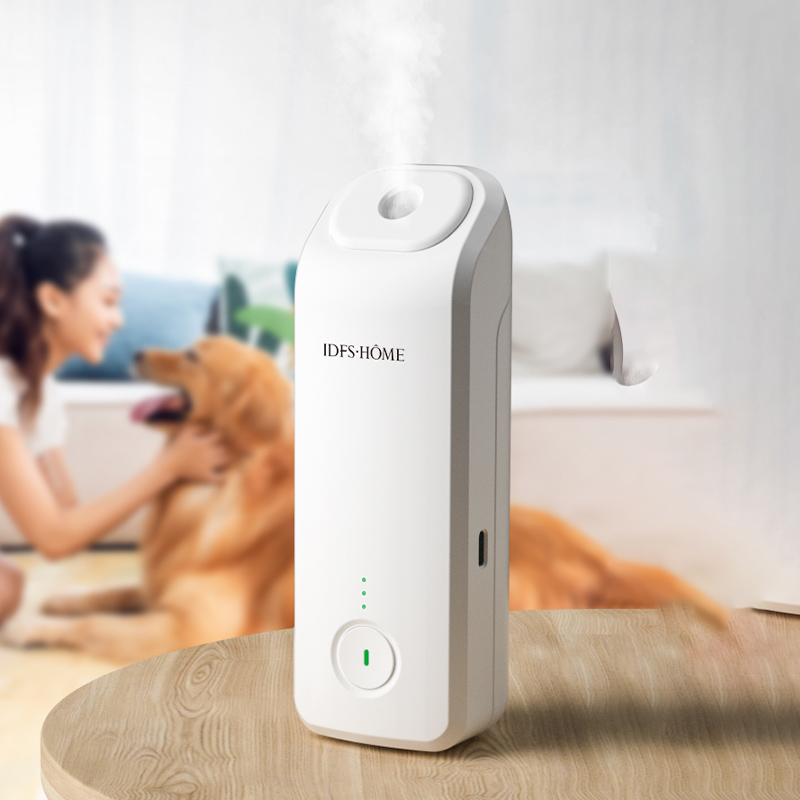
Ultrasonic units are the most common active dispersion devices installed in residential spaces. The mechanics rely on a piezoelectric transducer—a small, flexible ceramic disc located at the bottom of a water reservoir. When powered, this disc vibrates at ultrasonic frequencies, typically around 2.4 million times per second. These intense vibrations create a standing wave in the water. The agitation breaks the water and the drops of essential oil floating on its surface into micro-particles. The device then emits this mixture as a fine, cool mist into the air.
The primary control factor of ultrasonic technology is dilution. Because the essential oil mixes with a much larger volume of water, the resulting scent is subtle. This makes ultrasonic devices highly suitable for smaller spaces, bedrooms, or users who prefer a lighter fragrance footprint alongside a mild humidifying effect. You control the intensity manually by adjusting the number of oil drops added to the water reservoir.
This technology has distinct limitations in the field. The output is inherently tied to the device's water capacity and the ambient humidity levels of the room. As the water level drops, the scent concentration fluctuates. Mixing oil and water dilutes the pure scent profile. The requirement to manually refill and mix the reservoir daily proves inconvenient for users seeking a hands-off, automated solution.
Nebulizing technology represents the highest tier of scent control. These systems operate entirely without heat or water. They utilize the Venturi effect and Bernoulli’s principle of fluid dynamics. A pressurized air stream forces its way through a small capillary tube, creating a vacuum that pulls pure essential oil from the reservoir into an atomizing chamber. The high-velocity air strikes the oil, shattering it into microscopic particles—often under 5 microns in size. The device expels these ultra-fine particles directly into the environment.
Nebulizers offer massive concentration and immediate intensity control. Because they diffuse undiluted oil, they fit perfectly in clinical environments, large open-concept spaces, or commercial applications requiring a robust fragrance profile. A major operational advantage is the direct-attach convenience. Many modern nebulizers allow you to screw standard essential oil bottles directly into the atomizing head. This eliminates daily measuring and pouring.
The limitations of nebulizers involve resource consumption and acoustics. Atomizing pure oil means these devices consume essential oils at a significantly higher rate than ultrasonic models. The internal air compressor required to generate the necessary pressure produces a noticeable humming or vibrating noise. You must isolate the pump or place the unit carefully to avoid disrupting ultra-quiet environments like bedrooms or meditation spaces.
Evaporative systems use mechanical airflow to accelerate the natural evaporation process. A fan blows air across a fibrous pad or filter soaked in essential oil. As the air passes through the pad, it carries the volatile aromatic compounds into the room. Heat-driven systems operate similarly but use gentle thermal elements to warm the oil. This increases its volatility and speeds up evaporation without the use of a fan.
These units offer localized control. They work well for personal workspaces, cars, or small bathrooms where rapid, quiet dispersion is needed. Fan-based evaporative units run exceptionally quiet, making them unobtrusive in office settings.
The main risk associated with heat-driven systems is the alteration of the essential oil's chemical composition. Essential oils contain delicate, volatile organic compounds. Applying heat burns the lighter top notes and degrades the therapeutic efficacy of the oil. This results in a distorted scent profile that lacks the complexity of the original botanical extract.
Selecting the appropriate device requires mapping specific technologies to the physical dimensions of the room. Ultrasonic units typically generate enough mist to cover 150 to 300 square feet effectively. Attempting to use a standard ultrasonic device in a larger space results in rapid scent dissipation and uneven coverage. For areas ranging from 500 to over 2,000 square feet, a nebulizing scent machine is mandatory. The micro-particles produced by nebulizers are lighter and remain suspended in the air longer, allowing them to travel further on ambient air currents.
The physics of airflow play a massive role in required output capacity. Square footage is only one metric. Ceiling height drastically alters the total cubic volume of air that needs scenting. Rooms with vaulted ceilings, complex layouts, or heavy HVAC cross-ventilation require devices with higher output capacities. You must overcome the rapid dilution of fragrance molecules in a larger volume of air.
| Technology Type | Ideal Coverage Area | Maintenance Level | Oil Consumption Rate |
|---|---|---|---|
| Ultrasonic | 150 - 300 sq ft | Medium (Daily refills, weekly wipe downs) | Low (Diluted with water) |
| Nebulizing | 500 - 2,000+ sq ft | High (Requires regular alcohol flushes) | High (Uses pure essential oil) |
| Evaporative Fan | 50 - 150 sq ft | Low (Pad replacements needed) | Medium (Evaporates steadily) |
Advanced programmability separates basic units from professional-grade solutions. The implementation of interval timers dictates the success of maintaining a consistent ambient scent. An automatic diffuser programmed to run for 5 minutes and pause for 10 minutes prevents the room from becoming oversaturated. This duty cycle keeps the fragrance continuously noticeable to occupants without wasting oil.
Smart features elevate hands-off scent management. Wi-Fi connectivity and app-based scheduling allow you to align scent dispersion with daily routines. You can program devices to activate shortly before arriving home or integrate them with existing smart home ecosystems. Triggering based on occupancy sensors or specific times of day ensures optimal oil usage and a consistently pleasant environment without daily manual intervention.
High-end models provide granular control over the actual concentration of fragrance in the air. Advanced nebulizers allow you to adjust the pressure of the internal pump. This directly influences the volume of oil atomized per minute. Industrial models even allow for adjustments to the micron size of the mist, fine-tuning how long the particles remain airborne before settling on the floor.
When evaluating intensity controls, continuous variable dials offer superior environmental tuning compared to basic stepped settings. A variable dial allows you to find the exact threshold where the scent is present but not overwhelming. This preserves the natural notes of the oil without creating an aggressive or synthetic-feeling atmosphere.
Achieving high-intensity scent control requires proportional resource management. A nebulizer running pure oil consumes a 15ml bottle significantly faster than an ultrasonic unit that relies on a water-to-oil ratio. An ultrasonic device might use 5 to 10 drops (roughly 0.25ml to 0.5ml) to run for several hours. A nebulizer on a high setting can consume 1ml to 3ml of oil in the exact same timeframe.
You must calculate the long-term volume implications of running high-intensity settings daily. Nebulizers provide a superior, room-filling scent yield, but the recurring volume of pure essential oils required is substantial. Balancing the interval timers and intensity settings maximizes the lifespan of the oil while still achieving the desired environmental effect.
Higher scent control correlates directly with stricter maintenance requirements. Waterless devices, particularly nebulizers, are highly susceptible to clogging if ignored. This risk increases exponentially when using thick, resinous essential oils such as Vetiver, Sandalwood, Patchouli, or Myrrh. These dense oils quickly gum up the microscopic glass tubes or atomizing nozzles.
You must follow standard cleaning protocols to maintain warranty compliance and optimal performance. For nebulizers, this involves running a small amount of high-proof rubbing alcohol (99% isopropyl alcohol) through the system for 10 to 15 minutes. This dissolves residual oil buildup. Ultrasonic units require regular wiping of the ceramic disc and reservoir with alcohol or white vinegar. This prevents mineral scale from tap water and oil residue from inhibiting the ultrasonic vibrations.
The acoustic footprint of active dispersion devices varies significantly by technology. Nebulizers rely on internal air pumps, which generate a low-frequency hum or vibration. Modern designs have improved sound dampening, but they are rarely completely silent. Ultrasonic units use ultra-quiet micro-fans to push the mist out of the chamber, making them nearly inaudible and better suited for sleep environments.
Secondary environmental effects require attention. Ultrasonic models continuously add moisture to the air. This added humidity benefits dry winter months or arid climates. However, it proves undesirable in already damp environments. Excessive use in poorly ventilated spaces contributes to condensation on windows or promotes mold growth.
Introducing concentrated volatile organic compounds (VOCs) into an enclosed space requires careful consideration of Indoor Air Quality. Essential oils are natural, but they are highly potent chemical compounds. Continuous inhalation of heavily concentrated oils triggers respiratory sensitivities, headaches, or allergic reactions. Vulnerable populations such as children, the elderly, or individuals with asthma are particularly at risk. Certain essential oils are highly toxic to pets, such as eucalyptus and tea tree oil for cats and dogs.
To mitigate these risks, you must employ strict interval controls. Utilizing the scheduling features of an automated device prevents air over-saturation. Ensuring proper room ventilation and researching the specific safety profiles of individual oils before diffusion is mandatory for maintaining a safe, therapeutic environment.
Olfactory fatigue, commonly known as "nose blindness," is a physiological phenomenon. The olfactory receptors in the nose temporarily lose sensitivity to a continuous stimulus. Running a device continuously at maximum output is counterproductive. Within 30 to 45 minutes, occupants stop perceiving the fragrance entirely. This leads them to falsely believe the device is malfunctioning or the oil is weak.
The primary mitigation strategy for olfactory fatigue is interval programming. Set the device to cycle on and off, such as 10 minutes active and 20 minutes resting. This gives the olfactory receptors time to recover. This pulsing strategy maximizes the perceived value of the fragrance, ensuring the scent remains noticeable throughout the day while drastically reducing oil consumption.
Pure essential oils are highly concentrated and possess corrosive properties. They degrade cheap plastics over time. Citrus oils contain d-limonene, a solvent that rapidly eats through standard ABS plastics. This causes reservoirs to crack, leak, or leach plastic compounds into the dispersed mist.
You must prioritize material compatibility when selecting a device. Look for internal reservoirs and atomizing components constructed from medical-grade glass, anodized aluminum, or high-density, essential-oil-safe plastics like PP (Polypropylene) or PET (Polyethylene Terephthalate). Ensuring the device is built from robust materials guarantees longevity and prevents chemical contamination of the scent profile.
Integrating a scenting system directly into the HVAC ductwork offers the ultimate whole-building coverage for commercial or large residential applications. This implementation carries significant risks. You face residue buildup inside the ducting, rapid clogging of expensive HEPA air filters, and the potential voiding of the HVAC system's manufacturer warranty if installed incorrectly.
Mitigating these risks requires professional installation and the strict use of cold-air diffusion technology. HVAC-compatible units must atomize the oil into sub-micron particles that behave like a dry gas. This ensures they travel through the ductwork without adhering to the metal walls or dampening the filters. You must perform regular maintenance checks on the HVAC filters when running these integrated systems. Install the injection probe downstream of the evaporator coil to prevent oil condensation on the cold fins.
A: It depends on the technology and settings. A nebulizer atomizing pure oil consumes more liquid than a passive reed setup. However, an automated device with strict interval timers optimizes consumption. By preventing continuous, unnecessary dispersion, automated systems make a single bottle of oil last longer while providing superior scent coverage.
A: An electric diffuser is a broad term that includes ultrasonic models, which use water and high-frequency vibrations to create a diluted mist. A nebulizing machine specifically uses pressurized air to atomize pure essential oil without any water or heat. Nebulizers provide a stronger, undiluted fragrance profile.
A: Mechanical devices operate exponentially faster. Passive reeds rely on slow, natural evaporation that takes hours to subtly scent a small radius. Mechanical units use fans or air pumps to actively push fragrance molecules into the environment. A properly sized mechanical unit fills a standard room in under five minutes.
A: Yes, provided they do not use heat. Ultrasonic and nebulizing technologies utilize cold-air diffusion or high-frequency agitation. Because no thermal elements are involved, the delicate chemical compounds and top notes of the essential oils remain intact, ensuring you receive the full therapeutic benefits of the botanical extracts.
A: Most high-quality units are designed to run for extended periods, but continuous operation is not recommended due to olfactory fatigue and rapid oil depletion. While the motors can handle hours of use, it is best practice to use interval timers. This extends the lifespan of the internal components.
A: Yes, if installed correctly. HVAC scent machines must use cold-air nebulizing technology to break the oil into sub-micron particles. These ultra-fine particles behave like a dry gas, passing through the ductwork and filters without leaving a wet residue. Professional installation is required to ensure proper static pressure balance.


