
Views: 0 Author: Site Editor Publish Time: 2026-08-03 Origin: Site


Corporate real estate and workspace design increasingly prioritize environmental psychology. Facility managers actively manage air quality, humidity levels, and sensory inputs to support employee well-being and combat the sterility of modern workspaces. Workspaces often suffer from stale air, dry HVAC circulation, high ambient stress, and midday cognitive slumps. Introducing ambient scent into shared environments introduces complex variables regarding employee sensitivities, hardware maintenance, and HR compliance. Successfully deploying an essential oil diffuser for office environments requires moving beyond consumer-grade aesthetics. You must evaluate technical hardware, establish clear workplace etiquette protocols, and align scent profiles with specific productivity or wellness goals. We see many deployments fail because teams treat scenting as an afterthought rather than a mechanical integration requiring strict operational oversight.
Differentiating masking odors from active aromatherapy is the first step in atmospheric management. Masking odors typically relies on synthetic aerosols or heavy cleaning chemicals designed to overpower unpleasant smells. These synthetics simply layer heavy molecules over existing odors. Active aromatherapy utilizes volatile organic compounds (VOCs) extracted directly from plant matter. These compounds interact with olfactory receptors in the nasal cavity. This interaction sends electrical impulses to the limbic system, the brain region responsible for emotion, memory, and behavioral responses. Using an office scent diffuser shifts the operational focus from simply making a room smell pleasant to actively shaping the cognitive environment. Facility managers must target specific atmospheric improvements rather than just deploying arbitrary scents across a floor plan. You are engineering an environment, not just deodorizing a restroom.
Realistic, evidence-oriented expectations are necessary for workplace atmosphere improvements. Scent interventions should target perceived stress reduction, mitigation of environmental fatigue, and enhanced focus during deep-work blocks. For example, introducing specific botanical profiles during the mid-afternoon can counteract the natural circadian dip in alertness that plagues most office workers around 2:00 PM. Measuring these outcomes involves tracking employee feedback, monitoring usage rates of designated quiet zones, and assessing overall satisfaction with the physical workspace through regular environmental surveys. Ambient scent acts as a subtle environmental cue. It signals transitions between high-energy collaborative work in open areas and focused individual tasks in enclosed pods. Facility teams can map these zones and apply different scent profiles to match the intended use of the space.
Many consumer devices serve dual purposes, creating confusion during procurement and deployment. You must clarify the difference between using a device to combat dry office air and strictly managing ambient aroma. Humidification requires adding significant water vapor to the air to raise relative humidity levels. Scenting requires dispersing microscopic oil particles. Devices designed primarily for humidification often dilute essential oils too heavily for effective scenting in large spaces. Conversely, dedicated scenting devices add zero moisture to the air. Hardware selection must align with the primary environmental deficit of the workspace. If your building suffers from 20% relative humidity during winter heating months, a scent nebulizer will not solve the dry air problem. You need dedicated steam or evaporative humidifiers integrated into the air handler.
A clear distinction exists between perceived air freshness and actual purification. Some essential oils possess mild antimicrobial properties in controlled laboratory settings. However, diffusers add VOCs to the environment. They are not substitutes for HEPA filtration or adequate HVAC air exchange rates. Dispersing essential oils will not remove particulate matter, neutralize airborne viruses, or reduce CO2 levels in a crowded conference room. Facility teams must maintain robust mechanical ventilation systems alongside any ambient scenting initiatives. Scenting enhances the psychological perception of cleanliness but does not alter the physical metrics of indoor air quality. Relying on a diffuser to clean the air is a fundamental misunderstanding of the technology. You still need MERV 13 filters and proper outside air dampers.
Localized diffusion primarily relies on ultrasonic and passive mechanisms. Ultrasonic devices use high-frequency vibrations to break down a mixture of water and essential oils into a fine mist. Passive diffusers rely on natural evaporation, often utilizing porous materials like reeds, ceramic, or unglazed clay. These technologies are engineered for micro-environments, typically covering 10 to 50 square feet. They operate on low voltage and often draw power directly from USB ports on desktop computers or standard 120V receptacles.
A desk diffuser fits perfectly in private offices, remote work setups, or highly segmented cubicles. In these environments, the scent throw remains strictly contained within the user's immediate breathing zone. They serve well for individual employees seeking personalized atmospheric control without impacting adjacent workstations.
The primary advantages include a low barrier to entry, individualized control, and the added benefit of micro-humidification for dry environments. Employees can tailor their scent profiles daily. However, ultrasonic units present significant drawbacks. Unmaintained water reservoirs harbor mold and bacteria, creating localized health hazards. The mist output poses a risk of moisture damage to nearby electronics, keyboards, or sensitive paperwork. In open spaces, the risk of scent drift remains high, potentially causing friction with neighboring colleagues who may have different preferences or sensitivities.
Facility-wide scenting relies on cold-air nebulizing technology. These systems atomize pure essential oils into nanoparticles without using heat or water. High-pressure air forces the oil through a specialized nozzle, creating a dry, invisible mist that remains suspended in the air for extended periods. Advanced units integrate directly into existing HVAC ductwork, utilizing the building's mechanical airflow for distribution.
A commercial diffuser is designed for lobbies, large conference rooms, or standardized open-plan environments. These spaces require consistent, micro-fine scent dispersion across large square footages. They are essential for creating a uniform environmental brand experience in reception areas or high-traffic corridors where localized units would be entirely ineffective.
Nebulizing systems offer highly programmable controls, allowing facility managers to dictate intensity and scheduling precisely. They eliminate water-borne pathogen risks entirely, as the reservoirs contain only pure oil. The dry mist leaves no residue on surfaces or electronics. These benefits are weighed against the need for professional installation, particularly for HVAC-integrated models. They also require handling concentrated essential oils, which demands specific safety protocols during cartridge replacement.
| Feature | Ultrasonic Desk Diffuser | Cold-Air Commercial Diffuser |
|---|---|---|
| Coverage Area | 10 - 50 sq. ft. | 500 - 5,000+ sq. ft. |
| Technology | Water & High-Frequency Vibration | Waterless High-Pressure Atomization |
| HVAC Integration | None (Standalone only) | Yes (Direct duct injection available) |
| Maintenance Frequency | Daily water changes, weekly cleaning | Monthly or quarterly cartridge swaps |
| Residue Risk | High (Moisture fallout on desks) | Zero (Dry nanoparticle mist) |
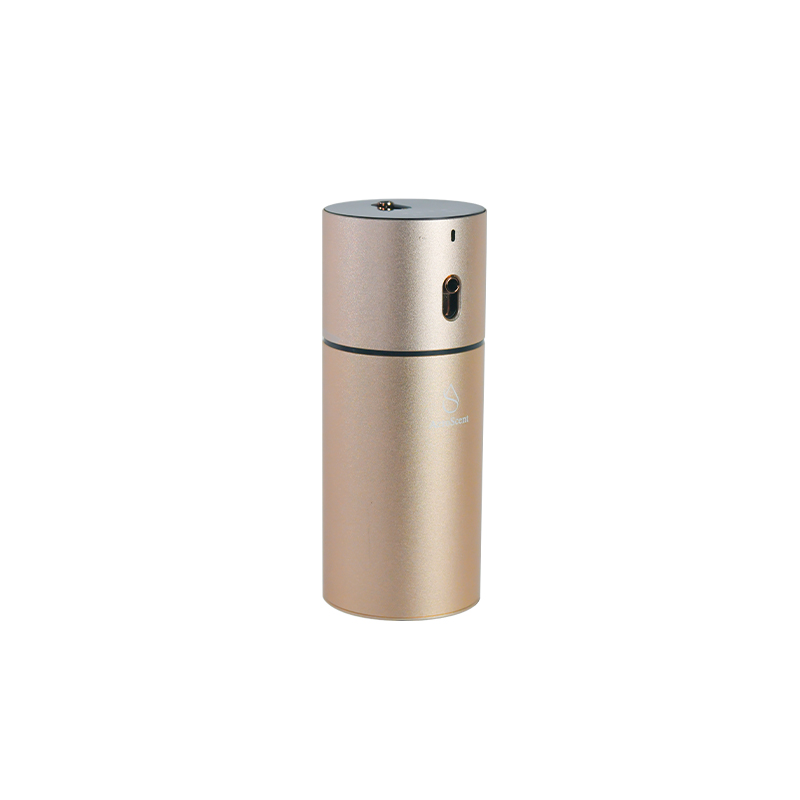
Positioning dictates performance. You must evaluate placement relative to HVAC vents, return air ducts, and high-traffic corridors. Placing a standalone unit directly under a supply vent can force the scent immediately to the floor, limiting dispersion. Placing it too close to a return duct pulls the scent out of the room before occupants can perceive it. Proper placement ensures even distribution without creating overpowering olfactory hot spots. Standalone units should sit at breathing height, utilizing natural ambient airflow to carry the nanoparticles across the intended zone. Integrating a scent system into existing ductwork requires precise calculation of static pressure and airflow velocity. The atomization nozzle must be inserted downstream of the main air handler and HEPA filters to prevent the oil nanoparticles from being trapped in the filtration media. You must also ensure the ductwork is properly sealed; otherwise, you will lose scent into the ceiling plenum.
Continuous diffusion leads rapidly to olfactory fatigue, commonly known as noseblindness. Occupants stop perceiving the scent after 15 to 20 minutes of continuous exposure. Programmable run-times are critical. Setting a cycle of 10 minutes on and 50 minutes off prevents fatigue and conserves consumables. Advanced systems offer day-parting capabilities, allowing managers to increase intensity during high-traffic morning arrivals and taper off during lower-occupancy afternoon hours. You can program the system to shut down entirely over the weekend or during holidays. This level of control prevents the building from becoming saturated with scent, which can seep into fabrics and carpets over time.
Workplace noise pollution directly impacts concentration. You must assess the decibel rating of the chosen hardware. Nebulizing pumps generate a distinct humming sound as the air compressor engages. If placed in a quiet conference room, this mechanical noise can disrupt meetings. Ultrasonic fans operate more quietly but still produce a continuous water trickling sound. Hardware selection must match the acoustic baseline of the target environment. High-output nebulizers are best relegated to mechanical rooms, IT closets, or noisy lobbies where ambient background noise masks the compressor cycle. If you must place a nebulizer in a quiet zone, look for units with sound-dampening enclosures.
Hardware longevity depends entirely on maintenance protocols. Water-based ultrasonic units require daily emptying and wiping to prevent bacterial growth. They need weekly deep cleaning with acetic acid to remove mineral scale buildup from the oscillating plate. This labor-intensive process scales poorly across large facilities. Imagine asking the janitorial staff to clean fifty individual desk units every Friday. Commercial nebulizers require far less frequent intervention. Maintenance typically involves monthly or quarterly cartridge replacements and a periodic flush of the atomizing nozzle with rubbing alcohol. Evaluating these operational requirements prevents hardware abandonment. Systems that require too much daily labor inevitably end up unplugged and shoved into storage closets.
Open-office dynamics amplify environmental conflicts. Real-world conflict resolution is a mandatory component of scent deployment. One employee's focus aid or humidifier combo easily becomes another's migraine trigger. The lack of physical barriers means volatile compounds travel freely across workstations. Facility managers must acknowledge these disputes proactively. Ignoring the shared space dilemma leads to immediate pushback and the eventual banning of all scent devices across the floor plan. You cannot rely on employees to self-regulate their personal devices. Without clear boundaries, the office environment quickly becomes a chaotic mix of competing aromas.
Airborne essential oils present legitimate medical realities. Asthmatic employees may experience bronchial spasms when exposed to certain volatile compounds. VOC sensitivities can trigger severe headaches, nausea, or cognitive fog. Direct contact with undiluted oils during maintenance can cause contact dermatitis. Scent deployment is not universally benign. HR departments must treat airborne aromatics with the same caution applied to other environmental allergens. You must maintain Material Safety Data Sheets (MSDS) for every oil profile used in the building. This documentation is critical for emergency responders or medical professionals if an employee experiences a severe allergic reaction.
Drafting a comprehensive policy protects both the employer and the employees.
Procurement faces a constant trade-off between pure, therapeutic-grade essential oils and synthetic fragrance oils. Pure oils deliver authentic aromatherapeutic benefits. They contain the complex chemical profiles necessary to interact with the limbic system. Synthetic fragrance oils offer highly consistent aromas and are often easier to source in massive quantities. However, synthetics carry a significantly higher risk of triggering headaches, respiratory irritation, and allergic reactions. Corporate environments must prioritize purity to mitigate health risks. Dispersing synthetic chemicals through the HVAC system is a massive liability. Always demand botanical extracts that have not been cut with synthetic carrier fluids.
Different zones require different olfactory interventions.
Evaluating suppliers is a critical safety measure. Procurement must demand GC/MS (Gas Chromatography/Mass Spectrometry) testing for all purchased oils. Gas Chromatography separates the volatile compounds within the oil, while Mass Spectrometry identifies the specific molecular weight of each component. This combined analysis produces a unique chemical fingerprint. Facility managers must review these reports to confirm the absence of synthetic solvents like diethyl phthalate, which are often used to dilute cheaper oils but can cause severe respiratory irritation when aerosolized in an enclosed office space. Sustainable sourcing also ensures consistent olfactory profiles batch-over-batch, maintaining the integrity of the environmental brand. You do not want your lobby smelling slightly different every time you swap a cartridge.
An essential oil diffuser deployed in an office setting serves as a powerful tool for environmental branding and employee well-being. Success depends entirely on technical precision, strategic placement, and strict respect for shared-space dynamics. Haphazard deployment creates friction, while calculated implementation enhances the cognitive atmosphere. We recommend personal ultrasonic units exclusively for private or home offices needing slight humidification. Strictly advise cold-air commercial diffusers for lobbies, large conference rooms, or managed open-plan spaces to ensure hygiene, control, and consistent dispersion.
A: They can be safe if deployed with strict opt-in policies and proper ventilation. Unregulated use risks triggering asthma or migraines in coworkers. Facility managers must establish scent-free zones and conduct allergy audits before introducing any airborne aromatics into shared workspaces.
A: A desk diffuser typically uses water-based ultrasonic technology to add localized humidity and scent to a small area. A commercial diffuser utilizes waterless, cold-air nebulization to atomize pure oils into nanoparticles, often integrating directly into HVAC systems for facility-wide coverage.
A: Ultrasonic diffusers add trace amounts of moisture to the immediate breathing zone, which helps combat dry air locally. However, they are not powerful enough to humidify large spaces and pose risks of moisture damage to nearby electronics if not placed carefully.
A: Evidence-backed options include rosemary and peppermint for memory retention and alertness. Citrus oils like sweet orange elevate mood. Facility managers should caution against heavy, polarizing florals which often cause olfactory fatigue or headaches in enclosed spaces.
A: Scenting the air is entirely different from purifying it. Diffusers add VOCs to the air and may offer mild perceived freshness, but they do not remove particulate matter or viruses. They cannot replace HEPA filters or proper HVAC mechanical ventilation.
A: Commercial units require less daily maintenance than water-based models. Standard operational requirements include monthly oil cartridge replenishment and quarterly nozzle cleaning with rubbing alcohol to prevent clogs and maintain hardware longevity.


