
Views: 0 Author: Site Editor Publish Time: 2026-08-14 Origin: Site


Maintaining a consistent indoor scent profile without relying on synthetic aerosols or open flames is a common challenge for many homeowners. Traditional ambient scenting methods like candles, plug-ins, and aerosol sprays suffer from uneven scent throw. They dissipate rapidly and introduce volatile organic compounds into your living space. Transitioning to a dedicated essential oil diffuser for room fragrance provides a controlled, customizable, and active dispersion mechanism. This guide evaluates the technical mechanics, hardware variations, and implementation realities of using these devices. We will look at how to engineer indoor air quality and elevate your home's olfactory environment effectively. You will learn the exact specifications needed to match hardware to your square footage and airflow, ensuring you get the most out of your botanical extracts without damaging your equipment or compromising indoor air quality.
Understanding how different devices manipulate essential oils helps you match the hardware to your desired fragrance intensity and specific room environment. A room diffuser does not simply heat oil. Modern devices use advanced physics to alter the state of the liquid, ensuring the scent travels further and lingers longer in the air without degrading the chemical structure of the plant extracts.
Ultrasonic devices dominate the residential market due to their reliability and quiet operation. They rely on a small piezoelectric transducer, usually a ceramic disc, located at the base of the water reservoir. When powered, this disc vibrates at ultrasonic frequencies, typically around 2.4 million times per second. This intense vibration creates cavitation in the water.
The process follows a specific mechanical sequence:
This method offers several distinct advantages. It doubles as a mild humidifier, adding a slight amount of moisture to dry indoor air. The ultrasonic process is also exceptionally quiet. You will only hear a faint water trickling sound and the low hum of the fan, making it suitable for bedrooms and quiet study areas. However, this technology has limitations. Because it dilutes the essential oil with water, the resulting scent throw is subtler. You must also refill the water reservoir frequently, which adds a layer of daily maintenance.
Nebulizing technology operates entirely differently. It does not use water or heat. Instead, it relies on pressurized air and Bernoulli’s principle. A small air pump forces air through a narrow tube. As the air velocity increases, it creates a vacuum that pulls the pure essential oil from the reservoir up through a secondary tube. The high-velocity air then atomizes the oil into microscopic particles.
Inside the glass chamber, a baffle catches larger droplets and directs them back into the reservoir, allowing only the finest vapor to escape into the room. This process delivers the most potent, concentrated fragrance possible. It is the ideal solution for large, open-concept spaces where ultrasonic mist would simply dissipate unnoticed. Since there is no water involved, the scent profile remains pure and unadulterated.
The trade-off is consumption and noise. Nebulizers consume essential oil at a much faster rate than ultrasonic models because they do not dilute the liquid. Additionally, the internal air pump generates a noticeable humming or vibrating noise. This motor sound can be distracting in completely silent environments, so placement is key.
Older, low-tech options rely on heat or simple evaporation. Evaporative models use a small fan to blow air across a pad soaked in essential oil. Heat-based models use gentle warming plates or tea light candles to accelerate evaporation.
Professionals generally discourage heat-based methods for high-quality oils. Heat fundamentally alters the chemical composition of the plant extracts. It degrades the delicate top notes of the fragrance and destroys the therapeutic profile, specifically breaking down volatile terpenes. Evaporative fan models are safer but suffer from uneven scent delivery. The lighter chemical components of the oil evaporate first, leaving the heavier base notes behind. This results in an unbalanced fragrance experience over time.
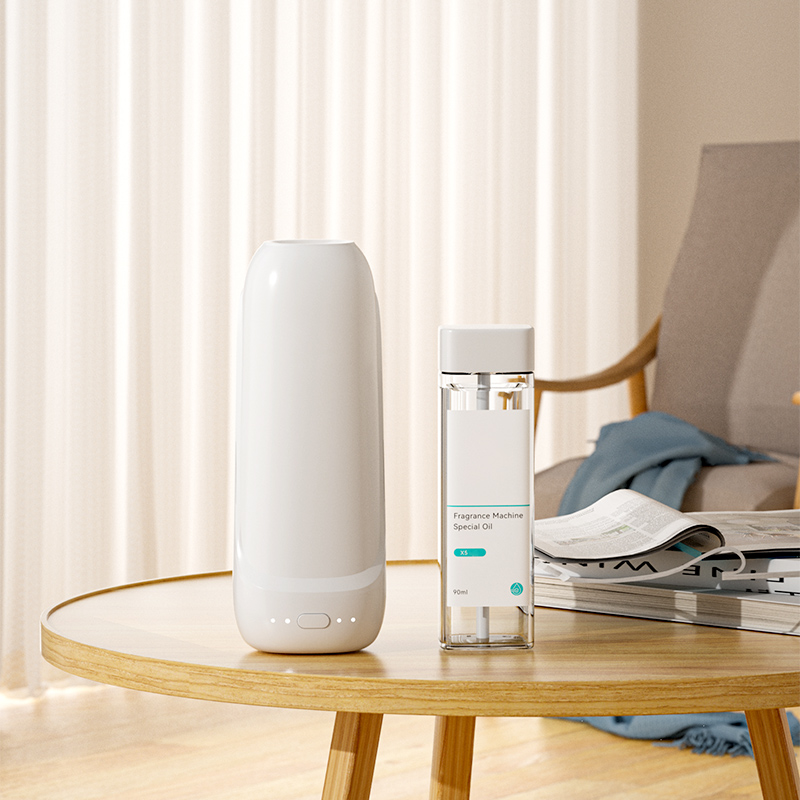
While an active dispersion device primarily upgrades your home's scent, it offers secondary benefits. The microscopic atomization of oils delivers targeted therapeutic benefits that passive methods cannot match. You can actively engineer the mood of different living spaces by selecting specific botanical extracts based on their chemical constituents.
Different rooms serve different functional purposes, and your scent strategy should reflect these functions. In bedrooms, the goal is relaxation and sleep preparation. Utilizing oils rich in linalool, such as lavender, chamomile, and bergamot, helps promote calmness. These compounds interact with olfactory receptors in the nasal cavity, sending signals to the limbic system to unwind after a long day.
Conversely, home offices require focus and energy. Deploying peppermint, sweet orange, or rosemary can enhance concentration. Peppermint contains high levels of menthol, which provides a sharp, invigorating scent profile. This helps combat midday fatigue and keeps the mind alert during complex tasks. Tailoring the oil to the room maximizes the utility of your device.
| Room Type | Recommended Essential Oil | Primary Chemical Compound | Desired Effect |
|---|---|---|---|
| Bedroom | Lavender / Chamomile | Linalool / Linalyl Acetate | Central nervous system relaxation, sleep aid |
| Home Office | Peppermint / Rosemary | Menthol / 1,8-Cineole | Mental clarity, fatigue reduction, focus |
| Living Room | Sweet Orange / Grapefruit | d-Limonene | Mood elevation, odor neutralization |
| Bathroom | Tea Tree / Eucalyptus | Terpinen-4-ol / Eucalyptol | Perceived freshness, mild antimicrobial properties |
Many marketing campaigns claim that diffusers act as standalone air purifiers. You must separate these claims from scientific reality. Oils like eucalyptus, tea tree, and thyme do possess mild antimicrobial properties. When atomized, they offer perceived respiratory clarity. They make the air feel fresher and easier to breathe by opening up nasal passages.
However, atomizing oil does not replace physical air filtration. It cannot remove particulate matter from your environment. Dust, pet dander, pollen, and airborne pathogens remain in the air regardless of how much oil you disperse. For true air purification, you must pair your scenting device with a dedicated HEPA filtration system. Use the diffuser for mood and scent, and use the HEPA filter for physical air quality.
A device's efficacy is strictly bound by its output capacity relative to the room's cubic volume. You must also factor in HVAC airflow, ceiling height, and natural ventilation. Placing an undersized unit in a massive living room yields disappointing results, while placing a high-output nebulizer in a small bathroom will overwhelm your senses.
Matching hardware to square footage ensures optimal scent distribution. Consider the following guidelines when selecting your device capacity.
For whole-home scenting, you must choose between multiple tabletop units or a centralized system. A tabletop unit offers portability. You can move it from the kitchen to the bedroom as needed. It requires no installation and allows you to change scents room by room depending on the time of day.
In contrast, a whole-home fragrance machine integrates directly into your existing HVAC ductwork. These systems use cold-air diffusion technology to push microscopic scent particles through your vents alongside your conditioned air. This guarantees uniform, whole-house scenting. The trade-off is the requirement for professional installation, regular maintenance of the HVAC integration point, and a commitment to a single fragrance profile for the entire house.
Hardware specifications directly impact your daily user experience. Evaluating these features helps prevent frustration and ensures long-term satisfaction with your chosen aroma diffuser.
Tank size correlates directly to operational hours. A 100ml tank typically runs for 3 to 4 hours continuously. A 500ml tank can run for up to 14 hours. However, continuous misting is rarely the best approach. The human olfactory system quickly adapts to constant smells, a biological phenomenon known as olfactory fatigue or nose blindness. If you run a device continuously, you will stop smelling it after 30 minutes.
To combat this, look for devices with intermittent mist settings. A unit that mists for 30 seconds and pauses for 30 seconds extends the run time significantly. More importantly, the constant fluctuation in scent concentration prevents your nose from tuning out the fragrance. You will perceive the scent more strongly throughout the day without using extra oil.
Build materials matter for both aesthetics and durability. Devices come in BPA-free plastics, ceramic, glass, and wood finishes. While ceramic and glass offer a premium look for your living room decor, the internal reservoir material is the most critical component.
Essential oils, particularly citrus oils like lemon, sweet orange, and grapefruit, are highly corrosive. They contain high concentrations of d-limonene, a natural solvent that breaks down cheap plastics. Ensure the internal water tank uses medical-grade, essential-oil-resistant plastic, specifically Polypropylene (PP). If the manufacturer uses standard ABS plastic, the oils will literally melt the tank over time, causing leaks and rendering the unit useless.
Modern devices offer automation that simplifies daily use. Programmable timers allow you to set specific run durations, ensuring you don't waste oil when you leave the room. Auto-shutoff mechanisms are a mandatory safety feature. They instantly cut power to the ultrasonic disc when the water level drops too low, preventing the unit from dry-burning and overheating.
Advanced models include Wi-Fi connectivity and smartphone apps. These allow you to schedule scent dispersion before you arrive home from work. You can adjust mist intensity, control ambient LED lighting, and monitor oil levels directly from your phone. This level of control transforms a simple appliance into an integrated smart home accessory.
Owning diffusion hardware involves hidden friction points. Proper maintenance and strict adherence to safety guidelines determine the longevity of your device and the health of your household.
The reality of ultrasonic maintenance involves battling hard water scaling and residual oil sludge. Tap water contains minerals like calcium and magnesium that calcify on the ultrasonic disc. Essential oils leave a sticky, resinous residue. If left unchecked, this combination harbors mold, breeds bacteria, and completely blocks the mist output.
You must implement a strict cleaning routine to keep the hardware functional:
You must navigate usage carefully around vulnerable household members. Many popular essential oils are highly toxic to dogs and cats. Felines, in particular, lack a specific liver enzyme (UDP-glucuronosyltransferase) necessary to metabolize certain phenolic compounds. Oils like eucalyptus, tea tree, citrus, peppermint, pine, and ylang-ylang can cause severe neurological and respiratory distress in pets.
Always research an oil's pet safety profile before atomizing it. Ensure your pets have an open door to leave the room if the scent bothers them. Furthermore, individuals with asthma or reactive airway disease should exercise extreme caution. While natural, atomized oils are still volatile organic compounds. They can trigger bronchospasms in sensitive lungs. Start with highly diluted mixtures, run the device on the lowest setting, and monitor respiratory responses closely.
The performance of your hardware depends heavily on the liquid you put inside it. You must calculate your consumption rate, especially if using a nebulizer. Because nebulizers use pure oil without water dilution, they drain bottles rapidly. You will go through a 15ml bottle much faster than you would with an ultrasonic unit.
Resist the temptation to use cheap, synthetic fragrance oils. Synthetic oils contain artificial carriers, phthalates, and synthetic musks. These heavy compounds clog the delicate glass baffles of nebulizers and leave stubborn, impossible-to-clean residues in ultrasonic tanks. More importantly, synthetic oils provide zero therapeutic benefits and often trigger headaches. Investing in pure, therapeutic-grade botanical extracts ensures your hardware functions correctly and your indoor air remains safe.
Benchmarking active diffusers against traditional market alternatives highlights why electronic atomization is superior for consistent indoor scenting.
Candles offer undeniable ambiance. The flickering flame provides visual warmth without requiring electricity. However, the trade-offs are significant. Open flames present a severe fire hazard, especially in homes with children or active pets. Furthermore, most commercial candles use paraffin wax, a petroleum byproduct. When burned, paraffin emits soot and volatile organic compounds like toluene and benzene into your home, degrading indoor air quality. The scent throw is also highly localized; it smells strong right next to the candle but fades quickly across the room.
Reed diffusers offer zero-maintenance passive diffusion. You set them up and forget about them. Unfortunately, they rely entirely on ambient airflow to carry the scent. The fragrance is weak, inconsistent, and only covers a small radius. Room sprays offer immediate odor masking. They are excellent for quick fixes in a bathroom. However, the scent is highly transient. The heavy liquid droplets fall to the floor within minutes, leaving the room smelling exactly as it did before. Active diffusers provide the sustained baseline fragrance that sprays lack.
Stovetop simmering pots and essential oil-soaked cotton balls require zero upfront hardware investment. Simmering cinnamon sticks and orange peels on the stove smells wonderful for the holidays. Yet, these methods are impractical for daily use. They require constant supervision to prevent the pot from boiling dry and causing a fire. The scent throw fails to circulate microscopic particles evenly throughout the home. Electronic diffusion automates this process safely and consistently.
Upgrading your indoor fragrance strategy requires moving away from passive, hazardous methods and embracing active atomization. By understanding the physics of ultrasonic and nebulizing technology, you can select the exact hardware needed to match your room's square footage and airflow. Proper implementation guarantees a consistent, sophisticated scent profile while allowing you to leverage the therapeutic benefits of botanical extracts.
To implement this system effectively in your home, follow these immediate next steps:
A: No. While some botanical extracts possess mild antimicrobial properties, these devices cannot physically remove dust, dander, or pathogens from the air. They improve perceived air quality and fragrance but do not replace a true HEPA air purifier.
A: You should empty and wipe the reservoir dry daily to prevent bacterial growth. Perform a deep clean with white vinegar and a cotton swab dipped in isopropyl alcohol once a week to remove mineral scale and oil residue.
A: Yes, provided the device features an automatic shutoff mechanism. This safety feature cuts power to the unit the moment the water reservoir runs dry, preventing the internal components from overheating while you sleep.
A: This is due to olfactory fatigue, commonly known as nose blindness. Your brain tunes out constant stimuli. To fix this, use the intermittent mist setting on your device. The fluctuating scent concentration keeps your olfactory receptors active.
A: Tap water is generally recommended by most manufacturers because the natural minerals help the ultrasonic disc vibrate effectively. However, if you have extremely hard water, use filtered or distilled water to prevent rapid mineral calcification.
A: Many are not. Oils like tea tree, eucalyptus, citrus, and peppermint are highly toxic to cats and dogs. Always research specific oil toxicity before use, and ensure pets have an open door to leave the room if they choose.


