
Views: 0 Author: Site Editor Publish Time: 2026-08-07 Origin: Site


Scent management directly impacts environmental design and brand experience. Tethered devices compromise aesthetic integrity and placement flexibility. Traditional wired diffusers restrict placement to areas near electrical outlets. This limitation leads to uneven scent distribution, potential trip hazards, and visual clutter in meticulously designed spaces like hospitality units, retail floors, and premium residential areas. Transitioning to a battery-operated or rechargeable system requires evaluating battery longevity, dispersion technology, and maintenance overhead. This guide breaks down the technical and operational criteria for selecting a wireless scenting solution. We evaluate how to map airflow, assess battery architectures, and select the correct atomization technology for specific spatial requirements. You need hardware that operates independently without constant manual intervention.
Establishing a consistent ambient olfactory experience requires dispersing tiny, breathable particles of essential oils into the air. The goal is to enhance spatial perception without overwhelming occupants or requiring daily manual intervention. Achieving this balance relies heavily on understanding the physical properties of the space and the mechanical limitations of the hardware. You cannot simply place a unit in the center of a room and expect uniform coverage. You must evaluate the environment systematically.
The ability of the device to match its output capacity to the room's natural HVAC or ambient airflow dictates its success. Airflow mapping involves identifying supply registers, return vents, and natural drafts caused by windows or doors. Placing a device near a return vent pulls the scent directly out of the room before it circulates. Conversely, positioning the unit near a supply register leverages the existing mechanical airflow to distribute the nanoparticles evenly across the designated area.
You must calculate the volume of the space in cubic meters rather than just square footage. High ceilings require significantly more output to achieve the same scent density as a standard room. For example, a 500-square-foot room with a standard 8-foot ceiling contains 4,000 cubic feet of air. If that same 500-square-foot room features a 16-foot vaulted ceiling, the volume doubles to 8,000 cubic feet. The hardware must work twice as hard to maintain the same ambient scent profile. Drafty corridors will disperse scent rapidly, requiring a higher output setting to maintain a noticeable aroma.
Minimizing the visual impact of the hardware remains a primary objective for interior designers and facility managers. Eliminating cable management issues immediately elevates the aesthetic cleanliness of a space. Untethered units can sit on floating shelves, centerpieces, or reception desks without unsightly cords trailing down walls. The physical footprint of the device should blend with the surrounding decor.
Matte finishes, minimalist cylindrical designs, and hidden control panels help the hardware disappear into the environment. This allows the scent to register as a natural characteristic of the room rather than the output of a machine. When we install these units in high-end residential or commercial spaces, we often hide them behind decorative objects or integrate them into custom millwork. The lack of a power cord makes this level of concealment possible.
Operational autonomy defines the duration a device can operate independently before requiring a battery recharge or an oil refill. Frequent maintenance interrupts operations and increases labor overhead. A successful implementation requires balancing the reservoir capacity with the battery life. If a device holds enough oil for a month but requires recharging every three days, the operational autonomy is effectively three days.
Selecting units with synchronized maintenance cycles ensures staff only interact with the device when absolutely necessary. You want the battery depletion and the oil depletion to align as closely as possible. If a unit runs for 30 days on a single charge and consumes its 100ml oil reservoir in exactly 30 days, maintenance staff only need to touch the device once a month. This synchronization drastically reduces the labor required to maintain a consistent scent profile across multiple rooms or zones.
Understanding how a wireless scent diffuser manages power and fluid dynamics is essential for proper deployment. These devices must perform mechanical work—moving air, vibrating water, or pumping viscous fluids—using only stored electrical energy. The efficiency of the internal components dictates the viability of the hardware in a real-world setting.
Lithium-ion battery architecture dictates the operational ceiling of any untethered unit. Modern units typically utilize internal battery packs measured in milliampere-hours (mAh). A standard device might feature a 2500mAh to 5000mAh capacity. This capacity easily supports low-draw components like ultrasonic transducers or small fans for extended periods. However, driving a pneumatic pump for a nebulizer demands significantly more current.
Many commercial-grade units now utilize 21700 lithium-ion cells instead of the older 18650 standard. The 21700 cells offer higher energy density and better thermal stability, allowing the device to run high-pressure pumps without overheating the battery pack. Charging protocols directly impact the turnaround time for maintenance staff. USB-C has become the standard, allowing for rapid power delivery and universal cable compatibility. Some premium units utilize proprietary charging docks. Docks simplify the charging process for staff—requiring only a drop-in action rather than plugging in a cable—but they limit charging locations to where the docks are permanently installed.
Internal pumps, fans, or heating elements draw power from the battery to atomize or evaporate oils. This creates a strict energy trade-off. High-pressure nebulization consumes more battery power than passive fan evaporation or gentle heat dissemination. A micro-compressor must generate enough pounds per square inch (PSI) to force the oil through a microscopic nozzle. This mechanical action drains batteries rapidly if run continuously.
To mitigate this power draw, manufacturers implement aggressive duty cycling. Instead of continuous operation, the device runs the pump for a brief interval and then rests. For example, a common duty cycle might run the pump for 15 seconds and then pause for 180 seconds. This intermittent operation extends battery life dramatically. It also prevents olfactory fatigue among room occupants, allowing the scent to remain noticeable over long periods without oversaturating the air. You must configure these duty cycles based on the specific airflow and volume of the room.
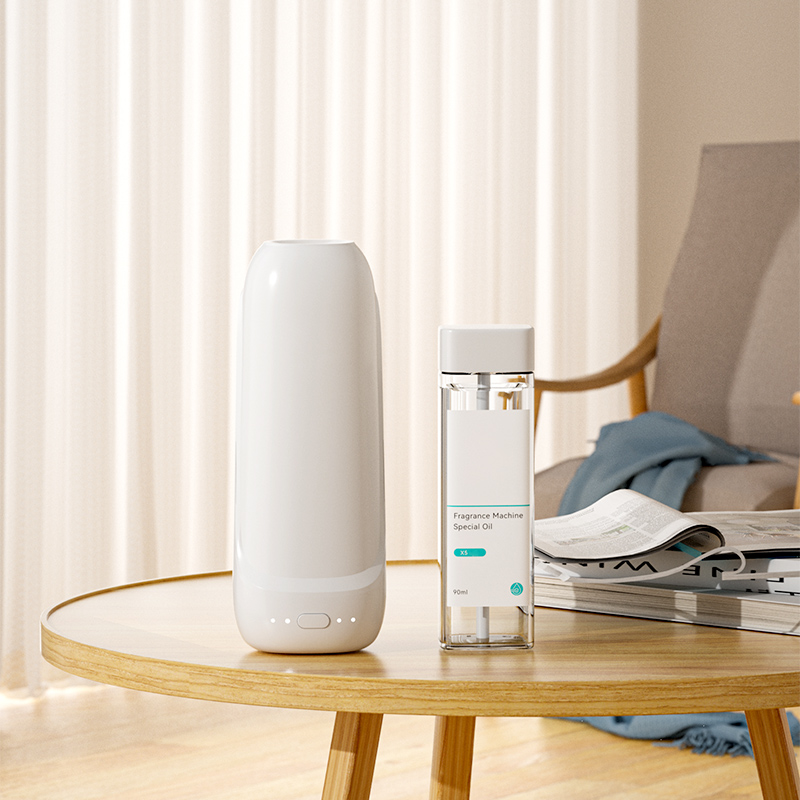
Selecting the correct aroma machine requires matching the dispersion technology to the specific environmental constraints. Each method handles the essential oil differently, resulting in varying power requirements, maintenance schedules, and scent profiles. You cannot use a one-size-fits-all approach when specifying hardware for different zones within a property.
| Technology | Atomization Method | Particle Size | Power Draw | Ideal Application |
|---|---|---|---|---|
| Waterless Nebulizing | Pressurized air shears oil into micro-droplets. | 1 to 5 microns | High (requires micro-compressor) | Large open spaces, lobbies, retail floors. |
| Ultrasonic | Piezoelectric transducer vibrates water and oil. | 5 to 15 microns | Low (efficient vibration) | Small residential rooms, localized desks. |
| Evaporative (Fan) | Ambient air blows across an oil-soaked pad. | Varies (gas phase) | Extremely Low (small DC fan) | Bathrooms, closets, very small enclosed areas. |
| Heat-Based | PTC heating element warms the oil. | Varies (gas phase) | Medium (continuous thermal draw) | Areas requiring absolute silence. |
Waterless nebulizing diffusers operate on the Bernoulli principle. A high-velocity air stream passes over a small tube submerged in the essential oil. This pressure differential draws the oil upward. The air stream then shears the oil into micro-droplets, typically between 1 and 5 microns in diameter. These nanoparticles remain suspended in the ambient air currents for extended periods. Because this process requires no water or heat, the chemical profile of the essential oil remains entirely intact.
The primary drawback involves the acoustic output. The internal micro-compressor generates a distinct hum or vibration. You must position these units carefully, utilizing acoustic dampening materials or placing them away from immediate seating areas. When we install nebulizers on hard surfaces like marble countertops or glass shelves, we always place a small rubber isolation pad underneath the unit to prevent the vibration from amplifying. Additionally, they consume oil faster than diluted methods, requiring larger internal reservoirs to maintain operational autonomy.
Ultrasonic units utilize a piezoelectric transducer located at the base of a water reservoir. This small ceramic disc vibrates at ultrasonic frequencies, typically around 2.4 MHz. The intense vibration creates capillary waves on the surface of the water, tearing off microscopic droplets of water mixed with the floating essential oil. This creates a visible, cool mist that carries the scent into the room.
These units are highly cost-effective and operate almost silently. They also double as mild humidifiers, which can be beneficial in dry climates. However, the reliance on water introduces logistical challenges. The reservoirs must be refilled frequently, often daily. Furthermore, if tap water is used, the minerals can create a fine white dust on surrounding surfaces. Regular cleaning is mandatory to prevent mold and bacterial growth within the damp reservoir. You should only use distilled water in ultrasonic units to prevent mineral scale buildup on the transducer plate.
Evaporative systems rely on basic airflow. A small, battery-powered fan blows ambient air across an absorbent pad or tray saturated with essential oil. The moving air accelerates the natural evaporation process, carrying the scent molecules into the room. This mechanism requires very little electrical power, allowing for exceptionally long battery life. A single charge can often power an evaporative fan for weeks.
The main issue with evaporation is fractional distillation. Essential oils are complex mixtures of volatile organic compounds. Lighter molecules, known as top notes like citrus or peppermint, evaporate quickly. Heavier molecules, known as base notes like sandalwood or cedar, evaporate slowly. This results in an inconsistent scent profile that changes over time. The room smells like lemon on day one and wood on day three. Coverage is also severely limited, making these units suitable only for very small, localized areas.
Heat-based units use gentle, battery-powered heating elements to warm the essential oil. The increased temperature accelerates evaporation without the need for a fan or pump. This provides completely silent operation and handles thick, highly viscous oils effectively. If you are working with heavy resins like vetiver or patchouli, heat is often the most reliable way to get the scent airborne without clogging a mechanical nozzle.
However, exposing essential oils to heat can alter their delicate chemical structures. High temperatures degrade the volatile compounds, potentially ruining the intended scent profile and neutralizing any therapeutic properties. Furthermore, generating continuous heat drains lithium-ion batteries rapidly. A PTC heating element requires a constant draw of current to maintain its temperature, often resulting in shorter operational lifespans compared to ultrasonic or evaporative models. You must weigh the benefit of silent operation against the frequent need to recharge the battery pack.
Translating hardware features into operational outcomes ensures the selected device meets the demands of the space. You must evaluate how the device balances power, connectivity, and consumable management. A feature is only valuable if it solves a specific operational problem on site.
An inverse relationship exists between scent concentration settings and operational uptime. Running a device at maximum output continuously will drain the battery in a fraction of its advertised lifespan. A standard essential oil diffuser wireless model must balance these factors to survive a full business day or guest stay. You must calculate the required duty cycle based on the room's airflow.
Setting a device to run for 15 seconds every three minutes drastically reduces battery consumption compared to a 60-second on, 60-second off cycle. Understanding the natural airflow of the room allows you to use lower intensity settings while achieving the same perceived scent density. If you place the unit directly under a supply vent, the HVAC system does the heavy lifting, allowing you to dial back the pump intensity and save battery life.
Advanced units function as a smart diffuser, integrating Bluetooth Low Energy (BLE) and Wi-Fi connectivity for app-based management. This connectivity transforms a simple piece of hardware into a manageable network node. Programmable scheduling is the most critical smart feature. You can program the device to operate only during business hours or peak traffic times.
For example, a unit in a hotel lobby can be scheduled to run at higher intensities during morning check-outs and evening check-ins, while dropping to a maintenance level during the afternoon. This granular control conserves both battery life and essential oil, extending the operational autonomy of the unit significantly. App interfaces also provide battery level telemetry, allowing maintenance staff to recharge units proactively before they fail. You no longer have to guess when a unit needs attention; the app sends a push notification directly to the facility manager's phone.
The design of the fluid reservoir dictates your supply chain for consumables. Manufacturers generally utilize either open or closed ecosystems. You must decide which model fits your operational workflow.
Deploying wireless scenting solutions introduces specific operational risks. Anticipating these challenges ensures a smooth implementation and prevents damage to the hardware or the environment. You must train your staff on these mitigation strategies before deploying the hardware.
In hospitality or short-term rental units, strong fragrances can trigger allergies, headaches, or negative visitor feedback. Scent is highly subjective. What one person finds relaxing, another may find offensive. Over-scenting a room is a common mistake made during initial deployments.
Mitigation requires utilizing universally appealing, hypoallergenic scents. Light citrus, subtle woods, or clean linen profiles generally receive positive reactions. Avoid heavy florals or strong spices. More importantly, leverage smart scheduling to maintain a subtle ambient aroma rather than heavy saturation. The goal is a background note, not a dominant feature. Implement intermittent duty cycles to prevent olfactory fatigue and keep the scent concentration well below the threshold of irritation. If you can smell the scent strongly the moment you walk in, the intensity is set too high.
Lithium-ion batteries lose capacity over time. A battery that lasts 40 hours on day one may only last 25 hours after two years of daily charge cycles. This degradation is a chemical inevitability caused by the breakdown of the internal electrolyte and the buildup of resistance on the electrodes.
Mitigation involves planning for hardware lifecycle management. Select units with user-replaceable battery packs if available. If the batteries are sealed, you must factor a 24 to 36-month hardware replacement cycle into the operational strategy. Avoid running batteries down to zero percent regularly, as deep discharges accelerate chemical degradation. Implement a charging schedule that tops up the devices before they deplete entirely. Keeping lithium-ion batteries between 20% and 80% charge significantly extends their overall lifespan.
Mechanical failures disrupt the scent experience. Nebulizers suffer from clogged nozzles when thick oils dry inside the micro-tubes. Ultrasonic units suffer from mineral buildup on the transducer plate and bacterial growth in the water tank. Neglecting maintenance guarantees premature hardware failure.
Mitigation requires strict, documented maintenance protocols. For nebulizers, implement a monthly cleaning cycle. Fill an empty reservoir with a small amount of 99% isopropyl alcohol and run the device for 15 minutes. The alcohol dissolves the residual essential oil and clears the pneumatic pathways. For ultrasonic units, wipe the transducer plate weekly with a cotton swab dipped in white vinegar to remove mineral scale. Empty and dry the water tanks completely when not in use. Keep a maintenance log attached to each unit to track cleaning schedules.
In public or rental spaces, wireless units are susceptible to theft, vandalism, or unauthorized adjustments. Because they are untethered, they can simply be picked up and walked out the door. Guests may also attempt to open the units to steal the essential oil inside.
Mitigation strategies depend on the environment. In high-risk public areas, utilize devices with physical mounting brackets or hidden Kensington lock slots. Select units with hidden control panels or require a specialized tool, like a security Torx bit, to open the reservoir compartment. App-only configuration is highly effective; if the device has no physical buttons, unauthorized users cannot alter the intensity settings or schedules. We frequently mount units high on walls or shelves, out of the direct line of sight and reach of the general public.
A: Battery life varies by technology and intensity settings. Most ultrasonic models last 4 to 8 hours on a single charge due to continuous operation. Intermittent waterless nebulizers, utilizing aggressive duty cycles, can last anywhere from 20 to 50 hours of active diffusion time before requiring a recharge.
A: Yes, provided it utilizes nebulization technology rather than ultrasonic, heat, or evaporative methods. High-end wireless nebulizers generate sufficient pneumatic pressure to atomize oils into nanoparticles, effectively scenting spaces ranging from 500 to over 1,000 square feet when placed in optimal airflow pathways.
A: It depends on the manufacturer's ecosystem. Some brands enforce a closed ecosystem with proprietary, pre-filled vials to guarantee fluid viscosity and ease of use. Other manufacturers feature open reservoirs that accept any pure essential oil, providing flexibility but requiring manual pouring and cleaning.
A: For commercial users, property managers, or multi-room setups, the advanced features justify the investment. The ability to set granular schedules via a mobile app prevents oil waste, avoids overwhelming occupants with continuous scent, and extends battery life through precise duty cycle management.
A: Maintenance typically involves running a small amount of high-proof rubbing alcohol through the system. Fill an empty reservoir with the alcohol and run the device for 10 to 15 minutes. This process dissolves residual oil buildup and prevents the internal micro-pump and nozzle from clogging.


