
Views: 0 Author: Site Editor Publish Time: 2026-09-20 Origin: Site


Many users assume achieving a consistent ambient scent requires running a device continuously from morning until night. Others fear operating one for more than an hour total is toxic. Both extremes miss the mark. The optimal strategy relies on intermittent operation. Running a unit in 30- to 60-minute intervals prevents wasted fragrance oil, olfactory fatigue, and indoor air quality degradation. Even natural essential oils require strict dosage control to prevent respiratory irritation.
This guide provides a structured framework for determining the optimal daily run time based on device specifications, room size, and safety thresholds. You will learn how to maximize your investment in ambient scenting without compromising health or efficiency. We cover the biological mechanics of scent perception, hardware differences, and practical safety guidelines to elevate your indoor environment responsibly.
Intermittent Operation is Superior: Running a home aroma diffuser in 30- to 60-minute intervals is more effective and safer than continuous operation. Exceeding one hour of continuous diffusion often leads to unintended physical effects.
Device Type Dictates Duration: Water-based ultrasonic models and waterless nebulizers have drastically different output rates, directly impacting safe run times and daily limits.
Capacity vs. Longevity: A standard 100ml essential oil diffuser typically provides 4–6 hours of total run time, while larger 500ml+ units can exceed 12 hours, though they should still be used intermittently.
Cost Efficiency: Utilizing built-in timers and intermittent settings can extend a standard 100ml–120ml bottle of fragrance oil to yield 2 to 16 weeks of scent (or 300 to 600 hours), depending heavily on intensity and room size.
Defining successful ambient scenting requires balancing consistency, noticeability, and safety. Over-saturation ruins this balance completely. Human biology and indoor air physics dictate how long you should operate these devices. Ignoring these factors leads to poor user experiences and wasted resources. You must treat ambient scenting as an active addition to your indoor air quality management rather than a passive background element.
The human olfactory system is designed to detect changes in the environment rather than constant states. When scent molecules enter the nasal cavity, they bind to receptors. These receptors send electrical signals to the olfactory bulb. If the stimulus remains constant, the receptors rapidly desensitize. They stop sending signals to prevent sensory overload. This biological mechanism is known as olfactory fatigue or nose blindness.
This desensitization occurs within 15 to 30 minutes of exposure to a constant aroma. Your brain simply stops registering the scent so it can focus on detecting new environmental changes. Think of walking into a coffee shop; the smell is overwhelming at first, but after sitting down for twenty minutes, you barely notice it. Running a device continuously leads users to falsely believe the scent has faded. They often react by wastefully increasing the intensity settings. This creates a cycle of over-saturation. You end up burning through expensive oils while barely noticing the aroma. Intermittent cycles prevent this sensory adaptation by giving your olfactory receptors time to reset.
Indoor air has physical limits regarding how much particulate matter it can absorb safely. The natural versus harmless fallacy often misleads consumers. Natural products still emit Volatile Organic Compounds (VOCs). Essential oils consist entirely of VOCs like terpenes and phenols. While plant-derived, high concentrations of these compounds irritate mucous membranes.
Dispersed essential oils eventually transition from a pleasant ambient scent to a potential respiratory irritant. Exceeding the one-hour mark of continuous diffusion often triggers unintended physical effects. Users frequently report headaches, nausea, dry throats, and respiratory fatigue. Proper ventilation and strict time limits keep VOC concentrations within safe thresholds. Continuous operation in a closed room traps these compounds, leading to rapid air saturation and discomfort.
Diffusion Time (Continuous) | VOC Accumulation Level | Physiological Response | Recommended Action |
|---|---|---|---|
0 - 15 Minutes | Low to Moderate | High scent recognition, pleasant ambient experience. | Normal operation. |
15 - 30 Minutes | Moderate to High | Onset of olfactory fatigue; scent seems to fade. | Prepare to cycle off. |
30 - 60 Minutes | High | Complete nose blindness; potential mild throat tickle. | Mandatory shut-off. |
60+ Minutes | Excessive Saturation | Headaches, nausea, respiratory irritation. | Ventilate room immediately. |
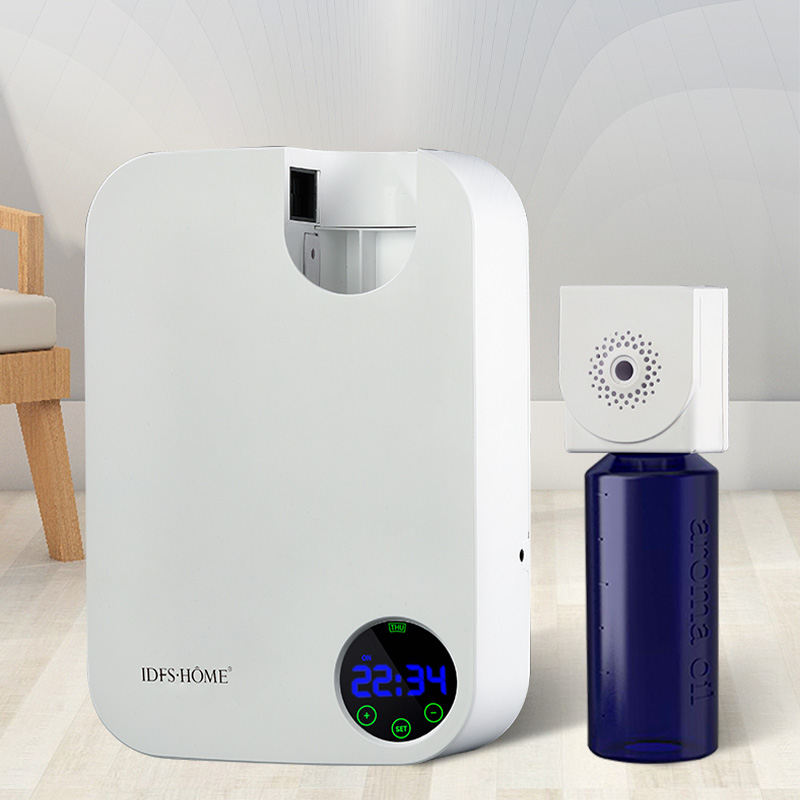
Hardware dictates operational guidelines. Different technologies require distinct usage patterns. Understanding the mechanics of your specific machine ensures safe and efficient operation. You cannot apply the run time of a water-based unit to a pressurized nebulizer without causing severe over-saturation.
These units use water and ultrasonic vibrations to create a fine mist. A small ceramic piezoelectric transducer at the base vibrates at ultrasonic frequencies. This creates capillary waves in the water, atomizing it into a breathable mist. They dilute the oil significantly before dispersal. The optimal run time is 30 to 60 minutes per session. You should follow this active period with a 30- to 60-minute break.
We recommend not exceeding 3 to 4 total hours of active diffusion per day in a standard-sized room. An ultrasonic essential oil diffuser adds humidity alongside the scent. Running it non-stop can create dampness on surrounding surfaces. Overusing these devices in humid climates promotes mold growth on walls and furniture. Furthermore, if you use tap water, continuous operation disperses mineral dust into the air, which can settle on electronics and degrade indoor air quality.
Nebulizers atomize pure oil without utilizing water or heat. They rely on the Bernoulli principle. Pressurized air forces pure oil through a tiny tube, creating a vacuum. This pulls the oil to the surface where it shatters into micro-particles. They create a highly concentrated micro-mist. Because the output is incredibly potent, they require much shorter bursts.
A standard cycle might be 5 to 10 minutes on, followed by 20 to 30 minutes off. You can leave them powered on all day only if you utilize strict intermittent timer settings. This prevents rapid air saturation. A waterless home fragrance diffuser delivers intense aroma quickly. Running a nebulizer continuously for an hour will overpower almost any residential space and deplete your oil reserves rapidly.
Determine the square footage of the target zone.
Set the nebulizer to the lowest pressure setting for the initial test.
Program a duty cycle of 5 minutes active spraying and 25 minutes resting.
Leave the room for 10 minutes, then return to evaluate the scent concentration.
Adjust the active spray time up by 2-minute increments only if the scent is undetectable upon re-entry.
These systems integrate directly into the home's ductwork. They provide whole-house scenting by leveraging the existing air handler. Run times are tied directly to the HVAC fan cycle. They use the system's static pressure to distribute nano-particles evenly across multiple rooms.
These units are typically programmed for low-intensity, intermittent dispersal throughout a 12- to 24-hour period. The central fan prevents localized over-saturation while maintaining a subtle background aroma. Because the scent travels through extensive ductwork and passes through MERV filters, the concentration drops significantly before reaching individual rooms. This allows for longer overall operating windows compared to standalone room units. You must synchronize the scent dispenser with the blower fan; injecting oil into idle ductwork causes residue pooling and damages the metal housing.
Physical environment and hardware specifications heavily influence operational decisions. You cannot apply a universal run time to every room in a house. Square footage, ceiling height, and airflow patterns dictate intensity requirements. A unit that perfectly scents a small bedroom will be completely lost in a vaulted living room.
Small spaces like bathrooms, walk-in closets, or home offices need minimal output. Cycles of 15 to 20 minutes on low intensity are entirely sufficient. Continuous running in confined areas risks rapid over-saturation. The air simply cannot absorb the constant influx of particles. The scent becomes overwhelming and unpleasant very quickly. In rooms under 150 square feet, the air exchange rate is typically lower, meaning VOCs linger longer.
Large spaces, such as living rooms or open concepts with vaulted ceilings, require a different approach. You may need 2 to 3 hours of continuous operation initially to establish the scent profile. The sheer volume of air demands a higher initial output. After this establishment phase, a mandatory 1-hour break is crucial. HVAC return vents in large rooms also pull scent out of the area constantly. You must balance the machine's output against the room's natural air exchange rate. Drafts from windows and foot traffic also disperse the scent faster, requiring slightly longer active cycles to maintain the baseline aroma.
Hardware capacity determines how long a unit can run before needing a physical refill. However, maximum run time is a hardware capability, not a daily usage recommendation. Consumers often confuse a large tank with permission to run the device endlessly.
Tank Capacity | Expected Total Run Time | Ideal Room Size | Recommended Duty Cycle |
|---|---|---|---|
100ml | 4–6 hours | Under 200 sq ft | 30 mins ON / 30 mins OFF |
200ml–300ml | 6–10 hours | 200 - 400 sq ft | 45 mins ON / 45 mins OFF |
500ml+ | 12+ hours | 400+ sq ft | 60 mins ON / 60 mins OFF |
Always use intermittent settings even if the tank holds enough water for 12 hours of continuous mist. A 500ml tank simply means you refill it less often. It does not mean you should subject your respiratory system to 12 hours of constant VOC exposure. Treat the large capacity as a convenience feature that reduces your daily maintenance load, not as an operational target.
Balancing intensity, duration, and room size directly impacts your financial efficiency. Understanding consumption rates prevents you from pouring money into the air unnecessarily. High-quality oils represent a recurring expense, and optimizing your run times protects that investment.
Intensity settings exponentially alter pure oil consumption. Running a unit on high depletes the bottle rapidly. A realistic cost-per-hour framework helps manage expectations and usage habits. A standard 100ml to 120ml bottle of pure oil contains roughly 2000 drops. The viscosity of the oil also plays a role; lighter citrus oils evaporate and atomize faster than thick base notes like sandalwood or vetiver.
In a waterless home fragrance setup, this bottle can last anywhere from 2 to 16 weeks. This yields roughly 300 to 600 hours of ambient scent. The massive variation depends entirely on your duty cycle. A nebulizer running continuously on high might consume 2ml per hour, emptying the bottle in 50 hours. Running it intermittently on a low setting extends that 50 hours of active spraying over hundreds of hours of actual calendar time. You must calculate your consumption based on active spray minutes, not just the days the bottle sits in the machine.
Continuous mode guarantees financial waste due to olfactory fatigue. You burn oil that you can no longer smell. Your brain has tuned it out, but the machine keeps consuming liquid. This is the definition of inefficiency. You are essentially paying to saturate the air past the point of human perception.
Investing in a slightly more advanced Home Aroma Diffuser with programmable timers pays for itself quickly. The drastically reduced oil consumption offsets the higher initial hardware cost. Smart scheduling ensures you only disperse scent when you can actually appreciate it. Programming the device to run 10 minutes on and 50 minutes off provides a constant background aroma while reducing oil consumption by over 80 percent compared to continuous mode. Over a single year, the savings in oil replacement easily cover the cost of a commercial-grade nebulizer.
Improper use and exceeding recommended run times carry potential negative outcomes. You must operate these devices with an understanding of indoor environmental safety. Ignoring basic ventilation and maintenance protocols leads to property damage and health risks.
Pets and infants have much lower tolerance thresholds for airborne particulates. Their respiratory systems are smaller and more sensitive. Cats and birds are particularly vulnerable to dispersed essential oils. Feline livers lack the specific glucuronosyltransferase enzyme required to break down various compounds found in essential oils, such as phenols. Oils like eucalyptus, tea tree, citrus, and peppermint pose severe toxicity risks to pets.
We recommend limiting run times to 10 or 15 minutes when vulnerable dependents are present. Always ensure the area is well-ventilated. Keep doors open so pets can leave the room if the scent bothers them. Observe animals for signs of distress, such as pacing, excessive grooming, coughing, or lethargy. Never operate a device directly next to a birdcage or a pet bed. Position the hardware high on a shelf to prevent direct inhalation of the concentrated mist before it disperses into the ambient air.
Ambient airflow is an absolute necessity. You should never run these devices continuously in sealed, unventilated rooms. Stagnant air traps VOCs and moisture. Without fresh air exchange, the concentration of airborne particles rises to uncomfortable levels quickly. You need a minimum of one complete air exchange per hour to maintain safe indoor air quality while scenting.
Excessive run times also accelerate residue buildup inside the machine. Ultrasonic units require frequent cleaning to prevent mold growth in the water tank. Stagnant water mixed with organic plant oils creates a perfect breeding ground for bacteria. Waterless nebulizers need regular maintenance to prevent clogs in the atomizing nozzle. Thick oils leave sticky residues that harden over time.
Unplug the unit and empty any remaining water or oil from the reservoir.
For ultrasonic units, wipe the interior with a microfiber cloth to remove the biofilm layer.
Fill the ultrasonic tank halfway with clean water and add one teaspoon of white vinegar. Run for 5 minutes, then drain and dry.
For waterless nebulizers, fill an empty oil bottle with 99% isopropyl alcohol.
Attach the alcohol bottle to the nebulizer and run it on the highest setting for 15 minutes to dissolve internal clogs.
Allow the atomizing nozzle to air dry completely before reattaching the fragrance oil.
Measure the square footage of your target rooms to determine the required output capacity and appropriate hardware type.
Program your device using strict intermittent timer controls, aiming for 30 to 60 minutes of active diffusion followed by an equal rest period.
Audit your current fragrance oil consumption to identify potential waste resulting from continuous operation and adjust your duty cycle accordingly.
Establish a routine cleaning schedule using isopropyl alcohol or white vinegar to prevent residue buildup and maintain optimal atomization performance.
A: Running a diffuser for more than an hour total per day is generally safe. However, running it for more than an hour continuously can lead to headaches, nausea, and olfactory fatigue. Intermittent use is key to maintaining a safe and pleasant environment without overwhelming your respiratory system.
A: Continuous overnight diffusion is not recommended due to safety and air quality concerns. Instead, use models equipped with auto-shutoff features and intermittent sleep timers. This ensures a subtle scent without saturating the bedroom air with VOCs while you sleep.
A: A standard 100ml water tank typically provides 4 to 6 hours of continuous use. The exact duration depends heavily on the mist output setting you select. Always utilize intermittent modes to extend this run time throughout the day and prevent over-humidification.
A: Yes, running it continuously all day poses several risks. It causes olfactory fatigue, wastes expensive oil, and increases VOC saturation. Leaving it on without breaks can trigger headaches or respiratory irritation due to the constant concentration of airborne particles.
A: A 100ml bottle of oil in a waterless machine can last anywhere from 2 to 16 weeks. The longevity is heavily dependent on your daily schedule, the size of the room, and the specific intensity settings programmed into the device.
A: This happens due to nose blindness, or olfactory fatigue. Your brain stops registering a constant scent stimulus after 15 to 30 minutes to prevent sensory overload. Implementing an intermittent diffusion schedule prevents this sensory adaptation and keeps the aroma noticeable.


