
Views: 0 Author: Site Editor Publish Time: 2026-07-12 Origin: Site


Operating an essential oil diffuser without a precise measurement strategy often results in olfactory fatigue, wasted essential oils, or respiratory discomfort. Users and facility managers frequently guess the oil-to-water ratio, leading to inconsistent scent throw, rapid depletion of expensive oils, and accelerated degradation of the diffuser's internal components. Establishing a standardized baseline based on reservoir capacity, oil viscosity, and diffuser technology ensures optimal aromatic output, hardware longevity, and safety. We see this constantly in the field: a unit comes back with a burned-out ultrasonic plate simply because the operator dumped unmeasured oil directly onto the dry disc. You need a strict protocol. By matching your drop count to the exact milliliter capacity of the water reservoir and understanding the physical limits of your hardware, you prevent these failures and maintain a consistent environment.
Without a baseline metric, users risk either underwhelming scent profiles or overpowering environments. Success relies on matching the drop count to the exact milliliter capacity of the water reservoir. A reliable mathematical calculation baseline allows for quick scaling across any reservoir size. The general rule is 5 drops per 100ml, capped at 25 drops for a 500ml tank. Pushing past this limit does not increase the scent throw linearly; it simply saturates the water beyond the ultrasonic plate's ability to atomize the mixture.
Let's break down the exact numbers based on hardware capacity. When you operate a 100ml unit, recommend 3 to 5 drops. You can push this up to 8 drops for a stronger fragrance if the room has high ventilation. This capacity fits small spaces like bathrooms or individual desks. When using 200ml diffusers, apply 6 to 10 drops. These units handle standard bedrooms or closed-door offices effectively. Stepping up to 300ml diffusers requires 10 to 15 drops, making them appropriate for medium-sized living rooms or open-plan kitchens. Finally, 400ml to 500ml diffusers need 15 to 20 drops, with a strict maximum of 25 drops for weaker, highly volatile oils. These larger units are designed for large, open-concept spaces or commercial lobbies.
These figures serve as starting benchmarks. You should begin at the lower end of the range and incrementally increase the drop count based on outcome testing and the specific airflow dynamics of the room.
| Reservoir Capacity | Starting Drop Count | Maximum Drop Count | Ideal Room Application |
|---|---|---|---|
| 100ml | 3 - 5 drops | 8 drops | Bathrooms, individual workstations |
| 200ml | 6 - 10 drops | 12 drops | Standard bedrooms, private offices |
| 300ml | 10 - 15 drops | 18 drops | Living rooms, open kitchens |
| 400ml - 500ml | 15 - 20 drops | 25 drops | Commercial lobbies, large open-concept areas |
Applying these metrics prevents the most common operational failure: overloading the water tank. When you exceed the maximum drop count, the excess oil pools on the surface of the water. The ultrasonic transducer at the bottom of the tank struggles to agitate this heavy layer, resulting in a weak mist output and a sticky residue that coats the interior plastics.
The sequence in which you fill your device matters immensely. Always fill the water reservoir first, then add the essential oil drops directly on top of the water. Adding oil before water can coat the dry transducer plate, leading to immediate clogging and poor mist production. We frequently inspect failed units where the ceramic disc is permanently stained and degraded because the operator dropped pure citrus oils directly onto the dry component before adding water.
Respecting the maximum fill line is equally critical. Overfilling the water reservoir, even by a few millimeters, prevents the ultrasonic plate from vibrating effectively. The plate operates at specific frequencies (usually around 2.4 MHz) to create a standing wave that throws water droplets into the air. If the water column is too high, the wave cannot break the surface tension. This results in zero mist output and poor oil dispersion. Keep the water level strictly below the indicator line.
Water acts as the dispersion agent in an ultrasonic essential oil diffuser. Do not add carrier oils like jojoba, argan, or sweet almond oil to the reservoir. Carrier oils do not evaporate. They will gum up the ultrasonic disc, ruin the internal mechanisms, and void the hardware warranty. Essential oils are highly concentrated plant extracts that volatilize easily; carrier oils are heavy lipids that remain static.
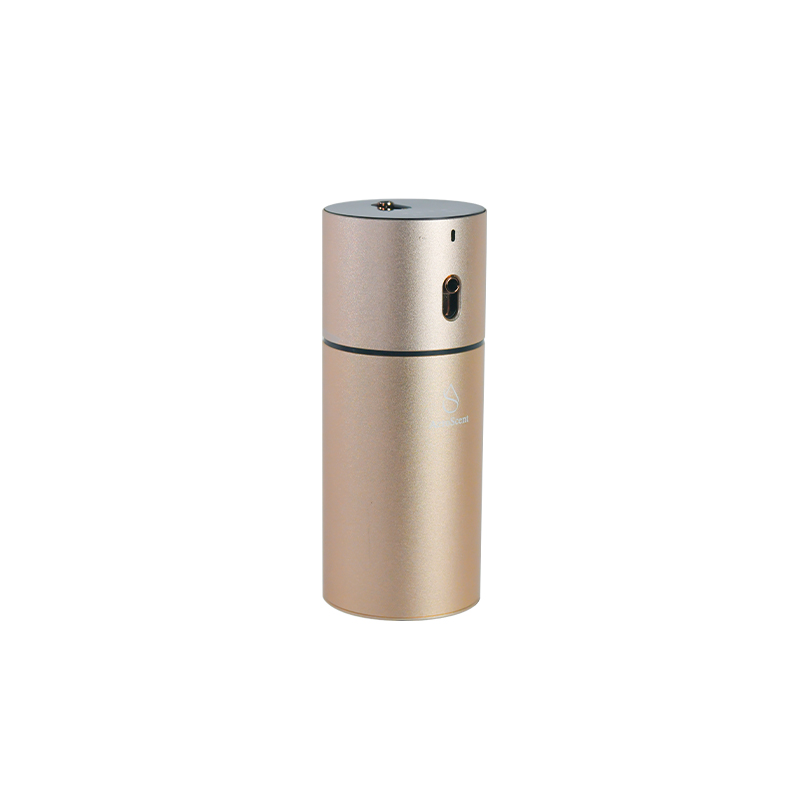
Different hardware mechanisms alter oil consumption and dispersion rates. Understanding these mechanics helps fine-tune your usage. Ultrasonic vibrations break water and oil into micro-particles. Because water dilutes the oil, precise ratios are critical to prevent the transducer plate from clogging while maintaining a steady scent throw. The ceramic disc vibrates millions of times per second, and any heavy, unmixed oil will dampen this vibration.
Contrast ultrasonic models with nebulizers. Nebulizing systems use pure oil and require no water. Instead of counting drops per milliliter of water, users adjust flow rates and timer intervals. This highlights the hardware-specific requirements of your chosen essential oil diffuser. You cannot apply water-based drop ratios to a nebulizer, just as you cannot pour pure oil into an ultrasonic tank.
Oil viscosity and flash points also dictate drop counts. Thicker oils like Vetiver, Patchouli, or Sandalwood require fewer drops and more frequent hardware cleaning. These resinous oils tend to sink or clump in the water. Highly volatile, thin oils such as Lemon, Peppermint, or Sweet Orange evaporate faster and may require slightly higher drop counts to maintain a consistent aroma throughout the diffusion cycle.
| Oil Viscosity Category | Examples | Drop Adjustment | Maintenance Impact |
|---|---|---|---|
| Thin / Highly Volatile | Lemon, Sweet Orange, Eucalyptus | Add 1-2 extra drops | Low residue, standard cleaning |
| Medium Viscosity | Lavender, Rosemary, Tea Tree | Standard baseline (5 per 100ml) | Moderate residue, weekly cleaning |
| Thick / Resinous | Vetiver, Sandalwood, Myrrh | Reduce by 1-2 drops | High residue, requires immediate wipe-down |
There is a conceptual trade-off between adding more oil and experiencing scent blindness. The evaporation rate of different oils directly affects perceived scent strength. Top notes dissipate quickly, which often tempts users to over-drop. Base notes linger much longer, providing a sustained aromatic background. If you mix a top note like grapefruit with a base note like cedarwood, the grapefruit will vanish from the air long before the cedarwood does.
Olfactory fatigue is a biological phenomenon where the nose stops detecting a scent after 15 to 30 minutes of continuous exposure. The receptors in your nasal cavity become saturated and stop sending signals to your brain. When this happens, do not add more drops to the reservoir. You are simply wasting oil and risking respiratory irritation. Instead, utilize intermittent diffusion cycles, such as 30 minutes on and 30 minutes off, to allow your olfactory receptors to reset.
Airflow heavily impacts how you perceive scent strength. A room with a high-velocity HVAC return vent will strip the mist from the air before it can settle or be smelled by occupants. Conversely, a stagnant room will trap the mist, causing the scent to become overpowering very quickly. Always evaluate the physical environment before adjusting your drop count.
Deploying multiple units across larger footprints requires specific strategies. For spas, offices, or retail environments purchasing essential oil diffuser bulk orders, establishing standard operating procedures for staff ensures consistent scent branding without wasting inventory. You cannot rely on individual employees guessing how much oil to use; you must provide a laminated chart detailing the exact drop count for each specific machine in the building.
Instead of overloading a single 500ml diffuser with 30 or more drops to cover a massive area, evaluate zoning and airflow. Strategic placement of multiple 200ml diffusers utilizes HVAC airflow dynamically, providing an even scent distribution without creating overwhelming localized hotspots. Place units near supply vents to help push the mist into the room, but keep them away from return vents that will immediately suck the mist out of the space.
When managing multiple units, standardize the oil blends used in adjacent zones. If the lobby diffuses a heavy floral scent and the hallway diffuses a sharp citrus, the overlapping boundary area will smell chaotic. Map out your scent zones just as you would map out lighting or audio zones in a commercial space.
Over-saturating the water reservoir carries physical and mechanical dangers. Excessive essential oil corrodes plastics, degrades silicone seals, and leaves a heavy residue on the ultrasonic disc. This chemical degradation leads to premature device failure and leaks. Essential oils are powerful solvents. If left sitting in a plastic tank for days without being diffused, they will literally eat into the plastic, causing micro-fractures that eventually turn into major leaks.
High-concentration diffusion also poses health and safety risks. Exercise extreme caution around pets, especially cats and dogs, which lack certain liver enzymes to process specific oils like tea tree, eucalyptus, and citrus. Infants and individuals with asthma are also highly sensitive to heavy particulate concentrations in the air. Always default to the lowest possible drop count when operating units in spaces occupied by vulnerable individuals.
Implement a strict maintenance protocol to mitigate the risks of high-drop-count usage. Wipe the reservoir after every use with a soft cloth. Perform a deep cleaning with white vinegar weekly to remove mineral deposits and oil residue, ensuring the longevity of your Essential Oil Diffuser. Neglecting this maintenance allows calcium from tap water and terpenes from the oil to form a hard scale over the transducer plate, permanently reducing mist output.
A: Adding too much oil clogs the ultrasonic plate, degrades internal plastic components, and causes respiratory irritation. It wastes expensive oils without proportionally increasing the scent quality, as the water becomes too saturated to atomize properly.
A: A 500ml diffuser requires 15 to 20 drops of essential oil. You can scale up to a strict maximum of 25 drops if you are using lighter, highly volatile scents like citrus, but exceeding this will damage the unit.
A: Always add water first. Putting oil in an empty reservoir coats the dry ultrasonic plate, which causes immediate clogging, prevents the device from misting properly, and can permanently stain the ceramic disc.
A: No. Heavy carrier oils like coconut, jojoba, or almond oil do not evaporate. They will permanently clog the device's misting mechanisms, leave a thick residue, and void your hardware warranty.
A: Yes. Wiping out the reservoir between scent changes prevents cross-contamination and stops sticky residue buildup from degrading the internal components over time. Use a soft cloth to remove residual oils.


