
Views: 0 Author: Site Editor Publish Time: 2026-07-23 Origin: Site


Finding the right balance for an essential oil diffuser can feel like a guessing game. Many users experience erratic aromatherapy results. You might get a weak, barely noticeable scent. Or you might end up with an overwhelming, headache-inducing fragrance that wastes expensive oils. First-time users often feel lost when setting up their device. They are unsure of exactly how much oil to add to the water tank. The lack of standardized measurement in aromatherapy is a real problem. Guessing drop counts leads to poor olfactory experiences. It can also degrade device components, void warranties, and pose respiratory or pet safety risks. Overloading a tank with oil leaves a sticky residue that damages internal mechanisms over time. The drop-count equation is a measurable formula. It depends on tank capacity, room dimensions, oil viscosity, and device hardware. This guide provides a technical framework for optimizing any diffuser. You will ensure maximum efficiency, longevity, and safety for your home environment.
Users often apply a static number of drops regardless of the device size. This leads to inconsistent dilution rates. A small tank becomes easily overpowered. A large tank produces almost no scent if the drop count remains the same. You need a reliable baseline to scale your usage properly based on the exact water volume.
Use this structured lookup framework for instant answers based on standard tank sizes. Adjust based on your specific room dimensions and ventilation.
| Tank Capacity | Mild Scent (Drops) | Strong Scent (Drops) | Ideal Room Size |
|---|---|---|---|
| 100ml | 3 – 5 | 6 | Small office, bathroom |
| 200ml | 6 – 10 | 12 | Standard bedroom |
| 300ml | 9 – 15 | 18 | Master bedroom, kitchen |
| 500ml | 15 – 25 | 30 | Large living room |
The standard rule is 3 to 5 drops for 100ml tanks. For 200ml tanks, scale up to 6 to 10 drops. These smaller capacities are ideal for localized scenting. Use them on office desks, in small bedrooms, or in bathrooms where a subtle aroma is preferred. When working in a confined space, less is always more. A 100ml unit running right next to your computer monitor will deliver a concentrated dose of aroma directly to your breathing zone. Adding more than 5 drops in this scenario often causes eye irritation and headaches.
Larger tanks require more oil to maintain the correct dilution ratio. Use 9 to 15 drops for a 300ml tank. Use 15 to 25 drops for a 500ml tank. Higher drop counts provide a stronger initial scent. You must balance this against the longevity of the diffusion cycle. Running a large tank for eight hours will slowly diminish the top notes of the oil. The citrus scents evaporate first. The heavier base notes linger in the water. If you want a consistent scent profile all day, add half the drops initially. Then add the remaining drops halfway through the cycle.
Adding 30 or more drops to massive tanks yields diminishing returns. Water evaporation rates in large tanks can leave heavy oil residue if not properly agitated by the device. The scent often fades long before the water runs out. You are left with a murky mixture at the bottom. These oversized units are better suited for humidification rather than pure aromatherapy. If you must use a 700ml unit for scent, clean the basin daily to prevent biofilm buildup and transducer damage.
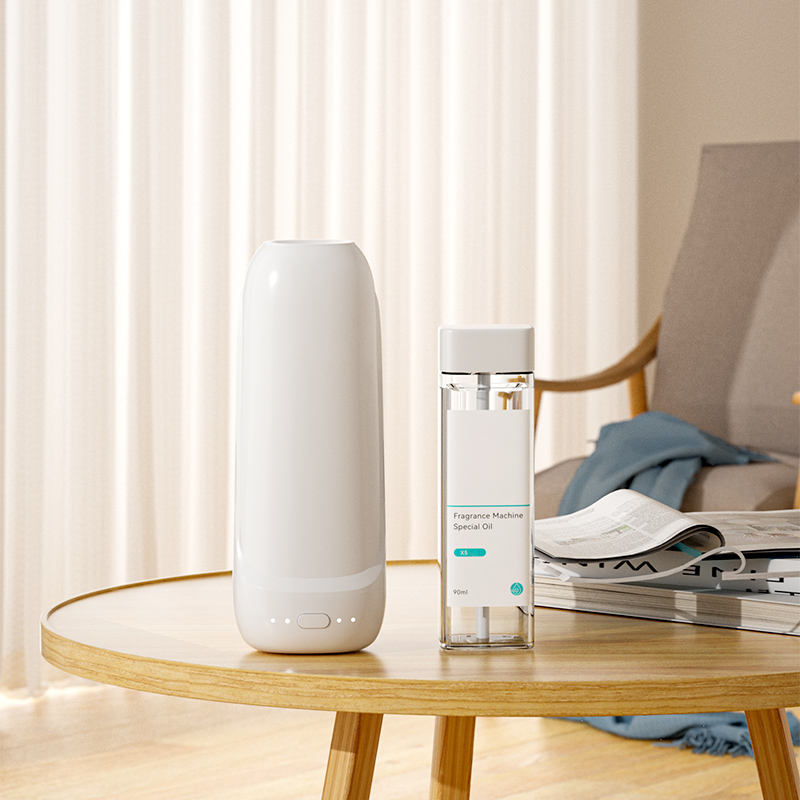
The mechanical operation of different diffusers changes the required oil input. Understanding your device type is critical for proper usage and preventing hardware failure.
An ultrasonic aroma diffuser vibrates a ceramic disk to create a fine water and oil mist. Precise dilution is critical here. Too much oil will coat the transducer plate. This prevents it from vibrating at the necessary high frequencies. Eventually, the machine clogs and stops producing mist entirely. The water acts as a carrier. It disperses the oil evenly throughout the room. Always fill the water to the fill line before adding your drops.
Nebulizers use pressurized air and zero water. They break pure essential oil down into micro-particles. Drop consumption is often measured in milliliters per hour rather than individual drops. This results in a much higher cost of operation. The aroma is highly potent. You attach the oil bottle directly to the machine. There is no dilution. Run these units for only 10 to 15 minutes at a time to avoid overwhelming the space.
These devices use airflow or heat to disperse the scent. They have a rapid consumption rate. Heat application can degrade the therapeutic properties of the oil. It alters the chemical composition and reduces the benefits. A fan blowing across an oil-soaked pad will dry out quickly. You will find yourself adding drops every hour to maintain the scent. Avoid heat diffusers if you want to preserve the integrity of expensive oils.
Adjust drop counts based on the physical environment and your specific goals. Room size and airflow play massive roles in scent perception and distribution.
Your wellness objective dictates the volume of drops. For therapeutic inhalation, such as decongestion or active meditation, use higher concentrations. Stay near the upper limit of the baseline ratios. Run the device for shorter, controlled durations of 15 to 30 minutes. For mild ambient scenting, use lower concentrations. Run the unit on intermittent cycles. This provides a pleasant background aroma without dominating the room.
Avoid olfactory fatigue and respiratory irritation in bathrooms or small offices. Cap usage at 3 to 4 drops regardless of the tank size. A heavy concentration in a small, unventilated room quickly becomes overwhelming. Keep the door cracked open to allow some airflow. If the scent feels too strong, turn the unit off and let the room air out completely before restarting.
HVAC airflow, high ceilings, and open doors dilute scent throw significantly. Scale up drops to 20 or 25 in a 500ml tank. Alternatively, utilize multiple smaller diffusers placed strategically around the room for even coverage. Placing one unit near the return air vent will pull the scent into the ductwork. This distributes the aroma throughout the house. Position the diffuser on a solid surface at waist height for the best dispersion.
Existing ambient humidity affects the dispersion and hang-time of ultrasonic mist. In highly humid environments, the mist struggles to evaporate into the air. The scent falls quickly to the floor. Dry, warm air allows the aroma to travel further and linger longer. Adjust your drop count based on the season. You may need fewer drops in the winter when the heating system dries out the indoor air.
Not all drops are created equal. Chemical composition dictates perceived strength and how the oil behaves in the water.
Strong oils like Peppermint, Eucalyptus, Oregano, and Cinnamon require 30% to 50% fewer drops. They easily dominate a room. Mild oils like Sweet Orange, Lavender, and Chamomile may require the maximum recommended drops to achieve a noticeable scent. Always check the botanical name and origin. A high-quality peppermint oil will clear your sinuses with just two drops.
When blending, the total combined drop count must remain within the tank's limit. If your limit is 8 drops in a 200ml tank, use 4 drops of Oil A and 4 drops of Oil B. Do not use 8 drops of each. This doubles the intended concentration. Start with a simple two-oil blend. Mix a top note like lemon with a middle note like lavender to see how they interact in the water.
Thick oils like Vetiver and Sandalwood yield larger drops from the orifice reducer. They require fewer total drops compared to thin, watery oils like Lemon or Grapefruit. Adjust your count based on how fast the oil flows from the bottle. If the oil pours out like water, you might accidentally add too much. Hold the bottle at a 45-degree angle to control the flow rate precisely.
The longevity of the device and its ability to handle essential oils connect directly to its manufacturing origins and material specifications.
A reputable essential oil diffuser factory utilizes medical-grade ultrasonic plates. These components withstand continuous exposure to corrosive oils. They ensure consistent mist output over years of daily use. Cheap transducers pit and crack after a few months of exposure to citrus oils, leading to leaks and motor failure.
BPA-free, PP (Polypropylene) plastics are essential. Cheap plastics risk melting or leaching chemicals when exposed to high concentrations of citrus oils, specifically limonene. High-quality materials protect both the device and your air quality. Inspect the inside of your water tank regularly. If the plastic feels soft or looks cloudy, it is degrading and should be replaced.
Knowing what happens when the drop count is wrong helps you fix issues quickly and maintain a safe environment for everyone in the building.
Follow this concrete checklist for beginners to avoid common setup mistakes:
Physical signs of over-diffusing include headaches, nausea, and watery eyes. Pet toxicity is a serious risk. Cats and dogs are highly sensitive to specific oils like Tea Tree or Eucalyptus. Always ensure pets can leave the room. Keep the door open. Monitor their behavior. If they start pacing or drooling, turn the unit off immediately and ventilate the space.
If the scent is too weak, check for oil expiration. Old oils lose their aromatic compounds. Clean the transducer plate with a cotton swab and rubbing alcohol. Verify that the room size is compatible with the tank capacity. Move the unit away from open windows or air vents that might blow the mist away before it disperses into the room.
Implement a regular cleaning schedule. Run a cycle with water and a splash of white vinegar every few weeks. This removes the oil buildup caused by using maximum drop counts. It keeps the mist output strong. Wipe out the basin with a dry cloth after every use. Do not let water sit in the tank for days, as this breeds mold and bacteria.
A: For a 500ml diffuser, the general rule is to use 15 to 25 drops of essential oil. Start with 15 drops for milder scents and increase to 25 if the room is large or the oil has a weaker scent profile.
A: Yes, you can use 20 drops if your diffuser has a water tank capacity of 400ml to 500ml. Using 20 drops in a smaller 100ml or 200ml tank will result in an overpowering scent and may clog the device.
A: Adding too much oil can cause headaches, nausea, and respiratory irritation. It also leaves a sticky residue on the ultrasonic plate, which can clog the machine and permanently damage the internal components.
A: Yes. Strong oils like peppermint or eucalyptus require fewer drops. Mild oils like sweet orange or chamomile often need more drops to achieve a noticeable scent in the same volume of water.
A: Clean the water tank and ultrasonic plate every three to five uses, or at least once a week. Use a cotton swab with rubbing alcohol or run a short cycle with water and white vinegar to remove residue.


